
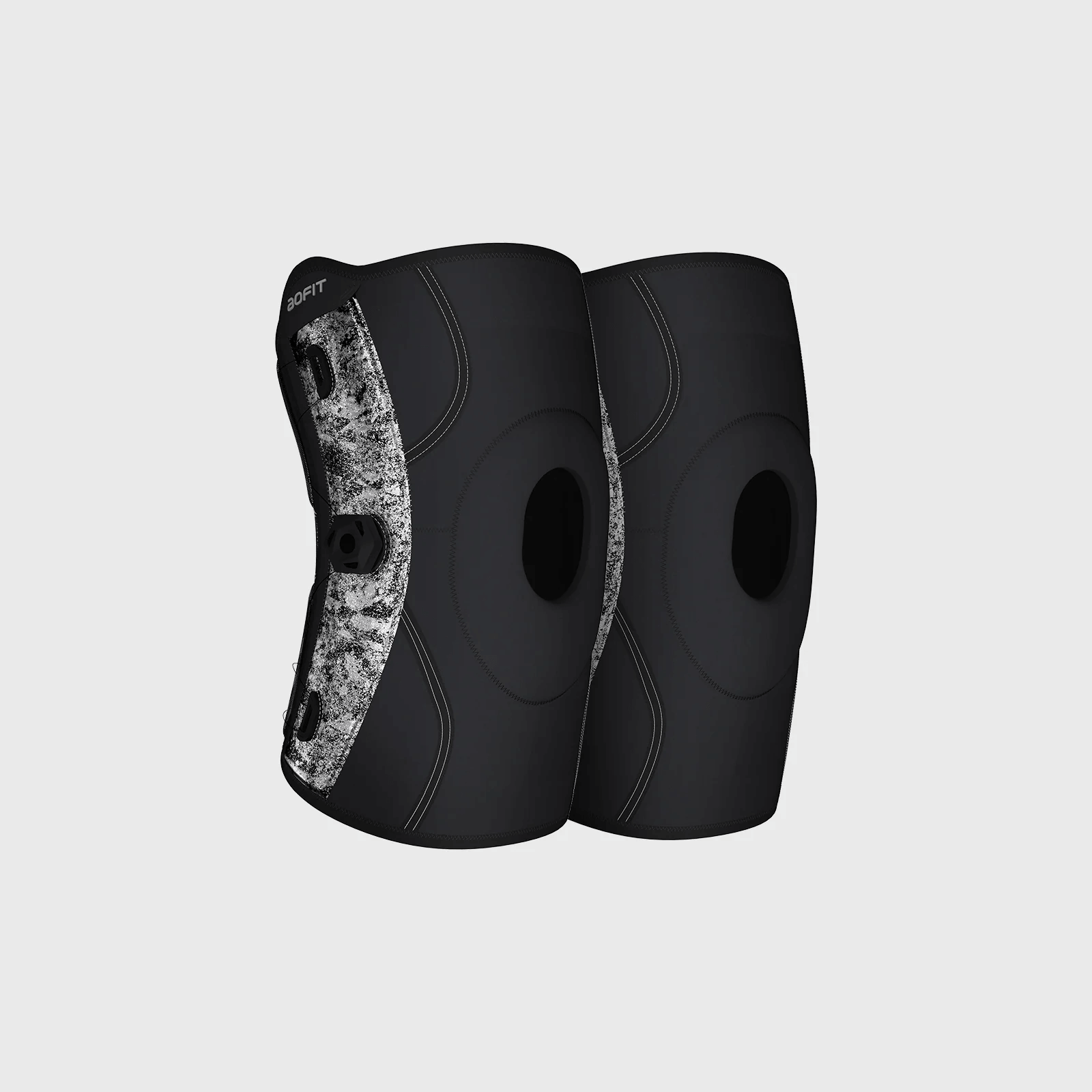
When you are looking for neoprene knee sleeves for your customers or for your own use, you will have a few important questions. What thickness of neoprene knee sleeves should you choose? Is a patella or closed patella design better for neoprene knee sleeves? The answers will affect how the neoprene knee sleeve feels on your leg, the level of support and how good it is for athletic activities.
This guide will look at the neoprene material itself along with the thickness and design of knee sleeves. You will learn to choose the right type of knee brace for different sports, body types and training levels.
Neoprene Knee Sleeve: The Material Itself
Neoprene is really popular for lifting. It was first made for wetsuits and people like it because it keeps heat in and stays dry. When used in knee sleeves, not being able to breathe is actually a thing.
The main advantage is that it keeps heat well. It traps sweat and body heat so it quickly warms up the knee joint. This makes the joint fluid less thick which helps to keep the joint lubricated for lifting. Also neoprene stays the shape even when under pressure, giving steady compression that doesn’t loosen much during a set.
On the downside, neoprene knee sleeves are not great for hygiene and airflow. Sweat builds up. If you don’t air them out and wash them often, neoprene can become a place where bacteria grow and get really smelly. Wearing neoprene for a long time can also cause irritation. In addition, neoprene sleeves can be a bit of a pain to clean.
Knit vs. Neoprene Knee Sleeves
| Feature | Neoprene Knee Sleeves | Fabric Knee Sleeves |
| Application | Performance & Mechanical Support | Recovery & Pain Management |
| Breathability | Low | High |
| Stiffness | High | Low |
| Best For | Powerlifting, CrossFit, Squatting | Post-Surgery Rehab, Work, Running |
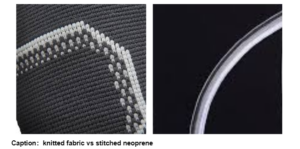
Caption:knitted fabric vs stitched neoprene
Neoprene knee sleeves engineered for high quality
Seam: Low-cost sleeves typically feature a straight seam along the back. This design becomes problematic when the seam aligns directly with the popliteal fossa (the hollow behind the knee), leading to irritation during deep knee flexion. In contrast, high-quality sleeves employ spiral seams or offset side seams, ensuring that smooth fabric lies against the area behind the knee joint.
Edge binding: Anti-roll edges keep the sleeve in place. Uneven or uncapped edges mean the sleeve will shift mid-workout.
Panel count: A two-panel construction tends to be stiffer and more cylindrical, which is ideal for powerlifting but offers less comfort. In contrast, a four-panel design provides a more anatomical shape that follows the natural curve of the leg, helping to reduce slippage. That said, buyers should keep in mind that more panels mean more seams, and as a result, there are more potential points of failure if the quality of manufacturing is poor.
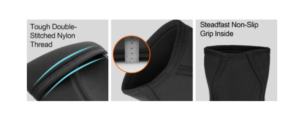
Breakdown by Thickness: The 3mm, 5mm VS. 7mm
Neoprene sleeves, the standard choice for training in the fitness industry, are rated by millimeter thickness. This measurement strikes the balance between how flexible and how rigid the sleeve is.
3mm Knee Sleeves
The 3mm sleeve is the lightest option available, designed for sports requiring agility and endurance athletes. It’s commonly used in MMA,long-distance running, HIIT, and casual hiking. Rather than providing heavy support, its main role is to keep joints warm and enhance proprioception. Mechanically, it offers minimal resistance and moves naturally with the body.
For runners, it avoids the drag and biomechanical changes of thicker sleeves—simply keeping the knee warm and synovial fluid lubricated to reduce stiffness over time. In high-repetition workouts like burpees, squats, or running, the 3mm sleeve excels by avoiding bunching behind the knee.
5mm Knee Sleeves
The 5mm knee sleeve is the all-around choice for functional fitness and CrossFit, where athletes need to squat heavy and then jump or run in the same workout. Specialized gear doesn’t work here—a generalist does. The 5mm sleeve offers enough support for moderate lifts while staying flexible for lunges, double-unders, or box jumps. It won’t give you the max boost of a thicker sleeve or the minimal feel of a thinner one, but it bridges the gap perfectly. For most gym-goers doing a mix of exercises, a single pair of 5mm sleeves is a practical, all-in-one solution.
7mm Knee Sleeves
For maximum load-moving ability, the 7mm sleeve is the standard—ideal for Powerlifting, Strongman, and heavy leg training (squats, leg presses, hack squats). Its rigid neoprene compresses under load, storing elastic energy that provides a helpful “bounce” out of the bottom position, aiding lifters past sticking points. However, these sleeves are not for cardio: running in them causes chafing, stride issues, and discomfort. They are specialized strength tools and should be removed after heavy lifting.
Design: Closed Patella VS. Open Patella
Beyond thickness, how the sleeve is physically built affects its interaction with your anatomy. Small details, like where seams are placed or if the kneecap is left uncovered, greatly change how it feels to use.
Closed Patella Knee Sleeve
Most lifting braces use the closed patella design, recognizable by its continuous, tube-like shape. It provides even compression across the entire kneecap and the tendons around it. Lifters prefer this design because the greater surface area for tension is key to supporting heavy loads. Moreover, by applying uniform pressure to the whole joint capsule, it helps control general swelling.
Open Patella Knee Sleeve
Featuring a circular cutout over the kneecap—often reinforced with a padded donut ring—the open patella design reduces direct pressure on the kneecap while still compressing the surrounding area. This makes it ideal for those with chondromalacia (runner’s knee) or patellar tracking problems, where pressure on the kneecap leads to sharp pain. For anyone whose knee hurts due to a tight sleeve, this design provides the necessary relief.
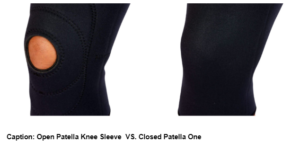
Caption: Open Patella Knee Sleeve VS. Closed Patella One
Considerations for the Buyers
When investing in proper gear, the initial price tag is only one factor; the resulting performance and the Total Cost of Ownership return are far more significant.
Material grade
A clear distinction exists between low-cost generic neoprene and the high-grade SBR neoprene found in premium products. Cheap neoprene contains air pockets that compress under significant pressure. After just a few months of heavy squatting, a budget sleeve will flatten out, losing both thickness and the essential rebound. Investing more in superior materials actually reduces your long-term expenses, as the sleeve preserves its supportive properties for years instead of months. When seeking reliable custom knee braces for lasting joint health, opting for quality materials is essential.
Washing
It’s best to hand-wash neoprene using a gentle detergent and let it air-dry. Machine washing and drying can break down the rubber and weaken the adhesive that bonds the fabric to the neoprene core. Taking proper care of your gear will help it endure many training cycles to come.
Sizing
Your sizing choice should be guided entirely by your intended use.
Competition Fit: Many powerlifters opt for a smaller size to achieve maximum compression—for instance, an athlete who typically wears a medium might squeeze into a small. The downside is that putting the sleeve on becomes extremely difficult. Getting a competition-fit sleeve demands significant effort, sweat, and struggle. While far from comfortable, it provides the highest level of stiffness.
Training/Comfort Fit: For most users, sticking to the manufacturer’s knee sleeve size chart is the best approach. This fit offers solid compression without restricting blood flow during rest periods. It also helps extend the life of the sleeve, since overstretching the material when putting it on is the main cause of seam failure.
FAQ
Q: What thickness should you get for squatting?
A: For heavy squats, a 7mm neoprene sleeve is the go-to choice, offering the ideal mix of support, warmth, and stiffness. It stores elastic energy at the bottom of the lift, giving a helpful rebound for heavy loads. But for high-rep air squats or endurance work, 7mm can be too stiff—5mm is a better fit.
Q: Do Neoprene knee sleeves really help you lift more?
A: Yes, but the effect is subtle. Mechanically, 7mm sleeves store energy on the descent, giving a slight boost on the way up. Psychologically, the tightness improves body awareness, helping you feel the joint’s position more clearly. This confidence and stability lead to better technique and safer handling of heavier weights.
Q: Can I wear Neoprene knee sleeves all day long?
A: No. Wearing tight neoprene sleeves throughout the entire day is not advisable, as it may impede blood circulation and lead to skin irritation from accumulated sweat.
Conclusion
No single neoprene knee sleeve is the best—it depends on your training load and activity. Powerlifters need 7mm closed-patella sleeves for maximum support. CrossFitters should choose 5mm for durability and versatility. Runners, hikers, and daily users are better off with 3mm for warmth and mobility without restriction.
Contact AOFIT now, a reliable custom brace manufacturer, for worry-free quality. After all, building a top sports support brand takes more than mass production—it requires expertise in materials science, biomechanics, and retail strategy.