
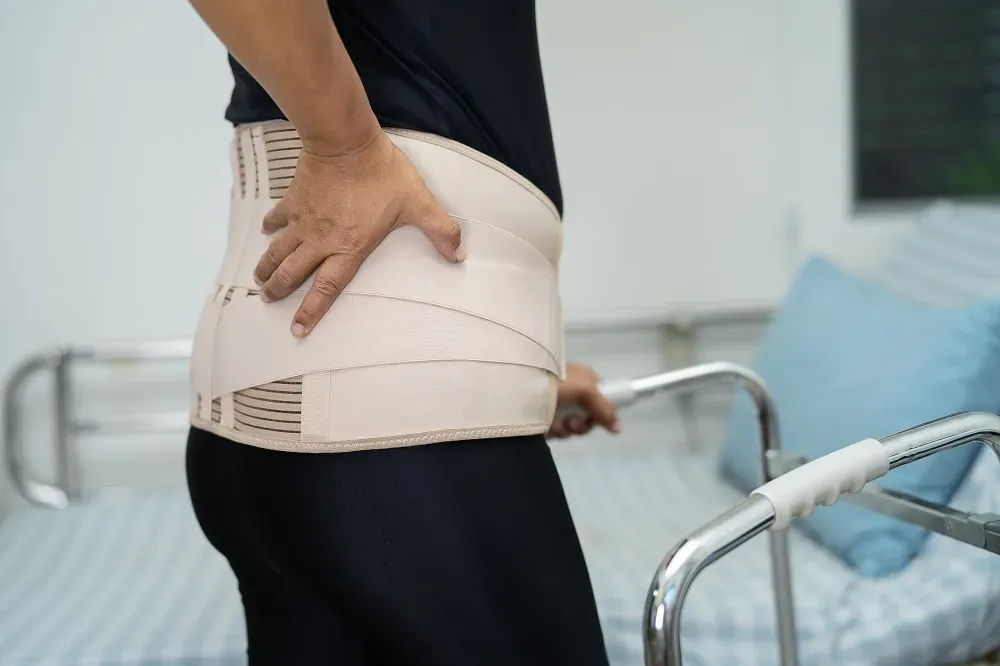
That persistent ache in your lower back might not just be tension. Your lower back may curve more than it should. This pulls your belly forward and pushes your hips out of alignment. That’s lumbar lordosis.
Here’s what most people miss: not every back brace is built to fix it. The wrong support can reinforce the very arch you’re trying to correct. So we did the research. We tested and evaluated the best posture corrector for lumbar lordosis available in 2026. The goal? Help you find the one that meets your needs.
What Is Lumbar Lordosis, and Why Does Posture Corrector Choice Matter?
The spine is supposed to curve. That’s not the problem. The problem is curving too much.
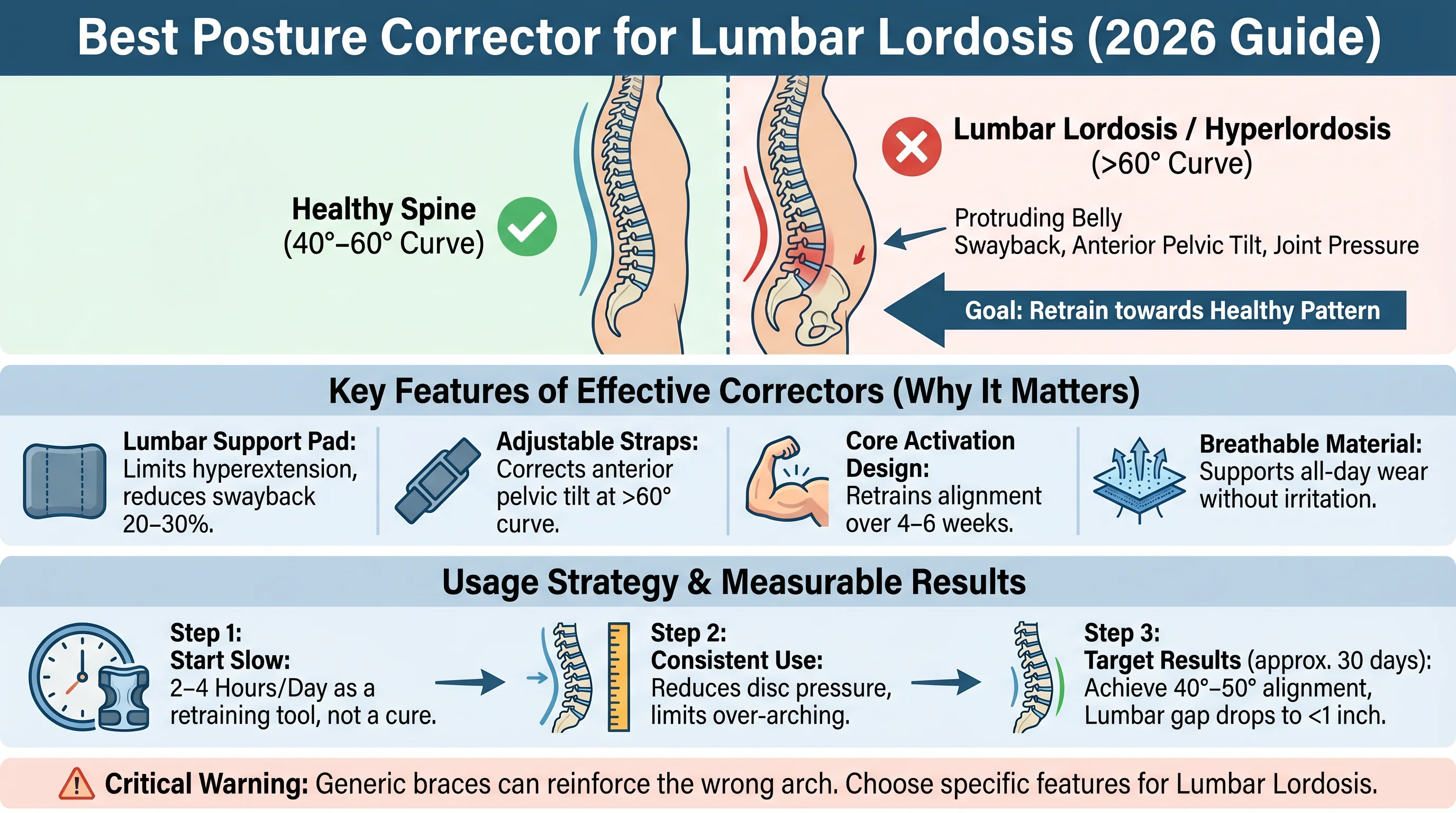
A healthy lumbar spine sits at 40°–60°. Push past 60°, and you’ve crossed into hyperlordosis — what most people call swayback. Your pelvis tilts forward. Your stomach protrudes. Your lower back joints take on pressure they were never built to handle.
Why does brace selection matter so much here? Lumbar lordosis isn’t just “back pain.” It’s a structural pattern. Anterior pelvic tilt. Compressed facet joints. Weakened core muscles are pulling everything out of alignment. A generic back belt won’t fix any of that. You need a posture corrector for lumbar lordosis with specific features:
|
Feature |
Why It Matters |
|---|---|
|
Lumbar support pad |
Limits hyperextension; reduces swayback 20–30% |
|
Adjustable straps |
Corrects pelvic tilt at hyperlordosis >60° |
|
Core activation design |
Retrains alignment over 4–6 weeks |
|
Breathable material |
Supports all-day wear without skin irritation |
Think of a posture corrector for lumbar lordosis as a retraining tool — not a cure. Start with 2–4 hours of wear per day. The right spinal alignment brace reduces disc pressure and limits over-arching. Over time, posture corrector for lumbar lordosis guides your body back toward 40°–50°. Add strengthening exercises, and results become measurable. Most users see their lumbar gap drop to under one inch within 30 days.
The wrong brace, though? It can silently reinforce the exact arch you’re trying to correct.
How to Select the Best Lumbar Lordosis Brace for 2026?
Not all lumbar braces work the same way. With lordosis, picking the wrong one makes a real difference — and not in a good way.
Start with severity. A mild curve does well with a flexible brace. The aHeal PC09 is a solid example — clinical data shows it improves alignment by 25% per day. Moderate-to-severe cases need semi-rigid support. True hyperlordosis beyond 60°? Go with a rigid, three-point pressure design.
Next, match the support type to the condition:
- Flexible — best for chronic discomfort, daily wear, and gradual correction
- Semi-rigid — suits bulging discs or cases where restricted movement is required
- Rigid — used for fractures, osteoporosis, or post-surgical recovery
Last, check breathability. Look for materials rated above 80% airflow. A brace that feels hot or stiff is one that users will stop wearing. Consistency drives results — so comfort matters more than you might think.
1. Mueller Lumbar Back Brace — Best Overall for Daily Lumbar Lordosis Support

Under $40. It works for office workers, postpartum recovery, and everything in between. The Mueller Lumbar Back Brace keeps showing up at the top of lordosis support lists. Once you see how it’s built, that makes complete sense.
The centerpiece is a removable steel lumbar pad that sits right over the sacral joint. That’s where lumbar hyperextension starts. The pad cushions and compresses that exact spot. It pushes back against the spine’s tendency to over-arch during movement. Four flexible steel springs run alongside the spine. They stabilize the curve without locking users into a stiff, rigid position. Users can move around more comfortably.
What makes it useful for lordosis:
- Double-layer adjustable design lets users dial in compression — tighter on hard days, looser for maintenance wear
- The removable pad has an adjustable height. Users can fine-tune sacral positioning as their posture improves
- Non-stretch panels push consistent lateral pressure on both sides. Internal side components keep the brace from rolling or bunching during movement
- Sizing runs from 22″ to 70″ waist — that’s a wide, inclusive range
Best for: Office workers, older adults managing degenerative disc discomfort, and postpartum recovery where lumbar strains need stabilization without tight, aggressive restriction.
One honest caveat: The double-layer build can feel warm during long wear in heat. Also, if lordosis is severe — think significant anterior pelvic tilt beyond 60° — this brace handles day-to-day management well. But it won’t replace a rigid orthopedic back brace for structural correction at that level.
Price: $25–$45 | Available at Walmart, Target, MuellerSportsMed, and DME-Direct.
2. Sparthos Back Brace — Best for Active Users Retraining Posture Habits
Some people need a brace that holds them still. Others need one that moves with them — and that difference matters a lot.
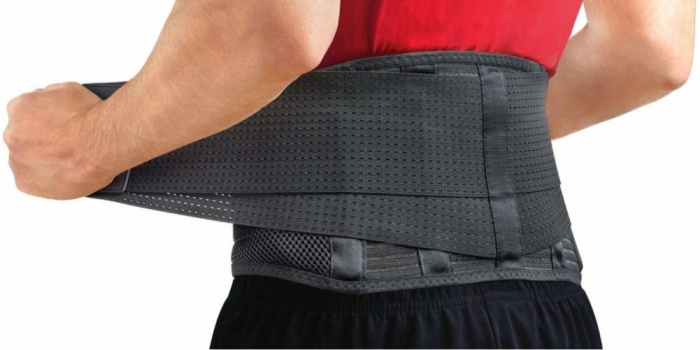
The Sparthos Back Brace is built for the second group. You’re walking, bending, stretching. Your lumbar needs support through all of it. This brace does that without making users feel locked in place.
What makes it work for lordosis in motion:
- Vertical spring bars and rubber strips keep the spine stable during movement. They stop rolling and postural collapse mid-stride
- Removable lumbar pad puts targeted compression right at the spot where hyperextension starts
- Breathable mesh construction lets you wear it under clothing for hours. No overheating
- Adjustable straps give you a firm-but-flexible fit. You get core support without feeling stiff
Physical therapists point to its value for muscle spasms, arthritis, and disc-related discomfort. The reason is simple — the stability holds during activity, not only at rest. That makes a real difference for people who stay on the move.
Best for: Active users managing disc herniation, sciatica, scoliosis, or stenosis. Users need a postural correction device that fixes habits while they go about their day. Skip this one for severe spinal deformity or post-surgical recovery.
Price: Mid-range | Available on Amazon and the Sparthos official site.
3. Aspen Active PTLSO — Best for Severe Lumbar Lordosis and Clinical Cases
Clinical-grade support costs more. The Aspen Active PTLSO — priced at $229.22 — is not for everyone. For severe hyperlordosis, post-surgical recovery, or osteoporosis-related spinal instability, though, nothing else comes close.
What sets it apart from every other brace on this list is the NEWmatix™ System. Most braces just restrict movement. This one does something different — it activates your postural muscles through biofeedback. Your shoulders get cued back and down. Anterior pelvic tilt gets countered at the source. You’re not being held in place. You’re being retrained.
The SlickTrack™ 4:1 mechanical advantage system lets you tighten the upper and lower sections on their own. You target the exact spinal segments that need compression — not just everything at once. The structural components are heat-moldable and trimmable, so the fit can be shaped to your body. The shoulder straps and lumbar belt also detach on their own, which supports a step-down protocol as your recovery moves forward.
It’s also HCPCS Code L0456 — insurance-reimbursable. Worth checking with your provider.
Best for: Post-surgical patients, fractures, osteoporosis, and severe hyperlordosis that needs clinician-supervised correction. Get a professional fitting before using this brace — the design is detailed enough that proper fit makes a real difference in results.
Price: $229.22
4. AlignPro Spine Brace — Best Targeted Support for Lower Back Arch Pain
805 verified reviews. 4.68 out of 5. Not a single one-star, two-star, or three-star rating. That level of agreement across hundreds of buyers is rare — and it tells you something real.
Here’s what AlignPro does: it fixes the upper back first, then your lower back falls into place. Pulling your shoulders back opens the chest. That realigns the mid-back. Then the lower spine settles into a neutral position, too. So, for people whose lower back arch pain comes from hours of desk slouching or hunching over a phone, this chain reaction is what solves it.
What sets it apart:
- Aluminum rear frame with a cutout design — firm support with no pressure buildup on contact points
- Breathable neoprene + pulley adjustment system — total weight under 8 ounces
- Fits S/M (25–32″) through L/XL (up to 55″ waist)
Real user results: A nurse reported less upper-back fatigue and fewer tension headaches within two months. A 41-year-old dad doing two-hour sessions each day described clear, noticeable relief in shoulder and mid-back tightness. By day 60, one reviewer’s back pain was “gone” — and the muscle memory from corrected posture held up even after taking the brace off.
Know its limits. AlignPro has no lordosis pad, no sacral anchor, and no rigid lumbar panel. Hyperlordosis is a structural, measurable curve beyond 60° — this brace won’t fix that. Its lower back benefit targets posture-driven strain only, not spinal conditions or pathology.
Best for: Desk workers, students, nurses, and anyone whose lower back tightens because the upper back collapses first. Pair it with wall angels and rowing exercises for stronger results.
Start slow: 20–30 minutes each day in week one, then build toward 1–2 hours. Wear it during your toughest posture moments — long calls, deep focus work, commutes.
Price: Available at thealignpro.net | 60-day money-back guarantee + free worldwide shipping.
5. ITA-MED Women Thoracic Lumbo-Sacral Orthosis — Best for Women with Posture + Shoulder Alignment Issues
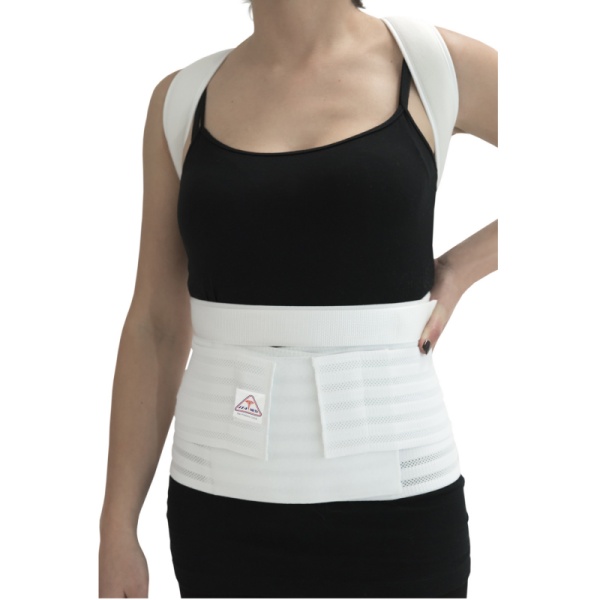
Most braces treat your spine like a single problem. The ITA-MED TLSO-250 takes a broader view — shoulders, upper back, lumbar curve, and sacrum, all supported at once.
That range matters for women with layered postural issues. Rounded shoulders pull the upper back into kyphosis. That tension then feeds into lumbar lordosis below. Fix one area without the other, and you’ve only solved half the problem.
What makes this brace stand out:
- 3-in-1 support system covers the full thoracic-to-lumbosacral span — rare in a single orthosis
- Crisscross shoulder strap design pulls the shoulders back and holds upper spinal alignment in place
- Two flexible metal stays run along the spine for structured support without feeling stiff
- Removable rigid front and back panels adjust compression up or down as needs change
- Two tension-adjustment pulls get a precise, personal fit
The construction also fits a woman’s actual body shape. You get cotton-lined breathable elastic, female-specific contour shaping, and a slim profile that sits flat under a blouse.
Doctors recommend this brace for scoliosis, kyphosis, osteoporosis, osteochondrosis, and lumbago. It covers clinical ground that most consumer braces skip.
Best for: Women whose lumbar lordosis comes paired with rounded shoulders or upper-back curvature. This is a postural correction device that works the whole chain — not just the lower back.
6. Optec Edge SL TLSO 3 Panel Rigid Spinal System — Best for Osteoporosis-Related Lumbar Lordosis
Bone density changes everything about spinal support. Osteoporosis brings compression fractures, collapsing vertebrae, and the slow forward pull of kyphosis. A fabric brace won’t cut it at that point.
The Optec Edge SL is a three-panel rigid TLSO built for exactly that situation. Two hard polymer shells — anterior and posterior — wrap the full thoracic-lumbar-sacral region. The back panel features a spinal relief opening plus built-in reinforcement. Removable soft padding controls moisture against fragile skin. That detail is critical for geriatric patients at risk of pressure sores.
The design works through intracavitary pressure. This unloads the intervertebral discs and blocks spinal collapse and forward flexion. You get broad clinical coverage across multiple conditions:
- Burst fractures
- Spondylolisthesis
- Laminectomy recovery
- Post-operative stabilization
- Osteoporosis-related lumbar curvature correction
Seven sizes cover hip measurements from 26″ to 61″.
One firm requirement: this brace needs a clinical prescription. A poor fit on fragile bone can worsen collapse or trigger pressure sores. Professional fitting isn’t optional — it’s what keeps this brace safe and effective.
Price: From $261.05 | 90-day warranty.
Which Lumbar Lordosis Brace Is Right for You?
Six posture correctors for lumbar lordosis. Very different bodies, very different needs.
The right answer comes down to three things: how severe the curve is, how active day-to-day life is, and whether a doctor is part of care.
Match severity first:
- Mild curve (under 20°) — a flexible brace, such as the Mueller, works well here
- Moderate (20°–40°) — step up to semi-rigid support, like the Bauerfeind LumboLoc
- Severe or post-surgical (beyond 40°) — the Aspen PTLSO is the clinical-grade option. Most doctors require a prescription for this one.
Then match lifestyle:
- Desk job, long sitting hours → Mueller
- Active recovery, movement-heavy days → Sparthos or FlexGuard
- Posture retraining, swayback correction → AlignPro or Pisces Vest
- Osteoporosis, fractures, post-op → Optec Edge SL or Aspen
Start with 2–4 hours of wear each day. Add more time as your body adjusts — aim for 8 hours over time. The goal isn’t just pain relief. It’s training your spine to hold a new, healthier position by default.
Key Buying Factors: What to Look for in a Lumbar Lordosis Posture Corrector
Fit first, everything else second. A loose brace offers zero resistance against your spine pulling back to its old position. Too tight, and you add joint strain on top of the problem you came to fix. Measure before you buy. Many braces come in real sizes — not just “one size fits all.”
Adjustability matters. The lumbar curve shifts as the heal. The brace needs to keep up. Look for wraps with adjustable straps that dial in compression as posture gets better. Fixed tension won’t cut it long-term.
Targeted lumbar and core support. Generic back braces cover a wide area. A lordosis brace needs to hit the lower back and the abdominal region — that’s where the imbalance sits. A brace that only covers your upper back misses the problem area entirely.
Breathability keeps consistent. The brace users wear is the one that works. Hot, stiff materials end up in a drawer. Go for mesh construction or moisture-wicking fabric blends. This matters more if users live in a warm climate or stay active during the day.
Material quality shows in the details. Two braces can look the same and feel completely different. Check stitching strength, buckle durability, and padding density. A flimsy brace can’t hold resistance against poor posture, so it corrects nothing.
Set a budget that matches needs. Functional options start around $15–$40. Clinical-grade designs run $200+. Price reflects design complexity, not always results. Match what is spent to the severity level, not the highest price tag on the shelf.
Conclusion
Living with lumbar lordosis isn’t just a posture problem. It’s a daily battle with pain, fatigue, and the quiet frustration of a body that won’t cooperate. The right posture corrector for lumbar lordosis won’t fix everything overnight. But it does something just as powerful — it gives your spine a real chance to feel what good alignment is like.
From Mueller’s dependable everyday support to the clinical-grade structure of the Aspen Active PTLSO, the best lumbar curvature brace for you comes down to one simple question: What do you need most right now? Start there. Then pick the one that fits that answer.
Browse our full collection of lumbar lordosis braces at aofitbrace.com — and find the one built for how you move.