
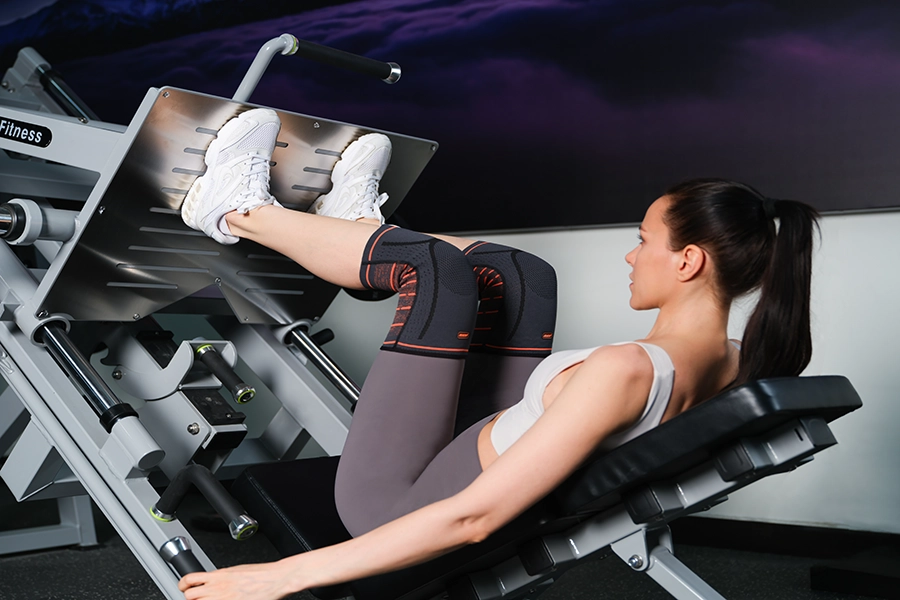
From meniscus tears to conditions like osteoarthritis, ailments impact not only the bones and soft tissues but also significantly hinder quality of life. Knee braces are really helpful, in these kinds of situations. They do more than just give your knee some support. We will look at the types of knee braces that are available and what they are used for.
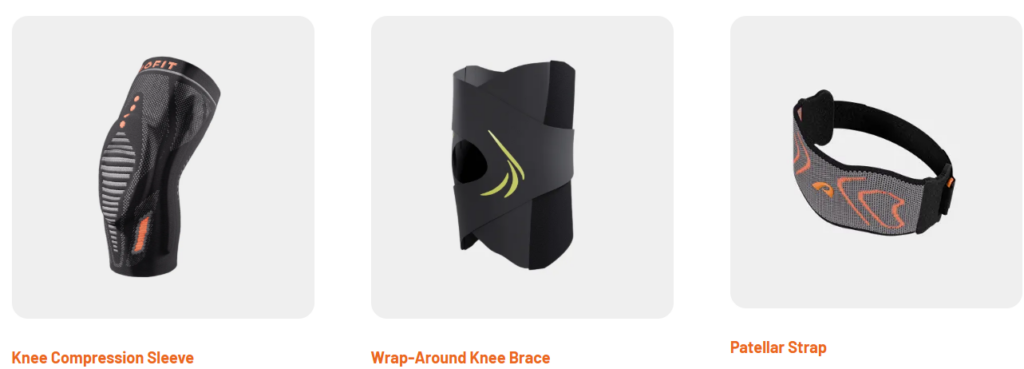
Knee Compression Sleeves—the most common knee brace types
Knee sleeves are made to go around the knee like a tube. They are usually made from neoprene, polyester or a kind of cotton that stretches. You can get knee sleeves in sizes and they look different too. Some are simple; just squeeze the knee. Others are more complicated with gel pads to help take the pressure off the kneecap. The main thing knee sleeves do is squeeze the knee joint, which helps with pain and swelling. Knee sleeves also help the muscles and tendons around the knee, so you do not get as tired or hurt.
How to Choose the Right Knee Compression Sleeve
Use Case
For Heavy Lifting (Powerlifting/CrossFit): Look for thick neoprene (7mm). These provide maximum joint stability, warmth, and proprioceptive feedback for squats and deadlifts.
For General Fitness & Daily Wear: Choose lighter neoprene (3-5mm) or nylon/spandex blends. These prioritize mobility, breathability, and comfort for walking, running.
For Needs like Swelling and Recovery: Look for graduated compression that are tighter at the ankle than at the knee. A study found that those with higher pressure, about 9.8 mmHg helped reduce swelling. Lighter pressure, around 8.2 mmHg did not work well in reducing swelling.
Material and Construction
Neoprene: The industry standard for sports. It provides excellent heat retention (which keeps muscles loose) and structure.
Nylon/Spandex (Elastane): These are usually knitted fabrics. They offer breathability and consistent pressure.The nylon and elastane fabric blend affects compression. A study on fabric characteristics found that a mix of 82 percent nylon and 18 percent elastane provided compression.It gave 25 mmHg at the ankle. This was more, than a mix of 88 percent nylon and 12 percent elastane, which gaves 18 mmHg.
Sizing
Where to measure: Knee Brace Manufacturers vary.
- Standard: Measure around your leg 10cm below the kneecap. This is 4 inches down from the middle of your knee.
- Alternative: Some brands, like Nufabrx want you to measure 5.5 inches up from the kneecap. This is around the top of your thigh or the knee.
The “Snug” Rule: Your compression should feel like a handshake. It should be snug enough to stay in place. Not so tight that it pinches, rolls or cuts off blood flow. If you are not sure what size to get go for the size for comfort all day. If you want the support, for competition get the smaller size.
Specific Features
The Anti-Slip sleeve has Silicone beading or bands at the edge. These Silicone beading or bands prevent the sleeve from sliding down when you are doing something.
The sleeve has flat seams or it is seamless. This means it does not rub against your skin.
The Moisture-Wicking feature is very importantfor neoprene sleeves because it helps if you sweat a lot. If the neoprene sleeves do not have the Moisture-feature and you sweat a lot, they can become very uncomfortable.
Patellar Straps
Designed to sit below the kneecap, the knee strap utilizes a gel-based massage pad to target the area just beneath the knee. While it addresses a range of conditions, it provides highly effective relief for those particular issues. It is primarily indicated for the management of runner’s knee, mild jumper’s knee, low-grade chondromalacia and minor patellar instability.
How to Choose the Right Patellar Straps
Perfect Fit
Where to measure:
- Standard Strap: Measure the circumference of your leg just below the kneecap .
- Patellofemoral Brace: Measure the circumference of your thigh , 6 inches above the center of your kneecap.
The “Two-Finger” Test: The most important rule of thumb is that you should be able to comfortably slide two fingers between the strap and your leg. This ensures it’s tight enough to be effective but not so tight that it cuts off circulation.
Break-in Period: New straps, especially those made of neoprene, can feel a bit stiff. Wear it for short periods at first to allow the material to soften and mold to your leg.
Your Activity
Running, Jumping, and Court Sports, including basketball, volleyball: Look for a simple, narrow strap that sits just below the kneecap. These offer focused pressure on the patellar tendon without restricting your range of motion. Brands like Nike offer lightweight, breathable versions perfect for high-impact activities.
General Knee Pain or Multi-Sport Use: A wider strap might provide more overall compression and warmth, which can be soothing for general aches and pains. This type offers a balance of support and comfort for daily wear.
Targeted Conditions (e.g., patellar misalignment): You may need a more structured patellofemoral brace. These have a cut-out for the kneecap, a buttress pad, and multiple adjustable straps to actively guide the kneecap into the correct position. They are bulkier but offer much more targeted support.
Hinged Knee Brace: the most supportive and structured types of knee braces
If you’ve ever suffered from ligament injuries such as ACL, PCL, or MCL tears, or from Osteoarthritis (OA) at the knee, you are likely familiar with hinged knee braces. These braces offer a solution for managing knee injuries by merging the compression benefits of a sleeve with the stabilizing effect of a rigid splint. When designed with a frame and secure strapping, the hinged brace serves two main purposes: it restricts sideways (lateral and medial) movement and helps reduce direct pressure on the knee joint. While it doesn’t completely offload the joint, it assists the knee in efficiently transferring force to the rest of the leg during movement.
How to Choose the Right Hinged Knee Brace
Specific Condition
| Your Primary Goal | Recommended Brace Type | Key Features & Function |
| Recovery from injury or surgery | Rehabilitation Knee Brace/ rigid hinged knee braces | Typically constructed from a mix of metals (such as aluminum), advanced materials like carbon fiber, as well as plastic, elastic components and sturdy straps.
Adjustable range-of-motion (ROM) hinges allow you to lock or limit range of motion (flexion/extension) to protect healing ligaments, fractures, or repairs. |
| Stability for an unstable knee | Functional Knee Brace/Soft hinged knee braces | knee sleeves and wraps with flexible aluminum or plastic stays on the sides for lateral stability fastened with straps around the knee. Provides robust support for day-to-day activities or sports. Most effective for ACL, PCL, or other ligament injuries. |
| Pain relief from osteoarthritis | Unloader Knee Brace | Specially designed to “unload” or reduce weight on the painful side of the knee (often the inner/medial side) by applying a gentle, corrective force. |
Right Fit
Get Professional Advice First: An orthopedist or physical therapist can accurately diagnose your issue and specify the exact type, support level, and ROM settings you require.
Measure for a Proper Fit: A brace that is too loose will shift and fail to support; one that is too tight can cut off circulation. Most braces are sized based on the circumference of your thigh (about 7 inches above the kneecap) and the middle of your knee. Use a soft tape measure and follow the manufacturer’s size chart closely.
Compare Materials for Comfort and Use:
Neoprene: Offers good warmth and compression but can get hot. Good for general use.
Breathable Fabrics: Much better for all-day wear or sports, as they wick away sweat and prevent skin irritation.
Check the Hinge and Straps:
Hinges: For rehab braces, ensure the hinges are easy to adjust without tools. For functional braces, look for sturdy, low-profile hinges.
Straps: You want wide, non-slip straps that are easy to fasten. Look for features like “anti-migration” to prevent the brace from sliding down your leg.
Decide Between “Off-the-Shelf” and “Custom”:
Prefabricated (Off-the-Shelf): Most hinged braces fall into this category. They are available in sizes (S, M, L) and are perfectly suitable for the vast majority of people. They are also typically covered by insurance when medically necessary.
Custom-Made: Only necessary for athletes at a very high level of competition or for people with unusual leg proportions that a standard size cannot accommodate. A custom brace is far more expensive and requires a specialist to take a cast or 3D scan of your leg.
Knee Immobilizer
A knee immobilizer is a rigid brace intended to keep your knee fully straight, stable, and protected. Unlike flexible knee supports, an immobilizer prevents all bending, twisting, and lateral movement, ensuring the knee remains secure. These features are essential for safeguarding the knee throughout the recovery process.
How to Choose the Perfect knee immobilizer
Correct Sizing
Knee immobilizer comes in various sizes, which reflects the specific purpose:
| Type | Best For | Coverage | Ideal Users |
| Short Knee Immobilizer | Mild support, shorter limbs, early-stage injuries | Covers knee with moderate thigh and calf support | Elderly, shorter individuals, mild sprains |
| Long Knee Immobilizer | Stronger stabilization post-injury/surgery | Extended thigh-to-calf coverage | ACL/MCL injuries, stiff knees, post-op users |
| 22-inch Knee Immobilizer | Provides maximum immobilization and full leg alignment | Gives the longest coverage & provides maximum restriction | Tall individuals, post-surgical rehab, fractures |
Design to Your Specific Injury
Stabilizer Bars (Stays): Most immobilizers use rigid strips (often aluminum) placed along the sides or back of the leg to prevent bending. Adjustable medial/lateral stays (on the inner and outer knee) are excellent for providing a custom anatomical fit to prevent slipping. Some models use T-bar stays for optimal strength.
Patellar Cutout: If you have a kneecap injury or recently had surgery, look for a model with an open patella cutout. This feature aligns over your kneecap to relieve pressure and prevent irritation
Materials and Ease of Use
Padding and Breathability: Look for devices with terry cloth, foam, or perforated canvas liners. These materials wick moisture away from the skin, reducing sweating and improving comfort for long-term wear.
Closure System: Most modern immobilizers use hook-and-loop straps (like Velcro). These are easy for patients to use and allow for quick adjustments if swelling changes throughout the day.
Washability: Check if the product is washable. This is a significant advantage for maintaining hygiene during the recovery period.
Conclusion
Knee braces in different forms treat various conditions, including ligament injuries meniscus tears and osteoarthritis. The right brace depends on your need for support, protection and range of motion. For support, in sports, medical and everyday activities, trust AOFIT, your reliable brace manufacturer. We deliver a custom fit that helps you stay on the move.