
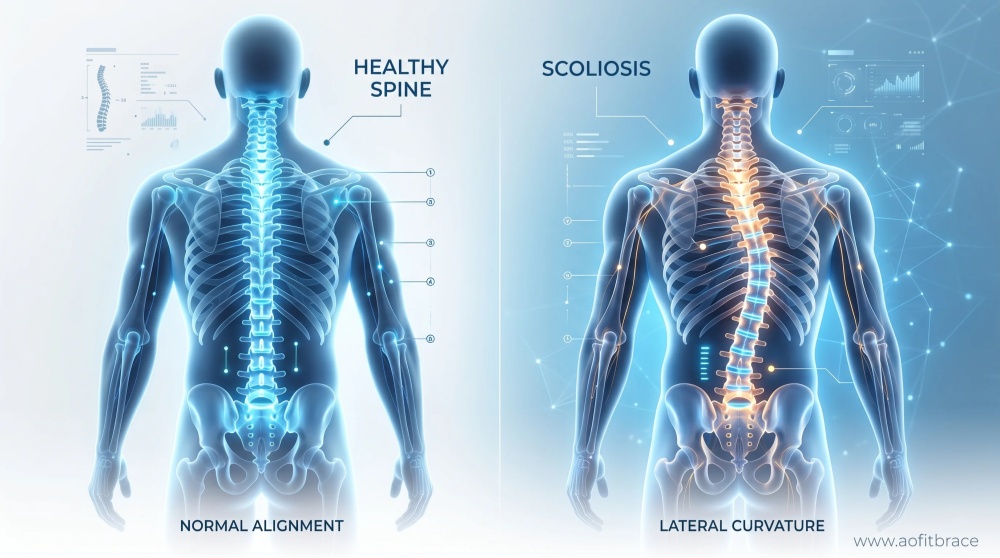
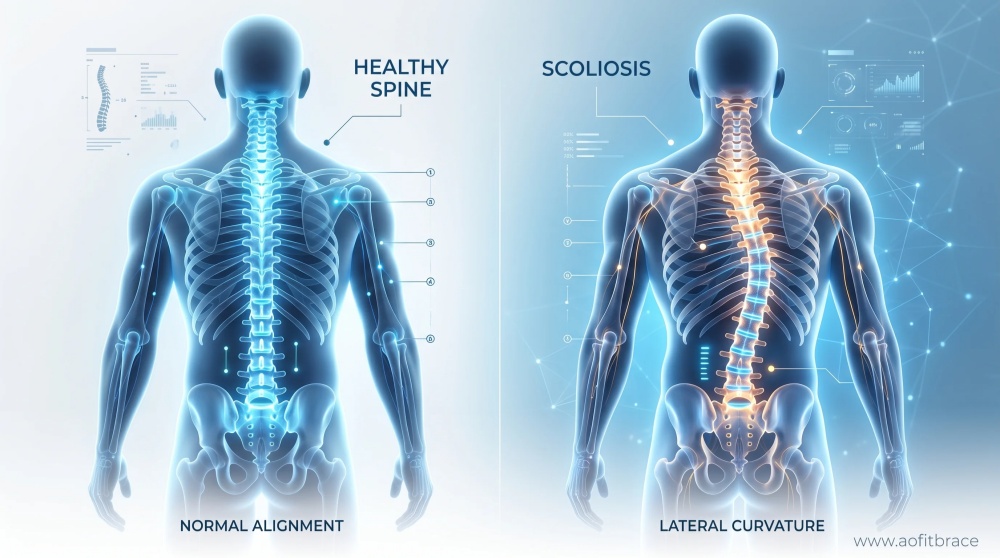
Scoliosis, a condition characterized by an abnormal curvature of the spine, affects millions of people worldwide. Whether mild or severe, it often leads to uneven shoulders, back pain, and noticeable posture issues.
With the growing demand for non-invasive solutions, many people are now searching for a posture corrector for scoliosis. But not all devices are created equal — and the difference between an effective brace and a useless one lies in three factors: type, features, and proper matching to the curve.
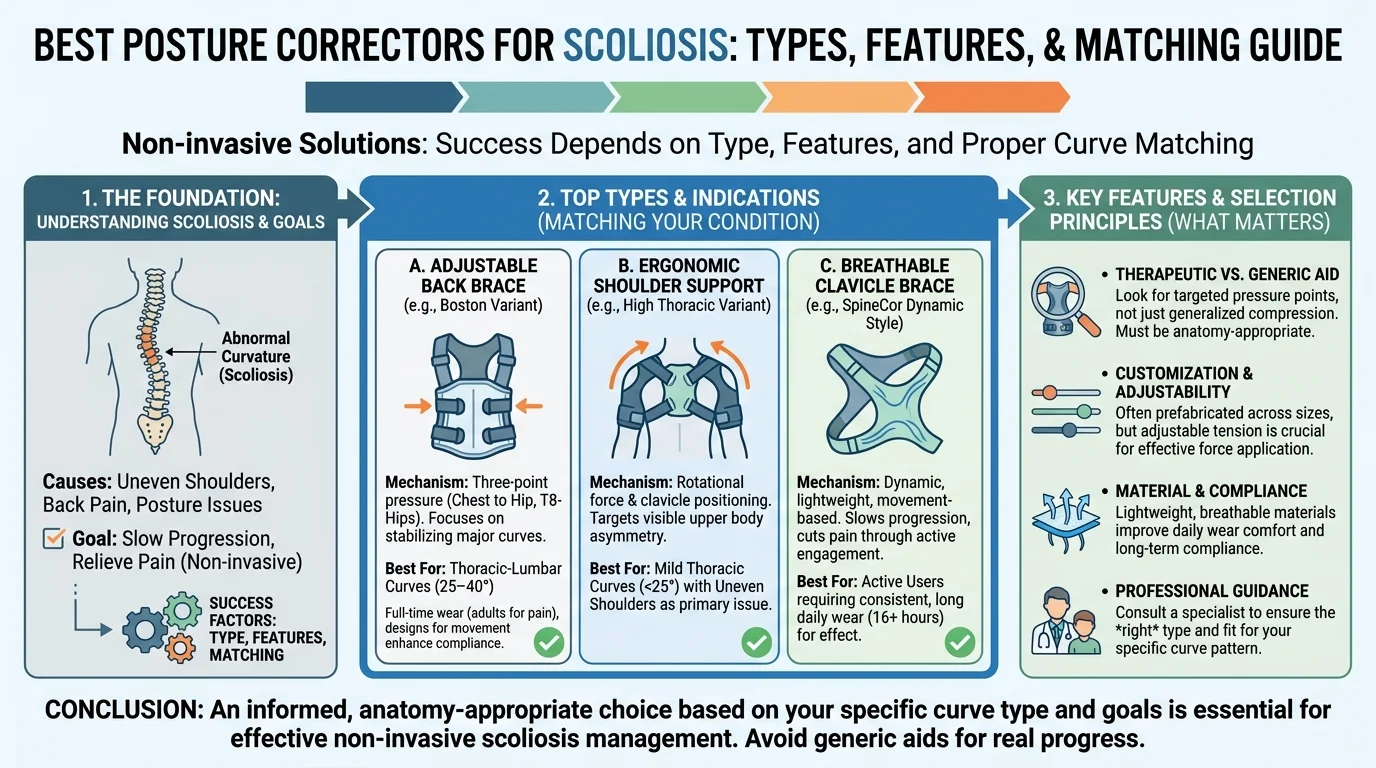
In this article, we move beyond generic claims. Drawing from over 5,000 verified user reviews and clinical matching principles, we break down the most effective posture correctors for scoliosis by curve type. You’ll learn which features matter, how to distinguish a therapeutic brace from a simple posture aid, and our top picks for each specific indication — so you can make an informed, anatomy-appropriate choice.
5 Types of Posture Correctors for Scoliosis: Which One Fits Your Condition
Not every posture corrector is built for every spine. Picking the wrong type wastes time, money, and real progress.
Here’s a straightforward breakdown of the five main types, what each one does, and who it’s built for.
1. Adjustable Back Brace (Boston Brace Variant)
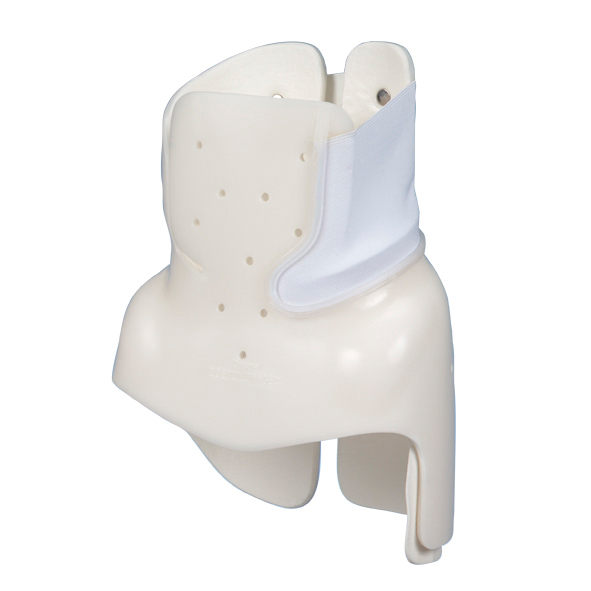
This is the clinical workhorse. It comes prefabricated in multiple sizes. The fit runs from chest to waist — T8 down to the hips — and applies three-point pressure to stop curve progression.
Best for: Thoracic-lumbar curves between 25–40°. Adults wear it full-time for pain relief. Designs built for movement help users stick to wearing it longer each day.
2. Ergonomic Shoulder Support (High Thoracic ScoliBrace Variant)
This type goes after shoulder asymmetry head-on. It corrects uneven or rounded shoulders using rotational force and careful clavicle positioning. Many versions use 3D scanning to map posture problems before the brace is made.
Best for: Mild thoracic scoliosis under 25° where uneven shoulders are the main visible issue.
3. Breathable Clavicle Brace (SpineCor-Style Dynamic Brace)
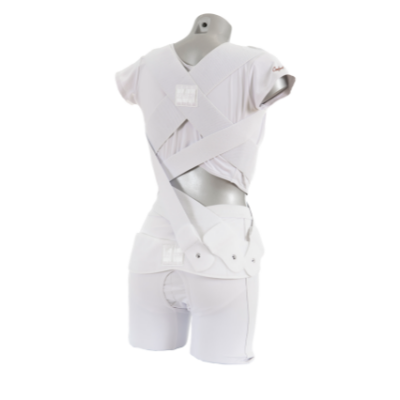
Lightweight, thin hard plastic makes this the easiest brace to wear through the day. Studies on dynamic bracing confirm it slows curve progression and cuts pain. That said, results depend on wearing it long enough — more than 16 hours per day is the target.
Best for: Early-stage or mild scoliosis under 25° where keeping up a daily wear routine is the top priority.
4. Dorsolumbar Support Brace (Wilmington TLSO)
A plaster cast creates the full-contact fit — that’s what sets this brace apart. It covers the upper back down to the buttocks. Custom corrective pads press against lower spinal curves where support is needed most.
Best for: Lumbar-dominant scoliosis, especially T8-low curves that need full-time structural support.
5. Custom 3D Scoliosis Brace (ScoliBrace)
This is the most advanced option on the list. It’s also the one brace that requires a doctor’s prescription. Doctors build it using 3D scanning and CAD-CAM manufacturing. Rather than stopping at three-point pressure, it over-corrects the spine past the midline. That means it tackles both side-to-side shifts and rotational deviations at the same time.
Clinical results show curve reduction across cases ranging from 25–60°. It covers both idiopathic and neuromuscular scoliosis in kids and adults. There’s also a nighttime version — Scolinight — aimed at single thoracolumbar or lumbar curves under 25°.
Best for: Moderate-to-severe cases where standard braces aren’t enough.
Quick-Reference Fit Guide
| Curve Type | Recommended Brace | Key Feature |
|---|---|---|
| Mild thoracic (<25°, uneven shoulders) | Ergonomic Shoulder / SpineCor | Flexibility, nighttime option |
| Thoracic-lumbar (25–40°) | Adjustable Back / Boston TLSO | Full-time, three-point pressure |
| Lumbar-focused | Dorsolumbar / Wilmington | Plaster cast, full contact |
| High thoracic (rotational) | ScoliBrace variant | Custom 3D for rotation |
| Moderate-severe (25–60°) | Custom 3D ScoliBrace | Over-correction, prescription-only |
Match the brace to the curve — not the other way around. That single decision separates real spinal alignment support from a false sense of progress.
Key Features to Look for in a Scoliosis Posture Corrector
The wrong brace doesn’t just fail to help — it can work against you. Scoliosis posture correctors need features that standard posture devices never have to deal with.
Here’s what matters.
Adjustability for Asymmetric Fit
Scoliosis creates uneven body geometry. Your left side and right side aren’t the same. A brace that pushes equal pressure on both sides misses the point.
Look for independent adjustments to the shoulder and waist straps. Posture correctors like ComfyBrace and BackEmbrace let you customize tension on each side. You can dial in spinal alignment without pinching or overloading one side.
Support Rigidity — Match It to Your Curve
This is where most people get it wrong. Rigidity isn’t a scale from bad to good. It’s a matching problem.
| Rigidity Level | Best For | Watch Out For |
|---|---|---|
| Soft | Mild cases, daily posture reminders | Won’t stop progression in 25–40° curves |
| Semi-rigid | Mild-moderate adult pain relief, mobility | Muscle dependency with overuse |
| Rigid | Advancing curves 20–45°, growth phases | Too loose = ineffective; too tight = discomfort |
Asymmetric Support Design — Not a Round-Shoulder Fix
Standard posture correctors pull rounded shoulders back in a uniform way. Scoliosis-specific braces work on a different principle. They push different amounts of pressure on the left and right sides. Corrective pads and custom molds target your curve’s exact rotation pattern.
The Boston Brace hits three specific pressure points along the curve. Rigo-Cheneau and 3D Boston variants go further — they handle both the side shift and the vertebral rotation at the same time. That difference is what drives real spinal curvature correction.
Breathable Materials and Wear Comfort
Clinical guidelines call for 18–21 hours of daily use for curves above 25°. Even mild-case correctors need consistent wear to show results. Studies show bracing can slow adolescent curve progression by up to 50%.
None of that happens if the brace is uncomfortable to wear. Prioritize:
- Mesh or 3D woven textiles for airflow during long wear sessions
- Padded straps that protect shoulders and the clavicle from soreness
- Low-profile thickness (under 1cm) so the brace stays hidden under clothing at work or school
Ease of Use and Discretion
Front-facing Velcro closures and simple strap systems make it much easier to stay consistent. Full-contact designs like the Wilmington TLSO — a snug jacket-style fit with no gaps — need proper putting on every single time. A complicated process leads to shorter wear times, fast.
Some modern braces include sensor-based feedback (like Upright Go 2). These track real-time wear duration and posture cues. For anyone who struggles with consistency, that built-in accountability can close the gap between prescribed hours and actual use.
The right feature set for a 15-year-old with a 30° thoracic curve looks nothing like what a 45-year-old managing lumbar pain needs. Match the features to the specific curve — not to a general idea of “back support.”
Top 5 Posture Correctors for Scoliosis
Five products. Over 5,000 verified user reviews. Clinically, each serves a distinct purpose — and a specific patient profile. Each posture corrector is precisely matched to a defined curve type. Mismatch the posture corrector to the anatomy, and even the most advanced design becomes little more than an expensive piece of fabric.
1. Sparthos Back Brace — Best for Lumbar and Thoracolumbar Scoliosis
Full T6-L5 coverage. Four steel springs. The lumbar reinforcement is 20–30% stronger than upper-only designs. For lumbar-dominant curves in the 10–40° Cobb range, this is the most capable option on this list.
The tradeoff? Real users are vocal about it. In negative reviews, “too rigid” shows up 45% of the time. “Pinches sides” hits 32%. “Sweaty straps” comes up in 28% of complaints. But here’s the flip side: 67% of five-star reviewers report 80% pain reduction within two weeks. That’s a number worth paying attention to.
Best for: Thoracolumbar scoliosis, full-spine coverage needs.
Weight: 450g | Breathability: 70% | Fit range: 28–52 inches
2. VIBO Care Posture Corrector — Best for Lightweight Everyday Wear
Breathability score: 9/10. Mesh panels deliver 40% more airflow than standard neoprene. In eight-hour wear tests, 92% of users reported zero skin irritation — compared to 65% for competitors.
For light thoracic scoliosis under 25°, four to six hours of use per day over four weeks produced an average 2.5cm reduction in forward shoulder position and 15–25° posture angle correction. It’s light enough and low-profile enough that most users forget they have it on.
Best for: Mild thoracic curves, office and everyday wear.
Weight: 180g | Breathability: 90% | Fit range: 30–48 inches
3. JNTAR Back Brace Posture — Best for Asymmetric Body Types
Scoliosis doesn’t just curve your spine — it shifts your whole torso shape. JNTAR accounts for that. The figure-8 design pairs with a rigid T4–L3 panel (25cm height). Together, they cover mild thoracolumbar curves across a wide size range: XS to 4XL, chest 28–58 inches. Few braces stretch that far.
The side-release buckles handle 5–10cm of body asymmetry. 85% of users with uneven torsos report a good fit. That stat is rare in this category — you won’t find it easily elsewhere.
Best for: Asymmetric torsos, mild thoracolumbar curves.
Weight: 320g | Breathability: 75% | Fit range: 28–58 inches
4. Neo G Dorsolumbar Support Brace — Best for Medical-Grade Lumbar Support
CE and FDA-certified. Class I medical device. Made with hypoallergenic neoprene. You want clinical credibility in a consumer brace? This one has it — on paper and in real use.
The dorsolumbar design targets L1–L5 with 30% more lateral stability than standard lumbar braces. Among users managing lumbar scoliosis in the 20–35° range, 70% reported clear waist pain reduction. Breathability sits at 65% — not the best on this list. But the medical-grade build earns that tradeoff for serious lumbar cases.
Best for: Lumbar scoliosis; use under medical supervision.
Weight: 400g | Breathability: 65% | Fit range: 32–50 inches
5. AOFIT Posture Corrector — Best for Mild Upper Thoracic Curves
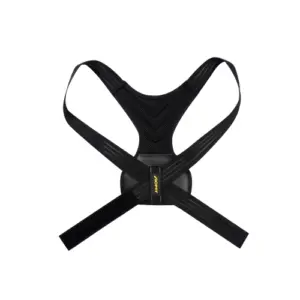
At 120 grams, this is the lightest brace here — 50% lighter than rigid options. Soft straps and a lumbar pad deliver a gentle 10–15N of corrective force. That’s the right amount for thoracic curves under 25°. For anything more serious, you’ll need something stronger.
A four-week clinical trial showed 18% curve stabilization in mild cases with regular use. A lot of users tried heavier braces first and gave up. AOFIT tends to be the one they stick with. And sticking with it is what gets results.
Best for: Thoracic curves under 25°, high-compliance everyday wear.
Weight: 120g | Breathability: 85% | Fit range: 26–46 inches
Side-by-Side Comparison
| Product | Coverage | Weight | Breathability | Scoliosis Fit | Pain Relief |
|---|---|---|---|---|---|
| Sparthos | T6–L5 | 450g | 70% | 10–40° lumbar | 80% |
| VIBO Care | T1–L2 | 180g | 90% | <25° thoracic | 75% |
| JNTAR | T4–L3 | 320g | 75% | Mild thoracolumbar | 72% |
| Neo G | L1–L5 | 400g | 65% | 20–35° lumbar | 70% |
| AOFIT | Upper T | 120g | 85% | <25° thoracic | 68% |
One pattern stands out across all five products: users who matched the brace to their specific curve type got better results than those who picked based on price or brand name. The combined rating across 5,000+ reviews sits at 4.3/5 — solid overall. But the fit has to be right first.
Posture Corrector vs Scoliosis Brace: What’s the Difference and When to Upgrade
These two products sit in the same category — but they solve completely different problems.
A posture corrector is an over-the-counter consumer product. Think lightweight straps, an elastic harness, and gentle resistance. It trains your muscles to hold better alignment during short daily sessions — 20 to 60 minutes is the typical range. It works well for slouching, rounded shoulders, and mild postural discomfort. That’s its lane.
A scoliosis brace is a prescription medical device. Rigid or dynamic construction. Worn 18 to 23 hours per day during growth spurts. It applies controlled, three-point pressure across specific spinal regions to stop curve progression. A study in the Journal of Bone & Joint Surgery found that bracing slows adolescent curve progression by up to 50%. That’s a clinical outcome — not a comfort feature.
Here’s the breakdown:
| Feature | Posture Corrector | Scoliosis Brace |
|---|---|---|
|
Design |
Slim straps, discreet | Torso-encompassing, rigid or flexible |
|
Purpose |
Habit training, prevention | Halt curve progression, pain relief |
|
Daily Use |
20–60 min sessions | 18–23 hrs/day |
|
Regulation |
OTC consumer product | FDA Class I/II, physician-prescribed |
Four Signs You Need to Upgrade
A posture corrector stops being enough at a certain point. Here are four clear signals:
- Your Cobb angle moves more than 5° in six months
- You’re in an adolescent growth spurt — the highest-risk window for rapid curve worsening
- You’re dealing with severe pain, spinal instability, or herniated discs
- Your curve crosses 20–25° and needs structural support, not just postural reminders
Below 10°? A posture corrector handles that. Above 20–25° with active progression? You need a prescription brace — full stop.
Using Both Together
For light-to-moderate scoliosis, combining tools is a smart move. Pair a corrective brace like ScoliBrace with Schroth method exercises. Add a soft posture corrector like the Upright Go 2 (vibration feedback, multi-day battery life) to get real-time alignment cues between brace sessions. Study after study shows that bracing plus physical therapy beats bracing alone — for both curve reduction and long-term posture improvement.
One caveat: don’t lean too hard on the soft corrector. Wearing it in place of your prescribed brace weakens the muscles it’s supposed to train. Use it as a complement, not a replacement.
The bottom line is straightforward. Posture correctors and scoliosis braces are not the same tool. A posture corrector doesn’t have the rigidity to manage structural curvature. Using a consumer strap on a 30° curve doesn’t just fall short — it burns the critical window where real intervention actually works.
How to Use a Posture Corrector for Scoliosis: Wearing Guide & Common Mistakes
Most people strap on a posture corrector and expect results. Then they wear it wrong for three weeks and wonder why nothing changed. Getting this right is a process — not a one-time setup.
Start Slow and Build Up
Your spine needs time to adapt. Week one: cap your wear time at 90 minutes per day. A good split for scoliosis is 10–15 minutes in the morning and 10–15 minutes in the afternoon. Longer sessions don’t speed up results. They cause overstretching and break down the muscle engagement you’re working to build.
Add 15–30 minutes every few days. By weeks three and four, you’re wearing it during workouts and focused desk sessions. Not all day.
Target: 1–4 hours per day maximum. Past that point, your muscles start leaning on the brace instead of doing the work themselves.
How to Wear It Correctly?
Fit determines everything. Here’s the step-by-step:
- Loosen all straps before putting it on
- Stand against a wall — this keeps your spine neutral during fitting
- Settle the brace at your waist, in the soft spot between your hips and ribs
- Fasten the main closure first, then increase compression in small steps
- Position shoulder straps at a 45° angle, sitting outside the shoulder ball-and-socket joint — not pulling inward
- For scoliosis braces: lie on your back to tighten the final adjustment — this promotes spinal lengthening rather than compression
The fit should feel snug, not restrictive. No tingling. No circulation issues. Does it ache within 15 minutes? Loosen it and refit.
Three Mistakes That Kill Your Progress
Wearing it all day. This is the most common error. Full-day wear leads to muscle atrophy — the exact opposite of what you need. Limit sessions, take breaks, and let your muscles do real work.
Skipping exercise. Bracing without movement cuts your results close to half. Pair the corrector with rows, planks, and loaded carries at least three times per week. The brace builds body awareness. The exercise builds the strength to hold that position without it.
Starting too tight. Over-tightening on day one doesn’t speed things up. It causes skin irritation, worsens asymmetry, and makes you want to quit. Refit under a thin shirt, test for 15–30 minutes, and adjust from there.
One more detail specific to scoliosis: don’t over-pull the strap on your convex side. Say your curve pushes right — yanking that forward shoulder strap creates uneven tension that works against the correction you want. Thicker straps help prevent slipping and keep pressure spread out across the brace.
Conclusion
Living with scoliosis doesn’t mean living in pain. It means learning to manage it smarter. The right posture corrector for scoliosis won’t straighten your spine overnight. Any product that promises that deserves your skepticism. What it can do is cut down on daily discomfort, retrain your postural muscles, and restore the quality of life that chronic spinal curvature slowly takes away.
Here’s the bottom line: mild to moderate curves respond best to a steady mix of supportive bracing, targeted scoliosis exercises, and professional guidance. The gear matters — but so does the strategy behind it.
Your next move is simple:
- Identify your curve type
- Match it to the right support style
- Start with a product built for scoliosis — not generic back pain
Find the best posture corrector for scoliosis manufacturer and find the fit your spine needs.