
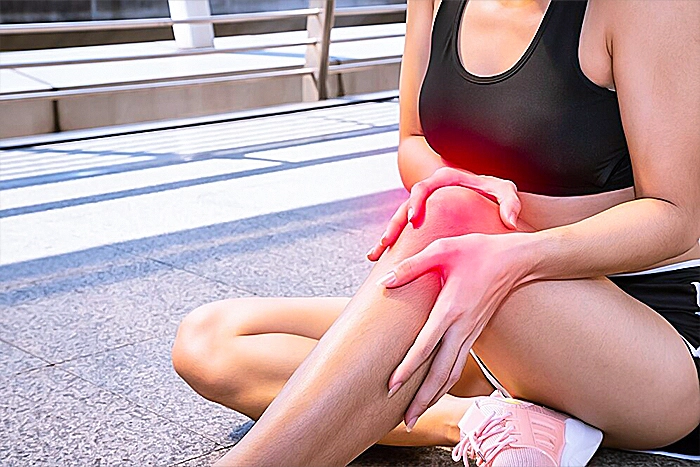
A torn or sprained ACL turns your entire life upside down. Every step feels uncertain. Every staircase becomes a challenge.
You might be in the first rough weeks after injury. Or counting down to surgery. Or grinding through rehab to get back to the sport you love. Either way, one question keeps coming up: which knee brace actually helps?
The market is packed with options — functional braces, hinged designs, compression sleeves. They all compete for your attention and your money.
This guide cuts through that noise.
By the end, you’ll know which knee brace for Acl injuries fits your diagnosis, your recovery stage, and your daily activity level. You’ll also know which ones to skip.
Benefits of Knee Braces for ACL Injuries
The anterior cruciate ligament (ACL) serves as a major stabilizer of the knee joint, linking the femur to the tibia. Its role is to restrict excessive forward sliding and twisting of the shinbone. When the ACL is damaged, the knee may feel unstable and is more likely to buckle—particularly during athletic activities or abrupt movements. Knee braces play a key role in recovery by stabilizing, supporting, and protecting the knee.
Their benefits include:
- Stabilization: They help maintain proper knee alignment, reducing the risk of re-injury.
- Pain reduction: The compression and support they provide can help ease swelling and discomfort.
- Injury prevention: Functional and prophylactic braces limit unnecessary strain on the ligament, helping prevent further damage.
- Rehab support: Braces enable controlled movement, allowing you to gradually rebuild strength and mobility.
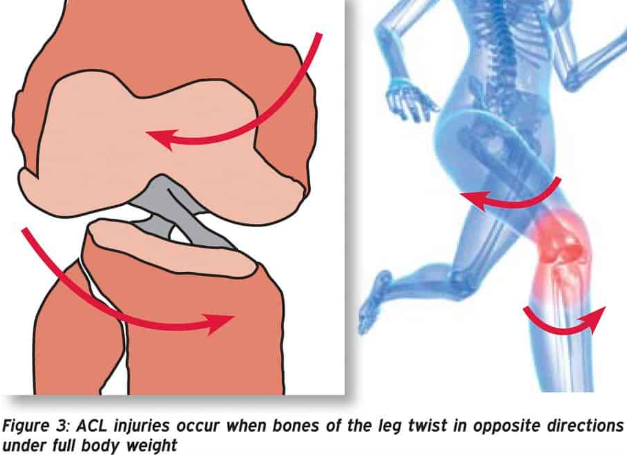
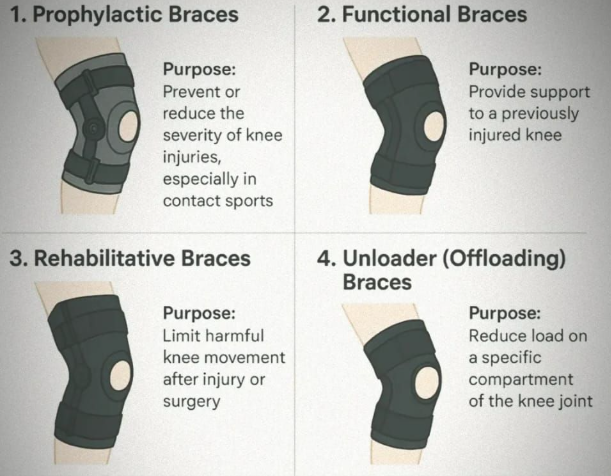
4 Types of Knee Brace for ACL Injuries
Before looking at specific options, it’s important to recognize that there are various kinds of knee braces for ACL injuries, each designed for a distinct phase of healing, level of physical activity, and injury severity.
| Type | Functional Knee Braces | Prophylactic Knee Braces | Rehabilitative Knee Braces | Unloader Knee Braces |
| Functions | Provides support for knees with mild instability | Prevents ACL injuries during high-risk activities | Used immediately post-surgery | Mainly for other knee conditions |
| Best For | Post-rehabilitation or minor ACL tears | Athletes in contact sports | Recovery after ACL surgery | Osteoarthritis or meniscus issues |
| Advantages | Lightweight, good mobility, reduces risk of re-injury | Preventive, reduces injury risk | Restricts movement, aids healing | Relieves pressure on specific knee compartments |
| Disadvantages | Limited protection for complete tears | Bulky, may limit mobility | Can be uncomfortable for long periods | Not ideal for ACL injuries |
5 Best Knee Braces for ACL Injuries
Everyone’s knee is a little different, so every recovery journey has its own twists and turns. The best advice? Talk to your doctor before picking a knee brace—make sure whatever you choose fits your specific needs and sets you up for real recovery. Once you know what to look for, here are the braces worth checking out:
Donjoy Quick Fit Hinged Knee Brace – Best Value Support for ACL Tear Recovery
If you need reliable ACL support without blowing your budget, the Donjoy Quick Fit is hard to beat. It brings strong stability with its dual hinges and easy-to-adjust straps, so getting a secure fit isn’t a hassle.
What makes it stand out:
– Great value—quality support at a friendlier price than most top-tier braces.
– Quad Velcro straps for a snug, rehabilitative fit you can tweak as needed.
– A comfortable Lycra panel keeps things moving smoothly, so no pinching or irritation.
– Hinges are wrapped up tight, protecting your knee from bumps or side impacts while you’re active.
BioSkin Q Brace Front Closure Knee Support – Best All-Around Support for ACL Tears
Looking for something versatile that works for both healing and daily life? The BioSkin Q Brace fits the bill. It uses advanced materials and a smart front-closure system to control knee movement and deliver just the right amount of stability, whether you’re rehabbing or just getting around.
Why it’s a win:
– Controls how much your knee bends or straightens, keeping things safe in a 0–90 degree range.
– Delivers real compression—18–20 mmHg—thanks to an eight-strap system.
– Super simple to put on, especially if you have limited mobility.
– Low-profile design means you can wear it quietly under clothes, whether you’re working or on the field.
McDavid Neoprene Knee Support Brace with Dual Disk Hinges – Ideal Compression for ACL Tear Recovery
Compression is a game changer when it comes to managing swelling and healing faster. The McDavid brace combines steady compression with dual disk hinges for stable support and comfort. It’s good for early recovery or when you just need solid, everyday support.
Highlights:
– Compressive design boosts circulation and keeps swelling and inflammation down.
– Dual disk hinges keep the joint in line and help you avoid overextending.
– Open patella helps guide your kneecap and gives added stability as you move.
– Breathable, open-back panel cuts down on overheating and sweat.
Össur CTi3 Ligament-Stabilizing Knee Brace – Top Choice for High-Impact Sports Support
If you’re into intense sports, you need a brace that really holds up under pressure. That’s the Össur CTi3. Its carbon-composite frame locks in stability, and the AccuTrac hinges are built to move naturally with your leg, giving you both support and flexibility at full throttle.
What sets it apart:
– Anatomical and adjustable, so you get a fit that feels made for you.
– Lightweight but sturdy at under 500g, thanks to its carbon-composite build.
– Soft, breathable padding prevents irritation and keeps it from slipping as you move.
– Non-elastic thigh strap adds a counter-force to keep your knee rock-steady, even during sharp moves.
Donjoy Armor Knee Brace with FourcePoint – Top Choice for ACL Tear Support in Skiing
If skiing or fast-paced sports are your thing, the Donjoy Armor is up for the challenge. Its FourcePoint system slows down your knee extension at the most vulnerable moment and absorbs shock, while the solid frame keeps your knee locked in—even if you take a sudden turn or hit a rough patch.
Key perks:
– FourcePoint hinges ramp up resistance in the last 35 degrees of extension to protect your knee.
– Aircraft-grade aluminum frame is light so you can move naturally, but tough enough for demanding use.
– Designed with injury prevention in mind, it’s trusted by pros for unstable knees.
– It’s recognized as one of the strongest and most loved sports knee braces you can get.
Key Factors to Consider Before Buying an ACL Knee Brace
The wrong brace doesn’t just waste money — it can set back your recovery. Here’s what matters when you’re comparing options.
Support Level That Matches Your Situation
Three tiers, three very different jobs.
- Level 1 (compression sleeves): Minor sprains, general pain management. No structural support.
- Level 2 (hinged/wraparound): Moderate instability. Handles day-to-day movement and light activity.
- Level 3 (custom functional, dual uprights, FourcePoint or polycentric hinges, 4-point leverage systems): Severe tears, post-surgery recovery. This is where serious ACL cases land.
Match the level to your rehab stage — not just your diagnosis.
Early recovery needs ROM-control hinges. These limits bend to 0–140°. Returning to sport is different. You need hinges built for basketball cuts or football contact. General-purpose hinges won’t hold up under that kind of load.
Frame Material and Breathability
Aluminum frames weigh 1.5–2.5 lbs with moderate rigidity. Carbon fiber comes in at 0.8–1.2 lbs with 30% higher stiffness. For long rehab sessions or all-day wear, that weight difference adds up fast.
Breathable, moisture-wicking liners cut skin irritation by around 40% in sessions over 8 hours. Sensitive skin? Specify hypoallergenic padding. For everyday use, target braces under 1 lb.
Adjustability
Look for straps that handle 1–2 inches of compression variance. That flexibility matters as swelling changes week to week.
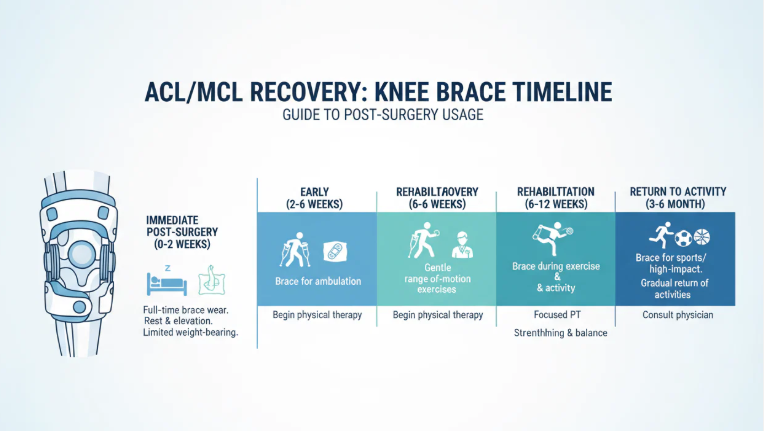
Hinge stops let you set exact extension and flexion limits. A common rehab setting is 0–90°. You dial it out as your range of motion grows. Anti-migration tabs keep the brace from riding up or sliding down. They cut positional shifts by around 25%.
Profile and Wearability
Bulk matters more than most people expect. A brace under 1 inch thick fits under pants and standard sports gear without friction.
Rigid post-op models are much bulkier. Most users need to adjust their wardrobe for the first 6–8 weeks. A low-profile design is easier to live with. Most users stop noticing it within 30 minutes of wear.
Durability and Verified Performance
Frames rated for 500+ use cycles last through a full rehab timeline without breaking down. Padding quality plays a big role in long-term comfort. Well-made cushioning scores about 30% better on comfort ratings than basic foam.
One useful shortcut: look for products averaging 4.5 stars or above on effectiveness reviews — not just comfort ratings. Those two things aren’t always the same.
Also, multiple ligament injuries or post-revision cases add complexity. Run your final choice past a physical therapist before you commit.
FAQs
1. Can a knee brace fully heal an ACL tear?
No. While a knee brace can provide support and help prevent further injury, it cannot repair a torn ligament on its own. Complete ACL tears often require surgery or physical therapy for proper healing.
2. How do I choose the correct size?
To find the right size, measure the circumference of your knee and refer to the manufacturer’s sizing guide. Braces with adjustable straps—such as the Doc Miller Knee Brace—allow you to achieve a customized, secure fit.
3. How long should I wear a knee brace for an ACL injury?
The duration depends on the severity of the injury. A functional brace is typically worn during physical activity, whereas a rehabilitative brace may need to be worn 24 hours a day for several weeks following surgery.
Conclusion
Your ACL doesn’t care if you’re a weekend warrior or a competitive athlete — and your brace choice shouldn’t either.
The right knee brace for ACL injuries isn’t a one-size-fits-all answer. Your recovery stage shapes everything. Are you just injured? Still healing from surgery? Easing back into sport? Or trying to avoid the next setback? Each stage calls for a different type of support. Get the match right, and your brace becomes a real partner in healing. Get it wrong, and it’s just an expensive piece of fabric.
Ready to find your ideal fit? Reach out AOFIT for their ACL knee brace collection. In addition, whether you’re developing a knee support line for sports, rehab-focused retail, or private label projects, AOFIT, as an experienced knee brace manufacturer, can align the product type with the intended level of support, making your range both easier to communicate and more effective for the end user.