
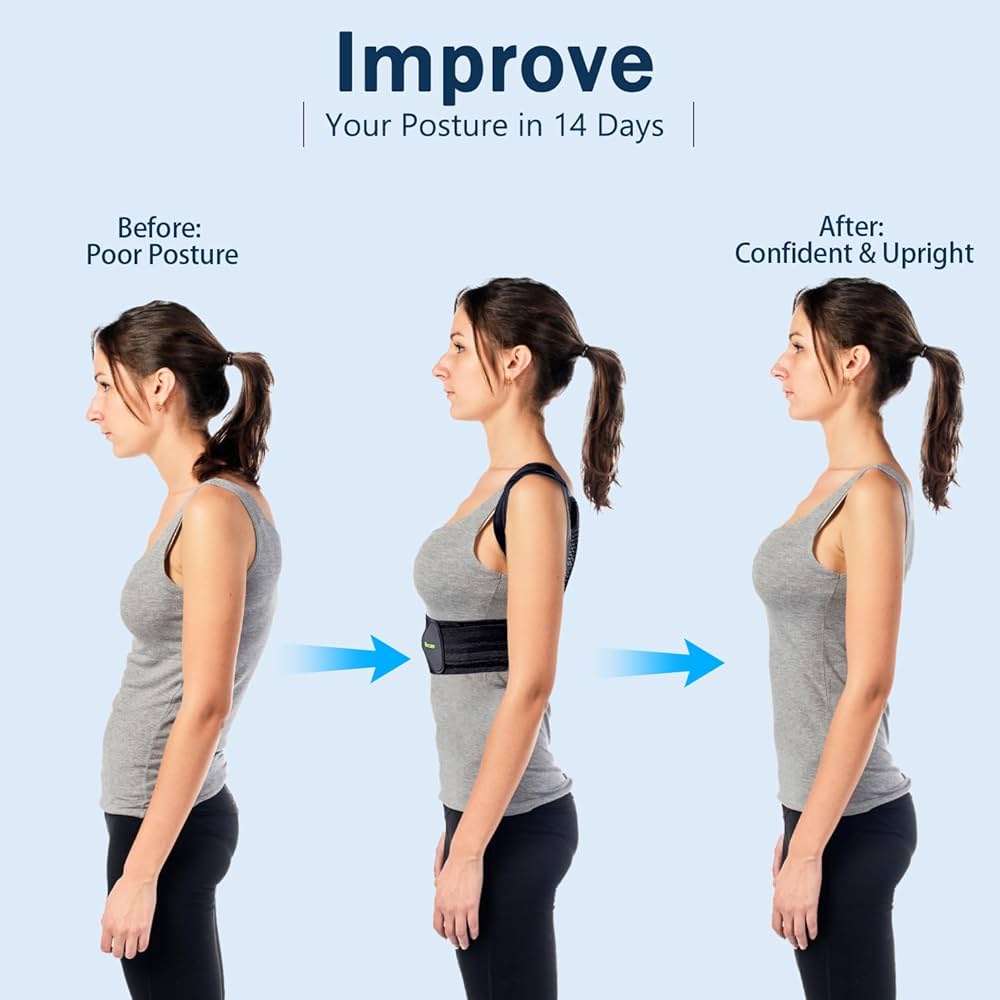

Poor posture has become a common issue among office workers, remote employees, and people who spend long hours on digital devices. As demand rises, posture correctors have quickly gained popularity in global markets. But one question continues to dominate search intent: what are the real posture corrector before-and-after results?
In this article, we’ll break down realistic expectations, timelines, and expert insights—and help B2B buyers understand what truly drives product performance and customer satisfaction.
What Do Posture Correctors Do to Your Body?
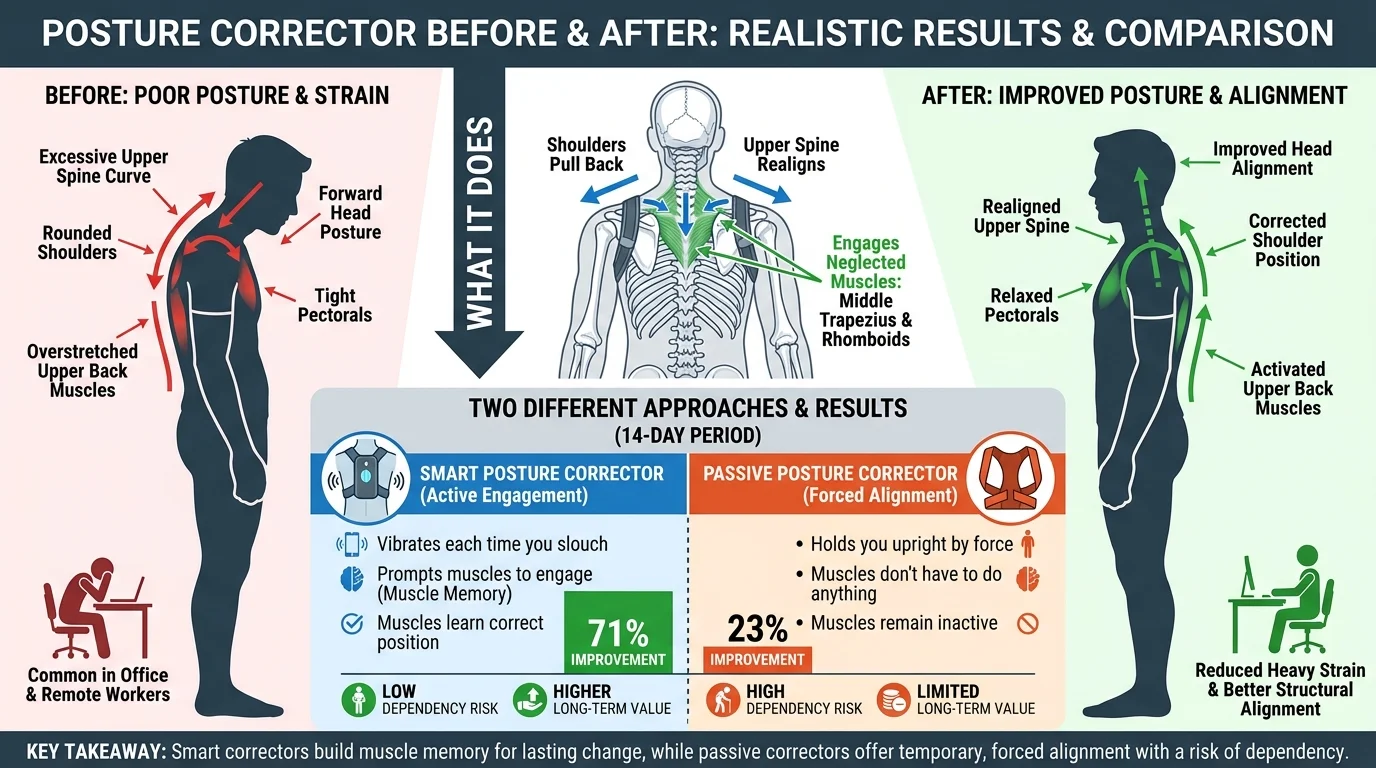
Here’s what happens when you strap one on: your shoulders pull back, your upper spine realigns, and two long-neglected muscle groups — your middle trapezius and rhomboids — get forced back to work. Those muscles are supposed to retract your shoulder blades and hold your spine tall. Instead, tight pectorals and overstretched upper back muscles have been doing all the work. A posture corrector breaks that cycle. But how it breaks that cycle makes a big difference.
Two Different Approaches With Different Results
Not all posture correctors work the same way. The gap between them is wider than most people expect.
Smart posture correctors vibrate each time you slouch. This prompts your muscles to engage on their own. In one clinical study, users saw a 71% posture improvement in just 14 days. Your muscles learn the correct position.
Posture correctors hold you upright by force. Your muscles don’t have to do anything. Same 14-day window: 23% improvement.
Smart Posture Corrector |
Posture Corrector | |
|---|---|---|
| 14-Day Result |
71% improvement |
23% improvement |
| Dependency Risk |
Low |
High |
| Long-Term Value |
Higher |
Limited |
Real Posture Corrector Before and After Results
Numbers don’t lie. Pull the data from clinical sources, and you get clear, specific results.
Start with the measurements. Before using a brace, researchers see the same pattern: too much curve in the upper spine, rounded shoulders sitting unevenly, and a head pushed forward that puts heavy strain on the neck. After a structured program that combines a posture corrector with targeted strengthening, the same subjects show less spinal curve, shoulders that sit level, and a head position that no longer juts forward. The body awareness gained carries over even after the posture corrector comes off.
Then, let’s look at a realistic timeline of the back posture corrector before and after outcomes:
| Time Period | Key Changes and Effects |
|---|---|
| Week 1–2: Initial Adjustment | – Users become more aware of their posture – Mild discomfort as muscles adapt – Immediate visual improvement while wearing the device |
| Week 3–4: Noticeable Changes | – Shoulders begin to stay more aligned naturally – Reduced neck and upper back strain – Early before and after posture corrector differences appear |
| Week 6–8: Habit Formation | – Improved muscle memory – Less reliance on the device for short periods – More stable posture even without wearing it |
Most back brace posture corrector before and after transformations are not instant — they are progressive and habit-driven.
What Speeds It Up And What Stalls It?
Your timeline depends on a few key factors:
- Daily wear time: Build toward 1–2 hours per day. Never exceed 6 hours — past that point, muscles weaken rather than strengthen.
- Consistency: Daily use delivers the fastest results. Sporadic use delivers almost none.
- Complementary exercises: Chin tucks (10 reps, three times a day), glute bridges, and chest openers can compress weeks of progress into days.
- Severity: Desk-slouch habits often resolve in 2–4 weeks. Chronic spinal curvature needs 8–12 weeks minimum.
Slower results than expected? The cause is almost always one of three things: irregular wear, skipping exercises, or going back to slouching the moment the posture corrector comes off. The posture corrector builds the habit. You still have to show up for it.
Posture Corrector Before and After: 5 Common Transformations Users Report

Real user experiences point to five clear patterns. These aren’t dramatic overnight fixes. They’re specific, repeatable changes that show up across different body types, different braces, and different starting points.
1. Hunching and Slouching Stop
This is the most reported transformation — and the most visible one. Take the BackEmbrace upper-back posture corrector as an example. Users who wore it for a few sessions each day — never more than six hours — describe a clear shift by day 30. The spine sits straighter. Less collapsed. One user said it plainly: they no longer slouch. The correction holds throughout the entire spine, not just the upper back.
2. Rounded Shoulders Pull Back — Then Stay Back
Rounded shoulders are stubborn. They change, but it takes time. Users who paired their brace with chest stretches three days per week saw their shoulders realign by day 30. At that point, pulling shoulders back had become automatic. The brace was no longer needed to trigger it.
3. Tech Neck Fades
Forward head posture builds up over years of screen time. With consistent upper back brace use, users start to feel a difference within three weeks. The tightness and pain in the neck and shoulders begin to ease. The brace doesn’t remove the habit on its own — it makes you aware of it so that you can break it yourself.
4. Back, Neck, and Shoulder Pain Quiet Down
Desk-related aches that show up like clockwork tend to fade around the three-week mark. Users start catching themselves before they sink into a slouch — not an hour after the damage is done. That shift in awareness is what drives the pain reduction.
5. You Look Taller. Your Stomach Looks Flatter.
This one catches people off guard. One user combined a posture corrector with a foam roller and targeted exercises for 30 days. The result: a straighter spine, a flatter stomach, and — their own word — shock at how much had changed. No weight lost. Posture alone did it.
Why Some People See No Results And How to Fix It
The posture corrector isn’t the problem. The habits around it are.
Most people who get no results from a posture corrector fall into the same few traps. None of them is hard to fix once you spot them.
The biggest culprit is inconsistency. Wearing your brace three days one week, skipping the next, then trying again a month later produces nothing. Posture muscles need steady, repeated input to rewire. Less than four weeks of continuous wear gives you close to zero measurable correction. Four to six weeks of daily, consistent use? Studies show roughly 20–30% improvement in alignment metrics. That gap is huge — and it comes down to showing up.
The second trap is passive reliance. A posture corrector worn without any supporting exercise becomes a problem of its own over time. Muscles that aren’t asked to work begin to weaken. Research on disuse atrophy shows that passive wear alone — without strengthening — can cut postural muscle capacity by 15–25% over six months. The fix is simple: pair your brace with three short strengthening sessions per week. Scapular retractions, rows, planks. Twenty minutes. That’s it.
The third trap is fit. A posture corrector placed too low, too loose, or in the wrong size loses up to 60–70% of its corrective effect. Position matters: mid-back, at scapula level, not at the lower lumbar. Remeasure as your posture adapts.
The Fix, Laid Out Plain
- Wear it 4–6 hours daily for at least 4–6 weeks before judging results
- Add 3x weekly strengthening — even 20 minutes shifts the outcome in a real way
- Check your fit weekly — posture shifts as muscles engage, and your sizing may need adjusting
- Twelve weeks of consistent, high-adherence use with no change in your metrics? The brace type or fit may be the mismatch — not your effort
Progress stalls for specific, fixable reasons. Find yours, fix it, and the results tend to follow.
Which Type of Posture Corrector Delivers the Best Before and After Results?
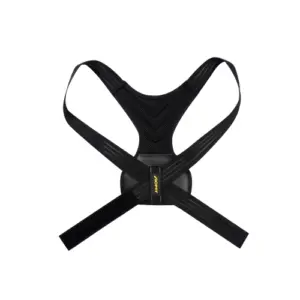
Elastic posture correctors (like the AOFIT Figure 8 Posture Corrector) have the most documented before-and-after evidence for everyday desk workers. Office workers who wore one for two to six hours a day reported visible spinal alignment improvements within two to six weeks. Results included straighter sitting, no more collapsed shoulders, and that stubborn neck-and-shoulder tension that hits by mid-afternoon — gone. A 100-day trial of the Posture Hero, another elastic support type, produced enough visible change to document on video.
Smart posture correctors deliver faster, measurable improvement. That 71% vs. 23% gap covered earlier says it all. These suit people who want active muscle retraining and a lower risk of becoming dependent on the posture corrector.
The real differentiator isn’t the type. It’s the pairing.
Every type on the market targets the same root problem:
– Tight pectorals pull your shoulders forward
– Weak rhomboids and traps fail to hold them back
Any posture corrector interrupts that pattern. But the correction holds long-term only when you combine the use of a posture corrector with strengthening exercises. Take the posture corrector off without building those muscles, and the old posture returns.
Does a Posture Corrector Work Long-Term?
The short answer is: yes and no — and that difference matters more than most brands will tell you.
Short-term, the evidence holds up. Motion capture studies show measurable spinal alignment improvements within 4–8 weeks. A 2025 review backed this up: braces paired with exercises improved alignment and reduced forward head and shoulder pain.
Long-term, on its own? The evidence falls apart. A 2019 review of 37 studies found no solid data supporting lasting posture improvement without exercise.
Here’s the straight truth: a posture corrector is a training tool, not a permanent fix.
Use it the right way:
– Wear it 30–90 minutes per day during high-risk tasks
– Pair it with targeted strengthening exercises
– Stick with it for 2–4 weeks
That’s where real, lasting change comes from.
Conclusion
Do posture correctors really work? Yes — but only as part of a consistent routine.
The before-and-after difference you’re looking for isn’t about wearing a brace for a few hours. It’s about using it as a training aid while you strengthen weak muscles and build better habits. A quality posture corrector doesn’t replace your muscles — it reminds them where to be.
What separates those who see lasting change from those who don’t? They commit to using the brace intentionally, day after day.
Not sure where to start? Try one week. Then compare your own before and after. Explore our posture correctors at aofitbrace.com. As the best posture corrector manufacturer, we design our posture correctors for comfort, durability, and real results.