
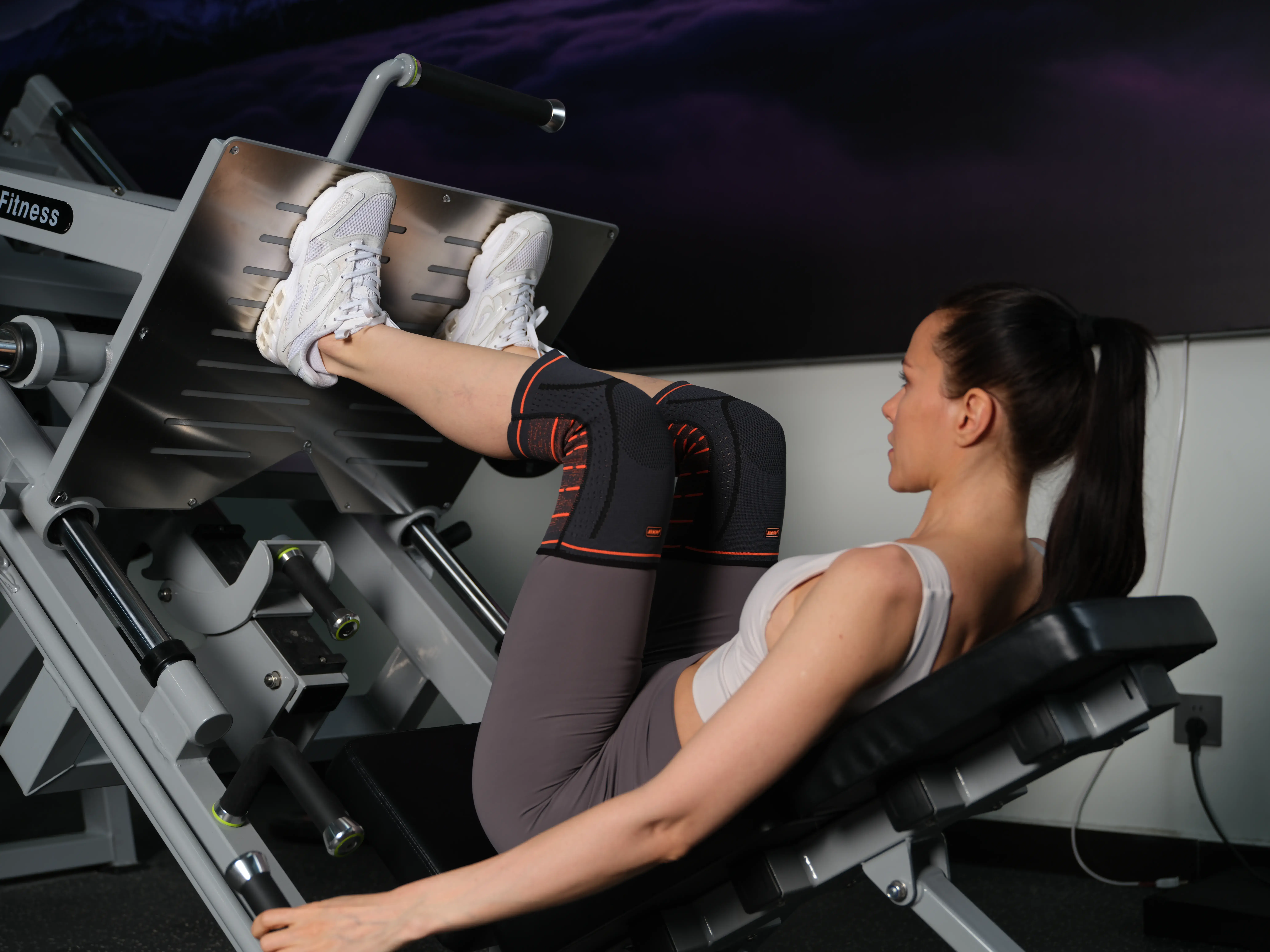
Have your customers ever complained frustration with knee sleeves that shift out of place? When a sleeve slips down, it fails to deliver the support it’s designed for—leading to potential discomfort, lower performance, and a heightened risk of injury. On top of that, constant movement of the sleeve can cause skin irritation and ongoing discomfort.
This recurring issue damages customer loyalty and drives up return rates. In this article, we’ll explore why knee sleeves roll or slide down in the first place, and how to keep a knee sleeve from sliding down—covering key perspectives from manufacturers and end users.
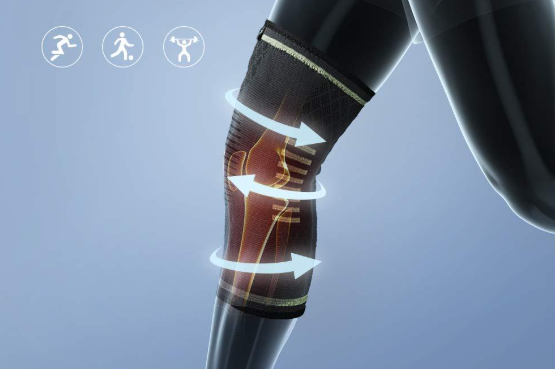
Why Your Knee Brace Keeps Sliding Down
A knee sleeve rolls down typically due to a combination of gravity, your natural leg anatomy, and the type of material between the brace and your skin. Let’s break them down.
Your Leg Shape Is Fighting the Brace
Think of your leg as an upside-down traffic cone. Your thigh is 5–10 cm wider than your calf. Every step you take, gravity drags the brace down along that taper. It’s physics, not product failure.
This taper problem hits harder than most people expect. Adults with a thigh-to-calf difference greater than 4 cm — that’s about 60% of people — lose 50% of the brace’s grip strength. The brace has less surface area to hold onto. That’s the core issue. In other words, a single size chart cannot accommodate all body shapes. For example:
- If the thigh circumference exceeds the recommended range for a given size, users might opt for “one size larger.” This results in a sleeve that feels comfortable but is too loose, leading to slippage.
- If the calf is significantly narrower than the thigh, a straight cylindrical design will create excess space behind the knee and along the lower leg, causing the brace to shift and bunch up.
Improper Design can Cause Rolling
- When the sleeve is too short on the thigh side, there isn’t enough contact area to keep it anchored, leading to downward slipping.
- Without anatomical shaping, the design functions like a straight tube on a leg that naturally tapers (thigh wider than calf), making movement almost inevitable.
- If the top band is too narrow, pressure becomes concentrated along a small line, which can cause the material to curl or roll.
But based on our experience in OEM knee brace production, incorrect sizing is one of the main reasons for rolling or twisting, even when the product itself is well-designed.
Sweat Destroys Friction
Neoprene makes up about 70% of braces on the market. It traps heat well. It also traps sweat — and sweat cuts skin friction by 40–60%. After 30 minutes of activity, that moisture layer turns your leg into a slip-and-slide.
Wear and Tear Is Quiet but Devastating
With 1–2 hours of ongoing wear, the fabric may gradually creep, shifting downward on the leg.
Elastic fibers stretch 20–30% after just 4–6 weeks of regular use and washing. Silicone grip strips lose 50% of their grip in that same window. The brace that held firm on week one can be worn out by week six. It won’t look any different. But the hold is gone.
Consider sleeves made with a high percentage of cotton, for instance. Cotton naturally absorbs moisture, making the fabric heavier as time passes. Additionally, the fibers can lose their elasticity and become less able to return to their original shape after repeated stretching and laundering. In practical scenarios, this tends to manifest as follows: the sleeve feels comfortably tight when new, but after walking or running for a while, the upper opening loosens and begins to slide down the thigh.
Application Errors That Cause Immediate Slip
How you put the brace on matters as much as which brace you own:
- Wrong strap order — Anchor the calf strap first, then the knee, then the thigh. Flip that order and you cause 70% of immediate post-application slippage.
- Patella opening off-center — A 2 cm misalignment creates a torque effect. Each stride pulls the brace sideways and down.
- Too little tension — Fit three or four fingers under the knee strap? It’s already too loose to hold.
Use the two-finger rule as your baseline. Snug enough to compress. Loose enough to slide two fingers underneath.
How to keep a knee sleeve from sliding down
The key to keeping a knee brace in place involves three factors: a proper fit, the right brace style, and the use of supplementary support techniques. And you can make sure the conditions with your manufactuers and end-users.
Custom knee brace solutions from Manufacturers
Help Brands/Retailers with Packaging
On product packaging,
- Include a short “how to wear” guide with step-by-step diagrams and/or videos
- Provide measurement diagrams (thigh, mid-knee, calf)
- Give expectations: Honest product descriptions help customers choose the right product for their needs, reducing complaints.
- Advise like: If between sizes and staying in place matters, when applicable, choose the smaller size.
- Plus an FAQ on identifying too loose vs. too tight.
- Share real examples like “Model: 180 cm / 80 kg, thigh 52 cm, wears size L.”
Give Design Tips on Knitting and Stitching
For a knee sleeve to stay in place, the fabric must maintain its shape through good elastic recovery and skin-side friction. Cotton-rich, loosely knitted sleeves tend to relax and slide during use. In contrast, neoprene-style sleeves show less slippage due to strong recovery and a grippy surface.
High-density nylon with high-percentage spandex improves fabric modulus, helping the sleeve return to its original shape. Key design tips: use high-recovery elastic yarns in the top cuff, increase stitch density for better grip, and apply zonal compression (tighter at the thigh and calf, softer over the kneecap). This creates a stable anchor without excessive tightness.
Use advanced anti-slip technology
The best way to prevent a knee sleeve from rolling down is a silicone grip inside the top band. Runners and team sport players report fewer sliding issues with well-designed silicone patterns, especially when sweating. Medical-grade silicone in wave or double-row patterns increases friction without sacrificing breathability or flexibility.
For example, hexagonal dots work well for powerlifting, while continuous waves suit running and basketball by allowing horizontal movement. Using hypoallergenic silicone also reduces skin irritation complaints. Choosing the right pattern and grade can significantly cut “sleeve sliding” feedback in customer reviews.
Upgrade pattern engineering
In knitwear, mechanics matter as much as materials—if the sleeve doesn’t match the leg’s shape, it will bunch up or fail.
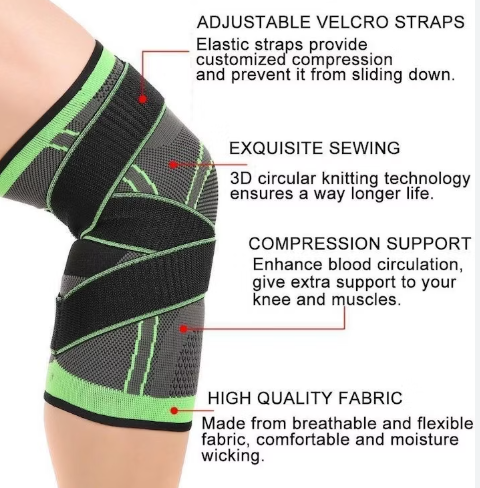
Using 3D circular knitting machines, AOFIT, your reliable brace manufacturer, can vary stitch density: the area behind the knee is made thinner to reduce bunching when bending, while the top cuff gets a higher stitch count for a ribbed effect that resists rolling. This keeps the sleeve secure whether sitting or sprinting. 3D anatomical knitting follows the natural curve of the knee and thigh, creating tension zones with higher compression at the top and bottom bands to prevent rolling.
When brands share real customer measurement data, we can refine the pattern so problem sizes stop sliding—without over-tightening the rest.
Tips for End-users
Wear the sleeve next to the skin
For optimal anti-slip performance, wear the sleeve directly on your skin, then layer your training pants or leggings over it if desired.
Take accurate measurements and select the right size.
Measure the circumference of your thigh a few centimeters above the center of your kneecap. If the brand offers a full sizing chart, also measure around the mid-knee and calf. Compare your measurements to the size chart, and avoid choosing a larger size solely for comfort if stability is your main priority.
Keep a clean inner surface
Moisture from sweat, dust and natural skin oils can diminish friction. Users should:
- Clean the sleeve regularly, following the care instructions
- Avoid using fabric softeners, as they can leave a residue on the fibers and reduce grip
- Let it air-dry and keep it away from high heat, which can harm the elastic fibers
Following these steps will help preserve both the compression fit and the anti-slip performance.
Change the old sleeves
Elastic fabrics are subject to wear and tear. Over time, even the best-quality sleeves can lose their elasticity. If a sleeve that once stayed securely in place begins to slip even when you’re just walking, that’s usually a sign it needs to be replaced—not simply adjusted or pulled up tighter.
| Issues | Solutions Provided by Knee Brace Manufacturers | Advice for End-Users |
| The sleeve slips downward shortly after application | Enhance upper-band tension and use higher-quality elastic yarns | Re-measure thigh circumference and opt for a snugger size if medically appropriate |
| The upper part of the sleeve rolls up into a narrow band | Incorporate a wider cuff, dual-layer design, and refine the taper profile | Avoid folding the top edge; instead, smooth it evenly across the thigh |
| The sleeve slides when worn over leggings | Apply silicone patterns (e.g., dots or wavy strips) for grip | Wear the sleeve directly against the skin, beneath leggings |
| The sleeve loses grip after several months of use | Monitor fabric durability and ensure adequate elastic recovery | Replace old sleeves; avoid excessive stretching and machine drying on high heat |
Conclusion
How to keep knee compression sleeve from rolling down? To prevent a knee brace from slipping, combine quality fabric and design with proper sizing and fit instructions. This ensures the sleeve moves naturally with the leg. Ready to enhance your product line with effective anti-slip technology? Contact AOFIT for a free design draft or a sample of our high-grip silicone sleeves.