
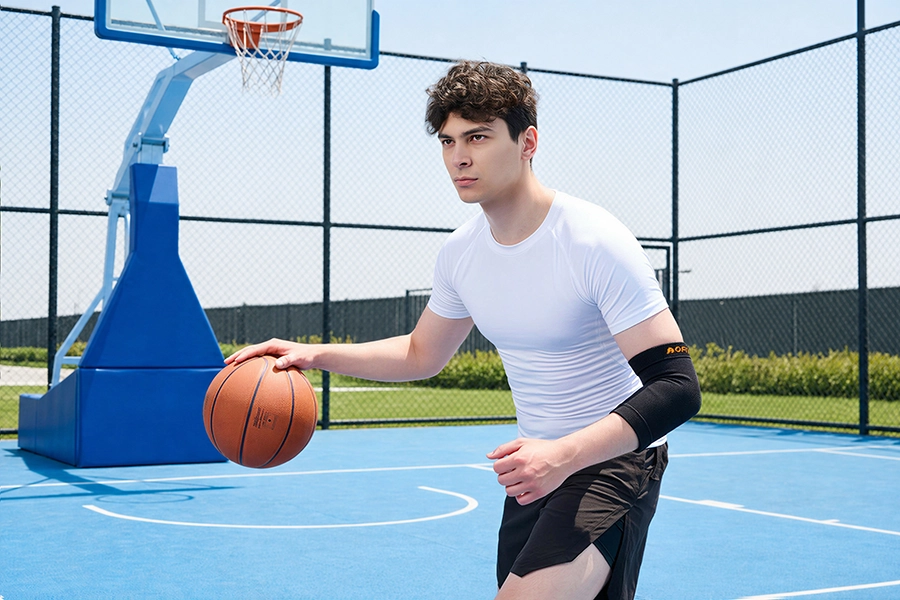
Sourcing the wrong golf elbow brace doesn’t just shrink margins — it erodes buyer trust.
For distributors and brand owners in the medial epicondylitis market, a few early sourcing decisions separate a high-turnover product from one that piles up returns. The demand is real and growing: millions of players need effective relief. Yet the shelf is crowded — compression sleeves, elbow straps, epicondylitis clasps, full-wrap braces — all competing for the same order. Gut instinct won’t cut it.
This guide brings technical clarity and commercial precision to the category. You’ll leave with confident, profitable sourcing decisions.
What Is Golfer’s Elbow and Why the Right Brace Matters?
Golfer’s elbow has nothing to do with how well you play the game. It’s all about how the body handles repeated strain.
Known as medial epicondylitis, this condition targets one specific spot: the medial epicondyle. That’s the bony point on the inside of the elbow where the forearm flexor tendons attach. Repetitive gripping, wrist curling, and rotational force — all built into every golf swing — pile stress onto these tendons over time. Inflammation sets in. Pain follows. For the people buying your product, that pain tends to be stubborn, slow to clear up, and hard to fix with rest alone.
Clinical data puts the annual adult incidence at 1–3%. Untreated cases average 6 to 24 months of ongoing symptoms. That’s a long recovery window — and a steady, real demand signal for effective support products.
Why Brace Design Is the Deciding Variable?
Not all elbow braces handle medial epicondylitis the same way. The difference matters a lot at the point of sale.
A counterforce brace applies targeted pressure 1–2 finger widths below the medial epicondyle — right at the forearm’s thickest point. This takes the load off the strained flexor muscles during activity. It does more than just warm the joint. A compression sleeve, by contrast, offers general circulation support. Useful, yes — but not precise where it counts.
A 2019 clinical trial by Kroslak put numbers to that gap. Padded counterforce braces beat non-padded options across four key areas:
– Pain levels
– Grip strength
– Object handling
– Overall elbow function
Recovery moved faster. Results were better across the board.
For buyers building a solid product line, that evidence is your foundation. The right brace doesn’t just feel supportive — it delivers functional, clinically-backed pain relief that end users notice from the very first wear.
3 Types of Golf Elbow Braces: Which One Fits Your Market?
Three product formats dominate this category. Each one serves a different end user, a different pain profile, and a different retail environment. Get this distinction right — and you separate a fast-moving SKU from one that quietly drains your margins.
Type 1: Counterforce Strap Braces
This is the workhorse of the golf elbow category — and for good reason.
A narrow strap with a raised foam or padded surface sits 1–2 finger widths below the medial epicondyle. It pushes focused pressure straight onto the flexor tendons. That targeted load redistribution makes it effective during activity — not just passively supportive.
It’s also the most populated segment. Donjoy, Mueller, McDavid, and Aircast all sit in the $15–$20 range and move well in value retail. At the premium end, Bauerfeind’s Sports Elbow Strap with BOA fit system retails at $59.99 — a different buyer, a different channel, but the same mechanical principle.
Standard sizing runs S through XL, covering 21 cm to 36 cm forearm circumference. This format makes up about 80% of counterforce brace designs on the market. The structure is proven, and so is the demand.
Type 2: Compression Sleeves
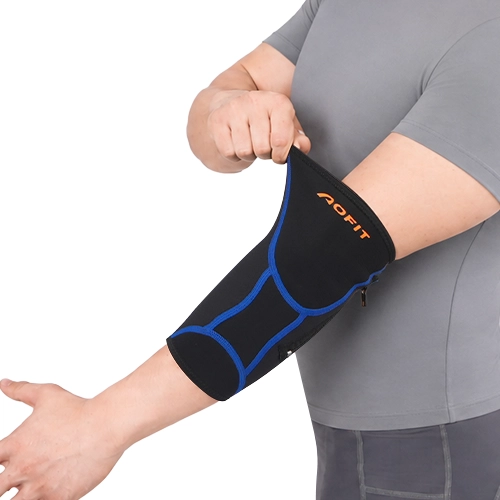
The strap is precise. The sleeve is broad. Full wraparound coverage delivers warmth, circulation support, and mild compression across the entire elbow joint. That makes it a natural choice for all-day wear and active recovery.
Bauerfeind’s EpiTrain sets the standard here: medical-grade compression, integrated Epicon+ massage pads, available in 6 sizes and 4 colorways. McDavid’s Buttersoft and DonJoy‘s Trizone fill the mid-market at $20–$45. These products work well for buyers serving wellness-focused consumers — people who want recovery support between rounds, not just during them.
Type 3: Hinged and Immobilizer Braces
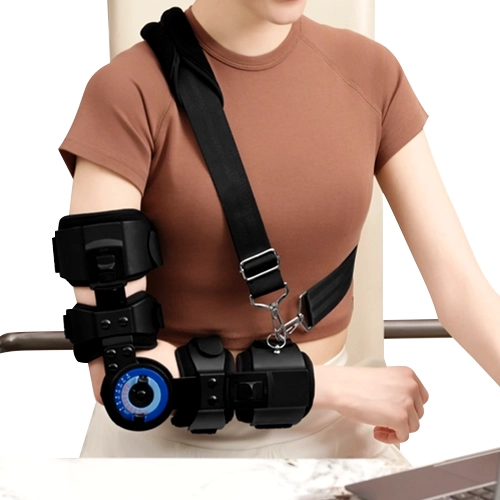
This format handles a different clinical need. Rigid bilateral hinges limit flexion and extension. They protect the joint during severe flare-ups or post-injury rehab phases. Prices land between $30–$70. Breathable structural materials like AirKnit make these braces more practical for warm-weather sports settings.
Retail volume is lower here. But the average transaction value is higher, and the buyer tends to be more committed.
| Brace Type | Best Market Fit | Key Feature | Price Range |
|---|---|---|---|
| Counterforce Strap | Golfers, active use | Targeted pad pressure | $15–$60 |
| Compression Sleeve | Daily wear, recovery | Broad joint support | $20–$45 |
| Hinged / Immobilizer | Severe pain, rehab | Rigid stabilization | $30–$70 |
Your sourcing decision should reflect your channel. Counterforce straps move in sporting goods retail. Sleeves hold their own in wellness and online DTC. Hinged formats fit clinical supply chains and medical distributors. All three are viable — the real question is which one matches the buyers you’re already selling to.
5 Key Factors to Evaluate When Choosing a Golf Elbow Brace
Reorders vs. returns — it comes down to five variables. Not the branding. Not the packaging. The product itself — how it fits, what it’s made of, and whether it does what it promises.
Here’s what to check before you commit to a SKU.
1. Fit and Sizing Architecture
Sizing is where most sourcing decisions fall apart.
The measurement point matters: forearm circumference taken 2 finger widths below the elbow joint. That one reference point drives the entire size range. A solid size ladder looks like this:
| Size | Forearm Circumference |
|---|---|
| Small | 21–24 cm (8.5–9.5 in) |
| Medium | 24–28 cm (9.5–11 in) |
| Large | 28–32 cm (11–12.5 in) |
| XL | 32–36 cm (12.5–14 in) |
The fit standard is clear. Snug enough to stay in place during movement. Enough give to slide one finger under non-padded areas. No skin discoloration. No tingling. Products that skip half-sizes — or go with a one-size-fits-most format — see higher return rates across active-use categories. Elbow braces are no exception.
2. Counterforce Pad Placement and Design
Pad position is the mechanical core of any medial epicondylitis brace. The target zone sits over the forearm flexors — not centered on the joint, not floating. A well-designed counterforce pad in the right spot reduces tendon strain load by 20–30% during the golf swing. That’s the number that backs up the product’s clinical value to end buyers.
Padding materials differ across price tiers:
– Basic foam — entry-level, adequate for low-frequency use
– Gel inserts — better pressure distribution, higher perceived value
– Air-cell or structured plastic — premium positioning, longer durability
This is where product tiering starts for buyers building across multiple channels. A basic foam strap at $15–20 fits volume retail. A gel or air-cell format at $40–60 fits performance or clinical positioning.
3. Material Quality and Breathability Standards
Materials signal durability, comfort, and clinical credibility — all at once.
A strong forearm brace for golfer’s elbow starts with a breathable, stretch-knit outer layer and medical-grade compression built in. That combination does two things. It reduces swelling through graduated pressure. It also improves proprioception — the body’s sense of joint position during movement.
Look for these in a sourcing spec:
- Soft knit or neoprene base — comfortable against skin during extended wear
- Moisture-wicking finish — essential for warm-weather sports use
- Targeted internal padding — offloads the medial epicondyle without limiting range of motion
The Bauerfeind EpiTrain sets the material standard at the premium end: soft knit construction, integrated Epicon+ massage pads, and documented clinical compression ratings. Use it as a benchmark when reviewing manufacturer samples.
4. Adjustability and Pressure Control
An elbow compression you can’t adjust is a liability. Hook-and-loop closure systems are the most reliable option for quick pressure changes. They let the user shift pad position left or right based on where discomfort sits, and tighten or loosen between rounds.
Here’s a practical test for a well-adjusted brace: no pain on resisted wrist curl, with the pad sitting over the tender flexor area. Limited adjustability — fixed stitching, narrow strap range, no lateral pad movement — shrinks the fit window fast. A smaller fit window means more returns.
For buyers looking at clinical or rehabilitation channels, prioritize braces that can do both jobs. Snug enough for active golf use. Gentle enough for post-round recovery wear.
5. Price Tier, Durability, and Use-Case Fit
Price segmentation in this category breaks down cleanly:
- $15–20 — entry counterforce straps, basic foam padding, value retail fit
- $25–45 — mid-tier compression with structured padding, DTC and sporting goods
- $50–80 — premium braces (Bauerfeind-level compression, advanced pad systems), clinic and performance channels
Durability benchmarks matter as much as price point. A reusable, washable knit or neoprene build should hold up through 6–12 months of daily active use. That’s the bar end users measure value against — and it’s what decides whether a product earns a review or a refund.
Match the price tier to the channel. Volume retail needs margin-efficient basics. Medical distributors expect clinical specs. Performance buyers want documented durability. One SKU can’t serve all three.
How to Match the Right Elbow Brace Type to Your Sales Channel?
Channel fit drives sell-through rate more than product quality alone. A well-made brace in the wrong retail environment sells poorly, collects mixed reviews, and cuts into your margin. The match has to be intentional.
Here’s how the three elbow brace formats fit the most common distribution channels:
Sporting Goods Retail and Mass Market
Counterforce strap braces are built for this environment. The price point sits between $15–$45. The form factor is familiar. Shoppers can grasp the value in seconds — a padded strap is easy to understand standing in an aisle. This channel rewards visible, functional design. High SKU turnover makes it the highest-volume opportunity in the category. Lead with your mid-tier strap here, not your premium sleeve.
DTC and Online Wellness Channels
Compression sleeves do well in direct-to-consumer and wellness-focused e-commerce. Buyers in this space want all-day wearability — something that moves from post-round recovery into everyday support. Product detail pages give you room to explain graduated compression, breathability, and long-wear comfort. These details get lost on a retail shelf. Online, they convert well in a strong listing.
Clinical Supply and Medical Distribution
Hinged and structured braces belong here. Medical distributors and rehab clinics care about documented support ratings, durable construction, and clinical credibility. Price efficiency is secondary. Transaction values run higher in this channel. Buyers also ask sharper questions — they want material specs, compression ratings, and compliance with relevant standards before placing an order.
The channel decision is also a SKU architecture decision. Build across multiple channels? Treat each format as a separate product line — not one product in different packaging. One SKU cannot serve all three audiences. Trying to make it work that way is where product lines lose focus.
What to Look for in a Reliable Golf Elbow Brace Supplier?
Five minutes with the wrong supplier can cost you six months of margin recovery. The golf elbow brace category looks simple from the outside. But the gap between a supplier worth keeping and one that slowly damages your brand comes down to a few very specific details.
Here’s what to check before you commit.
Certifications and Compression Standards
Medical-grade compression is not a marketing claim — it’s a specification. Ask suppliers to document their graduated compression ratings. You want 15–20 mmHg for recovery wear and 25–30 mmHg for active sport use. The Bauerfeind EpiTrain sets the benchmark here. It uses viscoelastic Epicon+ pads, documented compression zones, and full mobility retention. That’s the standard to measure your samples against.
Elbow sleeves with multi-zone stabilization technology stand out. Look for six-zone Compression Zone systems used in clinical-grade designs. These signal real engineering investment — not just stitched neoprene.
Material Durability and Breathability
Durability drives reorders. Fabrics that fray, lose elasticity, or pill within a few months create returns and kill reviews. Good suppliers use wear-resistant knit constructions. These hold their shape through frequent washing and heavy active use. Brands like Mueller, Bracoo, and Zamst built their reputations on this — materials that hold up under regular strain.
For golf, breathability is just as critical as compression. Moisture-wicking knits keep the brace comfortable across a full 18 holes. That wearability is what turns first-time buyers into repeat customers.
Sizing Precision and Fit Architecture
A supplier who cannot explain their sizing method is a red flag. The measurement standard is non-negotiable: forearm circumference taken 2 finger widths below the elbow joint. A solid size range covers S through XL across 21–36 cm. Fit should be snug enough to stay put through a swing. You should be able to slide one finger under non-padded areas — no tingling, no skin discoloration.
Suppliers offering one-size-fits-most formats are cutting production costs. They are not thinking about your end user. That trade-off shows up in your return rate.
Supplier Vetting Checklist
Before placing your first order, run through these five checkpoints:
| Vetting Dimension | What to Confirm |
|---|---|
| MOQ Flexibility | Industry benchmark sits at 100–500 units; compare against standard distributor thresholds |
| Customization Capability | Adjustable strap systems, pad repositioning, private label options |
| Return & Warranty Policy | 30–90 days is standard; durable fabrics reduce active-use returns by 15–20% |
| Production Scale | Established suppliers handle 10,000+ units per year; lead time benchmark is 4–6 weeks |
| Sample Testing | Request compression-rated samples; verify pad placement over the medial forearm flexors |
Suppliers who answer these questions with documentation — not just verbal assurances — are the ones worth building long-term sourcing relationships with.
Conclusion
Selecting the right golfer’s elbow brace is a strategic market decision, not a simple product pick. Smart buyers look beyond the lowest price — they grasp how a recovery‑oriented compression sleeve differs from an active‑play epicondylitis clasp. That distinction directly boosts sell‑through rates, cuts returns, and drives repeat orders.
Golfer’s elbow represents genuine, growing demand. A reliable supplier partnership turns that demand into steady revenue. Stop guessing — contact the professional brace manufacturer that offers custom elbow brace solutions. Share your channel needs, and let product specs, flexible MOQ, and customization options.