
Sourcing wholesale ankle braces sounds simple. But three months into a supplier relationship, you might find yourself sitting on defective stock and fielding angry emails from retail partners. That changes things fast.
The gap between a profitable bulk order and a costly supply chain disaster comes down to one thing: how well you vetted your manufacturer before signing that first invoice.
This guide is built for:
Sports retailers scaling a private label line
Amazon sellers looking for a competitive edge
Medical distributors building a reliable, long-term supply chain
Government tenders needing products meeting the standards of their global markets
Brands looking for full customization , strict quality control, and certified manufacturing to grow their brand
You’ll get a clear, practical framework for finding, evaluating, and locking in an ankle brace manufacturer you can trust. We cover certifications, MOQ structures, and sample evaluation most buyers miss before it’s too late.
What Makes a Wholesale Ankle Brace Supplier Reliable?
Reliability isn’t a feeling. It’s a paper trail.
Trustworthy suppliers don’t just claim quality. They document it at every stage of production. Here’s what that looks like in practice.
Certifications That Signal Legitimacy
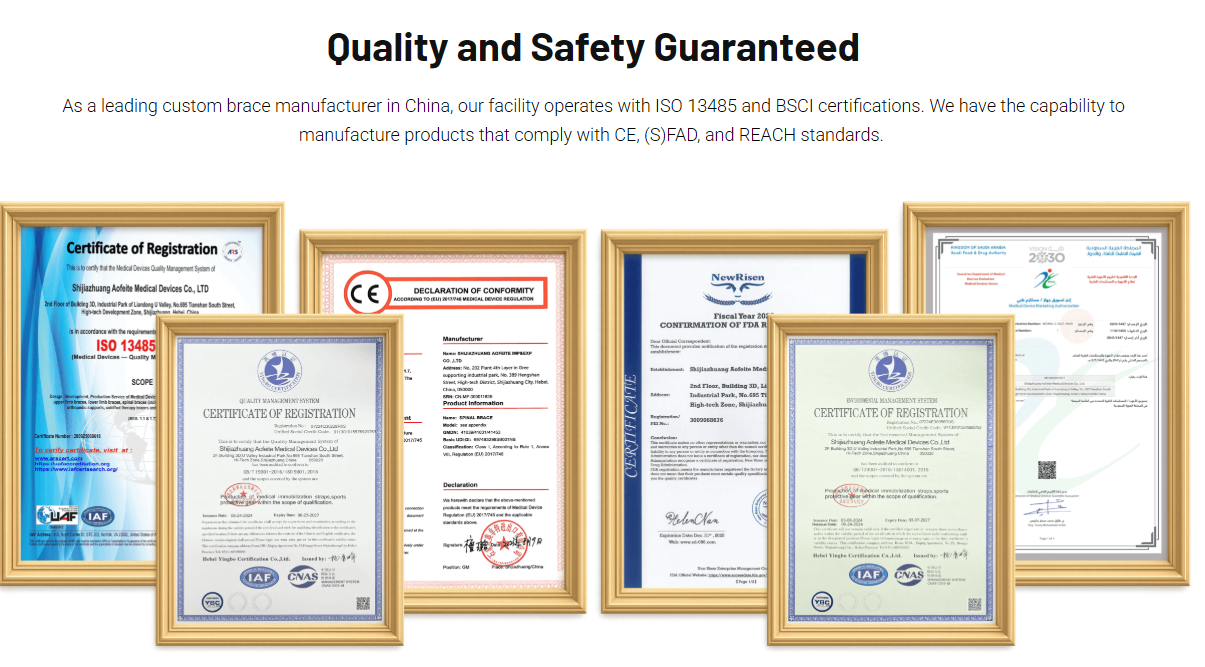
Start with three credentials: CE, ISO 13485, and FDA.
These three tell you the manufacturer runs a medical-device quality management system. They also follow structured production controls. A supplier holding all three has built compliance into their process from the start — not added it on after the fact.
Don’t take their word for it. Ask for current copies.
QC Documentation: What to Request
Certifications get you in the door. Inspection records tell you what’s happening on the floor.
Request QC reports that cover:
Incoming raw-material inspection
In-process / in-line checks
Final AQL inspection (target AQL 1.5 or better for critical defects)
Batch and lot traceability
A supplier that can’t produce these documents isn’t cutting corners — they are the corner.
Confirmed MOQ, Lead Time and Warranty for Bulk Ankle Braces
|
Parameter |
Standard Benchmark | |
|
MOQ |
Catalog products |
100–500 units/SKU |
|
Custom/private label |
500–2,000+ units | |
|
Lead time |
Standard |
15–30 days post-PO |
|
Custom/OEM |
30–60 days | |
|
Warranty |
30 days–12 months depending on brace type | |
These are real numbers, not best-case targets. Any credible ankle brace factory should hit these without pushback.
Rich Types of Wholesale Ankle Braces You Can Source in Bulk
A medical ankle support supplier with rich experience on different types of ankle brace manufacturing knows which brace fits post-sprain recovery versus osteoarthritis management and makes sure of their quality and lead time.
Compression Sleeves (Mild Support)
This is your highest-volume, lowest-cost entry point. Neoprene or elastic knit construction, 2–4 mm thick. These cover mild sprains, tendonitis, arthritis management, and edema control.
FOB pricing out of China ankle brace manufacuturers runs US$0.30–1.20/pc for basic elastic versions and US$0.80–2.50/pc for branded-quality neoprene. MOQ sits at 100–500 pieces per color or design — the most accessible starting point for ankle compression sleeve wholesale buyers.
Best fit for: pharmacy OTC channels, e-commerce, and entry-level private label lines.
Lace-Up and Figure-8 Strap Braces (Moderate Support)
This is the clinic-trusted category. The ASO Ankle Stabilizer — a benchmark product retailing at US$25–40 — sets the quality standard buyers in this segment aim to match. The build uses a fabric boot (nylon, polyester, or canvas) with laces and figure-8 stabilizing straps. Some versions include removable plastic stays.
For ankle support wholesale sourcing, expect FOB pricing of US$2–6/pair for standard versions. Premium OEM builds with better padding and retail packaging run US$8–12. MOQ runs 100–300 pairs per model.
Best fit for: sporting goods retailers, sports clinics, and team supply channels.
Hinged Semi-Rigid Braces (High Support)
More complexity, more margin. Hinged braces use injected plastic or polycentric hinge systems paired with medial/lateral stays and Velcro wrap straps. They block inversion and eversion while keeping dorsiflexion free — the key biomechanical balance for return-to-sport scenarios.
Benchmark references include the Zamst A1 and BetterGuard BG PRO. At the factory level, expect US$6–15/pair FOB. The final price depends on hinge complexity and whether CE or FDA documentation is included. MOQ ranges from 200–500 pieces per model, driven by tooling requirements.
Best fit for: orthopedic distributors, hospital procurement, and premium sports brands building OEM lines.
Rigid Stirrup Braces (Maximum Support)
The Aircast is the benchmark here. Hard ABS or PP plastic shells on both sides, foam or air bladder padding, Velcro strap closure. These braces handle severe sprains, post-fracture recovery, and high-instability clinical cases.
Pricing splits clearly: US$3–7/pc FOB for non-air rigid models, US$7–15/pc for air bladder or branded-harness variants. MOQ for basic non-air versions starts at 100–300 pieces. Air bladder models often need 300–1,000 units due to component complexity.
Best fit for: hospital supply chains and medical device distributors.
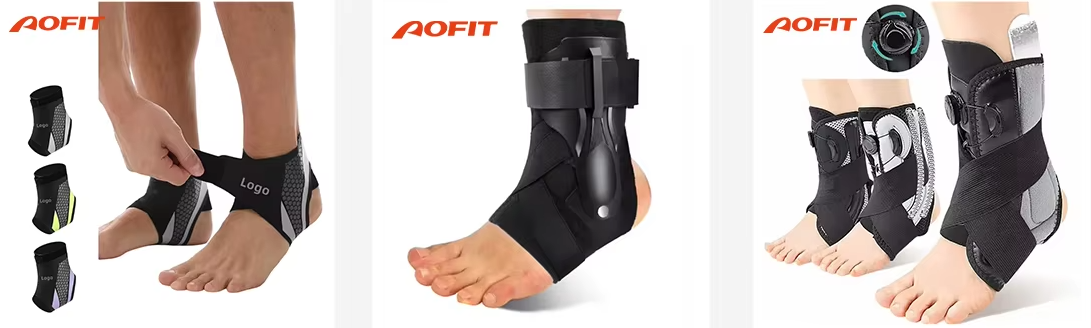
Factories that know these distinctions right away are the ones worth talking to.
Matching Product Type to Your Channel
Before contacting any ankle brace factory, map your distribution channel to the right product category:
|
Channel |
Primary Types |
|
Pharmacy / OTC retail |
Compression sleeves + lace-ups |
|
Sports clinics / physiotherapy |
Lace-up, hinged, rigid |
|
Sporting goods / team supply |
Lace-up + semi-rigid sport braces |
|
Hospital / post-acute care |
Rigid stirrup + walking boots |
One More Thing Before You Write That RFQ
Define the support level clearly in every bulk inquiry. Use clinical language: “compression sleeves for mild sprain and arthritis relief” or “rigid stirrup braces similar to Aircast for severe sprain and post-cast applications.” Vague requests get vague quotes — and vague quotes lead to spec mismatches on your first production run.
How to Verify an Ankle Brace Manufacturer Before Committing
Before you commit volume to any ankle brace factory, run them through this verification sequence. It’s not complicated — but it’s non-negotiable.
Certifications: Go Deeper Than the Logo
ISO 13485:2016 is the baseline for any manufacturer supplying clinical or reimbursable braces. Request the actual PDF certificate, not a screenshot. Check three things:
The expiry date
The scope — it must cover orthopedic braces or orthoses by name
The certifying body — TÜV, BSI, and SGS are credible names
Also ask for their latest audit summary. You want the number of major and minor nonconformities from their last notified body review. A factory with clean audit records will share that without hesitation.
Material Safety: What’s Touching Your Customer’s Skin
Most buyers miss this one entirely. For any skin-contact brace, request ISO 10993 biocompatibility test reports — at a minimum, cytotoxicity and sensitization results. Get a written latex statement too. Ask for the Technical Data Sheet (TDS) and Instructions for Use (IFU) for every model you’re evaluating.
Push further: ask how many wash cycles the brace holds full support through. A solid orthopedic brace manufacturer answers that with test data, not a rough estimate.
Operational Readiness: The Supply Chain Questions That Matter
Run these questions before any ankle brace OEM or private label ankle brace discussion moves forward:
Batch traceability: Can they trace every finished unit back to raw material lot numbers?
Complaint rate: What share of shipped units generate defect or fit complaints each year?
On-time delivery history: What’s their actual OTD percentage over the last 12 months?
Vague answers here — or no answers — tell you everything.
Deliverables alongside the samples:
A sample that looks good on a desk will lie to you. Most buyers run a quick manual flex test, check the stitching, and call it done. That’s how you end up with a bulk order of braces that loosen after 20 minutes of play and generate return requests you can’t defend.
Here’s a tougher approach.
Put the sample through a real movement sequence. Walk, jog, sprint, cut, and jump — in the intended sport shoe. This isn’t optional.
Run through this checklist during and after each wear session:
Support stability: Does the brace hold position through repeated movement? Or does it shift and need constant readjustment?
Skin contact: Any hot spots, edge irritation, or blistering after a full session? Those are automatic disqualifiers.
Performance penalty: Does the brace visibly hurt running form, cutting ability, or jumping? A functional brace should not slow the athlete down.
Ease of use: Can one person put it on, adjust it, and re-tighten it mid-session without help? Closure systems that are too complex will fail fast in real team settings.
Durability check: After repeated wear, look for seam separation, strap wear, or structural loosening. Any visible breakdown disqualifies the batch.
Deliverable | Why It Matters |
Material spec sheet | Confirms fabric grade, thickness, and latex-free status |
|
Full size range + adjustment range |
Ensures fit across your target customer profile |
|
Strap/closure durability notes |
Flags failure points before bulk production |
|
Dynamic inversion test data |
Validates real-world support claims |
|
Care and wash resistance guidance |
Predicts lifespan under repeated use |
Key Questions to Ask an Ankle Brace Supplier Before Bulk Ordering
Before placing any ankle stabilizer bulk order, put every ankle brace factory on your shortlist through this question set. These aren’t negotiation tactics. Think of them as diagnostic tools.
Product and performance basics:
– What exact motions does this brace restrict — inversion, eversion, plantar flexion, dorsiflexion? Get a number. Not a claim.
– Is this a compression sleeve, strap brace, or semi-rigid build? Each one serves a different support level and sales channel.
– What use category does this product fall under — mild compression, post-injury stability, or active sport use?
Sizing and fit:
– What measurement method does your size chart use? A reliable medical ankle support supplier measures ankle circumference — not shoe size.
– Can you share a recommended size ratio based on past order data? This helps you avoid dead stock in fringe sizes.
Commercials and logistics:
– What are your MOQs per SKU, per size, and per color — listed out as separate figures?
– What’s the pricing ladder at 100, 500, 1,000, and 5,000 units? Does that cover packaging, logo print, and freight?
– What are lead times for bulk, repeat, and rush orders — give exact business days, not vague estimates?
Quality and compliance:
– What’s your defect rate per 1,000 units historically, and what are the top three failure modes?
– Can you send ISO 13485, CE, or FDA registration documents — actual PDFs, not screenshots?
– What do your written warranty terms cover for defective bulk units? Who pays for return freight?
Private label readiness:
– Can you mix brace models, sizes, and colors within one PO?
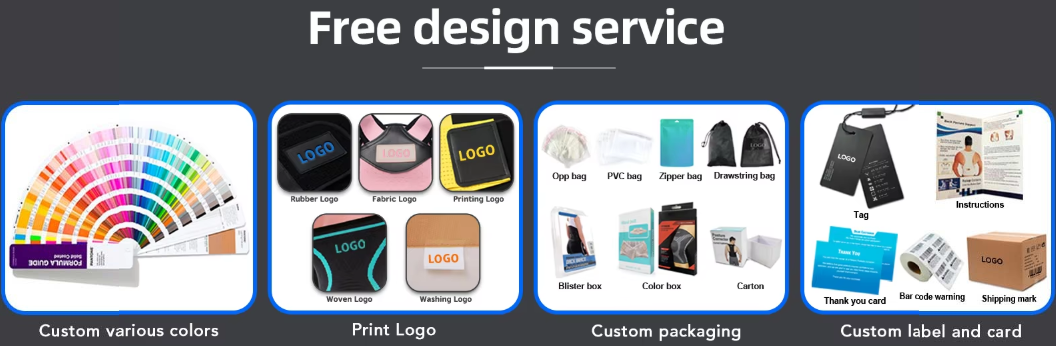
– What custom packaging formats do you offer — retail box, polybag, multilingual IFU, barcode labels?
Suppliers who answer these questions directly, with documents to back it up, are worth moving forward with. Those who stall, give vague answers, or dodge the question — aren’t.
Conclusion
Finding the right wholesale ankle brace manufacturer isn’t just a procurement task. It’s a strategic decision that shapes your product quality, brand reputation, and profit margins for years ahead.
The best suppliers aren’t just factories. They’re partners who grow with you. Look for verified certifications, transparent MOQs, and responsive communication. A strong partner also offers manufacturing flexibility — supporting OEM, ODM, or private label programs as your business grows.
Ready to move from research to action? AOFIT is a factory-direct brace manufacturer built for serious B2B buyers. You get solid certifications, strong production capacity, and real customization capabilities — all backed up and ready to go.
Reach out AOFIT today. Your next best-selling product starts with the right partner.