
When most people think of tennis elbow treatment, they picture an elbow strap or a counterforce brace. But what if the real culprit is hiding in your wrist? A wrist brace for tennis elbow is often overlooked—yet for many sufferers, it provides more relief than any tennis elbow band ever could.
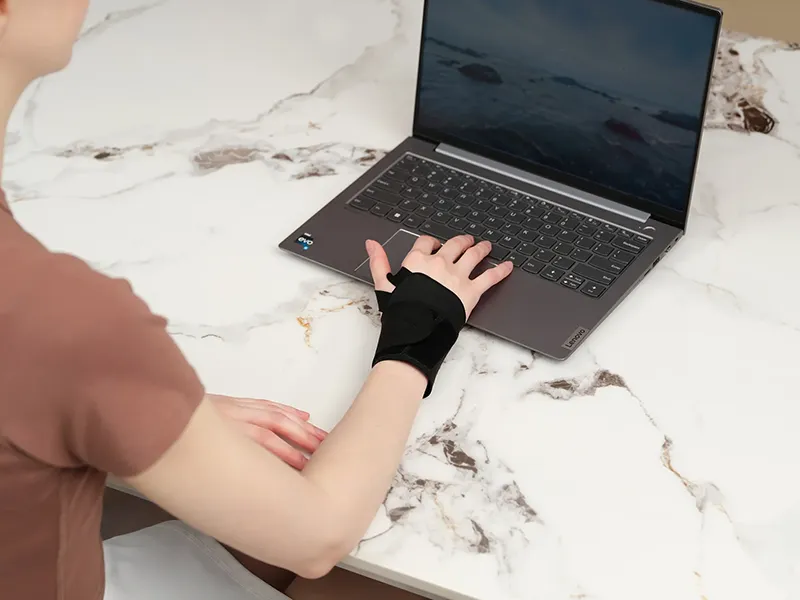
This guide explains exactly how your wrist drives lateral epicondylitis pain, when a tennis elbow wrist support makes sense, and how to choose the best wrist brace for tennis elbow for your daily routine.
Why Your Wrist Affects Tennis Elbow?
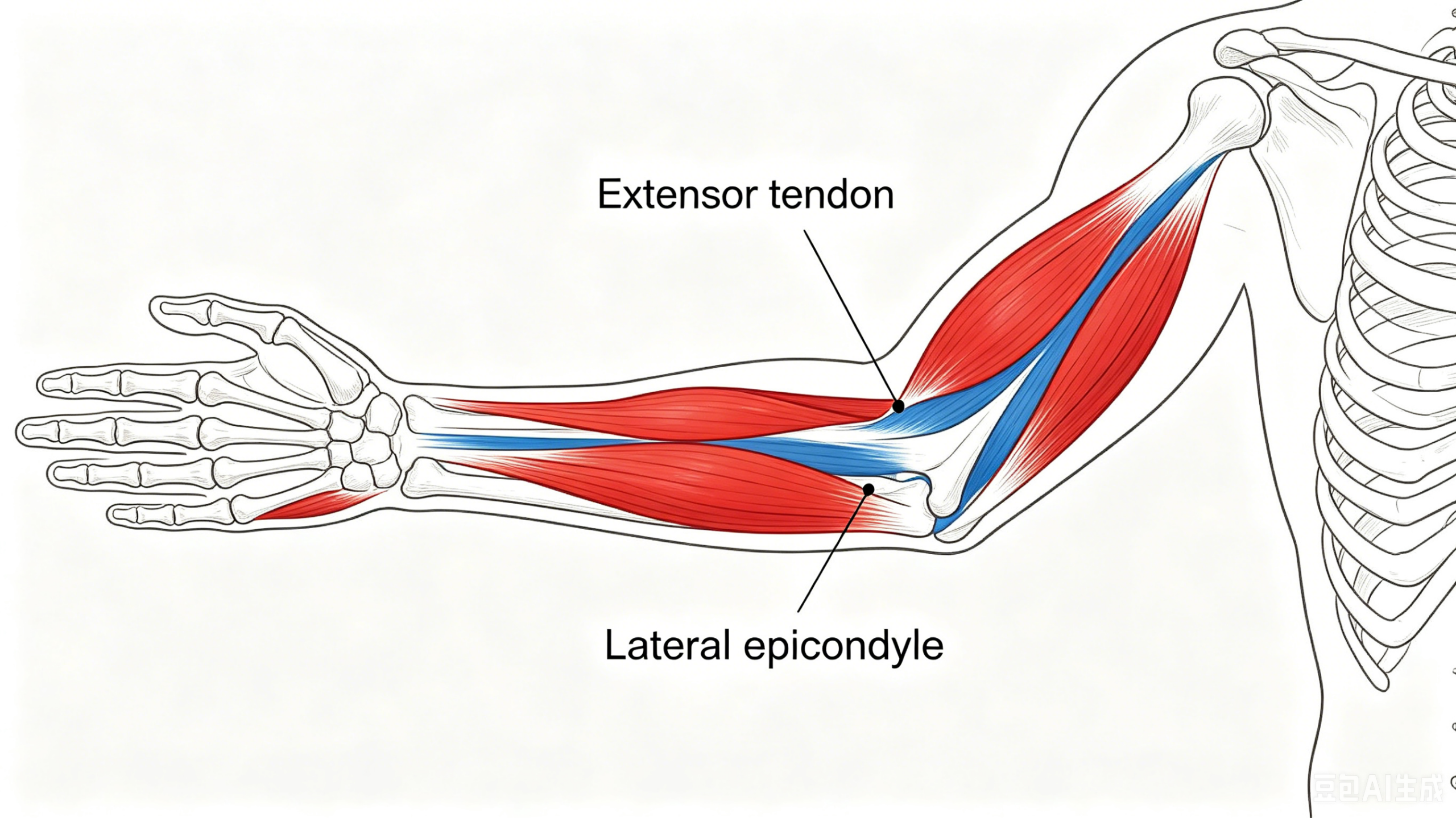
Here’s a surprising fact: You can have perfect elbow form and still develop tennis elbow. Why? Because the muscles that move your wrist also attach to your elbow.
The Overload Mechanism Explained Simply
Tennis elbow (lateral epicondylitis) happens when the extensor tendons—the cords that connect your forearm muscles to the lateral epicondyle (outer elbow bump)—become overloaded. Every time you lift your wrist backward (extension) or grip something tightly, those extensor muscles contract. That contraction pulls directly on the elbow attachment.
Do this thousands of times while typing, swinging a racket, or using a screwdriver, and the tendon starts to micro-tear and inflame. Your wrist is the trigger; your elbow feels the pain.
The Mechanical Chain: Wrist → Forearm Muscles → Elbow
Think of it like a pulley system. Your wrist is the handle, your extensor muscles are the rope, and the lateral epicondyle is the anchor point. Pull the handle (extend your wrist), and the rope tugs the anchor. The more forcefully or repeatedly you move your wrist, the greater the tension at your elbow.
That’s why a wrist brace for lateral epicondylitis can be so effective—it interrupts this chain at the source.
Who Feels This Most?
- Office workers and typists – Constant wrist extension while typing keeps extensor muscles under low-grade, non-stop tension.
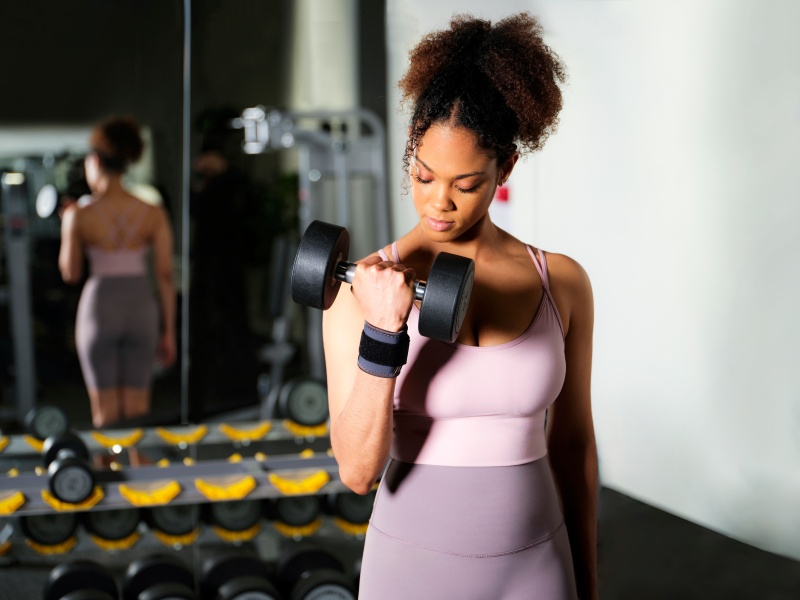
- Tennis and badminton players – Backhand strokes and repetitive wrist snaps are classic triggers.
- Manual laborers – Using tools like hammers, screwdrivers, or paint rollers forces repeated wrist extension against resistance.
How a Wrist Brace Actually Reduces Tennis Elbow Pain?
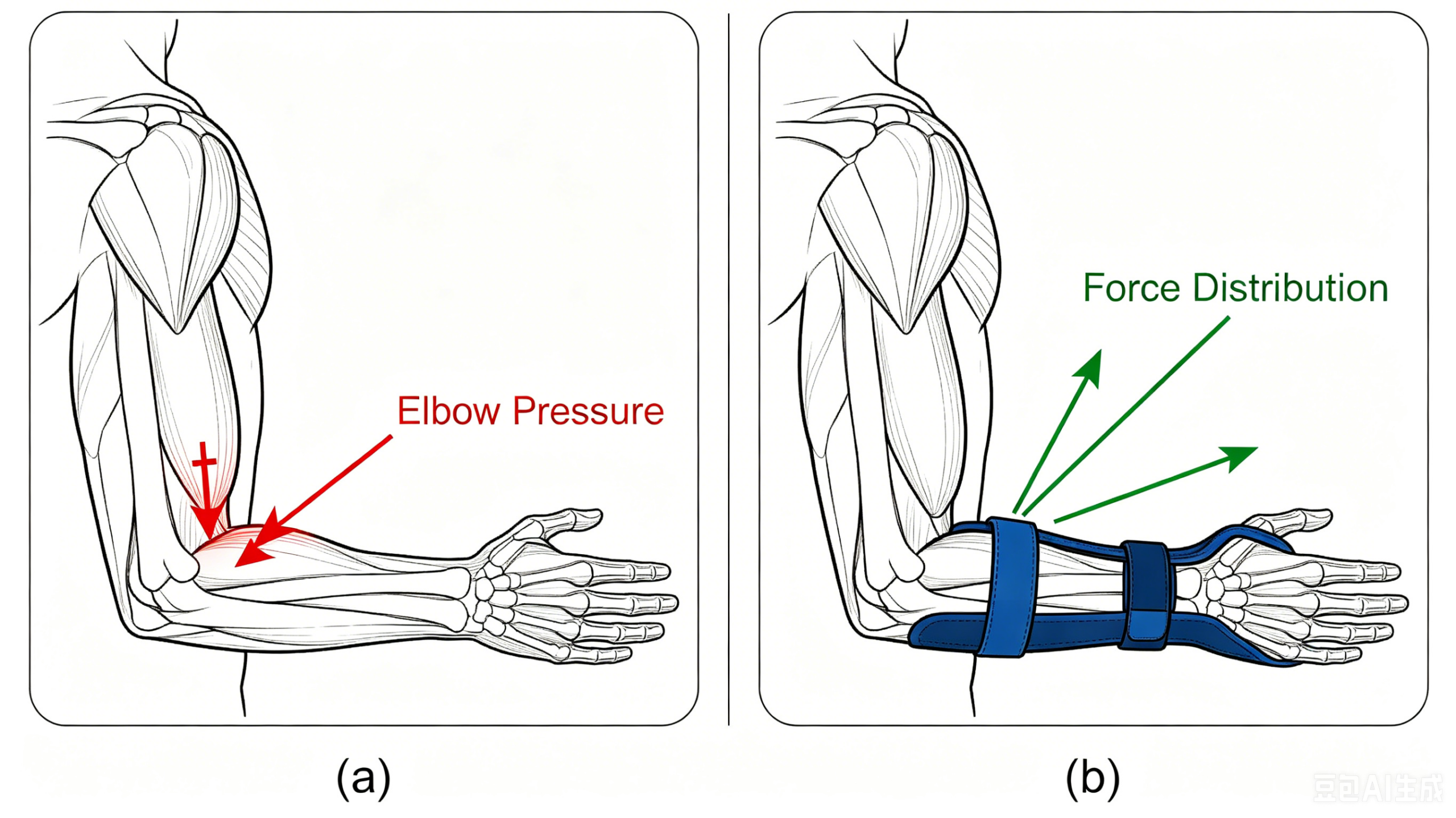
A wrist brace for tennis elbow doesn’t just “support” the wrist. It physically limits the movement that causes the problem.
Mechanism 1: Restricting Wrist Extension
Most tennis elbow pain is aggravated by dorsiflexion (bending the hand backward). A rigid or semi-rigid wrist brace prevents that motion past a certain angle. By locking the wrist in a neutral or slightly flexed position, the brace removes the active pull from the extensor muscles. No pull = no tension on the lateral epicondyle. Pain drops immediately during aggravating tasks.
Mechanism 2: Reducing Passive Tension Even at Rest
Even when you’re not moving, the extensor tendons can be under passive stretch if your wrist falls into extension. A brace holds the wrist in a neutral position, offloading the tendon 24/7. This is why some people need both an elbow strap for activity and a wrist brace for tennis elbow for rest.
Two Scenarios: Activity vs. Acute Rest
| Scenario | Brace Type | Purpose |
| Active use (typing, gripping, sports) | Soft, flexible brace with mild limitation | Reduce dynamic load without losing function |
| Acute flare / nighttime | Rigid brace with splint | Complete immobilization to allow inflammation to settle |
Important Limitation (Don’t Over-Rely)
A wrist brace is a management tool, not a cure. It won’t strengthen weak muscles, correct poor biomechanics, or heal degenerated tendon tissue. If you wear a brace all day but never do rehab exercises or modify your activity, the pain will return the moment you take it off. Use it as part of a broader lateral epicondylitis treatment plan that includes eccentric loading and load management.
Wrist Brace vs. Elbow Counterforce Strap: Which One Is Right for You?
Both products are sold for tennis elbow, but they work very differently.
Quick Comparison
| Feature | Wrist Brace | Elbow Counterforce Strap |
| Where it works | Wrist joint | Forearm muscle belly (just below elbow) |
| Mechanism | Limits wrist extension | Compresses extensor muscles to disperse tension |
| Best for | Pain clearly triggered by wrist motion (typing, backhand, gripping) | Diffuse elbow pain that worsens with any forearm effort |
| Wear during | Activity + rest/acute phase | Primarily during activity |
Simple Decision Tree
Ask yourself two questions:
- Does a specific wrist movement reproduce your elbow pain? (e.g., bending your hand backward against resistance)
- Yes → Try a wrist brace for tennis elbow first.
- No → An elbow strap may be more appropriate.
- Is your pain constant even when your wrist is still?
- Yes → Consider a night splint (rigid wrist brace) or see a professional.
- No, only during activity → A counterforce strap or soft wrist brace during tasks may be enough.
Can You Use Both? Absolutely.
Many people with moderate to severe tennis elbow benefit from dual support:
- Elbow counterforce strap during heavy gripping or sports
- Wrist brace during repetitive fine-motor tasks (typing, using a mouse)
- Rigid wrist splint at night if morning stiffness is severe
4 Key Features to Look For When Buying a Wrist Brace for Tennis Elbow
1. Support Strength: Soft vs. Rigid
- Soft brace (neoprene or elastic) – Mild limitation, good for typing and light daily activities. Allows some wrist movement. Best for chronic, low-grade pain.
- Rigid brace with metal/plastic stays – Locks wrist in neutral. Essential for acute flares, night wear, or when any wrist extension causes sharp pain. Look for removable stays so you can adjust the level of immobilization.
2. Material Breathability & Skin Friendliness
You might wear this for 8+ hours a day. Neoprene is supportive but traps heat and sweat. Look for:
- Perforated neoprene or fabric blends (nylon/spandex)
- Moisture-wicking lining (bamboo charcoal or Coolmax)
- Hypoallergenic labels if you have sensitive skin
Pro tip: If you work in a cold office, a thin thermal wrist brace can double as a comfort layer. If you sweat heavily, avoid thick neoprene.
3. Sizing & Adjustability
Incorrect sizing is the top reason wrist braces fail.
- How to measure: Wrap a tape measure around the smallest part of your wrist (just below the hand’s base).
- Adjustability: Look for at least two straps (proximal and distal) so you can customize compression without cutting off circulation.
- Tightness rule: You should be able to slip one finger between the brace and your skin. If your fingers tingle or turn purple, loosen immediately.
Most quality tennis elbow wrist support products come in S/M/L with velcro straps. Avoid slide-on sleeves without adjustment—they’re useless for precise tension control. For a truly customized fit, explore our custom wrist brace options.
4. Daily Usability & Profile
- Ease of on/off: Rigid braces with multiple straps take 30 seconds. Soft pull-on sleeves take 5 seconds. Choose based on your patience.
- Thickness: Thick braces may prevent you from using a keyboard properly or fitting your hand into a glove. Measure the brace’s bulk before buying.
- Low-profile design: For office workers, a slim black or beige brace that fits under a dress shirt is a must. Bright neoprene screams “injury” and can feel unprofessional.
When to Wear It, How Tight, and What to Watch For?
When to Prioritize Wearing
- During high-risk activities – Typing, lifting weights, gripping tools, playing tennis. Wear it for the entire duration of the activity.
- All-day vs. as-needed – If your pain returns within 30 minutes of removing the brace, you likely need to wear it longer (or address the root cause with rehab).
- At night – Generally not recommended unless you wake up with severe morning pain or unconsciously clench your fists while sleeping. Nighttime use should only be with a rigid splint and under guidance.
The “One Finger” Tightness Rule
- Correct tightness: You can insert one index finger between the brace and your skin. The brace should feel snug but not painful.
- Too loose: Slides around, provides no support. You’ll see wrinkles or gaps.
- Too tight: Fingers turn pale or blue, you feel pins-and-needles, or your hand feels cold.
Red Flags (Loosen or Remove Immediately)
- Numbness or tingling in thumb/index/middle fingers (could indicate median nerve compression)
- Sharp shooting pain up your forearm
- Skin discoloration or swelling below the brace
- Increased elbow pain after wearing (the brace might be pulling on the wrong structure)
If you experience any of these, stop using that brace and consult a physical therapist. You may need a different style or a professional fitting.
When a Wrist Brace Helps Most vs. When It Won’t Be Enough
Let’s be realistic: a wrist brace for tennis elbow is a powerful tool, but it has limits.
It Helps Most When
| Situation | Why It Works |
| Pain is clearly triggered by wrist extension (e.g., typing, backhand) | Brace directly blocks the aggravating motion |
| Acute flare where any wrist movement hurts | Rigid splint provides complete rest to the tendon |
| Occupational need (e.g., assembly line worker who can’t stop gripping) | Brace reduces cumulative load without stopping work |
It Won’t Be Enough When:
- Symptoms have lasted >6 weeks without improvement
- You have neurological symptoms
- You suspect co-existing carpal tunnel syndrome
- You’ve never modified the aggravating activity
FAQ: Real Questions People Ask About Wrist Braces and Tennis Elbow
1. Can a wrist brace cure tennis elbow?
No. A brace is a symptom management tool. It reduces pain during activity and allows inflammation to settle, but it does not heal the underlying tendon degeneration. True recovery requires eccentric strengthening, load management, and often manual therapy.
2. Should I wear a wrist brace for tennis elbow while sleeping?
Generally, no. Most people don’t extend their wrist significantly during sleep. If you wake up with severe morning pain, you might benefit from a rigid night splint—but this should be temporary (2–4 weeks). Prolonged night use can cause joint stiffness.
3. Does wearing a wrist brace while typing actually help?
Yes—if your tennis elbow is triggered by typing. Typing forces your wrist into slight extension thousands of times per hour. A soft tennis elbow wrist support that limits extension to 10–15 degrees can dramatically reduce pain. Just ensure the brace doesn’t prevent you from hitting keys accurately.
4. Can I wear both a wrist brace and an elbow counterforce strap together?
Absolutely. In moderate to severe cases, they address different parts of the mechanical chain: the wrist brace limits the movement, and the elbow strap disperses remaining tension. Many competitive tennis players wear both during matches. Just avoid overtightening either.
5. How long should I wear a wrist brace each day?
- Acute phase (first 3–7 days): Up to 8–12 hours (awake hours), removing only for hygiene and gentle movement.
- Chronic/activity-related: Only during aggravating activities (e.g., 1–4 hours). Wearing it all day when you’re inactive risks muscle atrophy.
6. What’s the difference between a wrist brace and a wrist splint for tennis elbow?
“Brace” often implies soft, flexible support. “Splint” usually means rigid with metal stays. For tennis elbow, a splint is for acute immobilization; a brace is for active use.
Final Take: The Right Brace for Your Wrist, Elbow, or Both
A wrist brace for tennis elbow isn’t a magic cure, but for the right person—someone whose pain clearly starts with wrist extension—it can be more effective than an elbow strap. The key is matching the brace type to your specific pain trigger and daily demands.
Not sure which brace fits your wrist and your work? Contact us for a free fitting recommendation.