
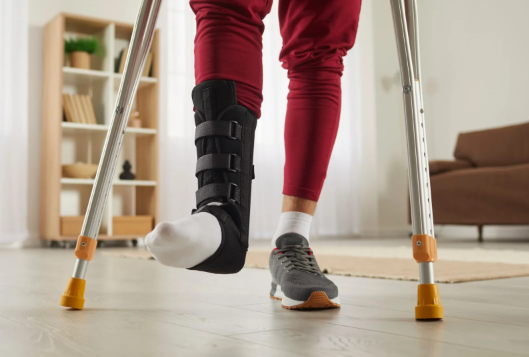
You leave the hospital with a freshly operated ankle and a brace locked in place. Most people think the answer is simple — just keep it on. But recovery doesn’t work that way.
Wearing an ankle brace after surgery is not a fixed commitment. Getting it wrong in either direction — too long or removed too soon — can slow your healing in ways you won’t catch until weeks later.
When and how long you wear it depends on where you are in your recovery. This guide covers every stage, from those first weeks of immobilization to the moment your surgeon gives you the all-clear.
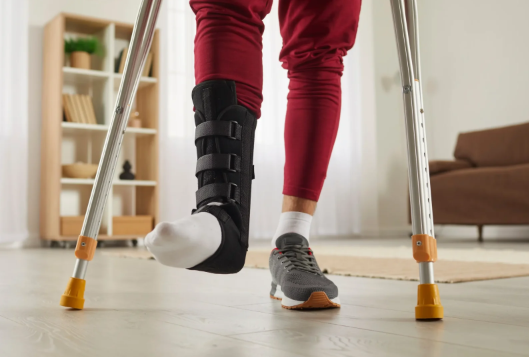
Should You Wear an Ankle Brace All Day After Surgery?
The short answer: it depends on where you are in your recovery — and no single rule fits everyone.
Most post-op protocols follow a two-phase approach. In the first 2–6 weeks, your surgeon will tell you to wear a boot or brace any time you put weight on your leg. That means all waking hours on your feet. But it does not mean 24 hours a day. Once your incisions are stable, the brace comes off at night and during wound checks.
After that first phase, the approach changes. You shift into what clinicians call protected mobility. You wear the brace during walking, rehab, or higher-risk tasks. Not all day.
Why “all day” isn’t a universal rule:
-Skin health — a rigid boot worn non-stop raises the risk of pressure sores and skin breakdown. This is a real concern around healing incisions.
-Joint stiffness — long periods without movement slow the return of strength and balance. Doctors push for protected movement, not total rest.
-Swelling management — in the first one to two weeks, keeping your foot above heart level does more for swelling than the brace itself.
-Sleep and comfort — most protocols allow you to remove the brace at night once the wound is stable.
The right schedule depends on your procedure. A Broström ligament repair, an ankle fracture fixation, and a total ankle replacement each follow different timelines — covered in detail below.
Phase 1: The Immobilization Stage — All-Day Wear Is Expected (Weeks 1–2)
The first two weeks after ankle surgery are about protection, not progress. Your body is working hard beneath the surface — rebuilding tissue, managing inflammation, and stabilizing a joint that just went through serious trauma. The brace keeps that process on track.
During this phase, wearing your ankle brace after surgery throughout your waking hours is expected — not just recommended. Most protocols require it any time you’re upright or putting weight on your foot. Taking the brace off too soon, even briefly, can increase swelling, worsen pain, and push your body into a movement pattern that causes new problems down the road.
What’s happening in weeks 1–2:
-Swelling and pain control are the primary focus — not strength, not flexibility
-The incision is still healing and vulnerable to disruption
-Your body hasn’t yet regained the muscle control needed to stabilize the joint on its own
What to do alongside wearing the brace:
-Elevate your foot above heart level — this does more for swelling reduction than almost anything else
-Ice on a regular schedule to keep inflammation under control
-Avoid prolonged standing or walking — more movement is not better at this stage
Watch for these warning signs that the brace fit needs reassessing:
-Numbness or tingling around the foot or incision
-Skin redness, blistering, or pressure sores developing under the brace
-Toes turning cold, pale, or bluish
-Swelling that keeps increasing despite elevation
By the end of week two, you want to see swelling trending down, pain staying stable, and the joint settling into its natural resting position. That’s the sign the immobilization phase is doing its job.
Phase 2: A Boot or Soft Brace — Adjusting Wear Time Step by Step
Between weeks two and six, full immobilization starts to ease. The process is slow and structured — your body has to show it’s ready before anything changes.
There is one clear entry point for this phase. You must be fully weight-bearing in your boot, without crutches, at pain ≤3/10. Your X-rays also need to show enough healing. Haven’t hit that point yet? You’re still in Phase 1.
Once you’re there, the transition follows a set hourly schedule — not guesswork.
A practical 7–14 day framework:
Days 1–3: Wear a shoe + soft brace for 1–2 hours/day. Split that time between morning and evening. Use the boot for everything else, including sleep. Keep your daily steps at 50% of your normal baseline.
Days 4–6: Extend shoe and brace time to 2–3 hours/day. On nights 5–6, many surgeons allow you to remove the boot during sleep — swap it for a compression sock or light soft brace — but only if swelling hasn’t increased.
Days 7–10: Move to 6–8 hours/day out of the boot. Save the boot for uneven ground or long outdoor walks.
Days 11–14: Gait stable? Pain below 3/10? The ankle brace after surgery takes over from the boot for most waking hours.
One rule that doesn’t bend: Pain jumps more than 2 points on a 0–10 scale? Swelling stays past 24 hours after you increase out-of-boot time? Pull back 25–50% for one to three days. Then try again. The schedule works for you — not the other way around.
Wear Your Ankle Brace After Surgery: Activity-Based Schedule
Recovery moves at its own pace. Work with it, not against it — that’s what makes the real difference.
Timing matters. Your ankle brace after surgery is not a one-size-fits-all commitment. The brace that protects you on a walk to the kitchen is overkill on the sofa. Context decides everything.
Here’s how wear time lines up with your actual activities, broken down by recovery phase.
Weeks 0–2: Brace On for Everything Upright
The rule during the splint or boot phase is simple.
Walking, standing, and stairs: Brace or boot on 100% of the time — no exceptions
Sitting or lying down: Keep it on. You can loosen the straps a bit if your surgeon gives the go-ahead
Sleep: Most protocols keep the boot on at night, or swap it for an immobilizing splint overnight
The brace comes off for hygiene or wound checks only. Short removals, and only with your care team’s instruction.
Weeks 3–6: Match the Brace to the Activity
Near week three — especially after internal brace stabilization — many patients move from a CAM boot to a lace-up ASO-type brace with a supportive shoe. Wear time gets more targeted from here.
|
Activity |
Brace On? |
|
Outdoor walking, uneven ground, slopes |
Always |
|
Prolonged standing (cooking, errands, work) |
Yes — any standing beyond 5–10 minutes |
|
Stairs |
Yes, with supportive shoe |
|
Weight-bearing rehab, balance drills |
Always |
|
Short indoor tasks, seated breaks |
Remove for short periods to air skin |
|
Sleep (once swelling is controlled) |
Off |
One hard rule through this entire phase: inversion movements stay restricted until week six. Keep the brace on for any activity that could roll the ankle inward.
Weeks 7–12: High-Risk Activities
Brace use narrows down to the situations that need it most.
Outdoor walking, community distances: Brace on through weeks 8–12
Sport, cutting, jumping: Brace on for 100% of practice and games — at minimum through the first 6–12 weeks back
Standing work, manual labor, uneven surfaces: Full-shift bracing through at least week 12
Desk work or calm indoor tasks: Brace becomes optional after week six, as long as strength and balance are solid
Situations That Always Call for the Brace (Regardless of Week)
Some environments spike your risk no matter where you stand in recovery:
Crowds, wet floors, public transport, airports
Carrying groceries, boxes, or a loaded backpack
Gravel, grass, sand, or sloped pavement
Any moment you feel instability, giving way, or pain spiking above 4–5/10
Not sure? Put the brace on. One unguarded step can cost you weeks of progress.
Red Flags: Stop Wearing the Brace and Contact Your Surgeon Right Away
Some signals don’t ask for your attention — they demand it. Normal post-op discomfort is one thing. A genuine emergency is another. Telling them apart can protect everything your surgeon worked to repair.
The rule is simple. Loosen or remove the brace right away if any of the following appear. Then call your surgeon or head to urgent care.
Neurological warning signs:
– Numbness, tingling, or burning in your toes or forefoot that starts after you put the brace on
– Toes that feel weaker, harder to move, or won’t extend the way they should
– Burning or shooting pain running along the foot — this can signal peroneal or tibial nerve compression
Circulatory red flags:
– Toes turning pale, bluish, or mottled
– Foot clearly colder than the other side
– Swelling that keeps building after elevation — worse inside the brace is a major concern
– Calf pain, warmth, or redness paired with shortness of breath — these point toward DVT or pulmonary embolism. Go to the ER. Leave the brace off.
Pain and structural changes:
– Severe pain that elevation, ice, and medication won’t touch
– A sudden pop at the surgical site, followed by rapid swelling or visible deformity — this suggests repair failure
– Pain that is worse with the brace on than off — call your surgeon that same day, no exceptions
Skin and wound signals:
– Redness, warmth, or discharge spreading beyond the incision edge
– Blisters, open sores, or pressure wounds under the straps
– Fever above 101°F (38.3°C) alongside any local swelling or redness
Not sure what you’re dealing with? Loosen everything. Check your toes — color, temperature, movement — and compare them to your other foot. Something still feels off thirty seconds later? That’s your answer.
Conclusion
Ankle surgery recovery is never a straight line. Neither is the answer to how long you need to wear your brace.
Here’s what matters most:
Wear it fully through those first immobilization weeks
Follow your surgeon’s guidance as you transition out of it
Don’t rush out of it too soon — and don’t hold on longer than needed
Both extremes carry real risks. Your healing body doesn’t need that extra setback.
Your ankle brace after surgery is a tool, not a permanent fixture. You use it through the stages that need it. Then you set it down once your strength and stability can carry the load on their own.
Recovery isn’t passive. It’s a series of small, deliberate choices — and each one adds up.
Ready to update your custom ankle braces? Contact AOFIT for a reliable solution.