
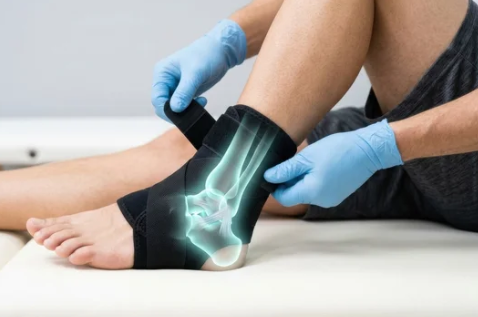
Picking the wrong ankle brace doesn’t just waste money — it can slow your recovery or leave you open to reinjury. Shelves and search results are packed with sleeves, lace-ups, stirrups, and rigid shells. That many options can feel overwhelming. But the right type of ankle brace comes down to a few clear factors — your injury severity, your activity level, and what you need the brace to do. This guide breaks down the main types of ankle braces. Each design is matched to the situations where it works best, so you can make a confident, informed choice — not just grab whatever looks supportive enough.
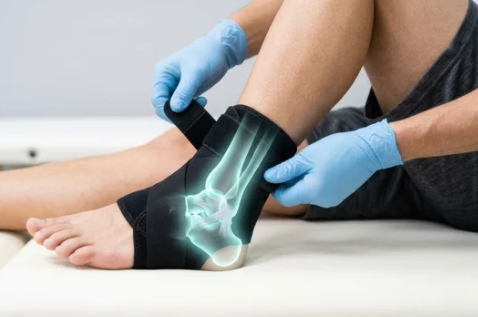
Common 5 types of ankle braces
There are 5 types of ankle braces, and each one does a different job. The right brace isn’t the most expensive one. It’s the one that fits your injury stage and what your body needs to do.
Compression Ankle Sleeves — For Mild Pain, Swelling & Daily Wear
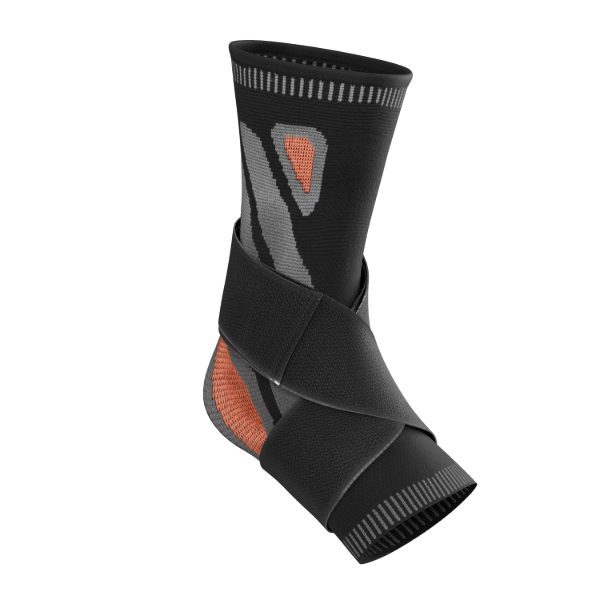
Compression sleeves are the workhorse option — unglamorous, underrated, and effective for a wide range of everyday ankle problems.
Sore ankle from tendonitis? Mild sprain? Swollen after a long day on your feet? This is where you start. Sleeve-style braces deliver 20–30 mmHg of graduated compression — tighter at the ankle, easing up toward the calf. That pressure gradient has a purpose. It pushes fluid out of the joint, improves circulation, and reduces inflammation — all without locking your foot into a fixed position.
That last part matters. Sleeves give you light stabilization, not restriction. Your range of motion stays intact. What improves is proprioception — your body’s sense of where your ankle sits in space. That feedback is valuable for mild sprains and chronic instability during low-impact movement.
Who This Type of Ankle Brace Fits
- Grade 1 sprains — ligament stress, no structural tear
- Tendonitis and overuse soreness — repetitive motion injuries from running, standing work, or training
- Arthritis and degenerative conditions — warmth and gentle compression reduce morning stiffness
- Chronic swelling — including post-surgical fluid management and lymphedema
Material Makes a Real Difference
Two materials lead this category. Each serves a different need:
- Neoprene — holds heat, adds joint warmth, best for cold environments or stiff mornings
- Knit fabric — breathable, moisture-wicking, machine-washable, built for all-day wear
The Bauerfeind MalleoTrain sets the standard here. Its low-profile knit fits inside a shoe without bunching. The edges taper to cut down on pressure points. Viscoelastic pads create a gentle massaging effect that moves swelling out of the joint as you walk.
Product line update
Ankle supports with straps are comparable to standard ankle sleeves, but they include an extra strapping system layered over the sleeve, offering enhanced protection and stronger compression. These straps usually follow a figure-8 or figure-6 design. The figure-8 wrap delivers comprehensive, all-around compression, allowing you to tighten the brace to its maximum compression potential. On the other hand, figure-6 braces offer better defense against side-to-side motion and are ideal for situations where there is a risk of twisting or spraining the ankle.
Lace-Up Ankle Braces — For Moderate Sprains, Sports & Ligament Instability
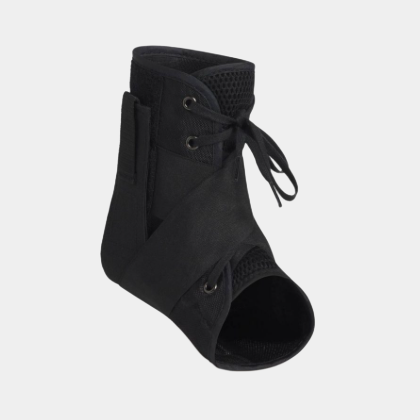
A Grade 2 sprain sits in an awkward spot — more than a minor twist, not quite a full tear. You’re dealing with partial ligament damage, real swelling, and enough instability to make you doubt every step. A compression sleeve won’t get you through this. Lace-up braces will.
The design is straightforward. Laces wrap the ankle with adjustable tension. Figure-8 straps sit on top for lateral control. Rigid side stays — steel in some models — block inversion and eversion. Your up-down motion stays free. You can walk, plant, and push off. What you can’t do is roll.
That balance is critical on a court. Basketball cuts. Volleyball landings. Soccer pivots. Lace-ups are built for this kind of high-impact, multi-directional movement. The numbers back it up too. Athletes who brace after a sprain are 50% less likely to re-injure, according to a British Journal of Sports Medicine systematic review.
Adjustability Is the Real Advantage
The lace-and-strap system isn’t only about tightness. It’s about timing. Loosen the fit in the morning when swelling peaks. Cinch it tighter by the third quarter when fatigue sets in and your ankle starts to give. Reinforced eyelets hold the whole setup in place during movement. That detail makes a bigger difference than most people expect.
Which Lace-Up to Buy
Four models worth knowing:
- ASO Ankle Stabilizer — Under $40. Figure-8 straps, solid side stabilizers. A solid starting point for mild-to-moderate instability. This is the one NBA players reach for.
- McDavid Lace-Up with Stays — Spring steel stays, breathable mesh. Built for basketball, football, and soccer at high intensity.
- Shock Doctor Lace-Up — Mid-tier, $30–$50. Gel cushioning adds comfort during long wear. Good for managing swelling across a full training session.
- DonJoy Anaform Lace-Up — Tops the support range for lace-up designs. A reliable return-to-play option for Grade 2 recovery.
Product line update
Lace-up fabric stretches. Over a season of hard use, the fit loosens — and so does the lateral control. Ankle braces with rotation buttons represent an upgrade from the classic lace-up model. Rather than having to tie a knot, you just push the dial to loosen the strap. After adjusting the fit to your liking, pull the dial up to secure it. This design makes fine-tuning your ankle support faster and far more convenient.
Stirrup Ankle Braces — For Moderate to Severe Lateral Sprains
The numbers on stirrup braces are hard to ignore. A Grade II sprain treated with a stirrup brace plus elastic wrap gets you back to normal walking in 10 days. A cast takes 24 days. That’s not a marginal difference — that’s more than two weeks of your life.
The design explains why. Rigid plastic uprights run along both sides of the ankle. They wrap under the heel in that characteristic horseshoe shape. Side-to-side motion — inversion and eversion — gets blocked. Up-down motion — dorsiflexion and plantarflexion — stays free. You can walk. You can climb stairs. What you can’t do is roll the ankle again while the ligaments heal.
How the Padding Works With Your Recovery Stage
The cushioning inside isn’t one-size-fits-all. It changes as you heal:
- Air cushions — First 1–2 weeks. These target acute swelling and help reduce it fast.
- Foam pads — Weeks 2–6. Firmer, lower profile. Better for functional rehab movement.
- Gel inserts — Use these in the first days of recovery. They protect sensitive tissue from direct pressure.
Most quality stirrup braces attach padding via MicroHook strips. Swapping between phases takes seconds — no new brace required.
Which Stirrup Brace to Consider
- DonJoy Performance Bionic Stirrup — Rigid uprights, built for high-intensity sport return
- Ossur Formfit® Ankle Stirrup — Lightweight shell, interchangeable liners for mid-recovery use
- BraceID® Ankle KIT — Interchangeable air/foam system with flannel textile lining for all-day comfort
One Practical Note on Fit
The rigid shell adds real bulk. You may need to size up your shoe by half a size. Strap tension matters too. Too tight cuts circulation. Too loose and the lateral control disappears. Get the fit right once, and this ankle brace earns its keep through your entire recovery.
Hinged Ankle Braces — For Severe Injuries, Post-Surgery & High-Impact Sports
Some ankle injuries go far beyond what fabric and laces can handle. That’s where hinged braces come in.
Grade 3 ligament tears. Post-surgical recovery. Structural damage that keeps athletes off the field for months. These injuries need real hardware — not a stretchy sleeve that loses shape by halftime. You need bilateral hinges. Rigid uprights. A shell that stays firm under full load.
The mechanics are straightforward. The hinges block inversion and eversion — the side-rolling motions that caused the injury. But your foot isn’t locked in place. You still get full dorsiflexion and plantarflexion, so walking, crouching, and running stay possible. That’s the key difference between a hinged brace and a cast. You get protection without losing function.
What These Braces Are Built For
- Grade 3 sprains — complete ligament tears, significant structural instability
- Post-reconstructive surgery — ACL repair transitions, MCL/PCL recovery
- High-impact contact sports — running backs, jumpers, athletes absorbing explosive lateral force
The Shock Doctor Ultra (bilateral hinges, X-Fit® strap system) sets the standard for Level 3 maximum protection. The DonJoy rigid hinged line delivers that same no-compromise support for contact sports — no sleeve or wrap needed underneath. Post-surgical cases tend to do well with the Orthomen Hinged Post-Op, priced at $60–$100. It includes ROM locking dials — adjustable motion stops your physical therapist can set as your rehab moves forward.
One Detail Most People Miss
Hinged shells are side-specific. Left and right are pre-curved to match your leg’s natural shape. Grab the wrong side, and the support works against you — especially during pivoting and lateral movement in rehab. Check the label before you order.
Rigid/Hard Shell Ankle Braces — For Maximum Protection & Post-Surgical Recovery
Hard plastic doesn’t forgive. That’s the point.
Stress fractures and post-surgical recovery demand one thing above all: stillness. Rigid braces deliver it. A hard shell wraps both sides of the joint. It locks lateral and rotational movement. It blocks the exact motions that would undo a surgical repair or re-displace a fracture. That’s not overcaution — that’s physics doing its job.
These braces limit 50–65% of ankle motion. In the first weeks after surgery, that restriction is the treatment. Movement is the enemy. The rigid shell keeps it out.
What Rigid Braces Are Built For
- Stress fractures — bone needs complete stabilization to knit properly
- Post-surgical recovery — ligament repairs, cartilage work, reconstructive procedures
- Severe Grade 3 tears — complete structural damage that functional braces can’t contain
The DonJoy Velocity ES is the most recognized name here. It uses semi-rigid hard shells built for maximum ankle support after serious injury. The trade-off is real: shoe fit becomes a problem. Size up. Accept that explosive lateral movement will feel restricted. That’s temporary. Re-tearing a surgical repair is not.
Don’t Skip the Transition
Rigid braces are early-phase tools — 4–8 weeks post-op is the standard window. Wearing one too long causes joint stiffness. That stiffness creates its own rehab problem. The protocol moves in three steps:
| Phase | Brace Type | Goal |
| Early healing | Rigid/immobilizer | Protect the repair, block all risky motion |
| Mid-phase rehab | Hinged semi-rigid | Controlled mobility, tissue still shielded |
| Return-to-activity | Functional/lace-up | Dynamic stability, gradual range-of-motion gains |
One more thing: rigid clamshell braces are often prescription-only and insurance-covered — a physician orders them post-surgery. Skip the OTC aisle for this category. Professional fitting cuts re-injury risk by 30–40% compared to a brace that’s close-but-not-right. Get it prescribed, get it fitted, follow the transition timeline.
Quick-Match Guide: Which Ankle Brace Type Fits Your Situation
5 ankle brace types. Three injury grades. One table that cuts through the noise.
| Injury Severity | Daily / Low-Impact | Sports / High-Impact | Post-Surgery / Rehab |
| Mild — Grade 1 sprain, tendonitis, minor swelling | Compression sleeve | Lace-up with adjustable straps | Light compression sleeve for edema control |
| Moderate — Grade 2 sprain, instability, arthritis | Lace-up or semi-rigid | Hinged/semi-rigid | Stirrup for swelling control plus early movement |
| Severe — Grade 3 tear, fracture, post-op | Velcro stays with side support | Maximum rigid shell | Aircast or hard-shell brace — stability without blocking foot motion |
Conclusion
Choosing the right types of ankle braces isn’t complicated. Stop guessing. Match your injury to the support it needs. Compression sleeves handle everyday aches. Lace-ups and stirrups work well for sprains and sport. Hinged and rigid shells step in when the damage is serious.
The 5 types of ankle braces available today cover every scenario. From a slightly sore morning run to post-surgical recovery, there’s an option for it. No single brace works for everyone. But the right one exists for you — based on your activity level, your injury history, and your risk tolerance.
For brands or product lines sourcing custom ankle braces where detailed specifications—not just a standard type—are required, AOFIT acts as a custom brace manufacturer, working with you on design, material and component selection, density specification, sizing, and sample production.