
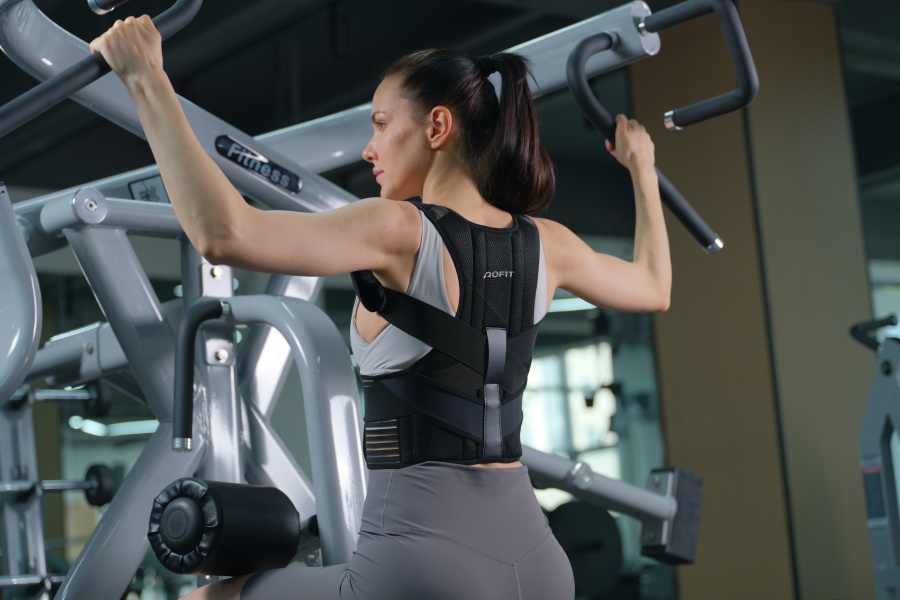
Searching for a reliable posture corrector manufacturer in the U.S. can be daunting — whether you’re a brand owner, distributor, or medical procurement specialist with FDA compliance needs. Quality, certifications, OEM flexibility, and minimum order quantities vary widely across suppliers. That’s why we’ve cut through the noise and handpicked eight posture corrector manufacturers in the U.S. that are truly worth your consideration.
1. AOFIT — The Best OEM/ODM Posture Corrector Manufacturer
Three production bases—over 700 automated and semi-automated production devices. For B2B buyers who need a stable supply and scalable output, those numbers speak louder than any marketing claim.
As a professional posture corrector supplier, AOFIT’s core range covers posture correctors, lumbar supports, and knee braces, and so on. That multi-category setup lets you build an entire support-brace range with one manufacturing partner—no need to split production across three separate factories.
What Makes AOFIT Stand Out for OEM/ODM Posture Corrector Work
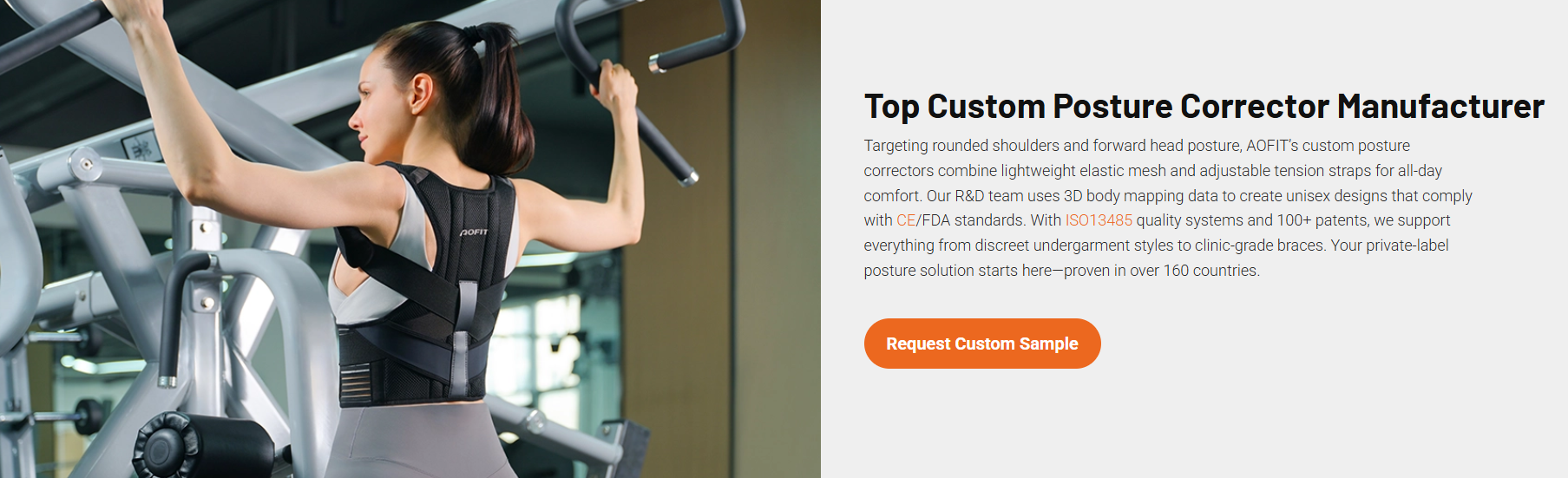
The posture corrector’s design focus here is comfort and adjustability. Shoulder-strap systems, Velcro closures, ergonomic back panels — all built for all-day wearability. That lines up with what’s driving sales in the posture corrector market right now: fit, breathability, and long-term comfort push repeat purchases far more than price does.
On the customization side, AOFIT covers the full OEM/ODM Posture Corrector scope:
- Materials: neoprene, polyester mesh, elastic webbing, foam padding
- Sizing: standard S/M/L/XL or custom size runs
- Branding: woven labels, heat transfer, silk screen logos
- Packaging: retail box, polybag, branded instruction manuals
Typical lead times run 7–15 days for samples on existing designs, 15–30 days for custom patterns, and 25–45 days for mass production after deposit confirmation.
Our posture corrector category carries CE certification. Before you scale to private label, request the full factory audit pack — certificate numbers, biocompatibility test reports, and material spec sheets. Check these against your specific market requirements to confirm compliance.
MOQ benchmark: 300–1,000 pcs per design for standard OEM builds.
2. Aspen Medical Products — Medical-Grade Posture Brace Manufacturer
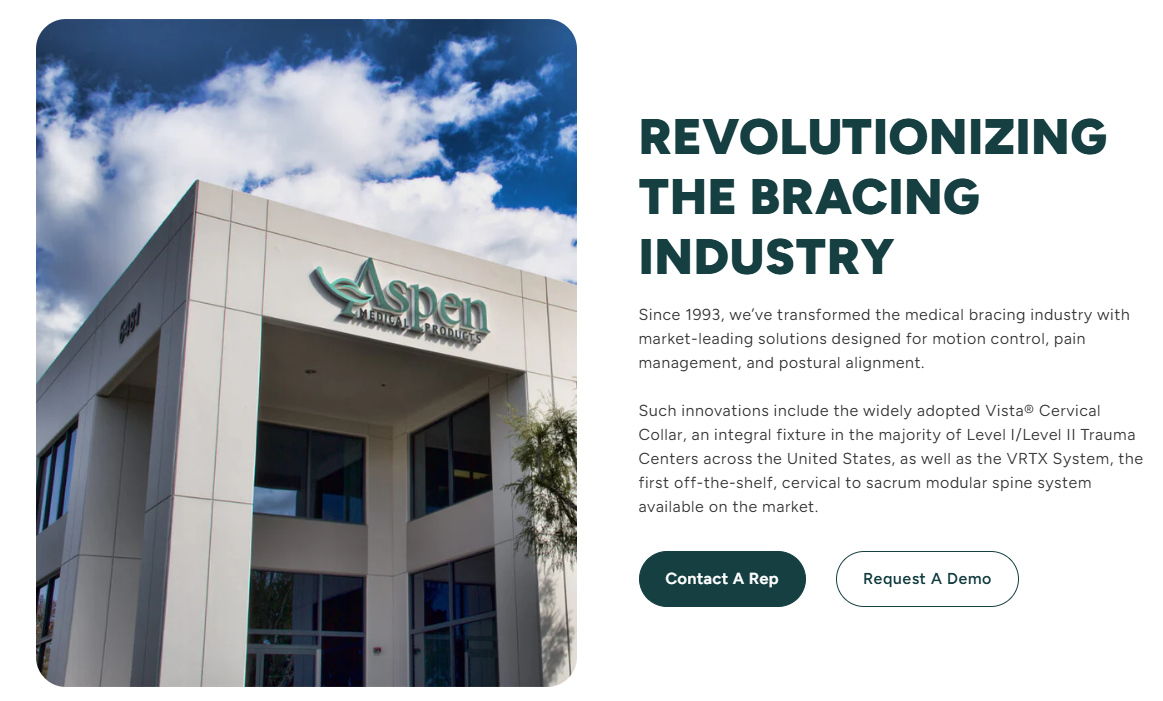
Aspen Medical Products has built a reputation over 30+ years: serious spinal orthoses for serious clinical environments.
Founded in the early 1990s, Aspen sits firmly in the medical-grade tier. That means TLSO systems, LSO braces, and posture alignment orthoses.
Who This Manufacturer Serves
Aspen distributes through O&P clinics, hospital orthopedic and trauma departments, and established DME networks — including suppliers like Southern Prosthetic Supply and Cascade Orthopedic. FDA establishment registration and HCPCS billing compatibility are baseline expectations here.
This is not an OEM-friendly partner for small or mid-sized brands. Private label discussions require annual volumes of 2,000–5,000+ units per SKU, or contract values above $500K+. For medical procurement teams sourcing clinical-grade spinal stabilization braces, Aspen belongs on your shortlist. For B2B buyers needing flexible custom production, keep looking.
3. Ottobock — Global Orthopedic Posture Support Manufacturer
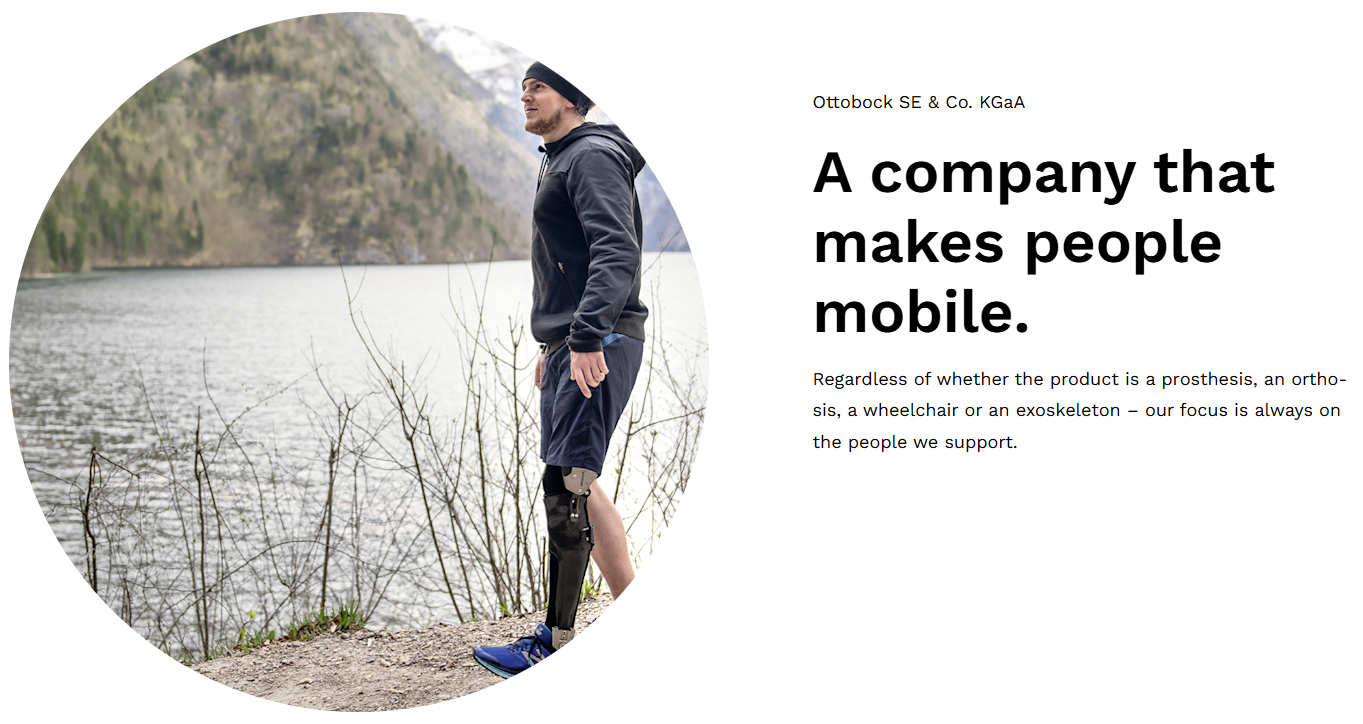
Ottobock is a clinical orthopedics company. Prescriptions, HCPCS codes, and hospital procurement departments drive every purchase decision here.
Who Buys From Ottobock
Their B2B buyers fall into three groups:
- O&P clinics
- Hospital orthopedic departments
- Established DME networks
Core clinical products include custom TLSO and LSO spinal orthoses.
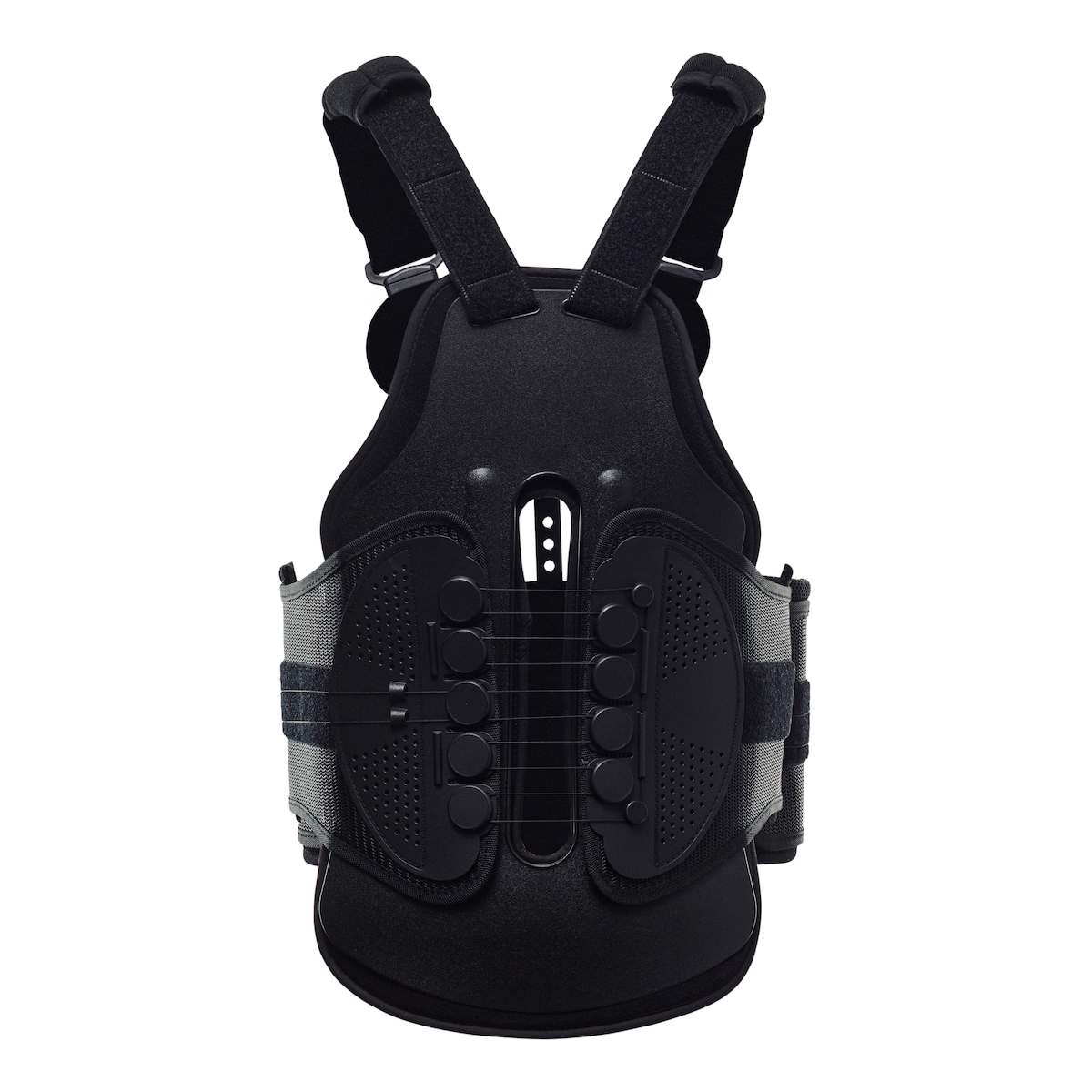
These feature adjustable panels, dual-layer tension systems, and thermoplastic-moldable hard shells.
Private label discussions start at thousands of units per year — that’s the minimum commitment level. Volume pricing works on a tiered structure:
- Below $100K/year: 5–10% discount
- $100K–$500K/year: 10–20% discount
Payment terms run Net 30–60 days.
4. Össur / Royce Medical — Orthopedic Posture Corrector Supplier
Össur leads the global orthopedics market. Its Royce Medical brand has moved orthopedic soft goods through U.S. medical channels for years.
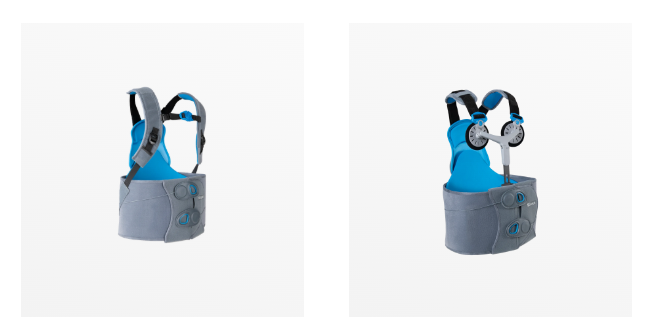
The product catalog covers a lot of ground. You’ll find back and waist supports, posture correctors, TLSO braces, hernia supports, and maternity back supports — all listed under the Ossur America–Royce Medical brand name across major DME and rehab distributors. That range matters for B2B buyers. You can build cross-category brace assortments from one recognized supplier. No need to split orders across multiple vendors.
Distribution Reach and B2B Fit
The reseller network is already in place. Carriers include Health Products For You, DME-Direct, Rehab Store, Grayline Medical, and Serfinity Medical. That multi-channel footprint lets downstream distributors restock with ease and get competitive quotes from day one.
OEM and private label talks should target these benchmarks:
– MOQ: 250–1,000 units per SKU/color/size mix
– Lead time: 30–90 days depending on materials and packaging
– Customization scope: swing tags, carton art, UDI labeling, IFU inserts
Before any sourcing commitment, request ISO 13485 certification, FDA establishment registration, device listing numbers, and biocompatibility summaries. These documents cover your compliance checks upfront.
Best fit for: DME networks, rehab distributors, and medical procurement teams that need recognized-brand orthopedic softgoods backed by an established distribution network.
5. Trulife — Custom Posture Brace Contract Manufacturer
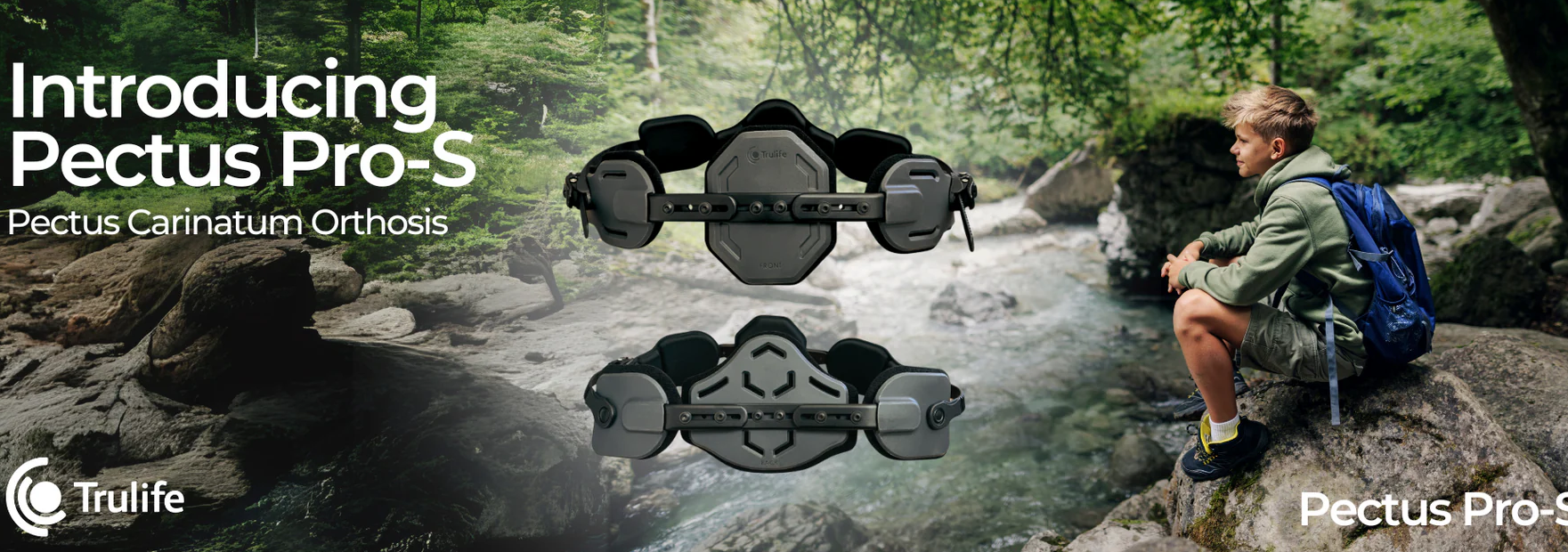
Trulife has been in medical-device manufacturing since 1958. That’s over 60 years of experience.
Their orthotics catalog includes thoracic, lumbar, sacral, and abdominal supports. Each product uses adjustable stays, boning structures, and proprietary antibacterial Trutex fabric. This is squarely medical-channel territory.
Trulife holds an active FDA filing profile. It covers Premarket Notifications, Premarket Applications, and GUDID registrations. That tells you this is a serious, regulated-device operation.
Best fit for: Established DME networks and medical-channel distributors. You need a documented U.S. orthotics supplier with solid regulatory standing — Trulife checks those boxes.
6. Optec USA — Custom Spinal & Posture Orthosis Manufacturer
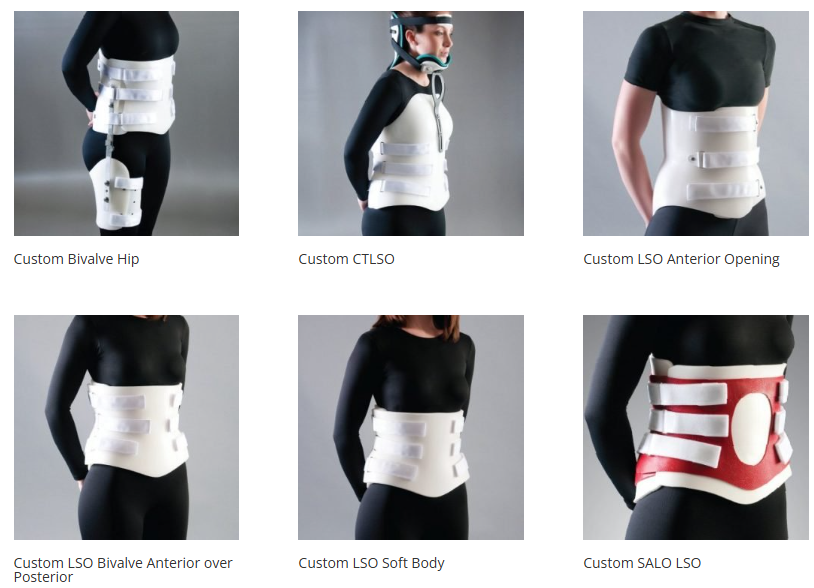
Optec USA runs a tight, focused operation out of Lawrenceville, Georgia. Fewer than 25 people produce custom TLSO, LSO, kyphosis braces, and scoliosis orthoses through an in-house CAD/CAM workflow.
A clinic submits measurements or a 3D scan file. Optec then CNC-carves a patient-matched mold, vacuum-forms thermoplastic over it, and ships a finished custom brace in 3–5 production days — standard. Rush cases turn around in 1–2 days. Compare that to offshore custom TLSO production, which runs 2–3 weeks door-to-door. The domestic advantage is real.
Who Does This Manufacturer Fit
Optec targets O&P clinics, orthopedic practices, and DME distributors that need fast-turnaround custom spinal orthoses — not high-volume retail. Private label is an option. Logo and label replacement on existing prefab LSO or TLSO styles starts at 50–100 units per style.
Wholesale pricing breaks down like this:
- Prefab LSOs: $60–120/unit
- TLSO/kyphosis braces: $120–250/unit
Those prices sit 20–30% below comparable Aspen or Össur SKUs. You get domestic speed at a price point that actually works.
7. BackJoy — Consumer Posture Corrector Brand & Wholesale Supplier
Based in Boulder, Colorado, BackJoy sits squarely in the consumer wellness and ergonomic accessory space — not the clinical orthopedic tier. No FDA device registration. No HCPCS billing. No prescription required. That’s by design. Their products are OTC wellness tools, and the brand language says it straight: “BackJoy will not cure your back pain” — it reduces pressure and strain while sitting. That honest positioning keeps them clear of regulatory territory while still connecting with millions of everyday buyers.
Core Products Worth Knowing
Two product lines drive most of the brand’s volume:
- SitSmart Posture Seats (Posture Plus / Core / Relief / Tech) — injection-molded pelvic-tilt seats that cup the gluteal muscles and rotate the pelvis forward. New users who feel discomfort should start at 15 minutes per session. Build up gradually over several days.
- Posture Band — a lightweight elastic shoulder band with no rigid stays. A blue oval center marker shows correct alignment. Wear it at the mid-biceps level. It gives you a gentle posture reminder — not a structural fix.
Wholesale Model: Authorized Resale, Not OEM
Here’s the key point B2B buyers need to know upfront: BackJoy does not offer OEM or white-label production. Every product ships under the BackJoy brand across all channels. The IP is the product itself.
What BackJoy does offer is an authorized distributor and reseller program:
- MOQ: 100–300 units/SKU for small retailers; 500–1,000+ units for regional distributors
- Wholesale discount: 40–55% off MSRP (higher volume pushes toward 50–60%+)
- Payment: Pro forma on first orders; Net 30 for established accounts
- MAP policy: BackJoy enforces this across Amazon and offline retail to protect price integrity
- Channel restrictions: Unauthorized marketplace sales get blocked — you need Amazon and Walmart.com reseller approval before listing
Best fit for: E-commerce sellers, corporate wellness procurement teams, fitness retailers, and healthcare-adjacent channels like chiropractic and PT clinics. Need private-label posture seats? BackJoy isn’t the right match — take that to a dedicated OEM manufacturer instead.
8. Swedish Posture — Posture Wearables & Braces U.S. Distribution Partner
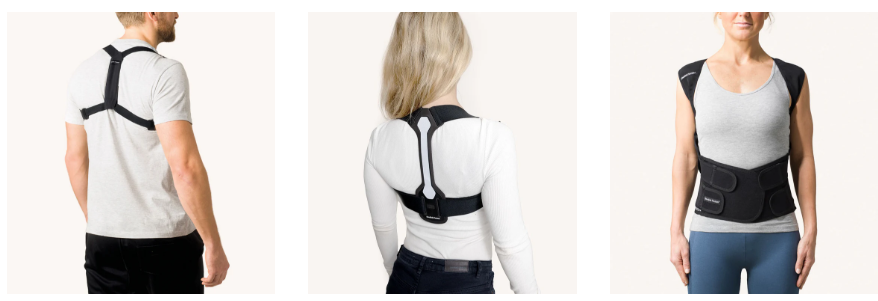
Swedish Posture leads as a lifestyle wellness brand — not a manufacturer chasing clinical contracts.
The product thinking is behavioral. Their braces, posture shirts, and ergonomic seats use elastic tension to remind your body to straighten. No rigid structures. No forcing. That core difference drives everything else: materials, price points, retail channels, and who ends up buying.
For U.S. orders, Swedish Posture ships through cross-border direct shipping. Here’s what that looks like in practice:
- Delivery time: 7–14 business days
- Shipping fees: $20–40 per order, plus import duties
- Warehouse location: Europe — no domestic U.S. storage
So for B2B buyers, your first inventory build via ocean freight runs 6–9 weeks in lead time. Plan your stock cycles around that gap.
On the production side, no OEM or white-label options are open to the public. U.S. partnerships run through an authorized distributor model. Regional resellers can expect estimated MOQs of 100–300 units per SKU to get started.
Best fit for: Fitness retailers, wellness e-commerce operators, and corporate ergonomics buyers. This is not the right match for medical procurement teams or private-label sourcing programs.
Side-by-Side Comparison: Top 8 Posture Corrector Manufacturers at a Glance
| Manufacturer | Type | Key Certifications | OEM/ODM | MOQ | Best Fit |
|---|---|---|---|---|---|
| AOFIT | OEM/ODM Factory | CE, ISO、FDA | Full OEM/ODM | 300–1,000 pcs | Private label brands, B2B custom production |
| Aspen Medical Products | Medical Brand | FDA, HCPCS | None | 2,000–5,000+ pcs | Clinical/DME procurement |
| Ottobock | Medical Brand | FDA, ISO 13485 | None | High-volume institutional | Hospital ortho departments |
| Össur / Royce Medical | Medical Brand | ISO 13485, FDA | Limited | 250–1,000 pcs | DME networks, rehab distributors |
| Trulife | Contract Manufacturer | FDA, ISO 13485 | Limited | Institutional scale | Established DME channels |
| Optec USA | Custom Fabricator | FDA registered | Private label | 50–100 pcs | O&P clinics, fast-turnaround custom |
| BackJoy | Consumer Brand | OTC | None | 100–1,000 pcs | Wellness retail, e-commerce resellers |
| Swedish Posture | Lifestyle Brand | OTC | None | 100–300 pcs | Fitness retail, corporate wellness |
The pattern is clear. Medical-grade suppliers — Aspen, Ottobock, Trulife — don’t do OEM. Their MOQs are high. Their channels are clinical. Their compliance setup targets hospital procurement, not brand launches. Consumer brands like BackJoy and Swedish Posture sell through retail and wholesale. But private-label? Not an option with either.
That puts AOFIT in a category of its own. It’s the one manufacturer on this list with full OEM/ODM support, CE certification, and MOQs that don’t require institutional-scale volume. A solid fit for B2B buyers who need custom posture corrector production on practical terms.
How to Choose the Right Posture Corrector Manufacturers for Your Business?
Before you shortlist any posture corrector manufacturers, build a filter system first.
1. Regulatory Status – First Filter
In the U.S., therapeutic claims (pain relief, spinal support, correction) make posture correctors a Class I, 510(k)-exempt orthotic device under FDA rules.
Before anything, ask:
FDA Establishment Registration & device listing number?
Product code & device classification?
Red flag: Vendors claiming “FDA approved materials” or “FDA compliant” without a real registration number — that’s marketing, not compliance.
For medical buyers (DME, hospitals, clinics): FDA registration is a hard gate. Non‑negotiable.
2. Quality Management System – Beyond ISO 9001
For medical‑grade posture correctors, ISO 9001 is not enough.
The standard that matters: ISO 13485:2016 — the QMS built for medical device manufacturing.
Hospital‑supplying orthotic brace makers typically hold both ISO 13485 certification and FDA registration.
Ask every supplier:
“Do you operate under ISO 13485? Provide certificate number, issuing body (BSI, TÜV, SGS), and expiry date.”
“Does your certificate explicitly cover design and manufacture of orthotic braces and medical supports?”
For retail/fitness channels (non‑clinical):
ISO 9001 + solid third‑party lab tests (tensile strength, wash durability) may suffice.
Decide your positioning first — medical device vs. general wellness — then set requirements.
3. Material Standards and Biocompatibility
A medical-grade posture brace manufacturer needs to hand over actual documentation proving their skin-contact materials meet biocompatibility standards. Set these as your baseline: latex-free construction, BPA-free and phthalate-free materials, and medical-grade hook-and-loop hardware.
Ask these two things directly:
- “Can you provide biocompatibility and skin irritation test reports referencing ISO 10993-5/-10 for your textiles and adhesives?”
- “Do you provide lot-level COAs (Certificates of Analysis) for incoming materials?”
For medical distributors, the bar sits higher. You need documentation showing no sensitization or irritation in 95% or more of test subjects in standard patch tests. Ask to see the actual summary results.
4. OEM/ODM Capability
Custom posture corrector production comes in two distinct forms.
OEM means you hand over a finished tech pack, and the manufacturer builds to it. Key questions:
- “What are your standard tolerances on elastic tension, strap length, and stitching density?”
- “What’s your lead time for a first OEM sample?”
- “Can you support private label at low per-design MOQs?”
ODM means you need the manufacturer to bring design capability to the table. For a posture corrector OEM manufacturer with genuine R&D depth, look for:
- In-house pattern-making and CAD capability
- A portfolio of posture-corrector SKUs designed in the past 24 months
- Prototype lead times of 7–14 days; pre-production samples within 30–45 days
Clarify IP ownership before work starts.
5. MOQ Structure and Pricing Reality
MOQ benchmarks shift based on who you’re dealing with. Here’s how the numbers break down:
| Supplier Type | MOQ Range | Pricing vs. Offshore |
|---|---|---|
| U.S. domestic medical brace maker | 500–1,000 pcs/style | 2–4× higher ex-factory |
| Boutique U.S. fitness brace factory | 100–300 pcs/color/size | Higher, with setup surcharges |
| U.S. brand + China/Vietnam OEM | 500–2,000 pcs/SKU at factory; 100–300 pcs from U.S. stock | Near-China pricing |
6. Manufacturer Verification
Legitimate domestic manufacturers will:
- Provide a physical factory address in an industrial area
- Share photos or videos of their cutting, sewing, and assembly lines plus production headcount
- Agree to a site visit or remote video audit
- State outright whether the product is “Made in USA” under FTC rules, or “Made in USA with imported materials.”
On the regulatory side, check who is listed as the manufacturer on the FDA device listing.
FAQ: Posture Corrector Manufacturers in the USA
Q: Is any posture corrector “FDA-approved”?
Not quite. Most rigid and semi-rigid posture braces fall under FDA Class I orthopedic devices. These are 510(k)-exempt. The correct terms are “FDA-registered establishment” or “FDA-listed device.”
Q: What certifications matter most for the U.S. market?
– ISO 13485:2016 — required for any medical-grade posture brace supplier targeting hospitals or clinics
– FDA establishment registration + device listing — non-negotiable for DME channels
– OEKO-TEX Standard 100 or REACH compliance — covers textile components and skin-contact materials
– CE Mark — needed for dual U.S./EU distribution from day one
Q: What pricing should U.S. buyers expect?
| Product Type | FOB Asia (1,000+ pcs) | U.S. Domestic EXW |
|---|---|---|
| Basic elastic shoulder corrector | $2.50–$5.00 | $8–$15+ |
| Medical-grade thoracic/lumbar brace | $8–$18 | $20–$50+ |
| Smart posture trainer (sensor-equipped) | $25–$40 | N/A at scale |
Q: What materials do quality posture corrector manufacturers use?
Here’s what you’ll see in well-made products:
- Breathable elastic (polyester/nylon + spandex) at 220–400 gsm for shoulder straps
- Aluminum or plastic stays at 1–2mm thickness
- Hook-and-loop closures tested to 1,000+ cycles
- Latex-free, hypoallergenic liners — a standard requirement across U.S. healthcare procurement
Q: Are there smart posture corrector manufacturers in the U.S. market?
Yes. Upright Technologies leads this niche with the UPRIGHT GO 2 and GO S. These are motion-sensor devices with a companion app and over 750,000 claimed users. Smart posture trainers involve PCB assembly, BLE connectivity, and 200–300 mAh Li-ion batteries. Want textile braces with integrated sensors? Look for posture corrector manufacturers with hands-on experience in e-textiles and IP-67 enclosures.
Q: Ready to start evaluating OEM partners?
Build your brief first. Set your target FOB price, monthly volume forecast, preferred materials, and required certifications. Pull two or three market benchmarks from established brands like Aspen or Optec USA to set your support-level specs. Then compare against a dedicated posture corrector OEM manufacturer like AOFIT for custom design, sampling, and U.S.-market compliance support.
Conclusion
Picking the right posture corrector manufacturer goes beyond sourcing. It shapes your brand’s credibility, product quality, and where you stand in the market long-term.
Ready to move from research to action? AOFIT is the clear starting point. You get custom posture corrector production backed by verified certifications, low MOQs, and real manufacturing flexibility.
Visit aofitbrace.com to request a free consultation, grab product samples, or talk through your OEM needs with a specialist. Build something your customers will trust.