
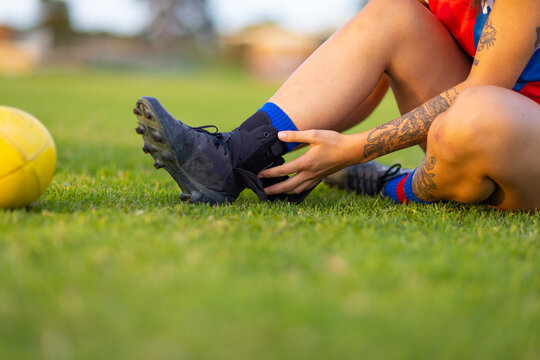
For a moderate ankle sprain, both the Med Spec ASO Ankle Stabilizer and the McDavid Ultra Light are top-tier choices, but they cater to slightly different stages of recovery and preferences. Here is a detailed breakdown of mcdavid vs aso ankle brace.
McDavid Ankle Brace Ultra Light Reviews
| Type of ankle brace | Lace-up | |
| Support mechanism | Provides mechanical stabilization using laces and a reinforced figure‑6 strap system | |
| Materials | Constructed from single‑layer polyester with a padded lining; includes a ventilated tongue for breathability | |
| Sizes | XS, S, M, L, XL | |
| Best for | Addressing moderate to major ankle instability, supporting post-injury recovery, and use in high-impact sports such as volleyball, football, and basketball. |
Priced at around $43 on Amazon, this lace-up design delivers excellent value for money, earning a 4-out-of-5 rating in its category. It also features a lightweight brace with hook-and-loop straps on both sides, allowing it to be worn on either the left or right foot. The materials feel sturdy, and the brace is straightforward and easy to put on.
Our tester wore the Ultra Light during several short runs and high-intensity interval training (HIIT) sessions. Aside from minor pilling on the Velcro—something that naturally occurs over time—she reported no significant problems, giving the materials a 4 out of 5.
Available in five sizes, this fully laced brace can be adjusted using two non-elastic straps that wrap around the ankle from each side. Two additional elastic straps at the top allow for further customization of the fit.
“I really like laced braces because they let you adapt to swelling, soreness, or tightness around the ankle,” our tester explained, giving adjustability a perfect 5 out of 5. “You can also use it during different stages of recovery or performance.”
Her one recommendation: wear a full, tall sock—or even two socks—under the Ultra Light. “If you don’t, you’ll get a lot of chafing at the top and bottom edges,” she warned. “With just one sock, I felt discomfort from the brace’s edges digging into my skin.”
Med Spec ASO Ankle Stabilizer Reviews
| Type | Lace‑up | |
| Support mechanism | Mechanical stabilization via angled figure‑8 straps | |
| Materials | Durable ballistic nylon boot, spacer-mesh fabric in tongue and Achilles area | |
| Sizes | XXS, XS, S, M, L, XL, 2XL, 3XL | |
| Best for | Chronic and acute ankle sprain support, daily preventive use, and athletic use(tennis, running, soccer, basketball) |
Priced at around $32, we find it offers good value for money, earning a 4 out of 5 in that category. This lace-up ankle stabilizer uses figure-8 straps—supportive bands that wrap around the ankle to enhance lateral stability. This mimics the taping technique athletic trainers and physical therapists use to prevent ankle rolls or sprains.
Our tester awarded the brace perfect 5 out of 5 scores for both adjustability and ergonomic design. “You can fine-tune the lacing to achieve a proper fit across the entire area,” she explains. “Braces like this are ideal whether you’re recovering from a sprain or want a single product that provides bracing, stability, and support.”
Though our tester admits that pricier brace and stabilizer models can feel stiffer and less comfortable, she found this stabilizer to be quite user-friendly.
“With a tall sock and the right adjustments, you can barely tell it’s on—except for the added stability you feel,” she says.
We also rated the ASO Ankle Stabilizer 5 out of 5 for in-use experience, as it strikes an excellent balance between adjustability and support. Our tester recommends it for those with minor ankle issues who want something to wear during physical activity. This makes it one of the top ankle braces for basketball and soccer players worried about rolling an ankle during games or practice.
In addition, the ASO Ankle Stabilizer is available in nearly every size imaginable, with eight options ranging from XXS to 3XL. “The lacing system also allows for extra adjustability and accommodates a wide range of sizes,” our tester adds.
mcdavid vs aso ankle brace: Which is the right brace for sprained ankle?
Since both braces use a proven lace-up design, the “better” choice depends on which features are most important for your specific situation.
| Feature | Med Spec ASO Ankle Stabilizer | McDavid Ultra Light |
| Primary Strengths | Maximum stability, active support, “figure-8” straps | Lightweight, breathable, low-profile fit |
| Support Mechanism | Lace-up boot + rigid plastic stays + figure-8 straps (pulls ankle into neutral position) | Lace-up boot + rigid plastic stays (basic mechanical support) |
| Best For | Return to sport (cutting/jumping), chronic instability, maximum protection | Late-stage healing, mild sprains, narrow shoes, hot conditions |
| Bulk & Fit | Slightly bulkier, may require wider shoes | Very low-profile, fits easily in most athletic shoes |
| Ventilation | Good, but thicker materials | Excellent; designed for maximum airflow |
Choose the Med Spec ASO if…
- You are returning to high-risk sports like basketball, volleyball, soccer, or football
- You have a history of chronic ankle instability or “giving way.”
- You want the highest level of mechanical support to prevent rolling your ankle.
- You prefer the active tension of figure-8 straps for proprioception.
Choose the McDavid Ultra Light if…
- You are in the late stages of healing from a mild to moderate sprain.
- You need to fit the brace into narrow shoes (cleats, racing flats, dress shoes).
- You prioritize breathability and lightweight comfort for all-day wear or hot conditions.
- You only need mild to moderate support for activities like walking, running in a straight line, or light training.
How to choose the best ankle brace for sprain?
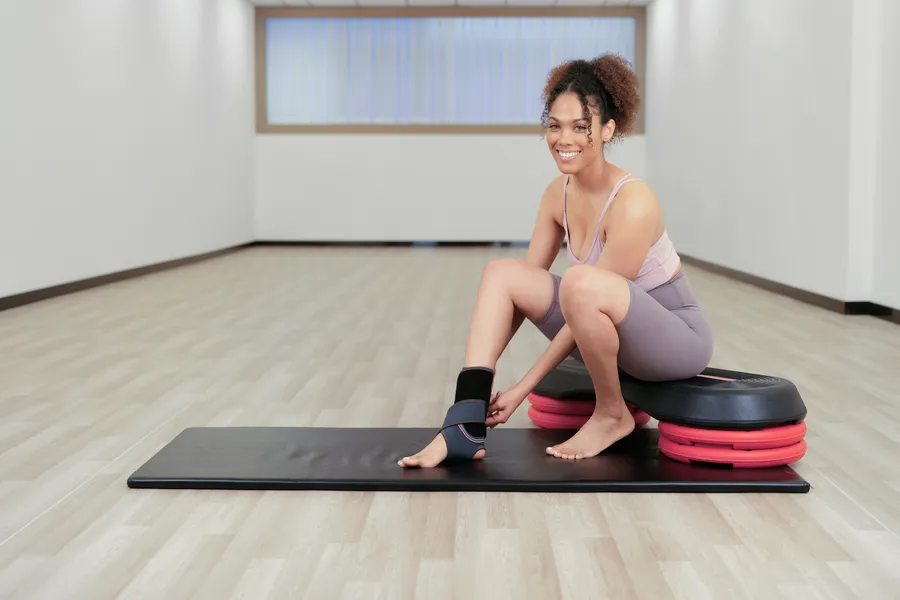
Generally speaking, ankle braces are intended to limit the ankle’s natural movement—such as inward and outward rolling, as well as twisting—in order to safeguard the joint and its ligaments.
These braces come in a variety of designs, ranging from low-profile compression sleeves that permit nearly unrestricted motion, to rigid immobilization braces that hold the ankle in a relatively fixed position. Some models incorporate metal or plastic supports—sometimes referred to as “stays”—or inflatable air bladders positioned along one or both sides of the brace to help manage the ankle’s range of motion. Many designs also feature straps with Velcro closures to replicate the supportive effects of athletic tape, along with elastic knit materials that offer compression to reduce swelling and alleviate pain, while also providing a degree of stability.
So, how do you decide which one is right for you?
First, make sure your ankle injuries: ‘high ankle’ or ‘low ankle’
When people hear the term “sprained ankle,” they typically imagine a low ankle sprain. The most frequent type of low ankle sprain results from the foot turning inward—a movement known as inversion. This primarily affects three ligaments: the anterior talofibular ligament (ATFL), the posterior talofibular ligament, and the calcaneofibular ligament. In a typical low ankle sprain, the foot is forcefully turned inward, and the ligament that endures the most significant injury is the ATFL.
In contrast, high ankle sprains occur when the foot is bent upward and then twists either inward or outward. This type of sprain damages the ligaments located above the ankle, which connect the tibia to the fibula. Unlike high ankle sprains, low ankle sprains do not affect these particular ligaments. High ankle sprains are less common than low ankle sprains and are frequently seen in athletes involved in sports such as basketball, ice hockey, football, wrestling, soccer or skiing. They almost always result from some form of collision—unlike the rolling motion responsible for most other ankle sprains. High ankle sprains typically happen during running or jumping activities, and they involve a twisting or rotational movement of the ankle.
Note: Most ankle braces are made to provide support against both inversion and eversion movements. However, some models are designed to target only one of these directions, so be sure to check before purchasing.
Then, conform sprains your ankle are categorized into
Grade 1 Sprain – Happens when the ankle moves beyond its normal limit, causing the ligaments to stretch excessively without tearing. Symptoms include mild discomfort, minimal or no swelling, slight or no joint looseness, some stiffness, and trouble walking or running.
Grade 2 Sprain – This is the most frequently occurring type of sprain, involving minor partial tears in the ligament. Symptoms may include significant swelling, moderate pain, bruising, and a noticeable reduction in joint movement or function. Walking may become challenging.
Grade 3 Sprain – Far less common and often requires medical care. Typically involves a complete ligament rupture. Symptoms include severe swelling, extensive bruising, major loss of mobility, and joint instability.
Now, choose the type of ankle brace you require
Once you’ve determined the severity of your ankle sprain, you can choose the right brace to support healing and provide protection. For more serious injuries, it’s wise to consult a doctor or physiotherapist for a proper diagnosis.
Mild support – Grade 1 Sprain
For a first-degree or mild sprain, the best ankle braces are lightweight and low-profile, offering moderate support—such as compression ankle sleeves.
Moderate support – Grade 2 Sprain
For a second-degree sprain, or if you’re active in sports involving lateral or side-to-side movements, a moderate-support ankle brace can help treat the injury and prevent re-injury. Examples include lace-up and wrap-around designs, which offer increased support.
Maximum support – Grade 3 Sprain
For a third-degree or severe sprain accompanied by ankle instability, braces with maximum support are essential. This includes stirrup designs (which use splints on both sides of the brace to restrict movement, squeezing the ankle between two pads) and rigid designs that provide greater immobilization—some even include air cells. Examples include stirrup braces, rigid ankle braces, or a tall walking boot for full immobilization.
Conclustion
All in all, if you are looking for maximum protection against re-injury during active sports like basketball or volleyball, the Med Spec ASO is generally the superior choice due to its lace-up boot and figure-8 straps. However, if you need a brace that is extremely low-profile to fit into narrow dress shoes or racing flats, or if you prioritize maximum airflow, the McDavid Ultra Light is the better fit.
Ankle braces may support both low and high ankle sprains, though certain designs are better suited for one type over the other. To ensure you choose the right brace for your specific injury, please review the “indications” section in ankle brace manufacturers’ product descriptions or consult with our design team.