
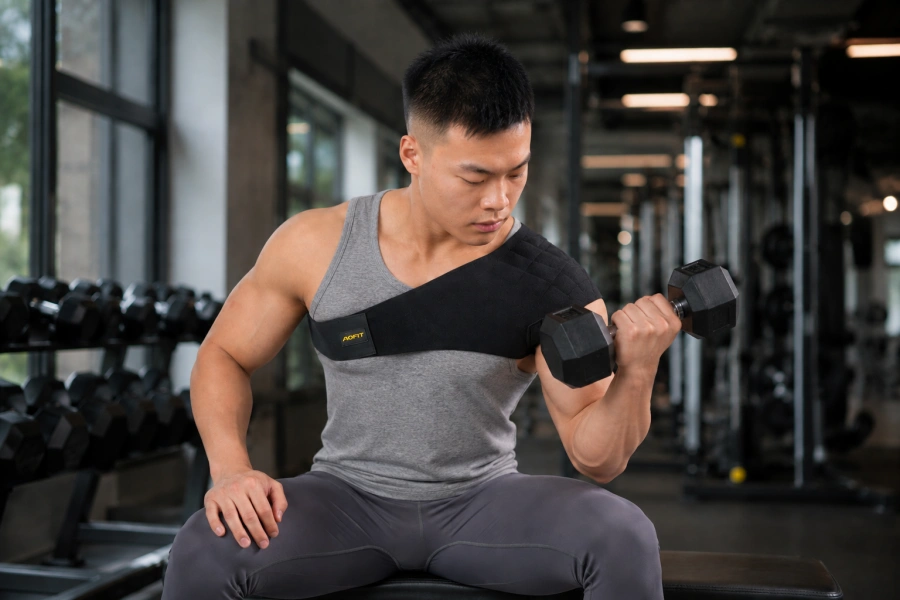
Shoulder pain turns simple tasks into struggles—reaching for a coffee mug, buckling a seatbelt, sleeping on your side. So you decide to take action. But then you face another obstacle: compression sleeves, stabilizers, immobilizers, and neoprene wraps. The options pile up. Here’s the truth: the wrong shoulder support can slow your recovery as much as wearing nothing at all. The right one, however, transforms how you move through your day. Whether you’re recovering from a rotator cuff injury, managing a flare‑up, or staying active without making things worse, this guide cuts through the noise and gives you a clear path to the support your shoulder truly needs.
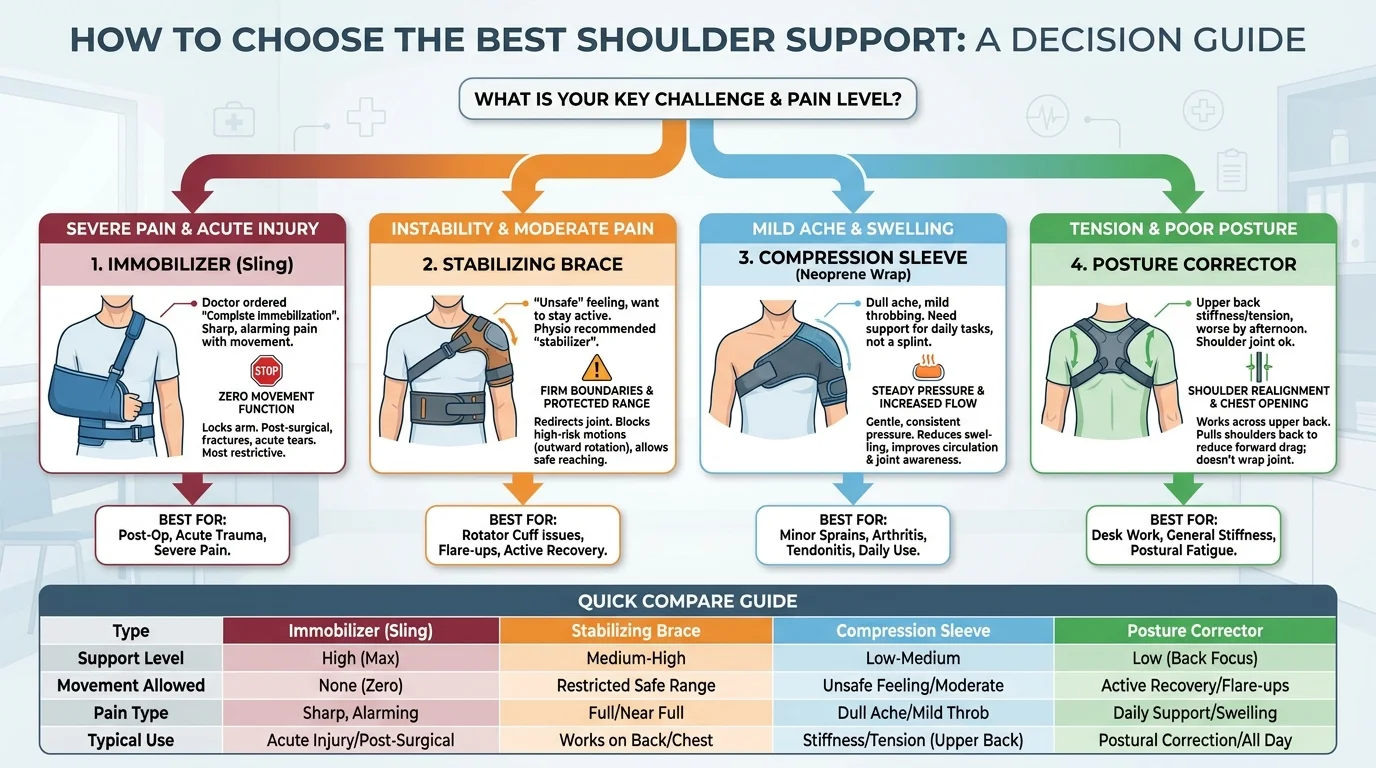
What Type of Shoulder Support Do You Need?
The Shoulder Immobilizer (Sling / Immobilizer)
This is the most restrictive option. That’s the whole point. A shoulder immobilizer uses a sling, a waist strap, and an extra shoulder band to lock the arm against the body. Almost zero movement. That’s not a flaw — it’s the function.
Quick self-check: Your doctor used the words “complete immobilization” or “abduction brace.” Or raising your arm at all causes sharp, alarming pain. Either way, this is your category.
The Stabilizing Shoulder Brace
A shoulder stabilizer brace doesn’t freeze your shoulder. It redirects it. Think of it as a firm boundary. It blocks the high-risk directions — outward rotation, extreme abduction — but you can still reach, carry, and move within a safe range.
Quick self-check:
– Your shoulder works day-to-day, but certain positions feel unsafe
– Your physio used the word “stabilizer”
– You want to stay active, not sidelined
The Compression Sleeve (Shoulder Support / Neoprene Wrap)
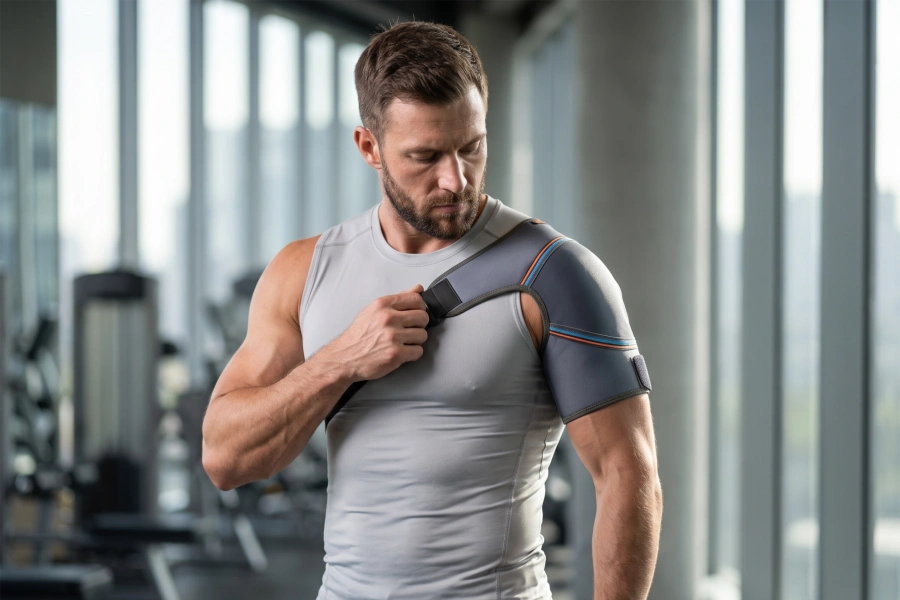
A shoulder compression sleeve or neoprene shoulder support doesn’t restrict your movement in any real way. What it does is apply steady, gentle pressure. That pressure reduces swelling, improves circulation, and sharpens your body’s sense of where the joint is sitting.
Quick self-check:
– You can lift your arm, get dressed, and carry light objects
– The pain is a dull ache or mild throb — not a sharp alarm
– You need support, not a splint
The Posture Corrector
A posture corrector works across the upper back and chest. It pulls the shoulder blades back, opens the chest, and takes the forward drag off the front tendons. It doesn’t wrap around the shoulder joint itself.
Quick self-check: Your shoulder function is mostly fine. It’s the stiffness and tension that gets to you — and it’s worst by 3pm.
The 30-Second Decision Table
|
Type |
Support Level |
Movement Restriction |
Best For |
|---|---|---|---|
|
Shoulder Immobilizer |
High–Maximum |
Almost complete |
Post-op, fracture, serious dislocation |
|
Shoulder Stabilizer Brace |
Medium–High |
Blocks high-risk directions |
Instability, recurrent dislocation, mid-recovery |
|
Compression Sleeve / Shoulder Support |
Light–Medium |
Minimal |
Mild strain, tendinitis, daily ache, sport use |
|
Posture Corrector |
Light |
Posture reminder only |
Desk-related tension, rounded shoulder pain |
One more thing worth knowing: the terms “shoulder support” and “shoulder brace” get used as if they mean the same thing online. They don’t. Shoulder support points to compression sleeves and light wraps — comfortable, flexible, built for all-day wear. Shoulder brace signals something stronger: a stabilizer or immobilizer built to control or restrict joint movement.
Match Your Shoulder Condition to the Right Brace Type
1. Rotator Cuff Strain or Tear
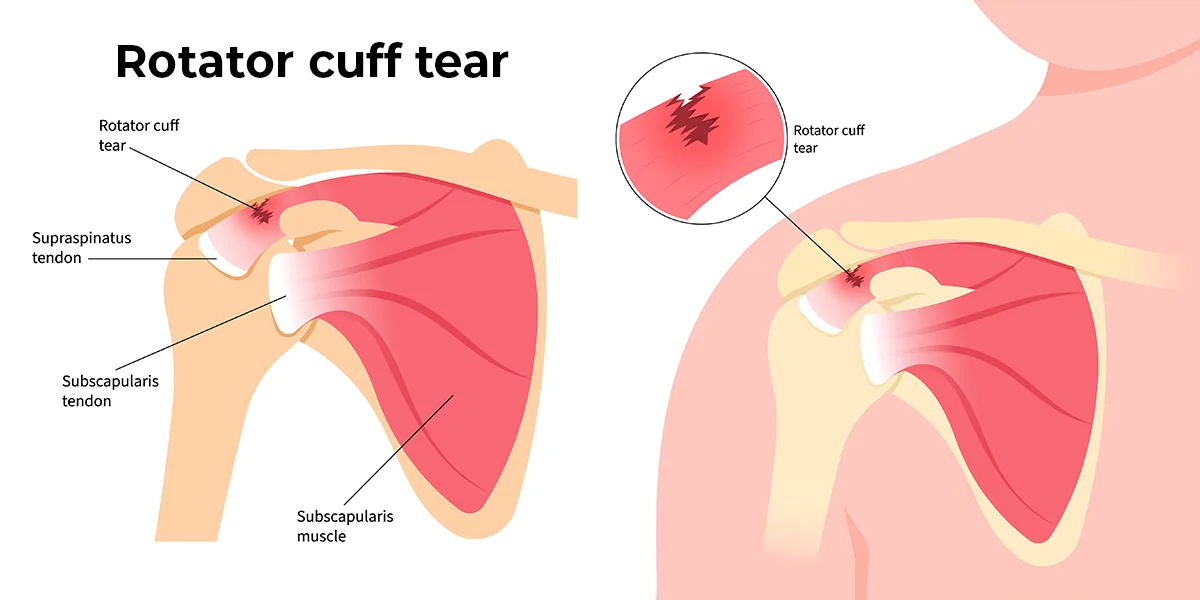
Mild strain (you can still lift your arm): A compression sleeve or rotator cuff support does the job. It puts steady, gentle pressure around the joint, cuts swelling, and sharpens joint awareness. Wear it during activity — 1 to 3 hours at a time works well.
Partial tear (night pain, limited reach): Move up to a shoulder stabilizer brace with cross-body straps. You need something that controls how far the arm lifts and how far it rotates.
Full tear or post-surgical repair: An immobilizer or sling brace for around 4 to 6 weeks. Worth knowing: research published on NCBI found that complex abduction braces showed no real advantage over standard slings in functional recovery or re-tear rates.
2. Shoulder Instability or Recurring Dislocation
Occasional instability during sport: A shoulder stabilizer brace built to limit external rotation and abduction. It lets you play while blocking the exact movement angles that cause dislocation.
Frequent partial dislocation in day-to-day life: Go with a higher-support stabilizer — one with multiple straps and a chest band. This holds the humeral head seated in the socket during normal movement.
Confirmed labral tear or multiple full dislocations: Search for braces labeled for shoulder instability or labrum tear support. Focus on strap design over compression level. Post-surgical cases need a prescription-grade immobilizer first. Switch to a stabilizer brace as healing moves forward.
3. Frozen Shoulder (Adhesive Capsulitis)
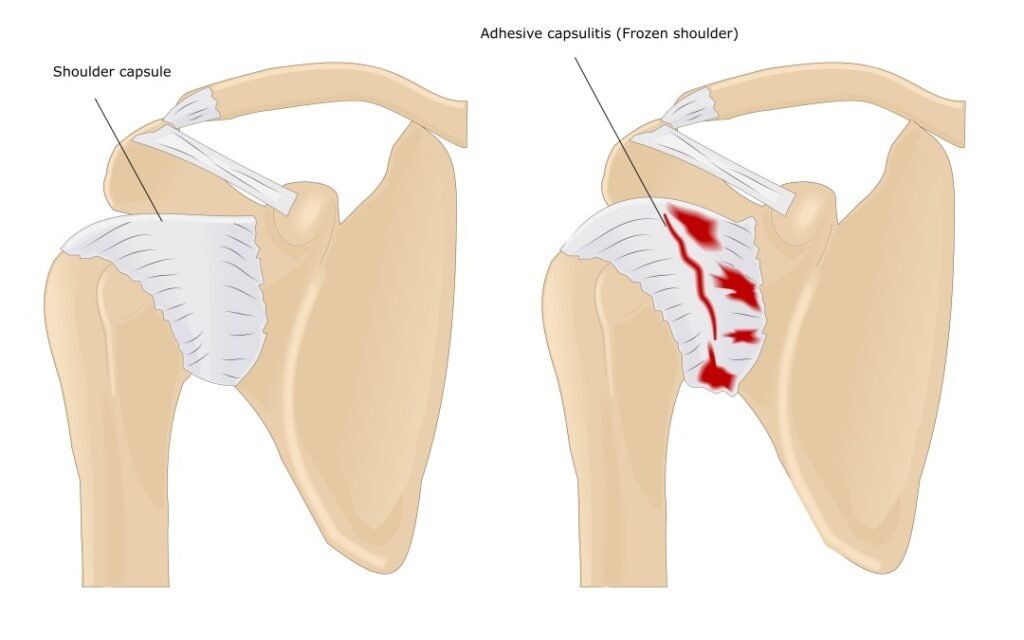
With frozen shoulder, the goal is controlled mobility — not rigid restriction.
Mild (slight stiffness, manageable night pain): A neoprene shoulder support with heat-retention properties. The warmth loosens stiffness before stretching. The gentle compression reduces aching during movement.
Moderate (difficulty dressing, can’t reach behind your back): An adjustable compression wrap is firm enough to reduce pain, flexible enough to allow the active range of motion your recovery needs.
Severe: Don’t self-select a brace. At this stage, physical therapy and short-term anti-inflammatory treatment should lead. Any brace here is pain-management support only. It’s not a rehab tool.
4. AC Joint Pain or Shoulder Arthritis
Mild arthritis (morning stiffness, aching after use): A compression sleeve with neoprene heat retention. It’s low-profile, comfortable all day, and proven effective for managing ongoing joint inflammation.
Moderate AC joint pain (pain lifting or carrying): An AC joint shoulder brace places a targeted compression pad over the acromioclavicular joint. Shoulder and chest straps then create a downward, inward force that takes the load off that joint.
5. Sports Overuse (Swimmer’s Shoulder, Thrower’s Shoulder, Impingement)
Mild (soreness after training, fine the rest of the day): A light compression sleeve — pull it on before a session, peel it off after. It reduces soft-tissue load and keeps your body aware of where the joint sits.
Moderate (pain during training, form breaking down): A sport-specific shoulder stabilizer brace with adjustable straps to limit end-range abduction and external rotation. This option is common among overhead and throwing athletes.
6. Posture-Related Shoulder Pain (Rounded Shoulders, Desk Fatigue)
A posture corrector or scapular brace — but there’s a catch. Studies show wearing one for 1 to 3 hours daily improves forward head posture and reduces upper trapezius fatigue. Wearing it all day, every day, builds dependency.
A Quick-Reference Condition Map
|
Condition |
Recommended Brace Type |
|---|---|
|
Mild rotator cuff strain |
Compression sleeve / rotator cuff support |
|
Partial rotator cuff tear |
Shoulder stabilizer brace |
|
Full tear / post-op |
Shoulder immobilizer / sling |
|
Shoulder instability / labrum |
Stabilizer brace (external rotation block) |
|
Frozen shoulder (mild–moderate) |
Neoprene wrap / adjustable compression |
|
AC joint arthritis |
AC joint shoulder brace |
|
Sports overuse (mild) |
Compression sleeve |
|
Sports overuse (moderate) |
Sport stabilizer brace |
|
Posture / desk fatigue |
Posture corrector (1–3 hrs/day) |
5 Key Factors to Evaluate Before Buying a Shoulder Support Brace
1. Support Level
Low support (light compression sleeves): minimal joint restriction, compression around 10–15 mmHg. Built for mild strains, desk fatigue, and low-intensity daily wear.
Medium support (cross-body or chest-strap designs): limits your range of motion to about 90° flexion and abduction. The right fit for moderate rotator cuff injuries, recurring instability, or mid-stage recovery.
High support (immobilizers and slings): restricts movement by 70–80% or more. Holds the elbow at 90° and the shoulder in 10–30° abduction. For fractures, acute dislocations, and early post-surgical recovery.
2. Sizing
Chest circumference: measure straight across just below the armpit, parallel to the floor
Bicep circumference: measure at the widest point of the upper arm, about 10–15 cm below the shoulder
A general sizing reference (varies by brand):
|
Size |
Chest |
Bicep |
|---|---|---|
|
S |
80–90 cm |
22–28 cm |
|
M |
90–100 cm |
28–34 cm |
|
L |
100–110 cm |
34–40 cm |
|
XL |
110–120 cm |
— |
On the borderline between sizes? Go smaller for firm sport protection. Go larger for long hours of wear or sleeping in it — to avoid skin marks and numbness.
3. Material
Neoprene (3–5 mm thick): firm, warm, and solid in support. The go-to for high-support braces and cold-weather recovery. The downside? It traps heat fast — most people notice real clamminess within 2–3 hours of active wear. Best in air-conditioned spaces, autumn/winter, or early post-op recovery.
Mesh (lightweight polyester or nylon): breathable enough for 6–8 hours of continuous wear. It’s less rigid on its own, so mesh braces pair with elastic straps or plastic inserts for added stability. Ideal for office days, driving, and sleeping.
Blended fabrics (neoprene panels + mesh or cotton zones): neoprene where support is needed, breathable fabric at the armpit, and back. Brand testing shows blended designs cut localized skin moisture by 10–20% compared to full neoprene. The solid middle ground for anyone who needs medium support across a long day.
Simple rule:
High-intensity sport → neoprene or reinforced neoprene.
All-day wear or warm climates → blended or mesh.
Post-op or cold-sensitive shoulder → neoprene.
4. Adjustability
A well-designed adjustable shoulder brace usually includes: one or two chest straps, an upper arm loop, a shoulder compression band, and sometimes a repositionable padding insert (adjustable by 3–5 cm).
Acute phase: tighten chest and arm straps to about 7–8 out of 10 perceived compression
Functional recovery phase: loosen by 5–10% every 1–2 weeks as mobility improves
Return to sport: keep the arm loop and shoulder band, ease off the chest strap for more freedom
5. Wearability
Most low-to-medium support braces sit 3–6 mm thick. That’s fine under a loose shirt or jacket, but noticeable under anything fitted. Plan to wear it under clothing? Look for blended or mesh construction with a total profile under 4 mm.
Best Shoulder Support for Sports & Athletic Performance
Sport needs a specific brace and support: support that moves with you, holds firm under sweat and impact, and doesn’t eat up half your range of motion. Here’s how to find the balance.
Compression vs. Stabilizing: Which One Belongs in Your Kit Bag?
Compression sleeves (light-to-medium support) are built for high-output activities. They deliver gentle, even pressure — in the 10–20 mmHg range — which sharpens body awareness and eases soft-tissue load without slowing you down.
Stabilizing braces (structured, multi-strap designs) work differently. They use cross-body straps and directional tension to control the humeral head — blocking forward, downward, or outward movements that cause dislocations.
Matched to Your Sport
Gym and strength training calls for a snug neoprene or elastic sleeve, 3–5 mm thick, with ventilation panels or perforations. Skip the rigid inserts. You need free shoulder flexion and external rotation for pressing and pulling.
Throwing sports — baseball, handball, javelin — need open, dynamic support through the full external-rotation-to-internal-rotation arc. Look for designs that keep full ROM (≥80–90% of natural movement). Some athletes pair a shoulder sleeve with an elbow support. This stabilizes the whole throwing chain and cuts peak torque at both joints.
Contact sports (rugby, hockey, wrestling) need the most protection. Multi-strap stabilizing braces with front and back padding are the standard here. These are built for recurrent dislocation, AC joint impact, and moderate separation. Shock Doctor’s Ultra Shoulder Support, for example, uses a multi-position X-Fit® cross-compression system. It’s rated for AC joint injuries and rotator cuff protection in contact situations.
Swimming is the outlier. A full stabilizing brace creates drag and blocks the overhead reach every stroke depends on. Swimmers with shoulder pain do better with a thin, quick-dry compression sleeve — or even kinesiology tape. Both preserve body awareness without changing stroke mechanics.
One Honest Caveat
A shoulder support is not a substitute for a warm-up. It’s also not a long-term fix on its own. Wearing a high-stabilization brace through every training session — without also building up your external rotators, lower trapezius, and serratus anterior — slowly weakens the muscles it’s meant to protect. Use it during high-load training and competition. Build the shoulder around it, not instead of it.
Best Shoulder Support for Daily Wear, Work & Recovery
For Office Work and Daily Wear
Shoulder pain tied to long hours at a screen? A posture corrector or light compression sleeve is your most practical option. Look for:
Thin, breathable construction
Weight under 200g
Strap width of at least 5 cm
One thing worth knowing about posture correctors: wearing one all day isn’t the goal. Start with 30–60 minutes, split across two or three sessions in week one. Build to 2–3 hours per day from week two onward. Wearing it longer than 3–4 continuous hours builds muscle dependency. Use it as a reminder, not a replacement for muscle control.
For Post-Surgery Recovery
Recovery moves in three stages. Your shoulder brace after surgery should move with it:
Weeks 0–6 (immobilizer/abduction sling): Full-time wear, including sleep. An abduction sling holds the shoulder at 15–45° of abduction. It keeps the elbow at 90° and cuts triangular muscle load by 15–20% compared to a standard sling alone.
Weeks 6–12 (functional stabilizer): Daytime wear, 2–4 hours at a stretch. Range of motion opens up step by step under medical guidance.
Week 12+ (compression support): A soft, 15–25 mmHg compression sleeve for work and light activity. This is your shoulder pain relief brace for the long road back to normal.
For Sleeping With Shoulder Pain
Pick a shoulder support for sleeping by one rule: nothing rigid, nothing tight.
Soft knit or perforated neoprene (2–3 mm, no hard inserts) works well for chronic arthritis pain and night aches. Post-surgical patients follow their surgeon’s protocol — an abduction sling with wide padded straps covers most people for the first 2–3 weeks.
What to skip: hard-frame stabilizers, posture correction bands with narrow straps (under 3 cm), and anything compressing above 25–30 mmHg. These create nerve pressure and cut off circulation through the night.
Conclusion
Choosing the right shoulder support isn’t just about buying a brace—it’s about giving your body the specific help it needs to heal, move, and feel normal again. Your injury type, daily habits, and skin sensitivity all matter. So ask yourself: Are you recovering from a rotator cuff tear? Managing AC joint pain? Training without making things worse? Your answer points straight to the right product. Explore AOFit’s full collection—filter by condition, support level, or activity. The right brace is out there, ready to work the moment you put it on.