
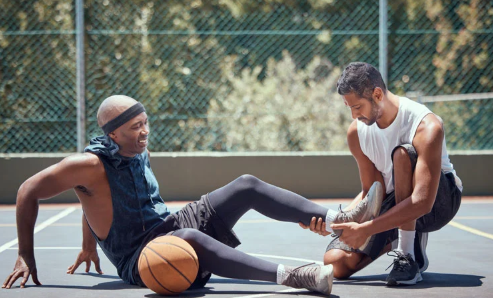
Basketball puts your ankles through explosive cuts, sharp direction changes, and high-flying jumps — every single one sends impact straight to your ankles. Ankle sprains make up 45% of all basketball injuries. That makes them the most common threat on the court.
So does an ankle brace for basketball actually work? The answer isn’t a straight yes or no. Your injury history matters. Your position matters. Your pain threshold matters. So does the type of brace you pick.
This guide gives you a science-backed, no-fluff look at ankle support for basketball — straight facts, clear breakdowns, and everything you need to make a confident call.
Should You Wear an Ankle Brace for Basketball?
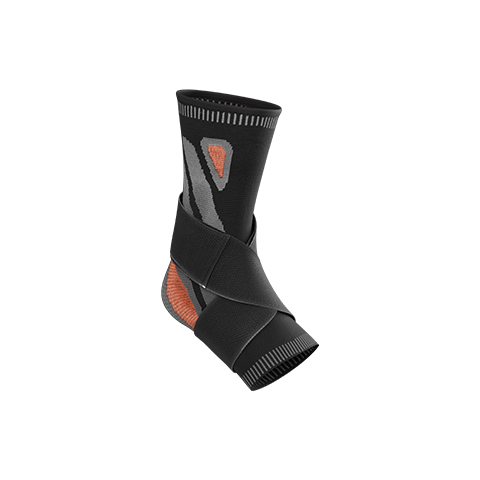
Short answer: yes, most basketball players should wear an ankle brace — but how strongly that applies depends on who you are.
The data is clear. A study tracked 1,460 high school basketball players. Athletes wearing lace-up braces got ankle injuries at a rate of 0.47 per 1,000 exposures. Players without braces? 1.41 per 1,000 — about three times higher.
That’s not a small gap. That’s a 67% reduction in acute ankle sprain risk.
Here’s who falls into the “yes, wear one” category:
- Players with 1+ ankle sprains in the past two years — repeat sprains are the strongest sign of future injury
- Guards and wings who do a lot of cutting and landing
- Youth and high school athletes — the research support is strongest for this group
- Anyone mid-recovery from an ankle sprain
Recreational players with no injury history and good balance training? A brace is optional — but it’s still a cheap way to protect yourself.
One key point: a brace doesn’t replace strength and proprioception training. It cuts down on injuries. It doesn’t fix or rebuild the joint. And the tight fit matters above everything else, so always match your size with the brace manufacturers’ ankle brace size chart.
How Wearing Ankle Braces Benefits Basketball Players
They Work on Two Levels at Once
First: mechanical restriction.
A lace-up or rigid brace limits how far your ankle can roll inward. Your foot hits the floor at a bad angle — on someone else’s shoe, on the court’s edge. The brace stops that motion before it reaches the point where your lateral ligaments tear. It doesn’t stop the roll. It stops the damage.
Second: proprioception enhancement.
This one surprises most players. The light compression of a brace against your skin and joint tissue sends constant feedback to your nervous system. Your brain gets better real-time awareness of where your ankle sits. Better position awareness means your muscles correct faster — before a sprain can develop.
Different Types of Basketball Ankle Braces
Two types of ankle braces dominate basketball: lace-up braces and hinged (rigid) braces. Each works on a different mechanical principle. Know the difference and you’ll land on the right fit for your situation.
Lace-Up Ankle Braces: Flexible Protection for Most Players
Lace-up braces combine a fabric shell with figure-8 cross straps. That setup wraps 360° around your ankle joint. It limits inward rolling — the exact motion behind lateral sprains — without locking the joint down hard.
The research is specific here. In the 1,460-player high school RCT, lace-up braces cut first-time acute ankle injuries by 68%. For players with prior sprains, injury rates dropped from 1.79 to 0.83 per 1,000 exposures — a 54% reduction. Those are real numbers, not rounding errors.
Why lace-ups work well for basketball players:
- Adjustable fit — tighten before tip-off, loosen after the final buzzer
- Low profile — sits flat inside most mid- or high-top basketball shoes without squeezing
- Price point — most quality options run $20–40, so they’re accessible for high school and recreational players
- Longer durability — the distributed lacing system spreads stress across more surface area than single-strap designs
One limitation worth knowing: fabric and straps wear out over time. Long, intense sessions can cause lace-ups to loosen and shift. You may need to re-tighten mid-game. They also cut into plantarflexion — the up-and-down foot motion you need for sprinting and jumping — more than rigid braces do.
Hinged Ankle Braces: Maximum Stability for High-Risk Players
Hinged braces use hard plastic shells along the inner and outer ankle, joined by a mechanical hinge. That structure handles something lace-ups can’t do: it takes the lateral force of a roll and moves it straight into the rigid frame. Your ligaments stay out of the equation.
The real engineering advantage is what the hinge allows, not just what it stops. It blocks dangerous inversion and eversion. At the same time, it keeps your natural plantarflexion range open. Your sprinting stride and vertical jump stay intact. Testing backs this up — no significant change in sprint speed, agility, or jump height with hinged brace use.
Where hinged braces have the clear edge:
- Superior lateral stability — hard shells stop the ankle from reaching the angle where ligament damage happens
- Consistent support — rigid frames don’t fatigue or loosen mid-game the way fabric does
- Post-surgical or chronic instability cases — players with torn ligaments or reconstructive surgery need this level of mechanical support
The trade-off: hinged braces are bulkier. Your basketball shoes need enough toe-box and ankle space to fit the shell. Prices run $35–80 per brace, with premium models going higher. These don’t work in tight-fitting shoes.
Lace-Up Ankle Braces vs Hinged Ankle Braces: Which One Should You Choose?
Here’s the decision logic, kept simple:
| Your Situation | Best Choice |
| No injury history, playing for fun | Lace-up |
| 1–3 mild sprains, occasional instability | Lace-up for practice; consider hinged for high-stakes games |
| 4+ sprains or Grade II–III ligament damage | Hinged brace |
| Returning from surgery or serious sprain | Hinged brace |
| Priority is natural feel and breakaway speed | Lace-up |
| Priority is maximum protection over flexibility | Hinged brace |
The bottom line: lace-up ankle braces cover most basketball players most of the time. They’re effective, affordable, and built for regular use. Hinged ankle braces make sense as an upgrade once your injury history or competition level calls for stronger mechanical defense. Not sure which category fits you? The checklist in the previous section gives you the clearest answer.
How to Wear an Ankle Brace for Basketball
Putting on an ankle brace wrong is almost as bad as not wearing one at all. The fit determines the protection. Get it right, and you cut your first-time sprain risk by up to 61%.
Here’s the exact process that works.
The Five-Step Wearing Process
Step 1: Start with the right sock.
Wear a mid-calf or tall moisture-wicking athletic sock. The brace goes over the sock — always. Keep your skin dry. Lotion or heavy sweat makes the brace slide inside your shoe. That kills its protective effect.
Step 2: Seat your heel fully.
Sit down. Bend your knee to about 90°. Hold your ankle in a neutral position — no inward or outward tilt. Slide your foot in and push your heel all the way into the back cup. No bunching, no gaps. The top edge should sit at least 3–4 cm above your outer ankle bone. That coverage matters.
Step 3: Lace it from the bottom up.
Tighten from the toe end toward your shin — one eyelet at a time. The right tension: one finger fits between the lace and your foot. Toes go pale, numb, or tingly within two minutes? Loosen it. Too tight is counterproductive. Restricted blood flow increases swelling, dulls your landing sense, and raises re-sprain risk.
Step 4: Fix the figure-8 straps.
On lace-up braces like the ASO or DonJoy style, the cross straps do the heavy lifting against inversion. Strap A runs from the outside, crosses the top of your foot at an angle, goes under the arch and heel, then wraps up to the inner ankle. Strap B mirrors it in reverse. Pull each strap to about a 4–5 out of 10 tension level — firm, not strangling. Finish with the horizontal compression strap across the top to lock both cross straps in place.
Step 5: Put your shoe on last — and lace it up tight.
The correct order is: skin → sock → brace → shoe. Loosen your laces all the way down before stepping in. Once your foot is seated, lace up from the bottom. You can leave the top one or two eyelets a little loose to ease calf pressure. Then do 10–15 lateral shuffles and hard stops. Heel shifts more than 3–4 mm inside the shoe? Re-tighten both the brace straps and your laces. The brace and shoe need to work as a single locked system — not two separate layers.
The Mistakes That Kill Your Protection
Wearing it too tight cuts off circulation, muffles your landing feedback, and can trigger swelling — the exact opposite of what you want.
Wearing it too loose means the brace rotates inside your shoe during cuts. At that point, your ankle protection is about as useful as wearing an extra sock. The brace edge also grinds against your skin and causes blisters on the outer ankle.
Misaligning the heel cup is the most common error that goes unnoticed. Heel floats even 5–10 mm above the cup? The lateral support struts shift off-center. They no longer cover the ATFL — the exact ligament that tears in most basketball sprains.
Skipping re-checks mid-game is a real problem. After 30–60 minutes of play, sweat and material fatigue reduce brace tension by around 10–20%. Check your cross straps and laces between quarters. A quick 15-second tug test is all it takes.
Shoe Compatibility: One Size Does Not Fit All
Traditional lace-up basketball shoes — think Kyrie, LeBron, or Jordan series — pair well with most standard ankle braces. The adjustable lacing handles the extra volume. You wear a US 10? Start with the same size using a standard-thickness brace (under 3 mm). Toes feel compressed? Go up half a size and test lateral movement.
Slip-on or knit-upper shoes are a different story. These designs count on a snug elastic fit. A standard-thickness brace creates pressure points, heel lift, and friction folds. Use a thin stabilizer sleeve under 1.5–2 mm or switch to a traditional lace-up shoe. Don’t force a thick brace into a tight knit upper. The poor fit reduces protection and raises blister risk.
FAQs About Basketball Ankle Braces
Do Ankle Braces Affect Your Basketball Performance?
NO. Multiple studies have tested this. One randomized crossover trial put 12 high school basketball players through vertical jumps, standing long jumps, cone runs, and 18.3-meter shuttle sprints. Researchers tested three different brace types against no brace at all. The result? No significant effect on athletic performance for any brace in any test. Not at first. Not after a full week of wearing the brace either.
Do ankle braces increase knee injury risk?
This concern comes up a lot. Lab studies do show some changes in landing mechanics. But real in-season data tells a different story. No increase in knee injury rates has shown up in braced athletes across multiple field studies.
Are ankle sleeves enough for game play?
No. Sleeves compress. They don’t stabilize. In cutting, landing, and contact situations, a sleeve won’t stop your ankle from rolling past the point of ligament damage. Use sleeves for swelling management and post-game recovery. For actual game protection, you need a lace-up or hinged brace.
Should you brace one ankle or both?
One unstable ankle? Brace that side. Instability on both sides, or multiple sprains on each? Brace both. Bracing cuts injury risk by 2–3×. That benefit applies to whichever ankle you brace — so both sides deserve protection when both carry risk.
Conclusion
Here’s what the evidence makes clear: ankle braces work. They cut sprain risk, build recovery confidence, and give you the stability to play hard. No more second-guessing every cut and pivot. You’re a weekend warrior, a recovering athlete, or a parent prepping a young player for the season — the right ankle support for basketball isn’t a weakness. It’s a competitive advantage.
Ready to update your product line of custom ankle brace for your sports brands? Contact AOFIT now.