
Your wrist has been nagging you for days. You search online and land on two options: a wrist splint and a wrist brace. The photos look almost identical. The names seem like they mean the same thing. But picking the wrong one could cost you weeks of slow progress instead of real recovery.
These two supports are more different than most people think. It all comes down to how much your wrist needs to be held still.
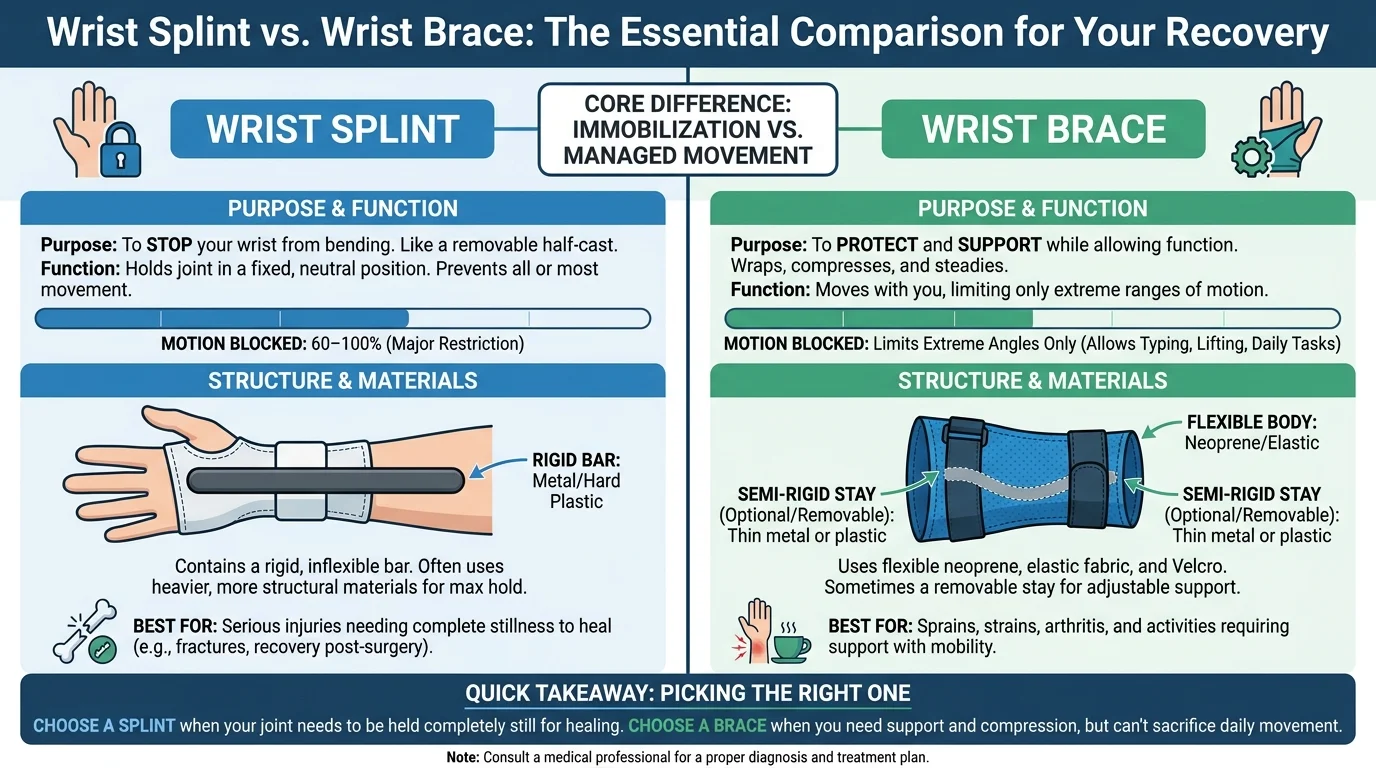
This article is a clear breakdown of what sets them apart — which conditions each one is built for, and how to pick the right wrist support for what your body is telling you.
What’s Inside Each One — And Why It Matters
The real difference isn’t in the name. It’s in the hardware.
A wrist splint contains a rigid bar — metal alloy or hard plastic — running from your forearm into your palm. That bar does one job: it stops your wrist from bending. Think of it as a removable half-cast. It holds your joint in a neutral position and doesn’t give way.
A wrist brace uses flexible materials — neoprene, elastic fabric, sometimes a soft, removable stay. It wraps, compresses, and steadies your wrist. But it moves with you, not against you.
That difference changes everything:
- Wrist splints block 60–100% of wrist flexion and extension
- Wrist braces limit extreme ranges of motion while letting you type, lift, and carry on
One prevents movement. The other manages it. These two are not interchangeable — and that gap has real consequences when healing is on the line.
What Is a Wrist Brace? (Structure, Materials & How It Works)

A wrist brace is built around one core idea: to protect the joint without taking away your life. It blocks the angles that cause damage — extreme flexion, sharp sideways bends. At the same time, your fingers can still type, your hand can carry a coffee cup, and your wrist can function in daily life.
What’s Inside
- A flexible main body — neoprene (2–4mm thick) or a breathable elasticized fabric blend. Neoprene adds warmth and even compression, which works well for sprains. Fabric blends breathe better and suit all-day wear.
- A rigid or semi-rigid stay — a thin metal or plastic bar that runs along your palm side. It holds your wrist near a neutral position, around 0–15° of extension. This is where the real support lives.
- 2–3 adjustable velcro straps — these let you dial in compression and keep the stay pressed against the right spot on your wrist.
Some wrist braces also include thumb loops for carpal tunnel support. Others add ventilation panels to stop that damp, overheated feeling after eight hours of wear.
How It Works
The wrist brace redirects force. Instead of all the pressure landing on one small wrist joint, it spreads across your forearm and palm. You feel resistance before you reach a dangerous angle — and you stop naturally. A flexible wrist brace doesn’t lock you down. It steers you away from harm while letting you keep moving.
Wrist Brace: Conditions & Scenarios It’s Best For
A flexible wrist brace works well in specific conditions — where your wrist needs support, not total restriction. Here’s where it actually helps:
-
Carpal tunnel syndrome is the strongest match. A night wrist splint or brace holds your wrist in a neutral position while you sleep. That’s the position that takes pressure off the median nerve. During the day, put it on for a few hours when repetitive tasks flare up your symptoms.
-
Wrist sprains, tendonitis, and RSI respond well too. The wrist brace takes on the load during movements that hurt most — typing, gripping, and lifting. Your tissue has a chance to heal without constant strain.
-
Arthritis benefits most during demanding tasks you already know will aggravate your joints. Put it on. Do the task. Take it off. Wearing it all day can cause stiffness to build up — the opposite of what you want.
Scenarios That Call for a Wrist Brace
| Situation | When to Wear |
|---|---|
| Office/desk work | Extended typing or mouse sessions trigger pain |
| Manual labor | Lifting, carrying, repetitive force tasks |
| Gym workouts | Wrist-loading movements during active recovery |
| Sleep | Carpal tunnel night bracing — most effective use pattern |
| Post-injury recovery | After cast removal or mild sprains |
What Is a Wrist Splint? (Rigid Bar Design & Immobilization Logic)
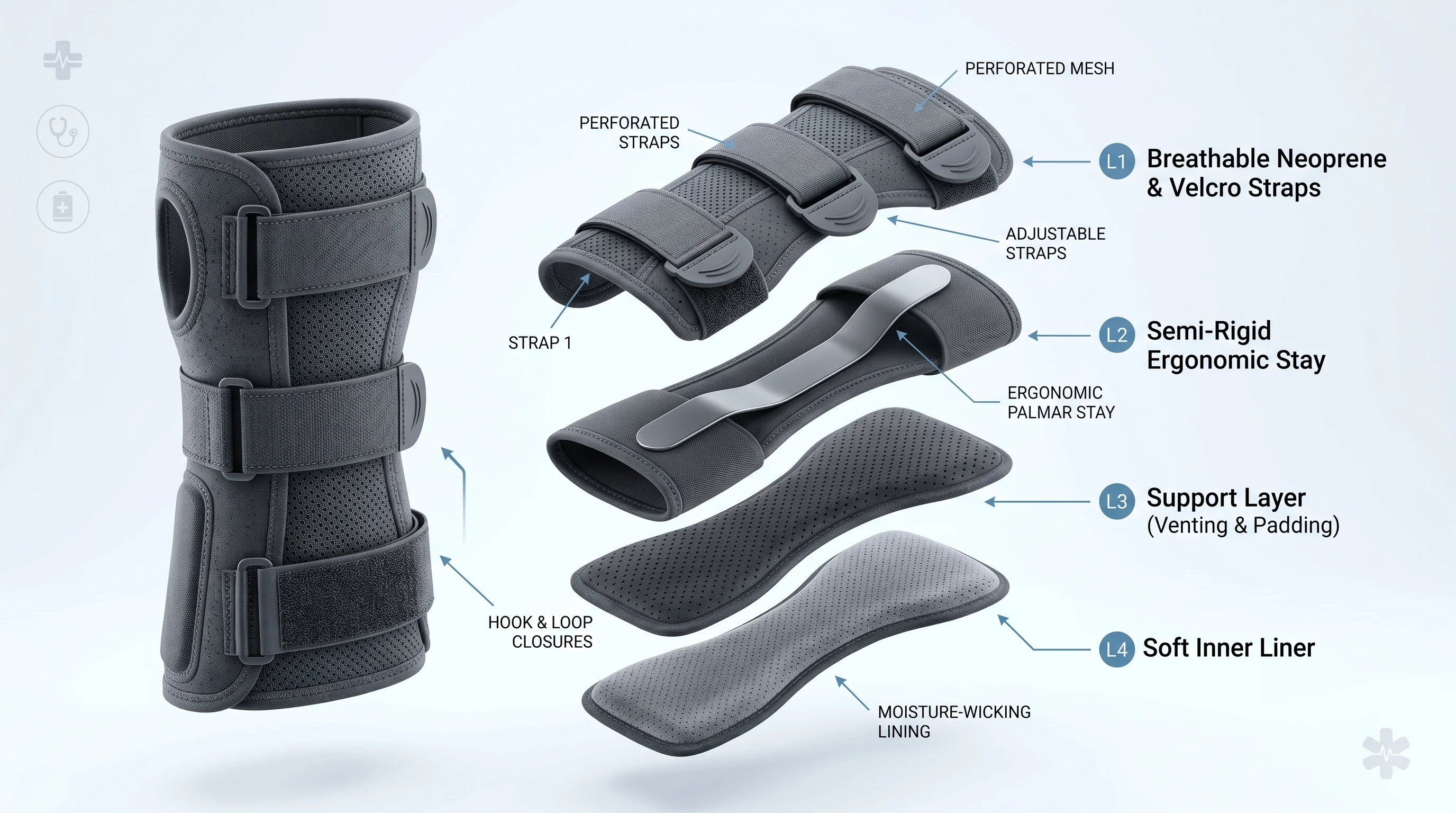
A wrist splint has one job: to stop your wrist from moving. It does not bend on this.
Every splint contains a rigid bar. It runs along either the palm side or the back of your hand. That bar can be metal alloy, hard plastic, or a 3.2mm thermoplastic shell. It locks your wrist into a neutral or extended position and holds it there. No give. No movement at all. This is called wrist immobilization. The logic is simple: the less your injured joint moves, the less it irritates the surrounding tissue. For healing tendons, compressed nerves, or post-surgical wounds, that stillness is the actual treatment.
Where the Bar Sits — And Why It Changes Everything
Splint design splits into two camps:
- Volar (palm-side) splints — the rigid bar runs along the underside of your wrist and forearm. You get a strong fixation, but the bar takes up your palm, limiting grip.
- Dorsal (back-of-hand) splints — the bar sits on top, leaving your palm wide open. Better for typing, using a mouse, or holding a phone.
The dorsal design is why many carpal tunnel splints let people keep working at a keyboard. You get genuine, rigid wrist support without losing the use of your hand.
Adjustable vs. Fixed Rigidity
- Basic splints use a single material at a fixed strength. These work best for acute wrist injuries, fractures, and post-op recovery — situations where any movement sets back healing.
- Adjustable splints let you pull out or reshape the metal stay. That suits people whose pain shifts day to day. Tighten the support during a flare-up. Scale it back on a better day.
Wrist Splint: Conditions & Scenarios It’s Best For
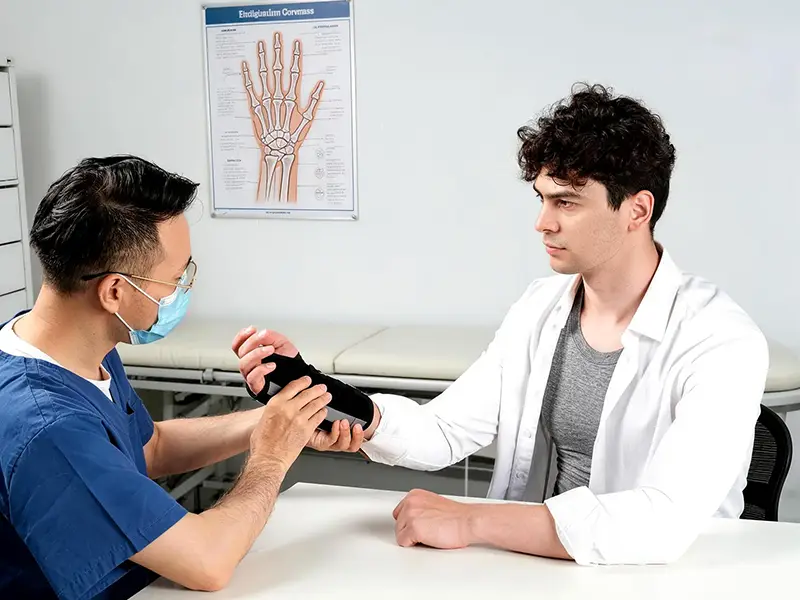
Rigid support isn’t for everyone. But some wrist injuries need full immobilization — a fracture, a surgery, a serious ligament tear. In those cases, a wrist splint isn’t optional.
Fractures and Acute Trauma
Scaphoid fractures make up 70% of all wrist bone fractures. For this type of injury, doctors apply a thumb spica splint right away — not a soft brace. The rigid bar keeps bone fragments from shifting. It also protects the blood supply to the area while swelling builds up.
Post-Surgical Recovery
After procedures like scaphoid screw fixation or TFCC repair, surgeons use a removable wrist splint to protect internal sutures and hardware. You can adjust the compression as swelling changes — something a cast won’t let you do. Full-time wear covers the first 1–3 weeks. After that, wear time decreases as healing progresses.
Moderate-to-Severe Carpal Tunnel Syndrome
That deep 3 am numbness that won’t let you sleep? That’s carpal tunnel doing its worst. A night wrist splint holds your wrist at a neutral 0° position through the night. Without it, your wrist curls during sleep. That curl presses on the median nerve, and the longer it sits that way, the worse it gets.
Clinical guidelines recommend 6–12 weeks of nightly wear for mild-to-moderate CTS. It’s one of the strongest conservative treatment options with real evidence behind it.
Severe Sprains and Ligament Injuries
A Grade II or III wrist sprain needs real immobilization in the first 48–72 hours — not just compression. A rigid splint limits movement so damaged ligament fibers can start repairing at the right length. Once the acute swelling goes down, you can switch to a flexible brace for activity-based support.
Wrist Tendonitis Flare-Ups (Including Tenosynovitis)
A wrist tendonitis splint cuts down on how much the inflamed tendon slides through its sheath. Less sliding means less friction, which in turn means less inflammation and faster recovery. Most clinical protocols recommend 2–6 weeks of splint use during acute flares, with wear time dropping as pain fades.
One rule holds across all of these: extended full-time immobilization has real costs. Once the acute phase passes, muscle atrophy, joint stiffness, and tendon adhesion become real risks. A splint protects healing tissue — it doesn’t do the recovery work for you. As pain improves, cut back on wear time and add gentle range-of-motion exercises with guidance from your provider.
Wrist Splint vs. Wrist Brace: 6 Key Differences at a Glance
| Wrist Splint | Wrist Brace | |
|---|---|---|
| Structure | Rigid or semi-rigid; metal bar or hard plastic stay | Flexible; neoprene or elasticized fabric |
| Immobilization Level | High — built to restrict movement | Moderate — stabilizes while keeping range of motion |
| Comfort & Breathability | Firmer fit; can feel warm with extended wear | Softer, more wearable through a full day |
| Best Time to Wear | Night, or the first days of acute recovery | Daytime activity and ongoing support |
| Injury Severity Match | Moderate to severe — fractures, post-surgical, serious sprains | Mild to moderate — sprains, carpal tunnel, RSI, prevention |
| Long-Term Wearability | Short-term use; too much immobilization has real costs | Better suited for sustained, repeated daily wear |
How to Choose Between a Wrist Splint and a Wrist Brace?
Not every wrist problem needs the same fix. Work through the four questions below to find the right support for your situation.
Step 1: Check for Red Flags First
Before picking any brace or splint, pause. Some symptoms need a doctor, not a device.
Go to urgent care if you notice any of the following:
– Visible deformity — your wrist looks crooked or “off”
– Pain at 8/10 or higher, or you can’t move your fingers at all
– Sudden loss of grip, dropping objects without meaning to
– Rapid or spreading numbness through your thumb and first two fingers
– Your hand looks pale, bluish, or feels colder than the other side
– The injury followed a fall from height, a road accident, or a crush
If any of those fit, stop here. Get evaluated first. Pick a device after.
Step 2: Four Questions That Lead to Your Answer
1. Acute or chronic?
– Sudden injury within the last two weeks → lean toward a wrist splint
– Gradual onset, long-term overuse, CTS, or arthritis → wrist brace by day, wrist splint at night or during flare-ups
2. How severe is the pain?
| Severity | Daytime | Nighttime |
|---|---|---|
| Mild (≤4/10, full motion) | Wrist Brace | Nothing needed, or a light wrist brace |
| Moderate (4–7/10, limited motion) | Wrist Brace if working; wrist splint if resting | Wrist Splint |
| Severe (≥7–8/10, significant limits) | Wrist Splint — plus see a provider soon | Wrist Splint |
3. Do you need to keep functioning?
– Must type, drive, or carry things → wrist brace
– Can fully rest the wrist → wrist splint during high-demand moments
4. What’s your specific pattern?
– Night numbness wakes you up, and you shake your hand out for relief → rigid night splint, neutral position, 6–8 hours each night
– Wrist ache builds after keyboard hours, no numbness, full motion → daytime wrist brace only. Ergonomic adjustments matter more here.
– Post-surgical recovery → follow your surgeon’s protocol. A rigid wrist splint covers the first 1–2 weeks. Then switch to a wrist brace as motion comes back.
Top Picks: Best Wrist Splints and Wrist Braces from AOFIT
AOFIT’s lineup matches every product to a specific situation.
- AOFIT Custom Wrist Brace — A solid choice for clinics, distributors, or brands building their own product line. You can customize materials (neoprene, mesh, memory foam padding), stay hardness, thumb loop design, and sizing range. CE/FDA-compliant options are available. MOQ starts at 300–500 pieces per style.
- AOFIT Wrist Brace with Thumb Support— Built for anyone who spends 6–8 hours a day at a keyboard. Also great for managing mild-to-moderate carpal tunnel syndrome or wrist tendonitis. You get a breathable, durable brace. Plus, it fits either hand, which takes care of one of the most common ordering mistakes. This is the orthopedic wrist support that holds up through a full recovery cycle.
- AOFIT Wrist Support with Straps— Built for training, post-injury transition, and everyday use. Elastic construction with adjustable straps gives you graduated compression. Your fingers and palm stay free to move. This is the natural next step after stepping down from a rigid wrist splint. You get enough structure to feel protected — without losing range of motion.
- AOFIT Wrist Splint—Designed for nighttime immobilization, acute injury recovery, or post-surgery protection. The removable metal stay holds your wrist near neutral, which cuts down on flexion and relieves carpal tunnel pressure. When symptoms ease, simply remove the stay and transition to a soft support. Breathable, washable fabric and a one-hand hook-and-loop closure ensure comfort during long hours of wear. Fits both left and right wrists — a versatile solution for clinics and home use.
Conclusion
Choosing between a wrist splint and a wrist brace doesn’t have to be confusing. It comes down to one simple question: what does your wrist need right now? The right choice protects your recovery. The wrong one delays it. Browse AOFit’s full wrist support collection at aofitbrace.com to find the exact fit for your condition, lifestyle, and healing.