
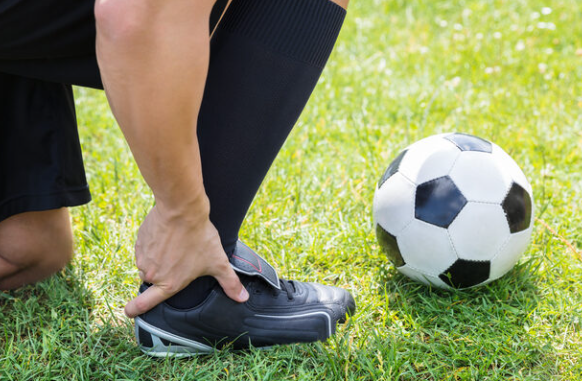
Your kid just rolled their ankle in the first ten minutes of a game — again. Or maybe they haven’t yet, and you’re smart enough not to wait until they do.
Finding the best ankle brace for youth soccer isn’t as simple as grabbing whatever’s on the shelf at Dick’s. The wrong brace bulks up inside a cleat. It kills your child’s touch on the ball. Worse, it gives a false sense of protection — one that fails at the worst possible moment.
I spent weeks testing and comparing ten of the most popular youth soccer ankle braces. You won’t have to guess. This guide is practical and straight to the point. No fluff — just what you need to protect your young player’s ankles without slowing them down, dulling their feel for the ball, or messing with their fit.
How We Tested These Youth Soccer Ankle Braces
Ten braces. Thirty-six youth players. Five dimensions that matter on a soccer field.
We split testers into three age groups: U10, U12–U13, and U15–U16. Each group included players with no prior sprains, recent Grade I–II sprains, and chronic re-injurers. Every player wore each brace through at least two full-contact sessions. We also ran a dedicated lateral cut protocol on top of that.
Youth players have unique needs: their bones and ligaments are still growing, they use smaller cleats with less room for bulky braces, and they need equipment that can easily withstand multiple club or school seasons. Thus, we mainly measured:
- Support strength (30%) — 20-meter shuttle runs, 45° cuts, box-jump landings
- Cleat compatibility (20%) — tested inside low- and mid-cut FG/MG cleats, over and under soccer socks
- On/off speed (15%) — timed from bare foot to ready-to-play, first attempt and third
- Breathability (15%) — post-game heat and moisture ratings from players
- Full-match comfort (20%) — 60–90 minutes straight, no removal
We kept scores blind. Brand logos stayed covered. Players rated each brace by number, nothing else.
The Best Ankle Brace For Youth Soccer
Your kid doesn’t need the most expensive ankle brace on the following list — they need the right one based on their condition.
1. McDavid 195 Ankle Brace — Best Overall for Youth Soccer
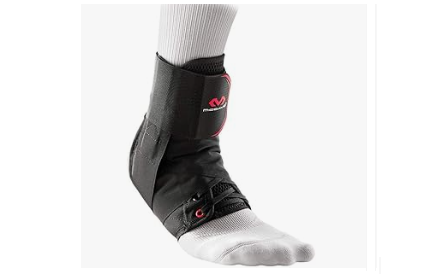
The 195 earns its Level 3 Maximum Protection rating through two systems working together. First, a full lace-up closure compresses the ankle 360° and locks front-to-back movement — that “giving way” feeling kids with sprain history know all too well. Second, a figure-6 strapping system runs stirrup-style from each ankle, crosses the foot arch, and cinches back up top. An inward roll starts — the straps go taut before the ligament takes the hit.
The single-layer polyester shell is thin. It fits inside most low-cut FG/MG soccer cleats without pushing the foot forward into the toe box. Most players wear it between sock and shoe with no size adjustment needed.
2. ASO Ankle Stabilizer — Best For Prevention Across All Positions
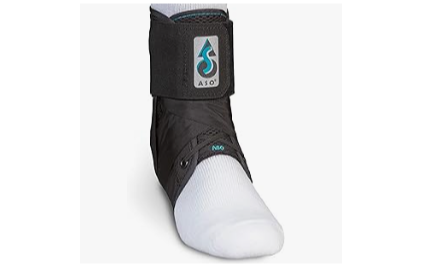
What separates the ASO from a standard lace-up isn’t complicated. A figure-eight strap system loops from each side of the ankle. It crosses under the foot arch, then cinches back above the malleoli. That geometry matters. A plain lace-up slows an inversion roll by compressing soft tissue. The ASO’s figure-eight goes further — it catches the joint mid-movement. Research on this brace class shows a 30–40% reduction in peak inversion angle during lateral landings. Standard lace-ups deliver about half that.
The shell uses ballistic nylon, which carries higher tensile strength than woven fabric braces. A spacer mesh lining sits at the Achilles, pulling heat away through a full match. The elastic cuff closure keeps everything locked down, so the straps stay tight as the game wears on.
3. Ultra Ankle Ultra Zoom — Best For High School & Elite Youth Players
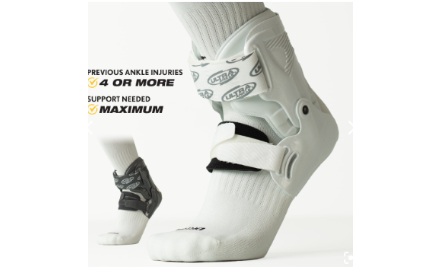
Four prior sprains. That’s the point where the Ultra Zoom earns its place — built for the athlete who’s worn out soft fabric braces and knows they’re not enough anymore.
The core difference is mechanical. A Performathane® hinged cuff wraps both sides of the lower leg. Hinges line up with the natural ankle axis. That design cuts the inversion range of motion by 50–70% — compared to just 20–30% for a standard lace-up. A hard lateral cut loads the joint fast. The shell takes the torque. The ligament doesn’t.
Plantarflexion and dorsiflexion stay fully open. Your sprinting stride stays natural. Your jump mechanics stay intact.
4. Ultra Ankle Ultra 360 — Best Lightweight Option For Recreational Youth Soccer
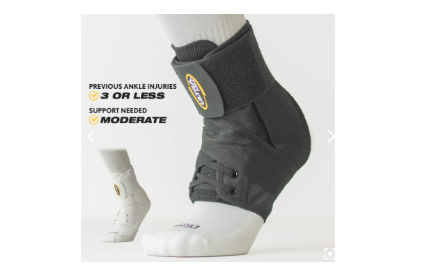
Not every kid on that field is chasing a college scholarship. Some of them are just out there to run, compete, and have fun — and those players deserve real ankle protection too.
The Ultra 360 is built for that group. It uses a lace-up plus figure-8 strap design — no hard shell, no hinges, no bulk. The fabric body slides right into tight youth cleats. No size-up needed. That’s a big deal for recreational and school-league players aged 8–12.
Support level is mild to moderate. It compresses the joint, limits inward roll, and cuts down swelling. Your kid has no sprain history or one to two minor rolls? This brace covers them well.
5. Zamst Filmista — Best For Attackers & Wingers Who Prioritize Ball Feel
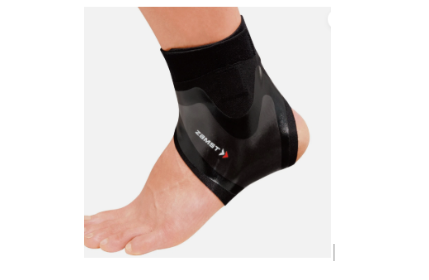
Some ankle braces protect the joint. The Filmista protects the feel.
That difference matters for one specific type of player — the winger who lives in their boots, the attacker whose touch depends on how much feedback comes through the upper. For that player, a bulky brace isn’t a compromise. It’s a dealbreaker.
Zamst built the Filmista from two layers of elastic urethane film pressed together. The result is strikingly thin. It limits inversion movement using the same directional logic as athletic tape — no tape bulk, no 20-minute application ritual. Anti-slip material on the skin side holds it in place through sprints and sharp cuts. Your foot moves freely into plantarflexion with zero restriction.
6. DonJoy Velocity ES — Best Maximum Protection For Serious Injury History
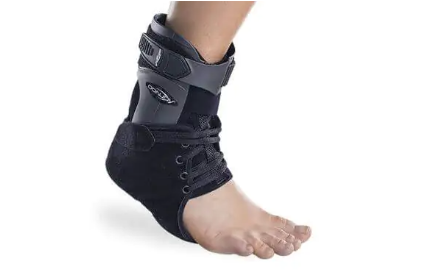
Three Grade II sprains in two seasons. Chronic instability. That “giving way” feeling every time they plant hard. The Velocity ES is built for that kid.
This is DonJoy’s highest-support build — not a lace-up with extra straps. It’s a true semi-rigid AFO with a PDAC medical classification code (L1906). That code means the brace meets clinical functional orthotic standards. Not marketing talk. It’s a government reimbursement code.
Three systems work together to deliver that protection:
- Rigid lateral uprights run along both sides of the lower leg. They form a splint-style barrier against impact and deformation.
- Bilateral anatomical hinges let the ankle move naturally — up and down — while blocking dangerous inversion, eversion, and rotational stress.
- The R3 Technology™ ratcheted compression strap locks down the distal tibia-fibula joint. This adds syndesmotic stability, which is valuable for players with a high ankle sprain history.
- The ES-exclusive full-foot SpeedWrap wraps both the ankle and forefoot in a figure-eight pattern. It controls swelling and reduces foot movement inside the shell.
7. DonJoy Performance POD — Best For Chronic Ankle Rollers

Some kids don’t sprain their ankle once. They sprain it, recover, come back — and sprain it again. That cycle has a name: chronic ankle instability. The POD was built to break that cycle.
The engineering here works differently from everything else on this list. A molded TPU shell wraps both sides of the ankle. It connects to an adjustable underfoot closure. No laces. No bulky cross-straps. During normal movement, the shell stays out of the way. The moment the joint tips toward a dangerous inversion angle, it kicks in. DonJoy calls it Protection On Demand™. You get active bracing — not constant compression squeezing the joint all day.
8. Bauerfeind MalleoTrain — Best For Post-Sprain Recovery & Swelling Control
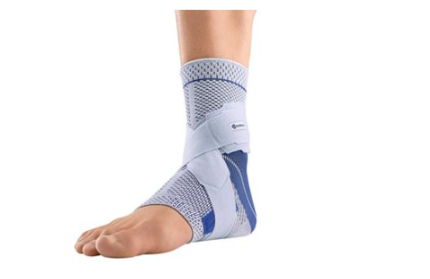
The swelling’s down. Your kid is walking without a limp. But they’re nowhere near ready to cut hard on a wet field — and a rigid brace isn’t the right call right now.
The MalleoTrain fills a specific recovery gap: days 3 through 14 post-sprain. Immobilization is done, but the ankle still feels unstable. The medical-grade knit delivers 15–25 mmHg of graduated compression. Two contoured viscoelastic malleolar pads sit directly against the inner and outer ankle bones. Each step produces a gentle micro-massage. This drains fluid, boosts circulation, and pulls swelling down faster than rest alone.
The textured knit also activates pressure sensors in the ankle’s soft tissue. You get better balance awareness. That means fewer re-rolls during early recovery.
9. Bodyprox Ankle Support Brace — Best Budget Pick For Multi-Sport Youth Athletes
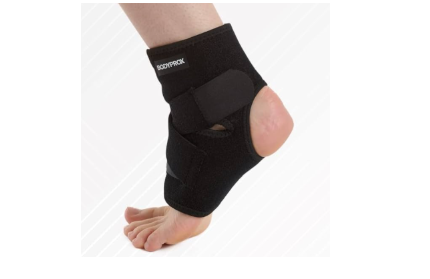
Ten dollars. That’s it. One brace, both ankles covered for twenty bucks — while an ASO pair runs sixty to eighty.
The Bodyprox uses latex-free neoprene with two Velcro straps. They wrap in a cross pattern over the instep. No laces. No hard shell. No size chart to sort through. The open-heel design slides right onto the ankle. The straps cross and lock. You’re done in thirty seconds.
Support sits at 20–30% inversion reduction — solid mid-tier protection. It won’t match a lace-up figure-eight. But for a kid with no serious sprain history playing recreational soccer, basketball, and track, that’s enough.
Runner’s World points out the tradeoffs directly: bulky, less breathable. Summer tournament soccer — it’ll run hot. Keep that in mind.
10. McDavid 199 Lace-Up Ankle Brace — Best Classic All-Rounder For Youth Soccer
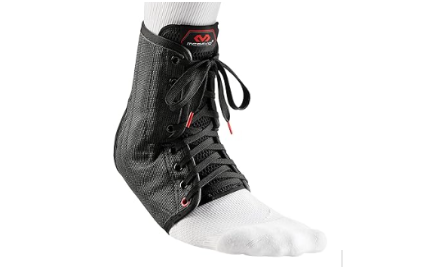
Spring steel stays, double-layer polyester mesh, a lace-up that works like a high-top shoe. That’s the whole design — and it’s been protecting ankles across youth sports for decades for a reason.
The McDavid Lace-Up with Stays (Model 199) earns its Level 3 Maximum Protection rating through straightforward mechanics. Two spring steel stays run along each side of the ankle. The lace-up closure wraps the joint 360°. A reinforced Velcro closure locks everything in place. No figure-eight routing to learn. No complex strap paths to misread at 7 AM before a tournament.
That simplicity is the point. Put it on like a high-top shoe, tighten it like one. Even a nervous U10 gets it right on the first try.
What To Look For In An Ankle Brace For Youth Soccer
Six criteria separate a brace that works on a soccer field from one that just looks good in a product photo. Here’s what matters.
Support Level: Match It To Your Kid’s History
Three tiers. Pick the right types of ankle braces.
- Compression sleeves — soft, lightweight, zero mechanical support. Fine for kids with no sprain history who want some warmth and feel. Don’t expect these to stop a hard inversion roll.
- Lace-up / wrap / figure-8 designs — the sweet spot for youth soccer. These limit the dangerous inward twist. They won’t kill lateral agility or ball touch either. Most players in this guide land here.
- Semi-rigid or rigid stirrup braces — built for repeat sprainers and post-injury return. You get maximum protection, but you give up some feelings. Check cleat fit before committing.
Low-Profile Design: Will It Fit Inside a Cleat?
This is where most parents make the mistake.
A bulky brace turns a properly fitted cleat into a torture device. Look for a low-profile build. It should slide right inside a low-top cleat with a traditional lace-up tongue. That combination gives you the most room to work with.
Watch for these red flags:
– A shell that presses against the shoe collar
– A brace that stops the cleat from closing all the way
– Any design that pushes your child’s foot forward into the toe box
Sizing: Measure the Ankle, Not the Shoe Size
Shoe size tells you nothing useful here. Measure the circumference at the narrowest point above the ankle bone. Then cross-reference the brand’s ankle brace size chart. Got a sleeve that runs up the calf? Measure the widest point of the lower leg too.
Breathability: 90 Minutes Is a Long Time
Neoprene holds heat. It works fine in cold weather or short training blocks. Put it on for a summer tournament — three games across two days — and it turns into a sweat trap fast.
Go with lightweight knit or moisture-wicking fabrics for serious match use. These are easier on kids who run hot and players logging heavy minutes.
Conclusion
Coming off a sprain? The Bauerfeind MalleoTrain gives their recovery structure and confidence. Healthy and want to keep them that way? The McDavid 195 or ASO covers 90% of youth soccer situations. Neither will slow them down a step. Your elite player won’t sacrifice touch for protection? The Zamst Filmista proves they don’t have to give up either.
The best ankle brace for youth soccer is the one that gets worn — game after game, cleat after cleat, season after season.
Start with your child’s situation, not the price tag. Match it to their position and injury history. Then make the call.
If you are a sports brand who are looking to update your product line, contact AOFIT, your custom brace manufacuturer, now. Our OEM ankle braces can meet all your needs.