
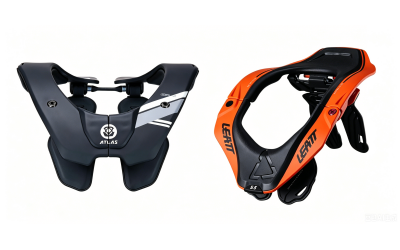
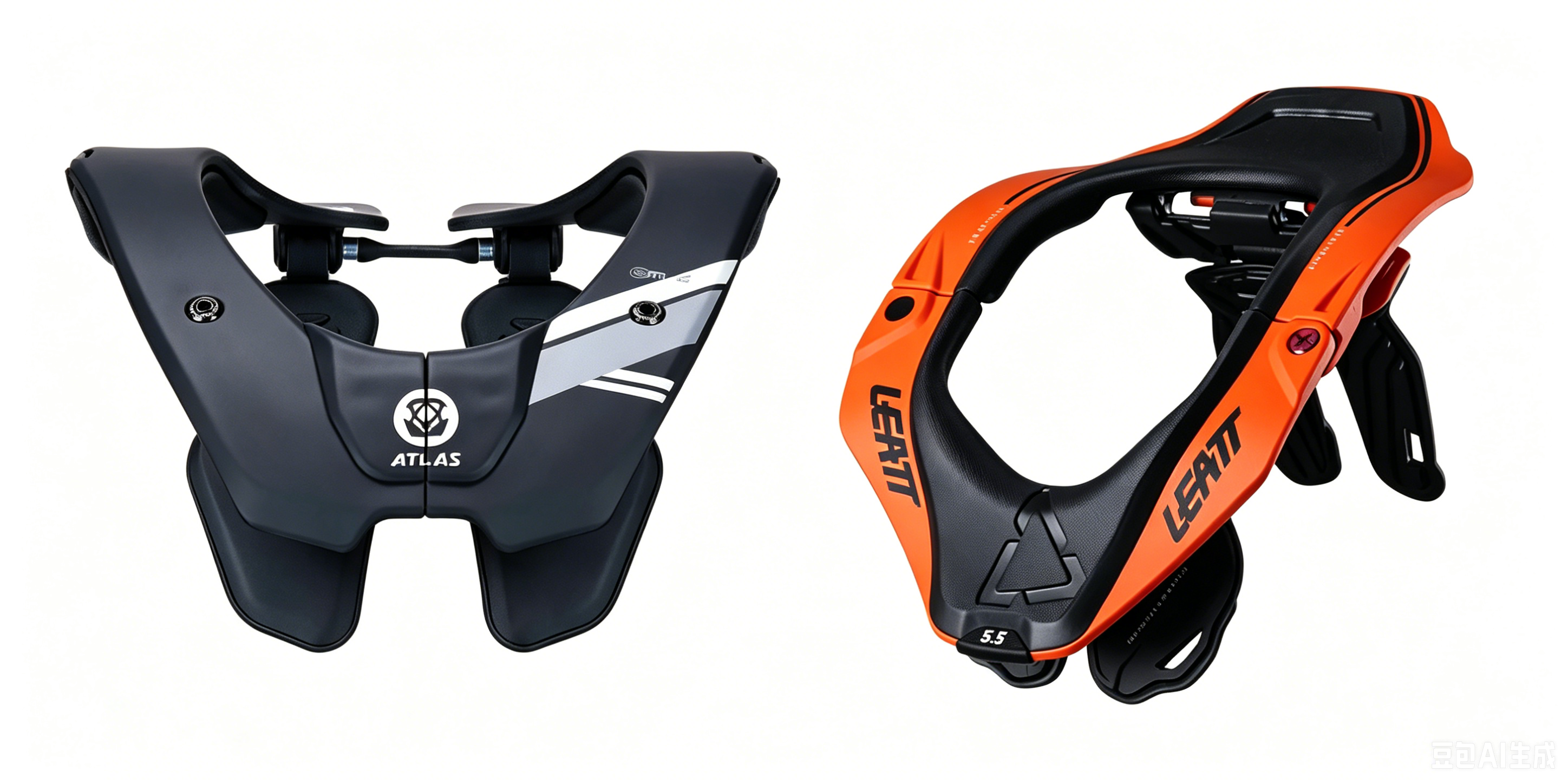
Your neck is one of the most vulnerable parts of your body in off-road riding or mountain biking. Two brands lead the market: Atlas and Leatt. Atlas focuses on flexibility and impact absorption; Leatt prioritizes rigid force redirection backed by medical research. This guide breaks down the key differences between the Atlas vs Leatt Neck Brace so you know which neck brace fits your riding style.
Atlas Neck Brace: Flexible Protection
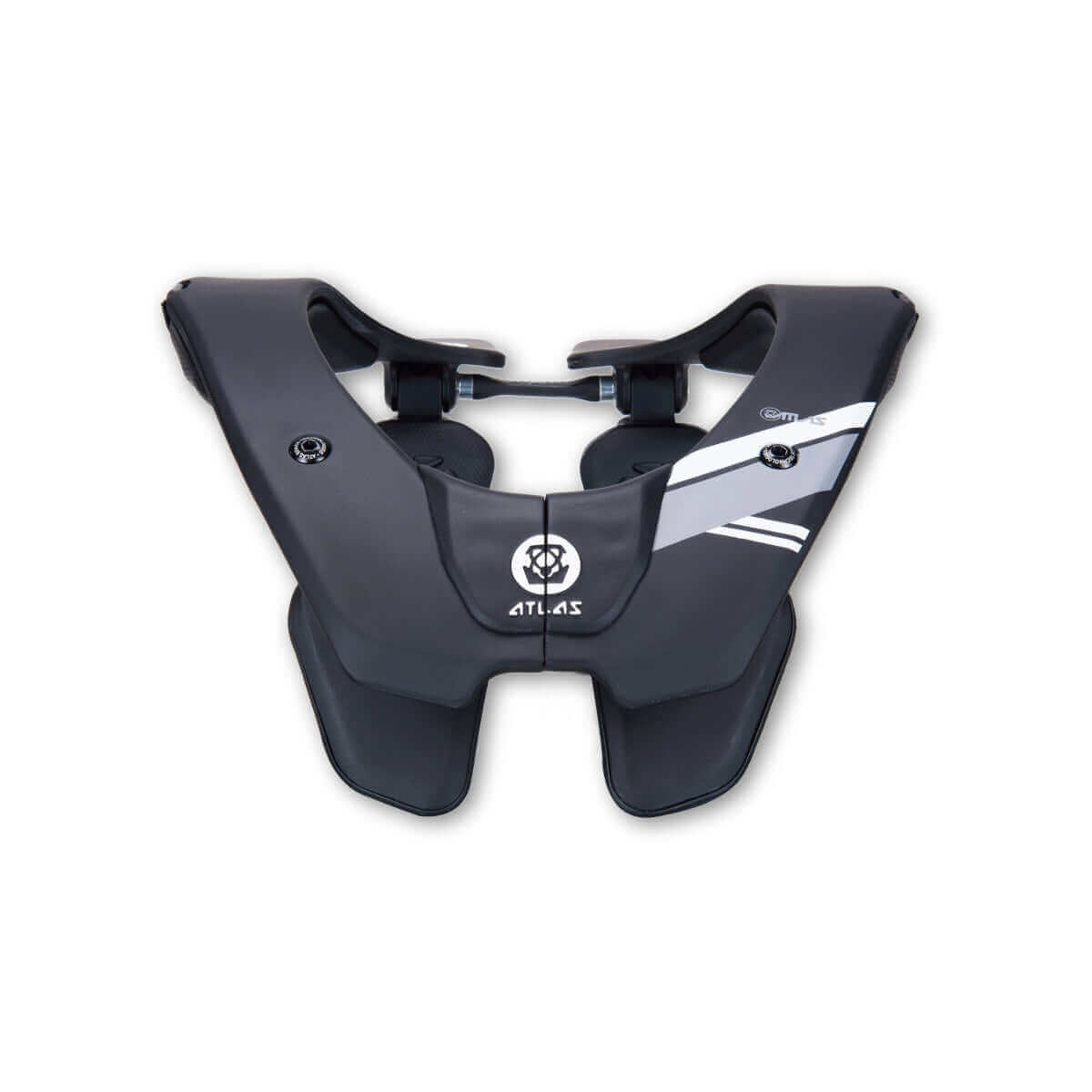 Founded by former racer Brady Sheren, Atlas is built around controlling a crash rather than just absorbing it. The core idea: extend impact duration and reduce peak force.
Split-Flex Rear Frame – two independent short wings, each handling its own side of the load. The frame flexes and returns to shape, protecting through multiple impacts in the same crash.
Front Chest Design (Dual-Feet Contact) – two independent “feet” land on the pectoral and sternocleidomastoid zones, leaving the sternum untouched.
The Product Line at a Glance
Atlas’s technology runs across four main models:
| Model | Key Trait | Approx. Weight |
|---|---|---|
| Atlas Air | Lightweight race-focused, full protection | ~580–650 g |
| Atlas Air Lite | Further reduced weight with material trimming | ~520–620 g |
| Atlas Carbon | Carbon-reinforced flagship, ~15–25% lighter than Air | ~450–550 g |
| Atlas Vision | Anti-compression collar, activity-specific design | Varies |
Leatt Neck Brace: Rigid Redirection
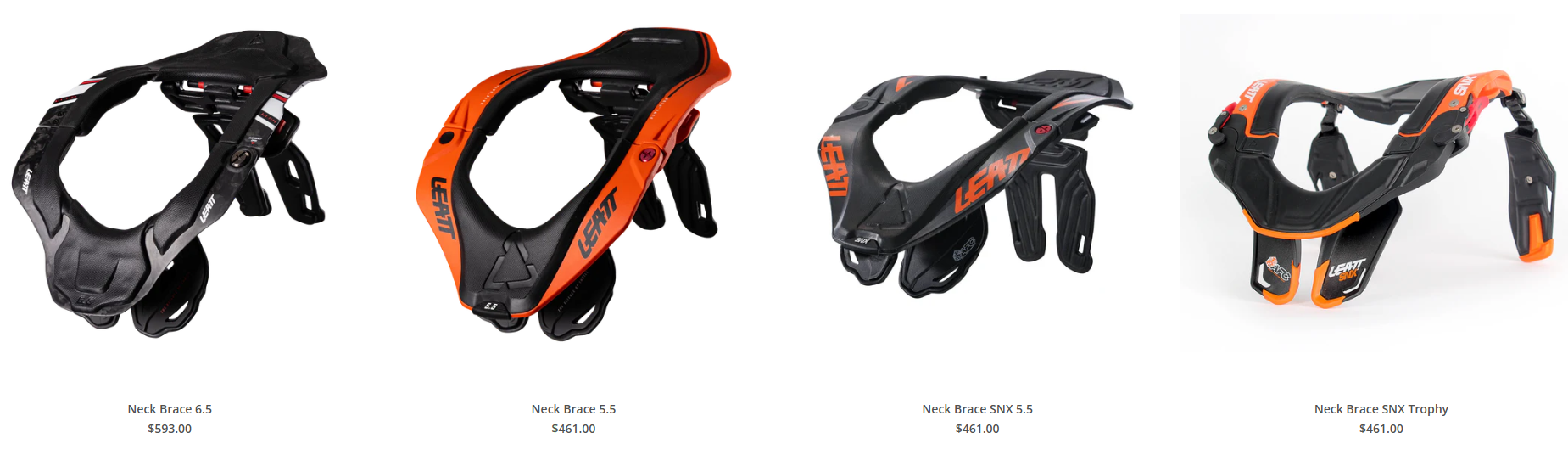
Founded by neurosurgeon Dr. Chris Leatt, Leatt is the pioneer of the modern neck brace. Its core technology: Alternative Load Path Technology (ALPT) – redirecting forces away from the cervical spine to the thorax, shoulder girdle, and upper back. Lab tests show 30–50% reduction in axial compression and 20–40% reduction in bending forces.
The Product Line at a Glance
Leatt’s neck brace lineup runs from an affordable entry model to a carbon-fiber flagship:
| Model | Frame Material | Approx. Weight | Approx. Price |
|---|---|---|---|
| 3.5 | Injection-molded polymer | ~500–590 g | ~$249 |
| 4.5 | Reinforced polymer + composite | ~600 g | ~$299–329 |
| 5.5 | High-stiffness composite | ~600–700 g | ~$369–399 |
| 6.5 Carbon | Carbon fiber composite | ~550–600 g | ~$499–549 |
Protection Performance: How Atlas Vs Leatt Neck Brace Handles a Crash
Leatt’s answer: redirect the force.
The engineering principle is called Alternative Load Path Technology (ALPT). A crash sends energy toward your cervical spine. The neck brace intercepts it. It routes the load outward to the thorax, shoulder girdle, and upper back — structures built to take that kind of force. The Leatt 6.5 Carbon runs a full carbon matrix frame. High stiffness. Minimal deformation. Maximum load transfer. MXstore cites a risk reduction of up to 47% for serious neck injuries. The collarbone cutout is a deliberate design choice. It keeps both helmet and brace clear of the clavicle — one of the most fracture-prone bones in a crash.
Atlas’s answer: absorb and recover.
The Split-Flex Frame doesn’t fight the crash as one rigid unit. Each rear wing flexes on its own. Each side of the chest suspension moves on its own, too. The 30 mm chest suspension slows the impact spike rather than pushing it outward. Force spreads across a wider surface area. Peaks get absorbed. The frame compresses, then springs back. That matters a lot in crashes where you take more than one hit.
The Core Trade-Off
| Leatt 6.5 Carbon | Atlas Carbon | |
|---|---|---|
| Protection Philosophy | Rigid redirection — ALPT | Elastic absorption — Split-Flex |
| Weight | ~600 g | ~580 g |
| Price | ~$499 | ~$499.99 |
| Standout Feature | Collarbone cutout + ALPT | 30 mm chest suspension |
Comfort & Range of Motion: The Riding Feel Test
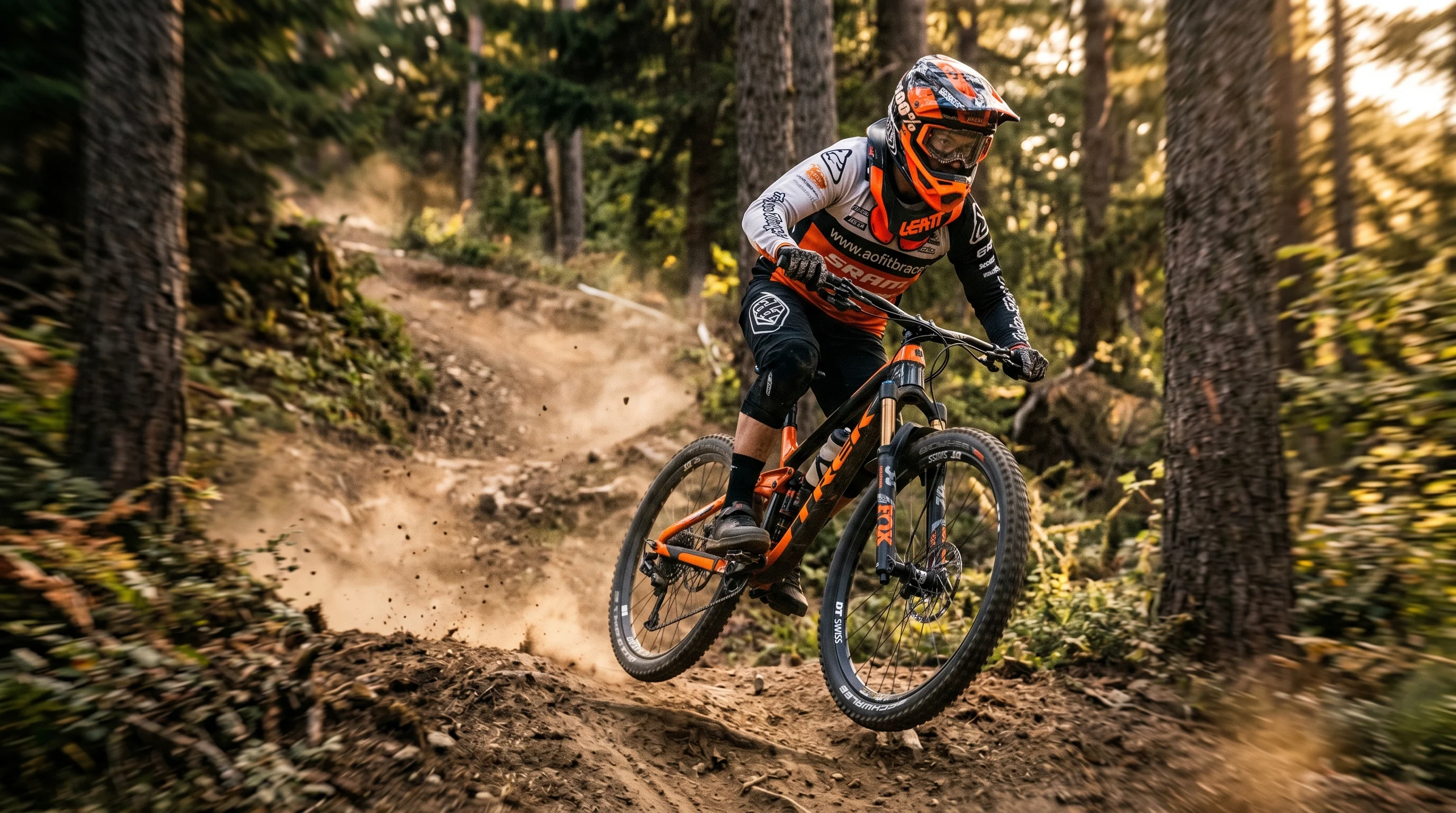
Put a neck brace on in the parking lot, and it feels fine. Put one on for four hours of enduro singletrack, and the story changes fast. This is where the two neck braces separate most clearly.
The “Looking Up” Problem
Normal cervical extension in a relaxed upright position runs about 40–60°. On a bike — body pitched forward, arms loaded, back rounded — that comfortable, sustainable range drops to 20–30°. That’s your real-world budget. Every degree a brace cuts from that number is a degree your upper back and eyes have to make up for.
- In structured riding tests, the Atlas Air lets riders reach that full 20–25° of extension before the helmet contacts the brace. Most riders put it simply: “I only feel it on extreme head-back — normal trail scanning is invisible.”
- The Leatt 5.5 makes first contact closer to 10–15° of extension. That’s still within safe functional range. But on long descents where you’re searching the line ahead non-stop, it shows up — a subtle, repeating nudge that builds into neck fatigue by hour two or three.
Left-Right: The Shoulder-Check Test
Functional cervical rotation for traffic awareness and trail scanning needs 40–50° per side. That’s enough to catch a rider coming up behind you without turning your whole torso.
Normal single-side ROM is 60–80°. Both braces stay within that functional range. The Atlas’s Split-Flex rear frame lets each side of the brace move on its own. Rotate left, and the left rear wing gives way instead of pushing back. The Leatt 5.5’s more unified rear chassis adds a bit more resistance through the mid-range of rotation. You notice it on a long ride. On a short sprint, it’s a non-issue.
The honest summary: The Atlas fades into the background during normal riding. The Leatt makes itself known — not with pain, but with presence. For a 45-minute MX session, that gap is almost irrelevant. For a full-day enduro race, it may be the deciding factor.
Weight & Fit: Finding the Right Match for Your Body
Here’s the number gap that matters most: the Atlas Air weighs 880–900 g. The Leatt 6.5 Carbon weighs 600–635 g. That’s a 250–300 g difference — 30% lighter on the carbon side.
Sizing: Two Very Different Systems
- Atlas runs four size steps — S through XL — tied directly to height and chest circumference.
- Leatt keeps it simpler: two adult bands — S/M and L/XL. Easy to stock in a retail shop. Less precise at the size boundaries.
So what does that mean in practice? Between sizes on Atlas, the gap is narrow. Between sizes on Leatt, the brand recommends you prioritize shoulder width and chest protector thickness over body weight. Don’t guess, measure both before you decide.
Three Rules for Getting the Fit Right
These rules hold no matter which brand you pick:
- Try it over your actual riding chest armor. Skip the t-shirt. Skip the base layer. Wear the armor you’ll have on at race day — nothing else.
- Test it in two positions — standing and riding.
- Standing upright: the brace should sit on your shoulders, not float above them.
- Leaning forward in riding position: your helmet should touch the brace across both shoulder pads at the same time, not just one side.
- Know the warning signs.
- Too big: the brace slides more than 5–10 mm side-to-side under hard braking.
- Too small: the front bridge digs into your collarbone, or looking down at your dashboard feels like a fight.
A wrong-fitting brace doesn’t just feel bad. It fails to protect the way it should.
Price & Value: Which Neck Brace Gives You More for Your Money?
$200 spent with care protects your cervical spine. $200 spent without thought just lightens your wallet.
Here’s where the two brands land on price:
- Atlas Air Lite: ~$260–$320
- Leatt 5.5: ~$320–$380
- Atlas Carbon / Leatt 6.5 Carbon: both hover around $499–$550
The price gap between mid-tier models is $40–$60. It shouldn’t be the deciding factor — but what you get for that difference should be.
The Honest Verdict
Budget under $300? The Atlas Air Lite wins on value — more adjustability, less weight, lower cost.
Already running Leatt chest protection? The 5.5 plugs straight into that setup. The extra $60 makes sense. You get full compatibility without any guesswork.
Buy the brace that fits your riding setup. That’s the one that gives you the most for your money.
Who Should Choose an Atlas Neck Brace?
Choose Atlas (trail, enduro, weekend adventure)
-
You want a brace you forget you’re wearing
-
You need frequent head turns and trail scanning
-
You have medium or narrow shoulders, or a shorter neck
-
You’ve had a clavicle injury and want to avoid chest plate pressure
Who Should Choose a Leatt Neck Brace?
Choose Leatt (racing, high-intensity training, system compatibility)
-
You race MX, enduro, or desert rallies – crashes are part of the season
-
You prioritize maximum coverage over minimum weight
-
You already own Leatt helmet and chest armor
-
You have race regulations or a doctor’s recommendation (CE-certified, 47% neck injury risk reduction data)
Final Verdict: Atlas Vs Leatt Neck Brace — The Honest Recommendation
Racing MX, hitting big jumps, or competing in high-speed enduro? Go with the Leatt 5.5 (or the 6.5 Carbon if budget allows). It delivers a stiffer load path and a larger contact surface. System integration with chest armor is tighter, too. In a serious crash, Leatt’s structural design is built to hold. That matters.
Is trail riding, enduro, and weekend adventures your thing? Pick the Atlas Air or Air Lite. It’s lighter and more forgiving on long days in the saddle. You’ll stop noticing it’s there — and that’s the point. A brace you forget you’re wearing is a brace you’ll keep wearing.
One final truth worth sitting with: the safest neck brace isn’t the one with the best lab score. It’s the one you put on every single ride.
| Rider Type | Recommended Choice |
|---|---|
| MX / competitive racing | Leatt 5.5 or 6.5 Carbon |
| Enduro / trail (comfort priority) | Atlas Air / Air Lite |
| No strong preference | Leatt 5.5 — the reliable default |
Conclusion
So which neck brace wins? Neither—because it’s about matching the brace to your ride.
Ask yourself: What kind of rider am I today, and what kind do I want to become? That answer tells you which neck brace belongs in your gear bag.
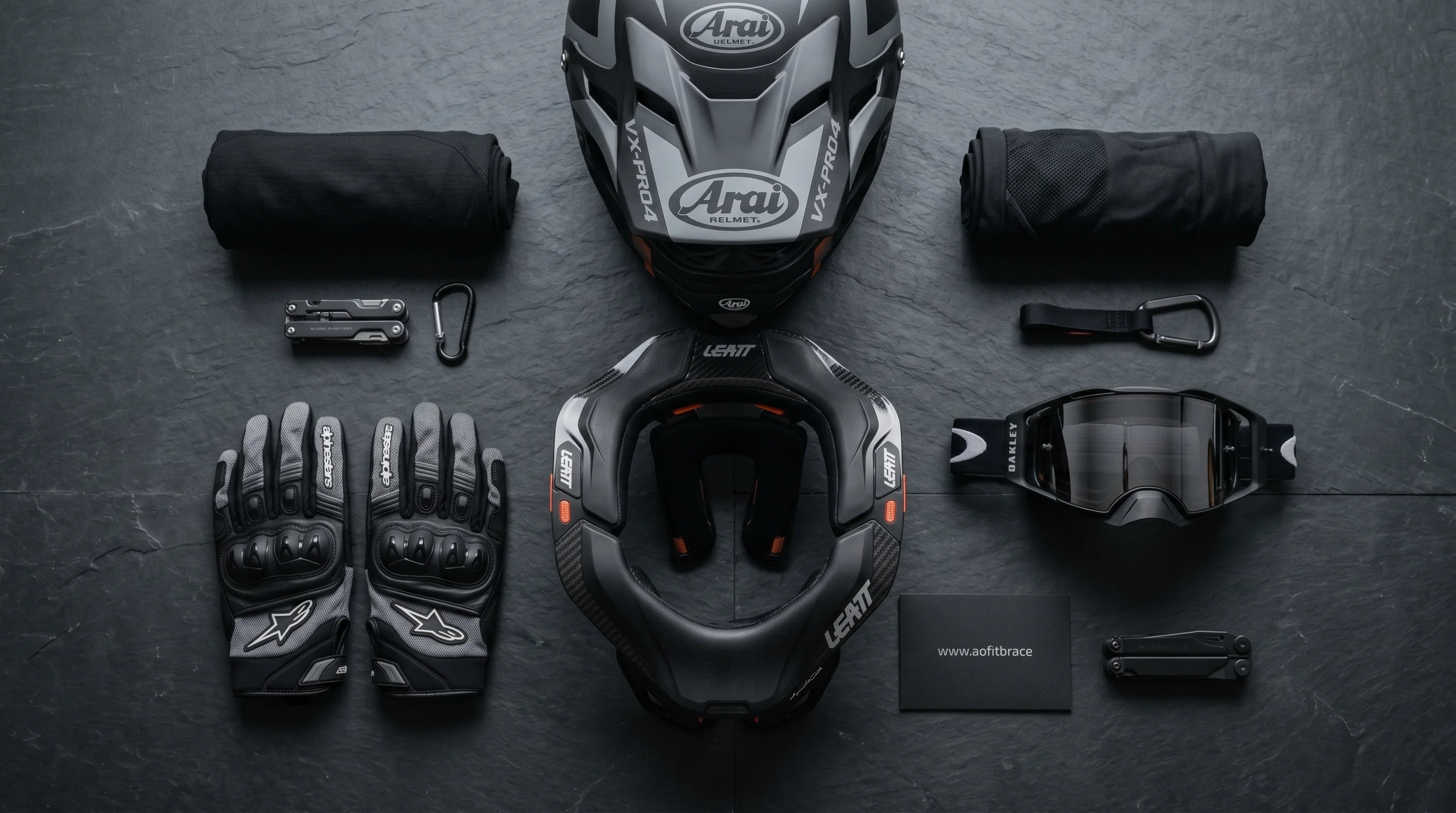
Ready to compare specs side by side? Browse our full motocross safety guide to find the right fit for your riding style and your body. As a dedicated provider of orthopedic solutions, we are committed to keeping you safe on every ride.