
Every football player knows the hit is coming, but not everyone is ready for what it can do to their neck. Stingers, whiplash, cervical compression—these are real injuries that end seasons and careers. Yet while helmets, pads, and cleats get all the attention, the football neck brace remains one of the most overlooked pieces of protective gear. In this guide, you’ll learn how different types of neck protection work and how to choose the right fit for your position, body, and injury history.
What Is a Football Neck Brace And Why Most Players Underestimate It?
A football neck brace (also called a cervical collar, neck roll, or football neck stabilizer) is a molded piece of polyurethane foam or synthetic material. It attaches to the shoulder pads and wraps around the back and sides of the neck. It’s a mechanical contact device — built to work in direct coordination with your helmet and shoulder pads under high-impact conditions.
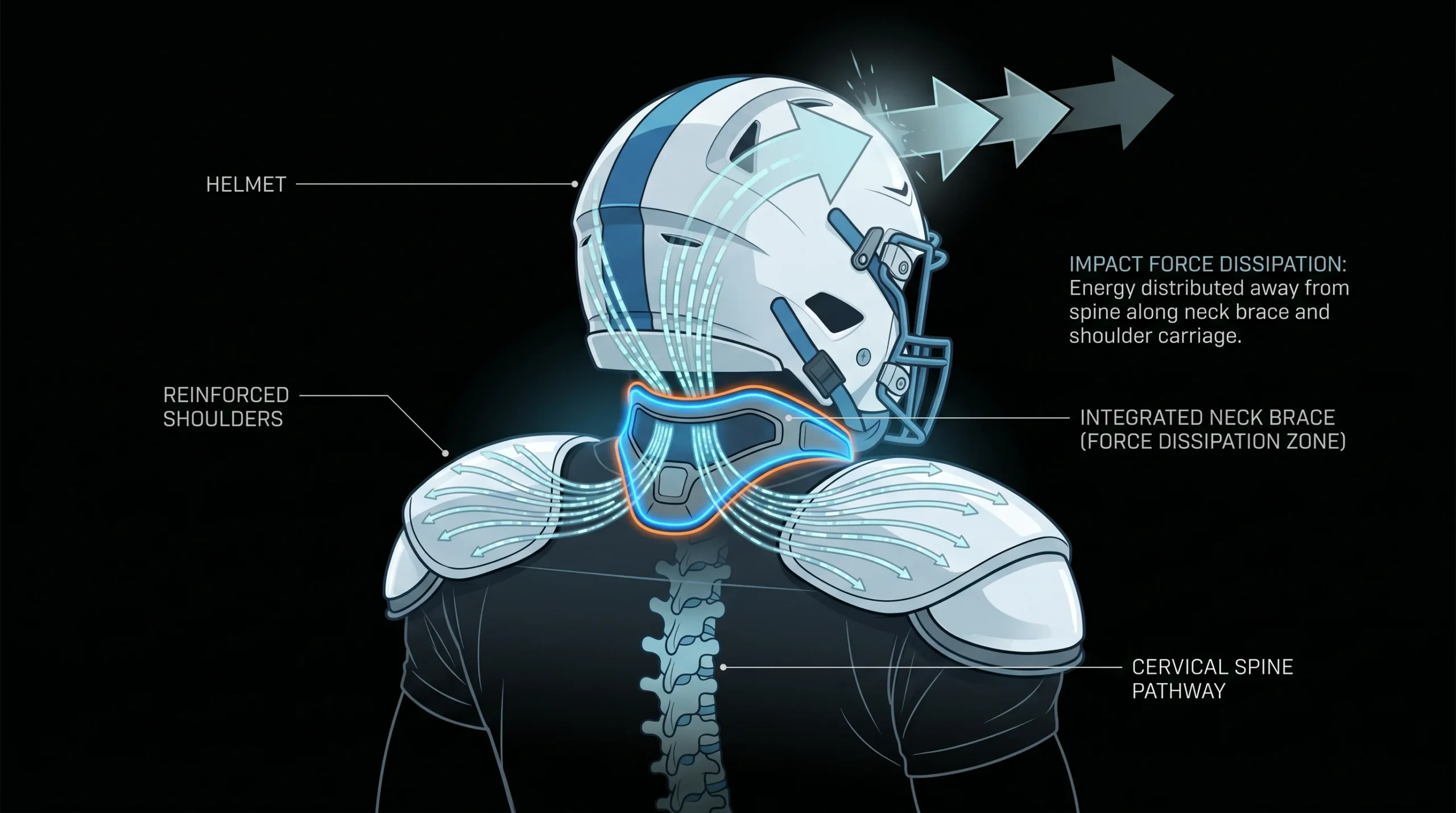
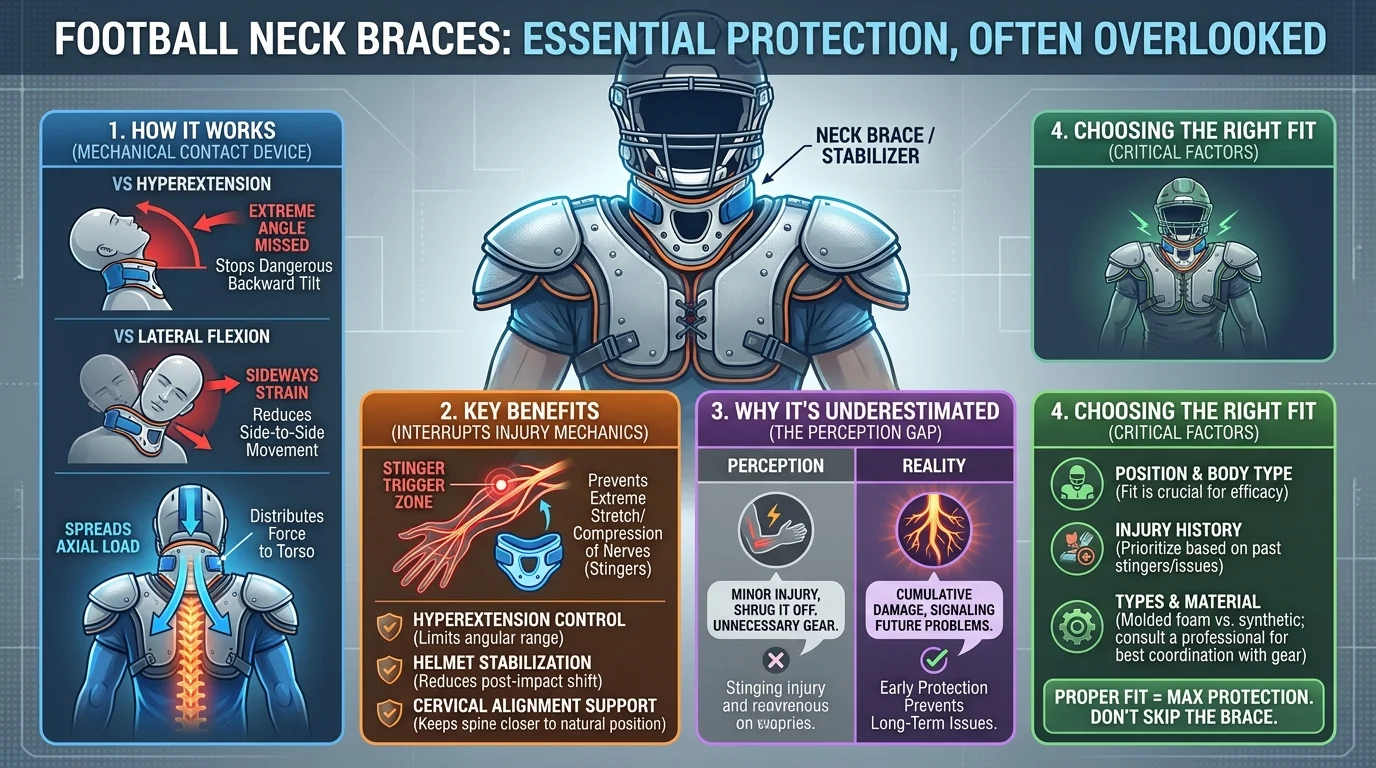
Here’s how it works: your head snaps backward or sideways during a collision. The lower edge of your helmet then meets the neck brace and stops that motion earlier than it would on its own. This does three things:
- Limits cervical hyperextension (your neck bending too far back)
- Reduces lateral flexion (side-to-side neck movement)
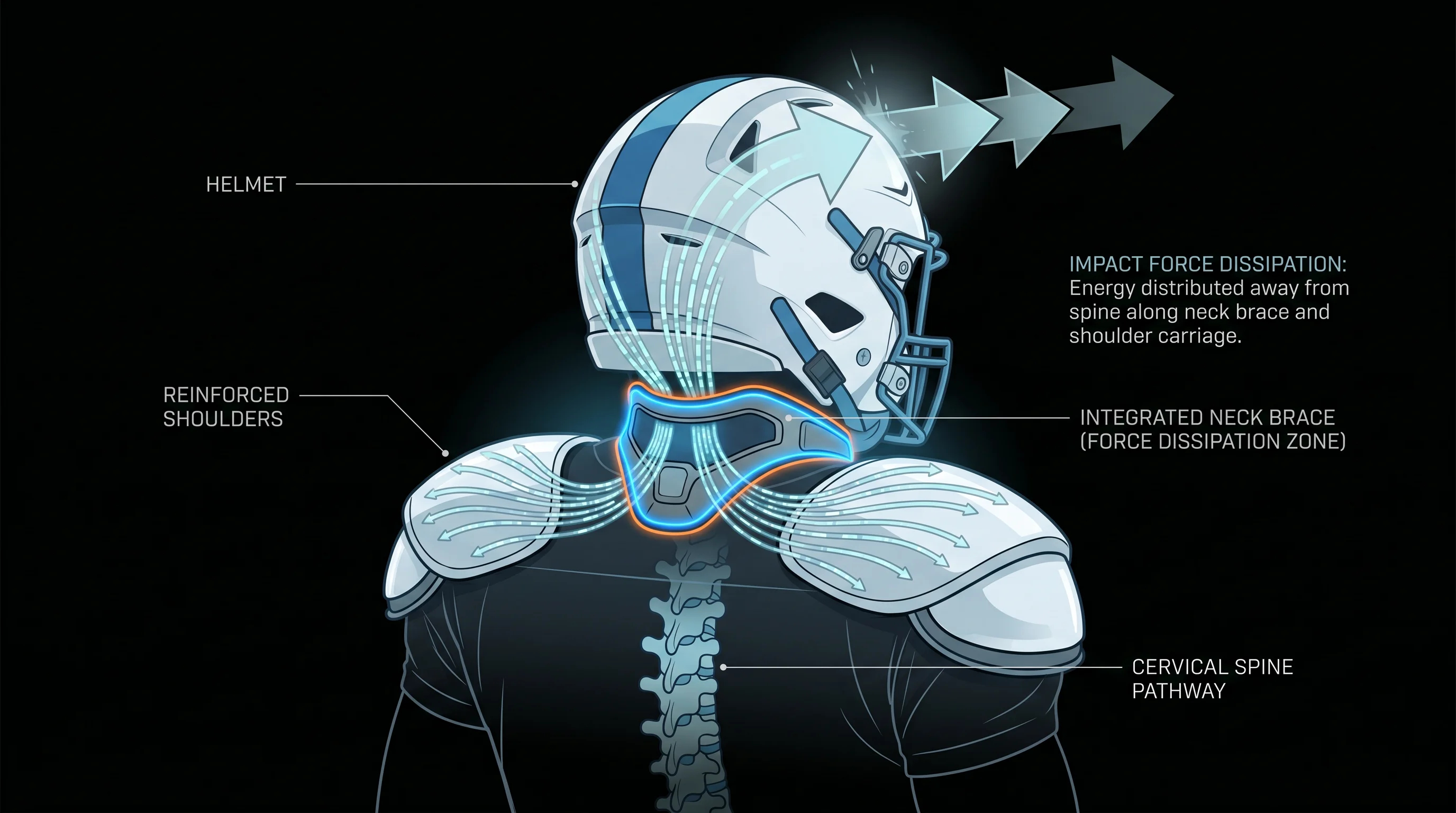
- Spreads axial load away from the spine — moving impact force from helmet to brace to shoulder pads to torso, rather than concentrating it on your cervical vertebrae
So why do most players skip the neck brace? Stingers fade in seconds, so players shrug them off and never report them. But that electric jolt down the arm signals cumulative damage to the cervical nerve roots. The injury feels minor; the gear feels unnecessary. That gap between perception and reality is where neck injuries take hold.
Key Benefits of Wearing a Football Neck Brace
They Interrupt the Mechanics Behind Stingers
Stingers occur when the neck snaps into extreme extension or side flexion. This stretches or compresses the brachial plexus nerve network. A football neck stabilizer targets those specific movements. It limits how far the neck can hyperextend during a tackle or block. So the mechanical trigger gets cut off before the nerve gets involved.
For players who’ve felt that burning jolt shoot down the arm — this matters. The brace doesn’t stop contact. It cuts off the extreme end of the motion range. That’s the zone where most stinger injuries start.
One Device, Three Layers of Protection
Here’s what a well-fitted cervical neck brace football piece delivers:
- Hyperextension control — limits the dangerous angular range during hard collisions
- Helmet stabilization — reduces helmet shift after impact and the sharp neck-pull sensation that follows
- Natural cervical alignment support — keeps the spine closer to its healthy curve during contact, spreading impact load more across the torso
7 Types of Football Neck Braces
Not all neck braces solve the same problem. The seven types below range from the classic foam roll the linebacker wore to an FDA-cleared medical device. Each one targets a different threat, fits a different position, and suits a different kind of player. Here’s what separates them.
1. Traditional Neck Roll (Standard Foam / Contoured Horseshoe)
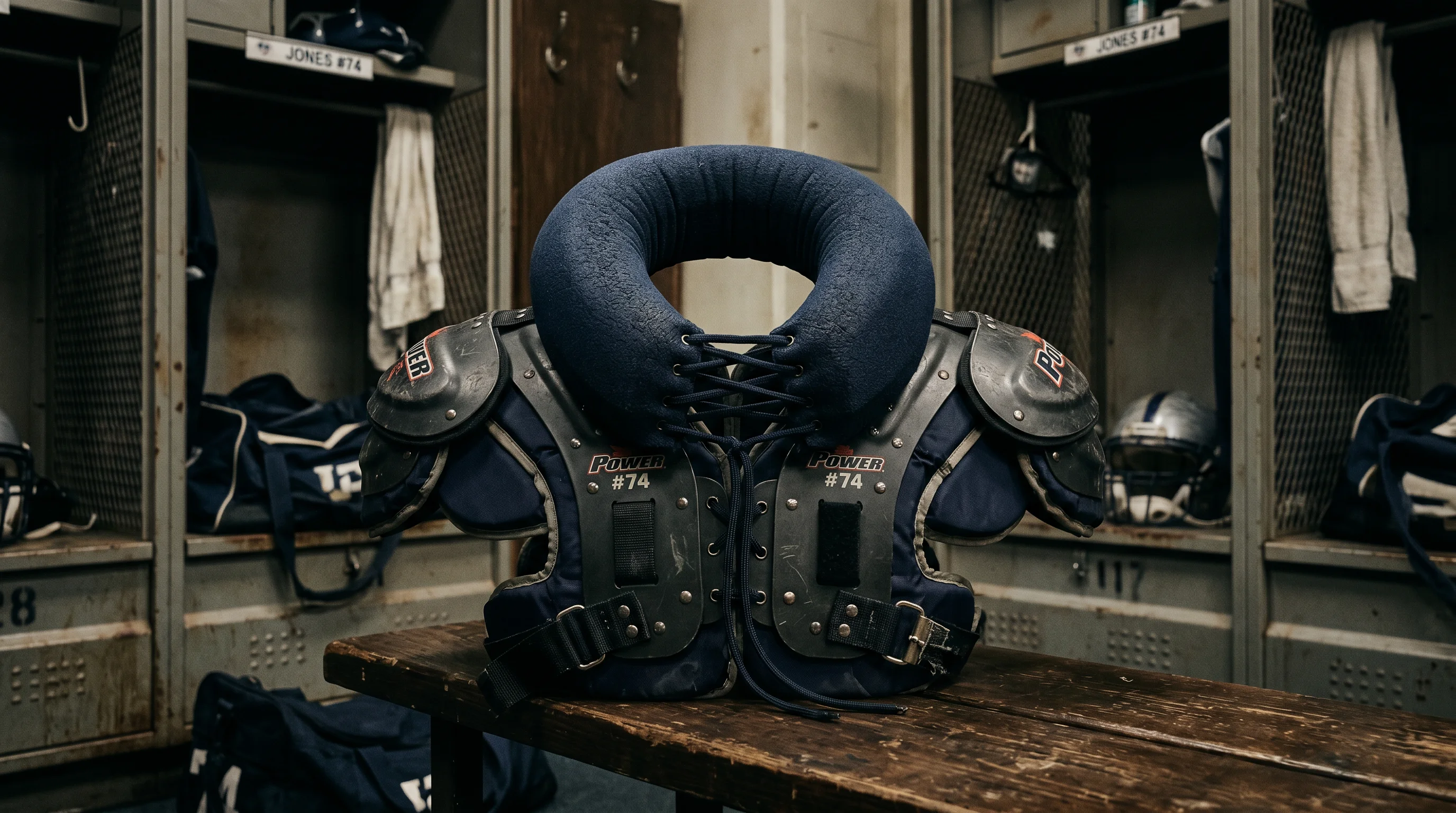
The neck roll is the original. It’s a cylindrical or horseshoe-shaped foam piece that laces onto your shoulder pads. It fills the gap between your helmet’s base and the top of your pads. Simple concept. Long track record.
What it does well: A comparative biomechanical study found the standard foam neck roll was the only brace that reduced active lateral flexion by a measurable margin. It also cut hyperextension compared to shoulder pads alone.
The catch: It restricts your normal head movement more than it stops dangerous extreme motion. That gap creates a false sense of security. Players feel protected during drills, but the brace loses its effect right at the range of motion that causes stinger injuries.
Best for: Youth and high school linebackers, tight ends, and fullbacks. Also, a solid starting point for first-time neck brace wearers with a mild stinger history.
2. Cowboy Collar (McDavid)
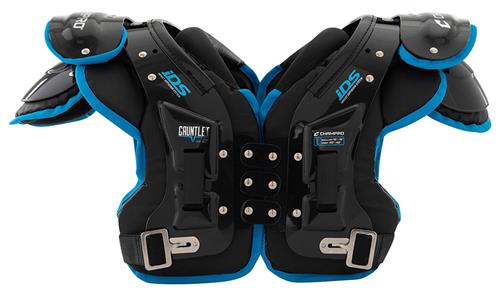
The Cowboy Collar feels more like wearing armor. It’s a molded polyethylene foam collar built into a padded vest worn under your shoulder pads. Your head snaps back — the collar engages the sides and rear of your helmet and stops the motion cold.
What the research says: In a three-way comparison against the A-Force and standard neck roll, the Cowboy Collar delivered the greatest reduction in cervical hyperextension of all three devices. It outperformed the foam neck roll by a clear margin.
The catch: It offers limited protection from lateral and top (axial) impacts. For front-on hits, it performs well. For everything else, its usefulness drops off. Quarterbacks and wide receivers tend to skip it — the bulk makes tracking deep routes uncomfortable.
Best for: Linebackers, power running backs, fullbacks, and tight ends who absorb high-velocity frontal contact. A strong pick for players with a brachial plexus stinger history.
3. A-Force Neck Collar
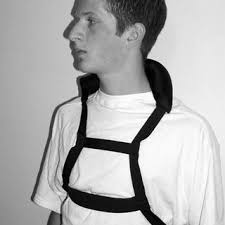
The A-Force has an unusual build. Two straps pass under your armpits and buckle at the back — anchoring the collar to your torso rather than your pads. Two horizontal straps reinforce the front. The collar moves on its own, separate from your shoulder pads. That matters for players whose pads tend to shift or ride up during contact.
Performance: It reduced hyperextension compared to pads alone, landing in the middle of the pack — behind the Cowboy Collar but ahead of the standard neck roll in that metric. Like the others, it showed no meaningful improvement in passive lateral flexion.
The catch: The underarm straps create comfort and fit problems, especially for larger players. Putting it on and taking it off also takes more steps than a basic neck roll.
Best for: Linebackers, defensive ends, and H-backs who want a torso-anchored fit for better shoulder pad stability. Also a good option for players with upper back or shoulder instability who benefit from spreading force through the harness rather than the pads.
4. Kerr Collar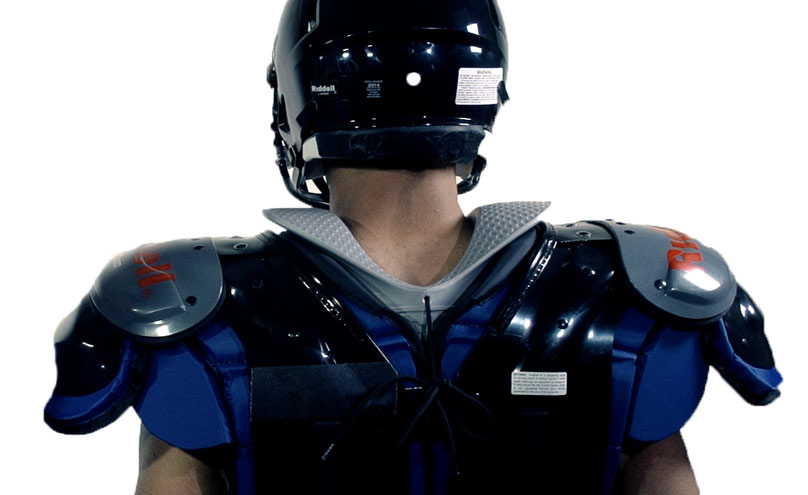
The data here is striking. Researchers tested the Kerr Collar against the Cowboy Collar and Bullock Collar across three impact locations — top, front, and side — at two different speeds. The result held across every test: the Kerr Collar reduced more force through the neck than any other collar tested.
Here’s the breakdown:
– Top impacts: Kerr reduced both head acceleration and neck force. The Cowboy Collar showed no reduction in top-impact scenarios.
– Front impacts: Kerr was the only collar that reduced lower neck force and upper neck moment at the same time.
– Side impacts: Kerr produced the largest lower neck moment reductions of all tested collars.
Best for: Interior linemen, fullbacks, guards, centers, and defensive tackles — positions where top-of-head contact is a real, repeated risk. Also a solid recommendation for anyone returning from a cervical compression injury.
The catch: The helmet contacts the collar early in the motion range, which cuts down on head mobility. It’s also harder to find than mass-market options, and fitting it across different pad models takes extra effort.
5. Bullock Collar
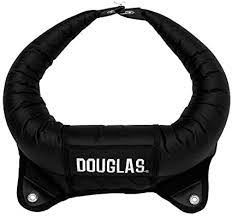
Think of the Bullock Collar as the middle ground between Kerr and Cowboy. It’s a high-density foam collar with a rigid plastic insert, strapped to the shoulder pads. It performed well in top-impact testing — reducing head acceleration and neck force — but landed behind the Kerr in overall force reduction.
One notable finding: it performed better at higher impact speeds than at lower ones. That means it’s more dependable in fast collisions than in routine practice contact.
Best for: Linebackers, box safeties, and running backs who face both frontal and top contact but want a bit less restriction than the Kerr gives. Programs that want measurable top-impact protection without committing to a helmet-contacting collar design.
The catch: Not built for lateral flexion protection. Performance is less consistent across different impact speeds.
6. L.E.X. Brace
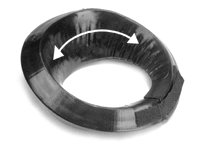
The L.E.X. Brace is a modern football neck brace that attaches to shoulder pads. It combines multi-density foam with rigid structural elements. The goal is clear: keep enough head rotation for skilled play while adding stability and shock absorption for repeated hits.
It’s aimed at high school and college programs that want something beyond the traditional foam neck roll — a collar built around biomechanics, not just padding volume.
Honest note: Independent peer-reviewed biomechanical testing — the kind done on the Kerr, Cowboy, and Bullock — isn’t available for this device yet. Right now, buyers are working from manufacturer data and field feedback.
Best for: High school and college linebackers, safeties, and running backs who want a more engineered neck protection option with absorption built in, but still need enough rotational freedom for coverage roles.
7. Q-Collar (Q30)
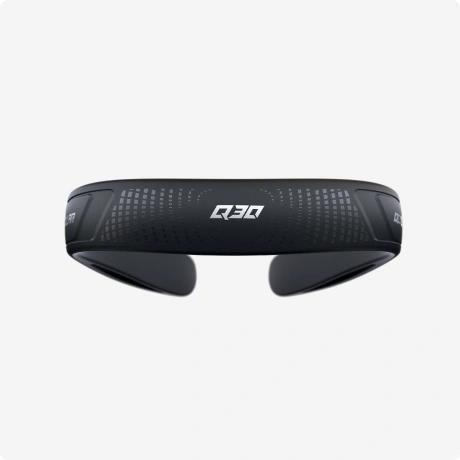
The Q-Collar sits in its own category — because it’s doing something completely different from the other six. It doesn’t limit your neck’s range of motion. It doesn’t attach to your pads. It doesn’t brace against your helmet at all.
This C-shaped band applies gentle compression to the jugular veins, raising blood volume inside the cranial space. The theory: a better-cushioned brain moves less on impact, which reduces the cumulative damage from subconcussive hits over a career.
The Q-Collar received FDA clearance in 2021 as a medical device — cleared for helping protect the brain from repetitive subclinical head impacts in athletes 13 and older. NFL and NHL players use it. The manufacturer is upfront that it is not designed to prevent concussions from major impacts. Its target is the thousands of smaller hits that never make the injury report but pile up over seasons.
Best for: Any position that takes frequent but lower-force head contact — linemen, linebackers, special teams players. You can wear it alongside a traditional neck roll as a brain-protection add-on. No changes to your existing pad setup needed.
Quick Comparison at a Glance
| Type | Hyperextension Control | Lateral Control | Top/Axial Impact | Best Position Match |
|---|---|---|---|---|
| Traditional Neck Roll | Moderate | Active only | Limited | LBs, TEs, youth |
| Cowboy Collar | Best (frontal) | Limited | None | LBs, FBs, RBs |
| A-Force Collar | Moderate | Limited | Limited | LBs, DEs, H-backs |
| Kerr Collar | Strong | Strong | Best | Linemen, FBs |
| Bullock Collar | Moderate–Strong | Limited | Good | LBs, Safeties, RBs |
| L.E.X. Brace | Moderate | Moderate | Moderate | LBs, Safeties |
| Q-Collar | None (brain-focused) | None | None | All positions |
Football Neck Brace Safety: What the Research Says
Lab testing confirms that neck braces work — but only in specific directions. A key study compared three devices (the Cowboy Collar, A-Force Neck Collar, and a standard foam neck roll) against no collar at all. All three reduced passive cervical hyperextension compared to helmet and shoulder pads alone. The Cowboy Collar outperformed the foam neck roll in that metric. The results were clear and documented.
Then comes the undesirable part.
Where the Protection Ends
Researchers tested lateral flexion — the side-to-side motion linked to stinger and brachial plexus injuries. None of the three devices showed meaningful improvement over wearing no collar at all. That side-to-side motion is the main cause of most burner injuries. Current football neck braces don’t stop it.
The foam neck roll did produce one notable finding. It reduced active lateral flexion. But that result cuts both ways. Stopping a movement you choose to make is not the same as protecting yourself during a collision you never saw coming. Researchers called this a “non-ideal characteristic.” You lose functional mobility. You gain little real protection against the hit that matters.
What This Means for How You Wear One
None of this means neck braces aren’t worth wearing. It means you need to wear them as one layer of a larger system — not a substitute for technique or strength training. Fit matters more than most players realize. A collar that sits too high can change your tackling posture. It can push you into a more upright stance. That shift can increase axial spinal load — the pressure that builds straight down through the cervical vertebrae.
The research is clear on this: neck braces offer real, evidence-backed protection against hyperextension. For lateral impact — the direction most tied to stingers — a wide gap still exists between what the equipment feels like it does and what it does in practice.
How to Choose the Right Football Neck Brace for Your Position & Needs?
The wrong neck brace isn’t just uncomfortable — it can make things worse. A collar that blocks too much movement pushes a lineman into an upright stance. That raises axial load on the cervical spine. A collar that’s too light leaves a linebacker exposed on the exact hits it was meant to absorb. Fit, position, and injury history all pull in different directions. Here’s how to sort through them.
Step 1: Start With Your Position
Your position tells you where the dangerous hits come from. That shapes every other decision.
Linemen and linebackers (OL, DL, LB) take frequent frontal and top-of-helmet contact. Axial load and cervical extension are the main threats. Go with higher-support collars. The Kerr Collar covers top-impact protection well. The L.E.X. Brace is a solid pick if you need to hold natural cervical lordosis in a three-point stance. Standard Cowboy Collars control hyperextension, but they do nothing to reduce top-impact force.
Skill positions (WR, RB, DB, QB) need range of motion to perform. A medium-height foam neck roll strikes the right balance. It was the one brace in comparative testing that reduced active lateral flexion. That matters for side-impact stinger risk. Players with a prior hyperextension injury can move up to a Cowboy Collar-style design.
Youth players need something lighter and adjustable. Look for a neck roll with multiple height options and a three-point float system — one that moves with the pads, not against them. Don’t fit a youth player in an adult Pro-sized collar. The A-Force, for example, was tested on athletes over 84 kg. Sizing matters more here than anywhere else.
Step 2: Factor In Injury History
- Prior hyperextension injury: All three braces tested in the key biomechanical study cut passive hyperextension by a notable margin. The Cowboy Collar outperformed the foam neck roll on that specific measure.
- Stinger or brachial plexus history: Pick a collar with thick posterior foam. It cushions the gap between your helmet and shoulder pads.
- Concussion or subconcussive hit history: Try layering a Q-Collar under your standard neck protection. It doesn’t restrict movement — it targets brain movement instead.
Step 3: Measure Before You Buy
- Neck circumference: Wrap a soft tape around the midpoint of your neck, near the Adam’s apple. Measure three times and take the smallest reading. Use the brand’s sizing chart.
- Neck exposure height: Put on your helmet and shoulder pads together. Measure the vertical gap between your helmet’s lower edge and the top of your shoulder pads. Pick a neck roll height a bit smaller than that gap — about 0.5–1 cm smaller for linemen, 60–80% of that distance for skill positions.
- Harness-style braces (A-Force): Measure chest circumference at the lower chest while wearing your base layer. The underarm straps need a snug but non-restrictive fit. That anchors the collar securely during contact.
How to Wear a Football Neck Brace?
Buying the right collar is step one. Wearing it right is where real protection happens.
Wearing It Right
How you install your neck brace depends on its type:
Shoulder pad-mounted (Neck Roll, Cowboy Collar, Kerr Collar)
– Attach with at least 2 anchor points per side — one front, one rear — to prevent rotation during contact.
– Tighten laces or straps until one finger fits underneath.
– With full gear on, your helmet’s rear edge should sit 5–10 mm above the collar at neutral. Tilt back to your maximum legal range. The helmet should meet the collar and stop right there.
– Side-to-side rotation should reach 45–60° without resistance. Hit resistance earlier? The collar is mounted too high or the straps are too tight.
Chest-harness style (A-Force, L.E.X. Brace)
– The collar’s upper edge should sit 1–2 cm below your jawline — never pressing your chin or throat.
– Chest straps should allow 2–3 fingers of give during a full breath.
Independent collar (Q-Collar)
– Measure neck circumference at mid-neck with the tape pulled to zero slack. Match the result to the manufacturer’s size chart.
– Put it on before your shoulder pads and helmet. Pad edges should never compress or deform the collar.
Conclusion
Your neck doesn’t get a second chance. A football neck brace isn’t just for “injury‑prone” players—it’s essential for everyone. You now know the types, fit, and research. The only thing left is the decision. Whether you’re a lineman, a parent, or a coach, the right cervical brace is out there, sized for your body and position. Browse the full collection at aofitbrace.com and find yours before the next snap—not after.