
Spend enough time on fitness forums, and you’ll see the same question pop up: can you swap a back brace for a waist trainer, or the other way around? It’s a fair thing to wonder. Both wrap around your midsection. Both claim to offer support. Side by side, they don’t look all that different.
But using the wrong one for the wrong reason can cause real harm. That’s not an exaggeration. The waist trainer vs back brace debate goes deeper than looks versus function. It’s about knowing what each device was built to do, who it actually helps, and where the line is between useful and risky.
What Is a Waist Trainer?
A waist trainer is what the name suggests — but also not quite what most people expect.
At its core, it’s a high-compression, boned garment built to cinch your midsection. It creates an instant hourglass shape. Think of it as firm, even pressure applied between your underbust and high hip. The garment is cut smaller than your natural waist. Once you fasten it, it presses inward on soft tissue — skin, fat, and your abdominal area. Everything gets pushed inward, then redistributed upward and downward. The result is a noticeably narrower waist while you wear it.
Most waist trainers share a similar build. You get a latex or rubberized compression layer wrapped in nylon or spandex. Vertical metal or plastic boning strips run through the garment to stop it from rolling or bunching at the narrowest point. Most styles fasten with hook-and-eye rows. You can tighten them gradually as your body adjusts.
Two Main Styles — Different Levels of Compression
- Latex cinchers (the gym-selfie staple): flexible, stretchy, and built to deliver 1–3 inches of instant waist reduction. They move with your body. You’ll see these marketed for workout use.
- Steel-boned corset trainers: rigid, strong, and capable of 3–6 inches of reduction with tight-lacing. These are built for serious, long-term shaping goals.
What Is a Back Brace?
A back brace exists for one reason: to manage what the body can no longer manage on its own.
Doctors call it a lumbar orthosis. It’s an external device that limits spinal motion, reduces pressure on stressed vertebral structures, and stabilizes damaged segments. This isn’t about reshaping your silhouette. It’s about protecting a spine that’s fractured, fused, or failing under load.
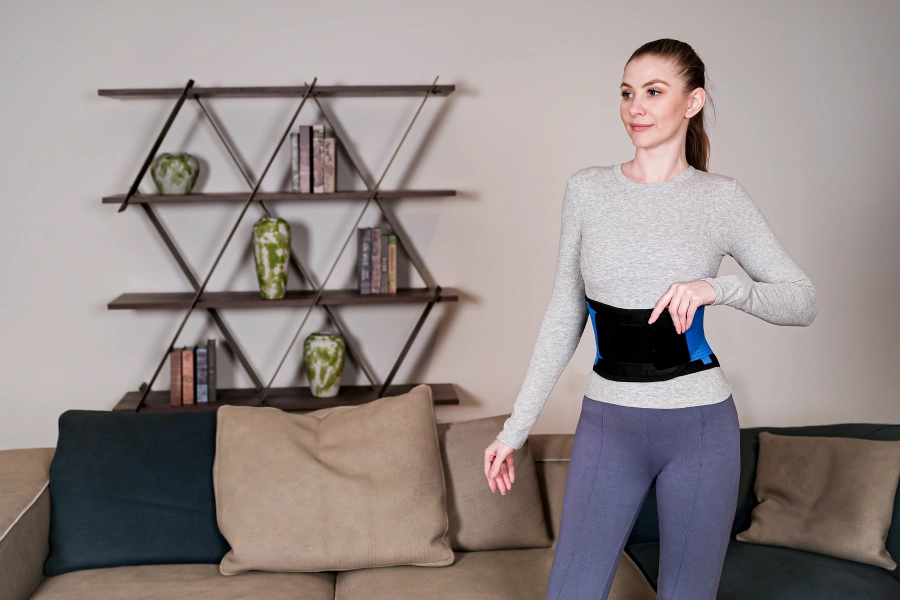
Three Distinct Types — Built for Different Levels of Need
Flexible braces are the starting point. You get elastic fabric, neoprene panels, and Velcro closures. These braces deliver compression and body awareness feedback — they signal your muscles to control movement more carefully. Pick one up off the shelf for mild back pain, muscle strain, or activity support like heavy lifting.
Semi-rigid braces step things up. Rigid plastic stays or metal inserts run through a fabric shell. This setup restricts flexion, extension, and rotation far more than a flexible brace can. Think of semi-rigid as the middle option — enough structure for moderate instability or early-stage degeneration, without locking you into full immobilization.
Rigid and custom-molded braces sit in a category of their own. A two-piece hard plastic shell — cast from a plaster mold of your torso — covers from just below the clavicles down to the sacrum. Doctors prescribe these after spinal fractures, fusion surgery, or severe spondylolisthesis. They don’t remind you to move carefully. They force it.
Waist Trainer Vs Back Brace: Side-by-Side Comparison
Forget the marketing language. The real difference between a back brace and a waist trainer comes down to one question: are you trying to look different, or heal something?
That single question drives every design choice — the materials, the coverage zone, how pressure spreads across your torso, and how long you wear it. Here’s how the two actually compare.
Design Goal: Cosmetic vs. Medical
A waist trainer is built for your mirror. The boning, the latex compression layer, the hook-and-eye rows — all of it works to shrink your visible waist size while you’re wearing it. Some brands mention “posture support” or “core engagement,” but those are secondary selling points. They’re not the main purpose.
A back brace is built for your spine. It stabilizes injured vertebrae, limits harmful movement, reduces pressure on compressed discs, or holds a surgical repair steady while tissue heals. Standing straighter may slim your silhouette slightly — but that’s a side effect, not the goal.
Compression Zone and Coverage
This is where the physical difference is easy to see.
Waist trainers target a narrow band — the 10–20 cm stretch between your lower ribs and your hip crest. All that force concentrates at your natural waist, the softest, most squeezable point of your torso. The result is 360° cinching of the abdominal soft tissue. It has minimal effect above or below that zone.
Back braces cover more ground, and the coverage depends on the type:
- Flexible lumbar belts cover the L1–L5 region. They span 20–30 cm and extend a bit into the lower thoracic spine and over the sacroiliac joint
- Rigid TLSO braces run from below the collarbone all the way down to the sacrum. Hard plastic panels cover the entire front and back of the trunk
The pressure pattern matters too. A waist trainer creates high all-around pressure at the waistline. That’s useful for reshaping soft tissue, but it does little to control spinal movement. A back brace uses a front abdominal panel plus a rigid back stay to build a three- or four-point support system. That setup limits forward bending, backward bending, and twisting — not just waist size.
Material Rigidity
| Device | Core Material | Structural Support |
| Waist trainer (cincher) | Latex, neoprene, spandex | Thin plastic boning, minimal |
| Waist trainer (steel-boned) | Latex + fabric | 12–24 steel bones, garment-grade |
| Flexible back brace | Elastic fabric, canvas | Wide elastic bands, no rigid stays |
| Semi-rigid back brace | Neoprene shell | Plastic or metal back inserts |
| Rigid TLSO | Cotton/canvas shell | Large plastic or metal plates, full orthosis |
Wear Time and Who Controls It
Most waist trainer brands suggest 6–8 hours a day for active shaping programs. Some medical professionals recommend keeping it to 2 hours, especially during exercise. No standard clinical guideline exists. You set your own schedule.
Back brace wear time is set by a doctor. After surgery or a fracture, protocols can require near-continuous use for 6–12 weeks. The time reduces gradually as healing moves forward. A clinician tracks and adjusts that timeline. Wearing a back brace too long without professional oversight can cause real muscle weakening — so don’t skip the supervision.
Price and Where You Buy
Waist trainers range from $10–30 for basic online styles up to $80–200+ for steel-boned, handcrafted versions. You’ll find them on fashion platforms, fitness retailers, and social media storefronts.
Back braces start at $20–60 for flexible over-the-counter lumbar belts. Semi-rigid options run $50–150. Custom-molded rigid orthoses go $200–1,000+ — and those require a prescription plus a professional fitting.
The price gap reflects the purpose gap. One is a garment. The other is a medical device.
Can a Back Brace Be Used as a Waist Trainer? (Direct Answer)
No. A medical back brace cannot replace a waist trainer — and trying to use it that way causes real problems.
The structure tells the whole story. A waist trainer creates 360° cinching pressure at your natural waistline — that narrow band between your lower ribs and hip crest. Every design choice works toward one goal: maximum visible inch reduction at that exact point. The tapered cut, the steel boning, the hook-and-eye closure — all of it targets your waist. Users report 2–4 inches of temporary waist reduction while wearing one.
A back brace works completely differently. Its pressure spreads across a wide zone — it stabilizes the lumbar vertebrae, supports the pelvis, and limits spinal movement. The structure runs along your spine and the sides of your torso. It doesn’t target the front and middle where waist cinching happens. Tighten it as much as you want — most back braces give users a “held in place” feeling, not the dramatic silhouette shift a waist trainer delivers.
The Risks Are Real
- Core muscle weakening — Extended brace wear reduces activation in your deep core muscles, the transverse abdominis and multifidus. Spine specialists flag this clearly: wear a back brace longer than needed, and it weakens the very muscles it’s meant to protect.
- Wrong pressure points — Tightening a back brace past its intended range pushes hard edges into your bony landmarks — the iliac crest, rib margin, and spinous processes. The result: skin damage, localized nerve compression, and real pain.
- Breathing and abdominal pressure — Squeezing a back brace to waist-trainer tightness raises pressure inside your abdomen, restricts your diaphragm, and can trigger acid reflux or shallow breathing. WebMD and GoodRx flag these same risks for over-tightened waist trainers too.
Who Should Use a Waist Trainer (And Who Shouldn’t)
The honest answer is simple: almost nobody needs one. A surprising number of people should stay away from one entirely.
But “almost nobody” still leaves room for a small group. Healthy adults with no spinal, digestive, or heart and lung conditions can wear one with low risk. The goal? A smaller-looking waist for a wedding, a photo shoot, or one night out. Keep the wear time short. Experts agree: 1–3 hours per session, special occasions only, never overnight, never during exercise.
The People Who Should Stop Before They Start
- Scoliosis — A waist trainer gives uniform compression all around. A scoliosis brace delivers custom, directional, three-dimensional force — mapped to your specific curve using X-ray data. These two are not the same thing. Replacing a prescribed orthosis with a waist trainer doesn’t protect your spine. It delays real treatment while the curve gets worse.
- Pregnancy — The uterus needs space to grow. Squeezing the abdomen from outside cuts off diaphragmatic breathing, makes reflux worse, and raises venous congestion. Full stop. Note, the maternity back brace is a different thing.
- GERD, peptic ulcer, IBS, or IBD — Waist trainers shrink the space inside the abdomen and push stomach contents upward. Cleveland Clinic and WebMD both list acid reflux as a documented side effect — even in healthy users. For people with existing GI conditions, the risk goes up sharply.
- Asthma, COPD, or heart failure — Squeezing the lower ribs reduces diaphragm movement. Shortness of breath and fainting during activity are real outcomes. Not theoretical.
- Recent abdominal or spinal surgery — Medical abdominal binders are clinical tools. Doctors size and prescribe them for a reason. Fashion waist trainers press unevenly on incisions and push pressure against sutures that are still healing.
- Neuropathy or reduced trunk sensation — The safety rule for waist trainers is straightforward: you feel pain, numbness, or discomfort, and you take it off. No sensation? That safety system breaks down completely.
If You’re in the “Probably Fine” Group — Use It Right
Even healthy users need to get the size right. Your natural waist is under 38 inches? Choose a trainer 4–7 inches smaller. Above 38 inches, go 7–10 inches smaller. For pure fashion use, staying within 3–5 inches of reduction keeps you out of extreme compression territory.
Take it off right away if you notice acid reflux, shortness of breath, leg swelling, numbness, or skin breakdown. These aren’t discomforts to push through. Your body is telling you the garment is causing a problem — listen to it.
Who Should Use a Back Brace (And Best Use Scenarios)
Post-surgical recovery and spinal fractures — This is where back braces do their most critical work. After procedures like laminectomy, spinal fusion, or scoliosis correction surgery — and after vertebral compression fractures — a brace limits the small movements that disrupt healing. Your doctor sets the wear time, often 4 weeks to 6 months. The schedule is structured: start with one hour off in the morning and one hour off at night. Then add 30–60 minutes of brace-free time each day until you no longer need it.
Heavy manual labor — Warehouse workers, construction crews, and logistics staff who lift 10–15 kg or more on a regular basis benefit from flexible or semi-rigid lumbar support during peak-load hours. The key word is during. Wearing one for a full 8–12 hour shift weakens the very muscles you’re trying to protect.
Chronic low back pain flare-ups — For conditions like spondylolisthesis, spinal stenosis, or degenerative disc disease, pairing a brace with physical therapy produces real results. One study tracked chronic low back pain patients using lumbar support combined with rehab. Pain scores improved by 37% at 3 months and 48% at 12 months. The brace alone didn’t do that. The combination did.
Athletes managing existing lumbar injuries — During maximum-effort lifts or high-rotation sport movements, a back brace works as a short-term load management tool. Use it for the heaviest sets. Take it off for the rest.
Conclusion
Your body deserves the right tool for the right job — and now you know the difference.
A waist trainer shapes and compresses for aesthetic goals. A back brace stabilizes and supports medical recovery. Each one is built for a specific purpose. Using one in place of the other isn’t a shortcut — it’s a real risk.
The back brace vs waist trainer debate comes down to one honest question: What does your body need right now? For posture correction or injury recovery, a back brace is the right pick. For waist definition and core compression during workouts, go with a waist trainer. Neither device works miracles. Neither should be worn without care.
Start a new business of custom lower back braces or waist trainers? Reach out AOFIT, your reliable custom brace manufacturer, if you’re unsure. We will satisfy you with the perfect ODM/OEM solution.