
That growing heaviness in your lower back isn’t just “part of pregnancy” — and you don’t have to push through it alone. A maternity back brace does far more than offer temporary relief. Worn the right way, it works with your shifting body to tackle the real reasons you’re hurting.
It redistributes the weight of your bump. It also helps fix the postural habits that stick around long after delivery. The right support changes how pregnancy feels, day after day.
At 20 weeks and already struggling? Or deep in the third trimester, unsure how you’ll reach the end? These five reasons might be exactly what you need to hear.
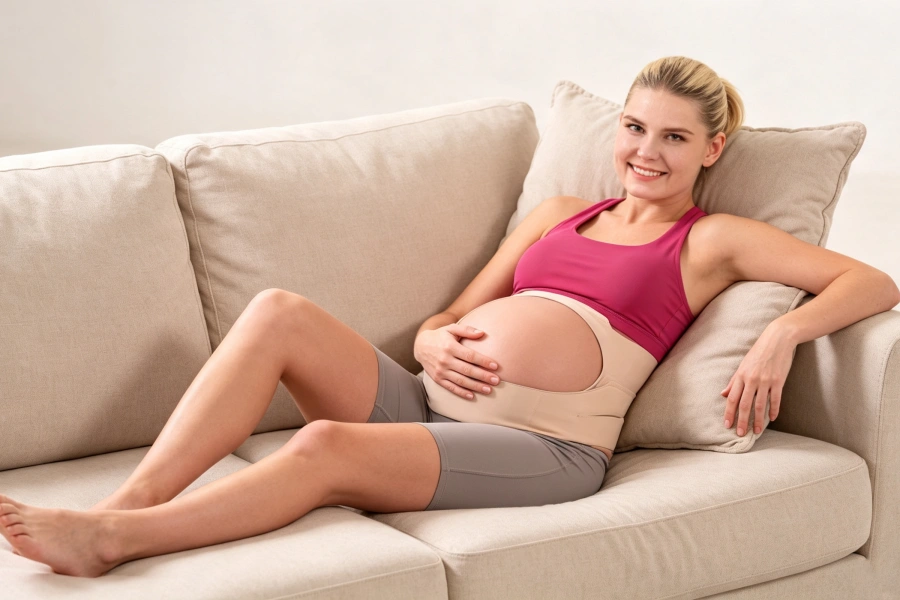
Finding the Best Maternity Back Brace: Key Features
A maternity back brace —also referred to as a maternity support belt, Pregnancy Belly Band, belly support band, or pregnancy support band—is a specially designed aid for expectant mothers. Think of it as a sports bra, but for your growing belly.
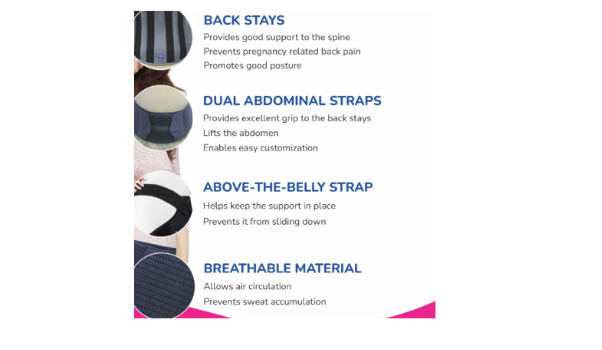
Made from elastic, breathable materials, this band wraps around the midsection and fastens with Velcro, offering adjustable comfort and support as your bump expands.
Its main purpose is to gently lift the belly, reducing strain and pressure on the lower back and hips. This helpful accessory not only boosts comfort during pregnancy but also helps you stay active and manage daily tasks as your body evolves.
While many brands offer their own take on belly bands, they generally fall into three main categories:
- Classic belts (single strap belts) – Designed to ease back strain without adding bulk. These can be worn discreetly under clothing.
- Added support belts (extra-supportive belts) – Featuring an additional strap across the top for enhanced back relief.
- Prenatal cradles (cradle maternity belts) – Equipped with crossed shoulder straps that evenly distribute weight between your back and shoulders, providing maximum support.
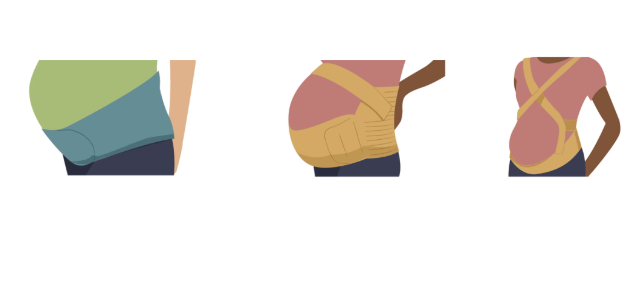
Choosing the right pregnancy belly band depends on how you carry weight and where you feel the most discomfort. Each pregnancy has unique needs—that’s part of the journey’s beauty. You’ll also want to consider factors like material, how visible the band is under clothing, and your budget.
Reason #1: It Targets the Root Cause of Pregnancy Back and Pelvic Pain
While pregnancy discomforts are often blamed on hormones, in this case it’s justified. The hormone relaxin, which loosens pelvic ligaments for birth, affects joints throughout the body—rising to about ten times normal levels. This widespread loosening, especially in the sacroiliac joints and pubic symphysis, leads to pelvic instability, inflammation, nerve irritation, and deep, hard-to-describe pain.
Meanwhile, the growing belly adds 10–15 kg, shifting the center of gravity forward and increasing lumbar curvature (5–10°) and pelvic tilt (3–7%). This overloads spinal discs and joints, while back muscles overwork and fatigue.
The cause is a clear physical chain—not weakness or bad luck. A well-fitted maternity back brace helps by providing external pelvic support, reducing sacroiliac shear by about 20–30%, restoring neutral pelvic tilt, and easing the exaggerated lumbar curve. Surface EMG studies show back muscle activity drops 10–20%, reducing strain. Less instability, less compensation, less pain—right at the source.
Reason #2: Distributes Baby’s Weight So Your Body Stops Compensating
By the third trimester, your body carries a front-heavy load equivalent to a small watermelon—about 5–7 kg concentrated in your lower abdomen. Unlike normal body weight, this force is off-center and constant, pulling on your spine, shifting your center of gravity, and straining your lower back and round ligaments. Around 10–30% of pregnant women experience sharp ligament pain as a result.
A well-fitted maternity back brace redistributes this load across a broader support area (800–1200 cm²), redirecting an estimated 10–30% of the forward weight away from your spine and ligaments. Clinical evidence shows that wearing such a brace for four or more hours daily over three weeks can reduce round ligament pain by 20–30%. It may also lift the uterus slightly (0.5–2 cm), easing bladder pressure and potentially cutting nighttime bathroom trips by 15–30%. In short, a maternity brace helps your body stop overcompensating and start functioning more comfortably.
Reason #3: Corrects Posture Before Swayback Becomes a Chronic Problem
Swayback doesn’t appear suddenly—it develops through small, daily postural shifts until your body adapts to a faulty stance. Pregnancy accelerates it. The pelvis shifts forward, the lower back flattens, and the upper spine overextends. Weight transfers from muscles to ligaments and joints, creating predictable imbalances: tight hamstrings and chest, weak abs and glutes, leading to rounded shoulders, forward head posture, and chronic neck fatigue.
Postural habits solidify over months or years. Early on, they’re reversible; later, they become structural. Correcting swayback can take over six months, but mild cases improve in 4–6 weeks. Pregnancy and early postpartum are key windows for intervention.
A maternity back brace provides real-time feedback, helping the brain relearn neutral posture. Unlike painkillers or heat, it actively retrains alignment. Consistent use over 2–6 months can prevent chronic back pain, disc issues, and joint strain—turning a simple brace into lasting protection.
Reason #4: Keeps You Active, Mobile, and Confident on Your Feet
Staying active during pregnancy isn’t about pushing harder—it’s about staying steady enough to feel like yourself. But that gets tougher with every wobbly step. Your center of gravity shifts, your balance changes, and the fear of tripping can stop you before you start.
A maternity back brace helps by stabilizing your pelvis and supporting your lower back. It gives you a steadier base, smoother movement, and helps bring back the confidence you thought you’d lost.
Small Moves, Real Gains
No gym or strict plan—just small, consistent moments throughout your day:
- Balance on one leg while brushing your teeth (10–30 sec each side)
- Shift your weight while waiting for the kettle (3–5 reps each side)
- Stand up from your chair with control (10–15 times a day)
- Walk a few heel-to-toe steps on a flat surface
These aren’t formal exercises—they’re tiny resets that remind your body where steady feels like.
On your feet all day, like nurses or teachers? Aim to move gently for 1–2 minutes every 30 minutes. It keeps your legs loose, your circulation going, and makes the next hour more bearable.
Steady movement builds confidence. And staying active through your second and third trimesters is one of the best things you can do for both you and your baby.
Reason #5: Supports Circulation Now and Speeds Up Postpartum Recovery Later
By the third trimester, your body achieves remarkable feats—cardiac output rises by 30–50%, and blood volume by 40–50%. However, blood return from your legs is physically obstructed. The enlarged uterus compresses the inferior vena cava (IVC) and pelvic veins, causing blood to pool in the lower limbs, swelling in the ankles, and a deep, heavy ache by evening—a sign of trapped venous pressure.
A well-fitted maternity back brace addresses this issue at its root. The brace works through ventral lift, raising the uterus upward and forward to relieve pressure on the IVC and pelvic veins. This restores blood flow and reduces fluid leakage into tissues.
Apply 10–20 mmHg pressure to the lower abdomen and pelvis, leaving a two-finger gap under the top edge for easy breathing. Results include:
- Ankle swelling reduced by ~0.5–1.5 cm over a full day
- Leg heaviness and pelvic pressure reduced by ~20–40% (clinical data)
- Less varicose vein pain and bulging
What to Look for When Choosing a Maternity Back Brace
The market is full of options — and most of them look alike. The differences are hard to spot until you’re already stuck with the wrong one.
Start with the support level
Belly bands from single or double-layer stretch fabric with 10–20 cm wide, work best in the early second trimester — gentle lift, light compression, nothing more. A structured maternity support belt does far more. You get a wide back panel, contoured edges, and adjustable compression straps. These target your sacroiliac joints and lower spine directly. Most people need this type from around week 20 onward. For severe pelvic instability or SI joint dysfunction, a rigid SI belt with groin straps is an option — but talk to a physiotherapist before going there.
Match the Brace to Your Stage and Symptoms
- Weeks 13–27: Your belly pulls forward and your lower back tightens after standing. A structured belt with Velcro adjustment handles this well.
- Weeks 28 onward: You need something that grows with your bump. Look for secondary straps to manage pelvic girdle pain.
- Any trimester: A pre-existing back injury or SI instability moves you straight into structured belt or SI-belt territory.
Materials and Fit Matter More Than Price
Choose soft, breathable fabric. Bamboo viscose blended with stretch fibre is a solid combination — it won’t trap heat during long shifts on your feet. Machine washable construction is a must. You’ll wear this piece daily, so easy cleaning isn’t optional.
On sizing: go by your pre-pregnancy waist measurement, not your current bump size. Compression should feel firm but still comfortable. Try saying a full sentence out loud. Too hard to get through? Loosen the straps.
Neutral colours — nude, black, white — stay hidden under clothing. A thin front profile keeps ridging from showing at the waistline.
One firm rule: circulatory issues, blood pressure concerns, or placenta complications all require a doctor’s sign-off. Get that cleared before you buy anything.
Conclusion
Your body is doing something remarkable right now — and it deserves real support.
A maternity back brace isn’t a crutch or a sign that you’re struggling. It’s a smart, proactive choice. Women who wear one understand that protecting their spine, pelvis, and posture during pregnancy shapes how they feel after it. Less pain today means a stronger, faster recovery tomorrow.
The five reasons we’ve covered all point to one simple truth: a supported body makes everything else easier. The walks. The work. Sleep. The moments you want to hold onto.
Maternity Brands looking to update your custom lower back brace? Contact AOFIT now, and our products are designed featuring:
- No rigid components, maximizing both safety and comfort
- Ultra-soft, breathable mesh fabric
- Ergonomically contoured to fit the pelvic area
In addition, our advanced manufacturing techniques eliminate common complaints such as:
- Chafing: Ultrasonic welding creates smooth, seam-free edges that prevent skin irritation.
- Rolling: Plus-size optimization uses custom grading to reduce bulging and stop edges from rolling.