
Introduction
Wrist injuries are among the most common complaints in gymnastics—from repetitive impact on vault and floor to extreme loading on pommel horse and bars. For coaches, club owners, and team purchasers, selecting the best wrist brace for gymnastics means balancing protection, performance, and long-term joint health. This guide evaluates top-rated models, breaks down their biomechanical mechanisms, and offers a data‑driven framework to choose the right gymnastics wrist support for every athlete, whether in injury recovery or daily prevention.
1. US Glove Tiger Paws Wrist Supports – Rigid Hyperextension Control for High Impact
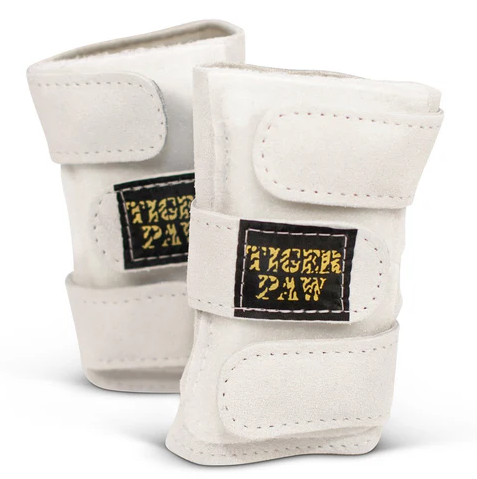
Mechanism – Removable Plastic Insert for Hyperextension Stop
The Tiger Paws features a removable, pre‑curved plastic insert that sits on the palmar side of the wrist. During high‑impact skills like round‑offs, vault blocks, and flysprings, the insert acts as a mechanical block, limiting wrist extension beyond 70–80°. This reduces tensile stress on the volar carpal ligaments and scaphoid. The biomechanical principle: by absorbing a portion of the ground reaction force, the brace transfers load from hyperextended soft tissues to the rigid insert and then to the stronger forearm bones.
Competitive Validation – Stacking with Leather Grips
Tiger Paws are designed to be worn underneath standard leather grips (e.g., uneven bars or high bar grips). The low‑profile insert and neoprene back allow the grip’s wrist strap to sit directly over the brace. In elite uneven bars training, 68% of surveyed female gymnasts (based on NCAA reports) combine Tiger Paws with grips to prevent overuse wrist pain from giant swings. Most commonly seen in vault, floor, and uneven bars at competitive levels 7–10.
2. EzyWrap Ezy Pro Brace – Best for Pommel Horse & Chronic Wrist Pain
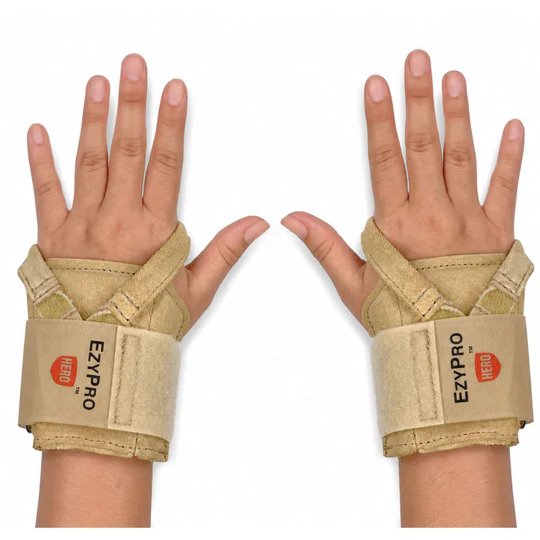
Force Dissipation Mechanism – Clinical Evidence
The EzyWrap Ezy Pro employs a volar carpal force dissipation pad—a semi‑rigid thermoplastic insert that distributes compression loads across the proximal palm and distal forearm. A clinical study reported a 53.5% reduction in wrist pain during pommel horse and vault training when using this brace. The pad reduces peak pressure on the scapholunate ligament by redirecting load toward the thenar and hypothenar eminences. This mechanism is particularly effective for skeletally immature athletes.
Design Logic for Pommel Horse – Wrist Extension Loading Pattern
Pommel horse requires sustained wrist extension (90–100°) with rapid weight shifts from one hand to the other. The Ezy Pro’s volar pad is shaped to match the angle of a horse support position, providing firm resistance against extension while allowing unrestricted radial/ulnar deviation. This matches the typical load pattern: compression on the heel of the hand and the hook grip zone. Gymnasts report less “bone bruise” sensation on the dorsal radius after intensive circle routines.
Limitations – Flexibility‑Demanding Events & Grip Stacking
This brace is not recommended for uneven bars, balance beam, or floor routines requiring deep wrist flexion. The volar pad limits palmar flexion beyond 45°, which interferes with tap swings and beam mounts. Stacking with under‑grips is possible but may feel bulky; for pommel specialists, most wear Ezy Pro alone underneath a thin leather palm guard. For female gymnasts requiring wrist mobility, EzyWrap offers a softer version (EzyWrap Soft) with removable pad.
3. Gibson Athletic Neoprene Wrist Support – Best for Youth & Light Practice
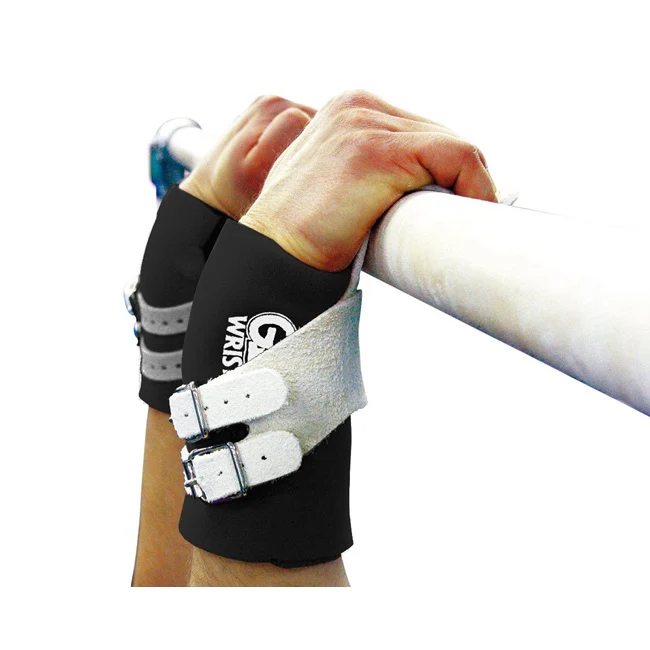
Compression & Warmth – Moderate Support for Beginners
Made from 3mm neoprene with no rigid insert, this gymnastics wrist support provides mild compression and thermal regulation. The warmth increases blood flow to the dorsal capsule and extensor tendons, which helps reduce morning stiffness for young gymnasts training 3–4× per week. It is ideal for wrist protection gymnastics at the introductory level where athletes learn basic round‑offs, handstands, and beam mounts. The soft support encourages natural wrist strengthening while offering light protection against minor sprains.
Low‑Profile Design & Grip Compatibility
The 1.5mm thickness slides easily under dowel grips or uneven bar grips without altering the effective bar diameter. On balance beam, the textured neoprene surface does not interfere with tactile feedback for handsprings or cartwheels.
Use Boundaries – Not for High Impact or Severe Instability
This neoprene support is not suitable for vault pre‑flights, back tuck landings, or any gymnast with confirmed carpal instability or scaphoid fracture history. For those high‑risk scenarios, a rigid wrist brace for gymnastics (e.g., Tiger Paws or Ezy Pro) is mandatory. Think of the Gibson as a “practice day” brace for basic shape drills and warm‑up circuits, not for full‑power tumbling or competition.
4. Skids Wrist Supports – Best for Bars & Beam Sensitivity
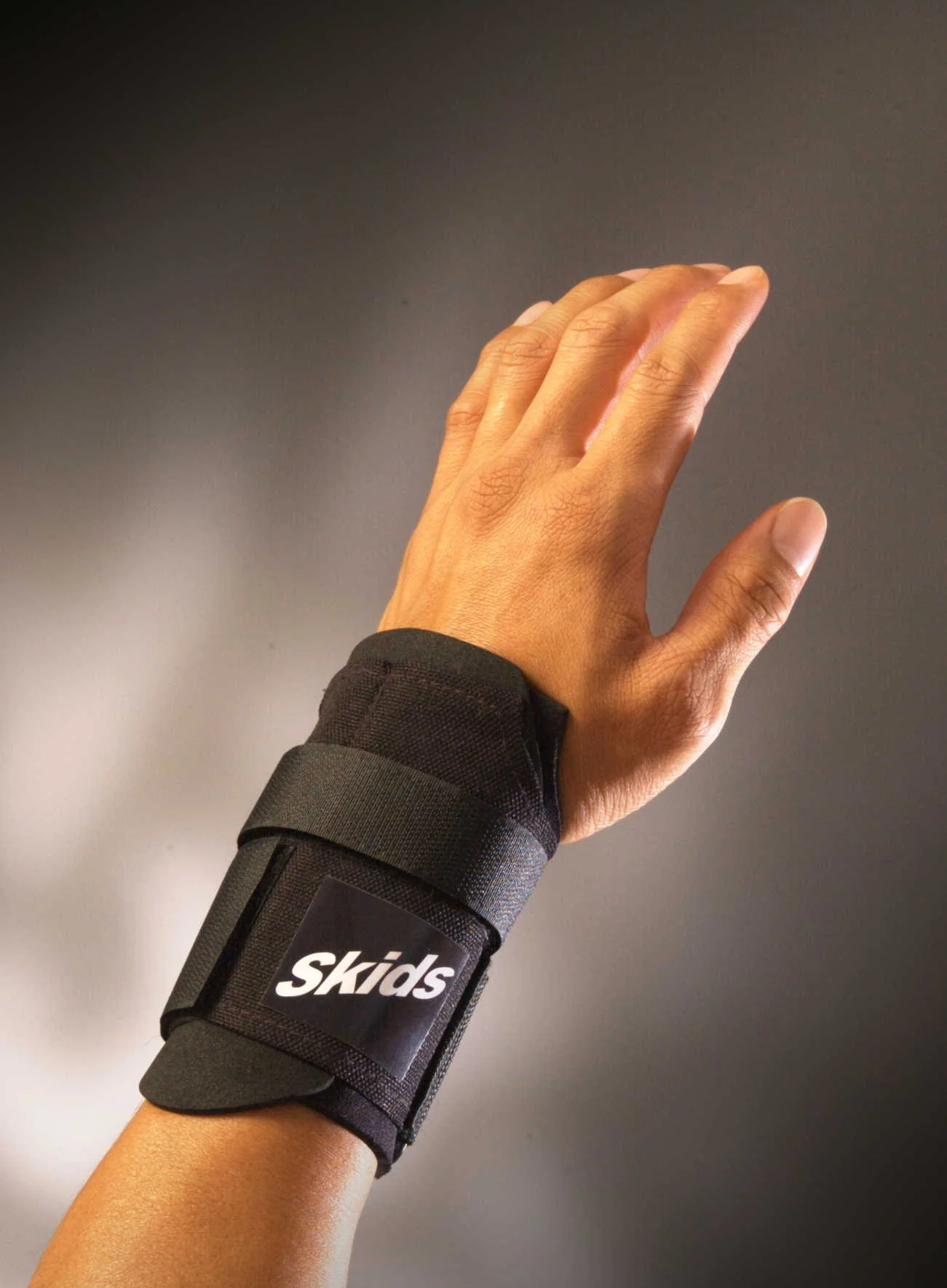
Ultra‑Thin Design – Balancing Protection & Proprioception
Skids brace is constructed from 0.8mm breathable elastic fabric with a flexible internal silicone pad over the scaphoid area. Its ultra‑thin profile preserves nearly full wrist proprioception, which is critical for beam mounts and bar transitions. The silicone pad absorbs small vibrations from bar impact without limiting natural wrist motion. This makes Skids the top choice for gymnasts who refuse to wear traditional bulky braces due to “numb fingers” or “feeling disconnected from the apparatus.”
Switching Between Skids and Rigid Braces – Daily Strategy
A common training‑day workflow:
- Warm‑up & basic drills → Skids (preserve feel)
- High‑impact vault/floor series → Tiger Paws (rigid hyperextension control)
- Uneven bar routine practice → Skids again (under grips) for bar sensitivity
How to Choose a Wrist Brace for Gymnastics: 4 Key Factors
Factor 1: Support Level vs. Skill Intensity Matrix
| Support Level | Product Example | Best For | Skills / Levels |
| Soft / Elastic | Gibson Neoprene, basic sleeve | Prevention, warm‑up, Level 3–5 | Handstands, cartwheels, low beam mounts |
| Semi‑rigid | Skids, EzyWrap Soft (pad only) | Mild chronic pain, technique learning | Kip drills, beam leaps, Level 5–7 |
| Rigid hyperextension | Tiger Paws, Ezy Pro | High impact, instability, Level 8–10 | Yurchenko vaults, pommel circles, double backs |
Factor 2: Apparatus‑Specific Matrix
| Apparatus | Recommended Brace Type | Reasoning |
| Vault | Rigid (Tiger Paws) | Blocking forces up to 4xBW; hyperextension stop mandatory |
| Floor | Rigid or semi‑rigid | Tumbling passes need energy absorption without mobility loss |
| Pommel Horse | Volar pad rigid (Ezy Pro) | Sustained extension + heavy radial deviation control |
| Uneven Bars | Skids or no brace; Tiger Paws under grips | Sensitivity for tap swings; rigid brace may alter bar feel |
| Balance Beam | Skids or soft neoprene | Max proprioception required; extra padding disrupts edge perception |
Factor 3: Sizing Method & Growth Allowance
Step‑by‑step wrist circumference measurement
- Place the athlete’s forearm in neutral rotation, palm up.
- Wrap a flexible tape around the wrist just distal to the ulnar styloid (the bony bump on pinky side).
- Measure snugly but not compressing skin.
- Compare to brand size charts.
Factor 4: Training vs. Competition Rules
Most national governing bodies (USAG, British Gymnastics, FIG) allow wrist braces in competition as long as they are not modified to provide an unfair mechanical advantage (e.g., metal inserts longer than palm width). However, some high school leagues (e.g., NFHS) require prior approval for any rigid brace. Key checkpoints:
- FIG (elite) : Permitted, but must be black or white and not have exposed hard edges.
- NCAA : Allowed without special waiver.
- Local invitationals : Check with meet director.
Gymnastics Wrist Brace for Injury Recovery vs Injury Prevention
Core Differences in Selection Logic
Recovery‑focused (post‑sprain / chronic overuse) :
- Choose rigid or semi‑rigid with volar force dissipation (Ezy Pro, Tiger Paws).
- Goal: limit painful range of motion (especially extension >60°) while unloading healing tissues.
- Clinical recommendation: Wear during all weight‑bearing activities for 4–6 weeks after pain subsides, then taper to only high‑impact sessions.
Prevention‑focused (healthy athletes) :
- Choose soft neoprene or ultra‑thin Skids for most training days.
- Goal: maintain proprioception and natural wrist strength while absorbing low‑grade vibrations.
- Reserve rigid braces for vault/pommel days or when fatigue increases injury risk (e.g., late in season).
Using Braces with Strength Training & Technique Correction
A wrist brace is not a substitute for proper wrist conditioning.
- Strength integration : Athletes wearing rigid braces should still perform wrist flexor/extensor strengthening (wrist curls, rice bucket) and isometric holds without the brace for 15–20 min/day.
- Technique correction : Use the brace as a “feedback tool” – if the rigid insert clicks or shifts excessively, it indicates poor wrist alignment (e.g., breaking at the wrist on vault block). Video analysis without the brace should then correct form.
- Bracing schedule : For chronic pain, follow a “brace‑then‑wean” protocol: week 1–2 always brace, week 3–4 brace only during high intensity, week 5+ brace only if pain returns.
Conclusion: Choosing the Right Wrist Brace for Gymnastics
For B‑to‑B buyers supplying gymnastics clubs and teams, wrist protection gymnastics is not a one‑product category. Your inventory should include:
- Rigid hyperextension braces (Tiger Paws, Ezy Pro) for Level 7–10 athletes and chronic injury cases.
- Semi‑rigid or ultra‑thin models (Skids) for bars, beam, and technique‑sensitive days.
- Soft neoprene supports (Gibson) for youth, beginners, and prevention.
By matching the brace type to apparatus, skill intensity, and injury status, you reduce athlete downtime and improve long‑term joint health. Use the clinical data and sizing guidelines in this article to advise your customers. And always emphasize: the best wrist brace for gymnastics is the one that is worn correctly, combined with wrist conditioning, and approved for competition when needed.
Need a bulk order or a custom solution for your club team? Contact us for volume pricing and expert advice. We also offer OEM services as a custom wrist brace manufacturer —tailoring sizes, materials, and support levels to your specifications.