
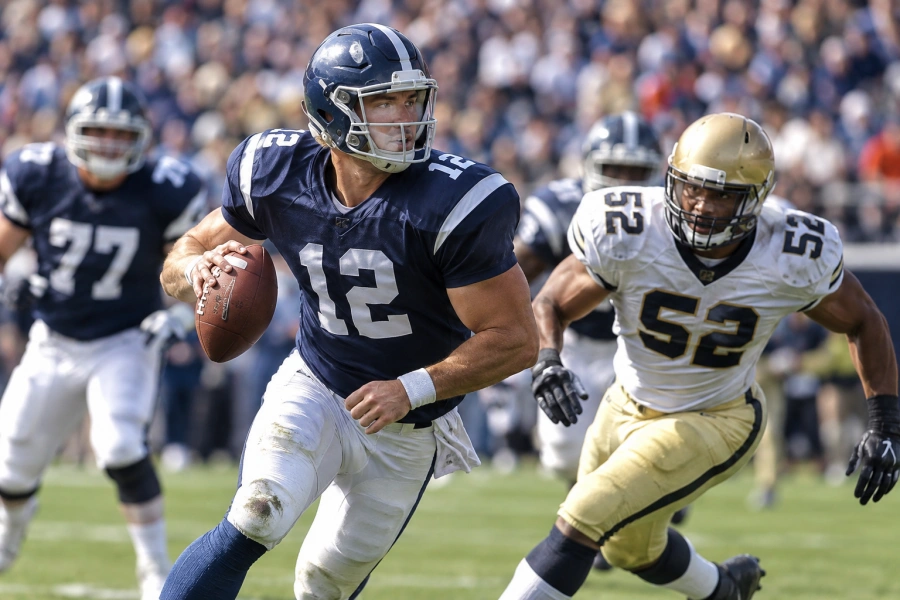
Why is a football shoulder brace necessary? Because in a sport defined by high-energy collisions, the shoulder is one of the most vulnerable joints on the field. Shoulder injuries account for roughly 10–20% of all football injuries, and the AC joint is the most commonly injured shoulder structure. A football shoulder brace helps limit the dangerous abduction and external rotation position linked to instability and dislocation, offering positional protection and confidence during contact. This article breaks down the injury risks, how a football shoulder brace works, who actually needs one, how to choose the right fit from a custom shoulder brace manufacturer, and what it can—and cannot—do.
Understanding Football Shoulder Injury Risks
Shoulder injuries are a major part of the injury burden in football. They account for roughly 10%–20% of all football injuries. In an NCAA men’s football study, shoulder injuries represented 13.3% of all injuries, with 15.4% occurring in games and 11.9% in practice.

The AC joint is the most commonly injured shoulder structure. It accounts for about 41% of shoulder injuries in college football and about 40% of shoulder injuries in NFL quarterbacks. In NCAA shoulder/elbow injury data, common diagnoses include AC joint separation (30%), anterior shoulder subluxation (9%), shoulder contusion (9%), and rotator cuff tear/strain (8%). In professional quarterbacks, AC joint injuries account for 40%–56% of shoulder injuries, while SLAP tears are only about 3.1%, and 85% of those are isolated injuries.
High-risk groups include defensive backs and linebackers, who have the most shoulder instability events. When adjusted for exposure, however, quarterbacks have the highest incidence. The key mechanism is the abduction + external rotation (ABER) position—the vulnerable arm position used before throwing, when opening the upper body to absorb contact, and during tackling. Collision in this position can push the anterior capsule and labrum anteroinferiorly, causing instability.
Shoulder instability is not only “dislocation.” In football, subluxation is more common than true dislocation, and anterior instability is the core problem. If an athlete continues playing after an in-season instability event, recurrent instability is common, whether the first event was a subluxation or a dislocation. Nonoperative recurrence rates can reach 40%–55%; after surgery, recurrence falls to 13%–26%, but return to play often takes close to 9 months. After a first dislocation, nonoperative failure can be as high as 50%, especially in young, high-intensity athletes.
Return to play may look quick, but recurrence risk is high, and the problem can become chronic instability requiring longer rehabilitation or surgery. About 61% of athletes use a brace when returning after in-season instability. Long-term consequences include chronic shoulder instability, secondary injury, and further labral/cartilage damage.
The core problem is therefore not a single collision alone. It is high-energy contact in the ABER position combined with recurrent instability. The most common injury site is the AC joint; the most common mechanism is anterior instability and labral injury during tackling or impact.
How a Football Shoulder Brace Prevents Dislocation & Instability?

A football shoulder brace works by keeping the shoulder away from the vulnerable abduction + external rotation (ABER) position that is closely linked to anterior instability and dislocation. By limiting extreme abduction and external rotation, the brace helps reduce exposure to the “apprehension” or dislocation posture during passing, blocking, tackling, and impact. One review notes that bracing is used to keep the shoulder out of these risky positions, which may otherwise lead to recurrent dislocation.
Biomechanically, tested stability braces in collegiate football players helped reduce exposure to the dangerous 90° abduction + external rotation position. Among the braces tested, the Sawa shoulder brace was the most effective. This positional protection is the main way a brace supports stability: it helps guide the shoulder away from the range where dislocation and instability are most likely.
- Football shoulder braces can also play a positive role in injury burden. In one collegiate offensive-linemen study cited in a 2022 review, bilateral shoulder stabilizing braces reduced missed time: braced athletes missed 8.7 contact practices/games, compared with 36.6 for nonbraced athletes. This supports the use of bracing as a protective tool that can help players stay available and participate more consistently.
- Beyond mechanical protection, a football shoulder brace can improve confidence and contact readiness. Shoulder bracing has been reported to improve athletes’ sense of stability when returning to play, and recovery perception is moderately correlated with performance confidence. In football players with recurrent shoulder dislocation, wearing a brace helped normalize the tackling posture on the affected side and was reported to have a clear psychological effect by reducing anxiety about re-dislocation.
For high-contact actions such as tackling and blocking, the brace’s value is often shown in helping athletes feel more secure and more willing to perform contact movements. After bracing, football players with shoulder dislocation showed significant improvement in most measured indicators, and their tackling posture became more normalized. This suggests that a shoulder brace can support not only physical positioning but also the confidence needed to play aggressively and effectively.
The best-supported positive use case is in-season protection after instability and return-to-contact support. In these situations, a football shoulder brace can help limit risky shoulder positioning, reduce exposure to the dislocation-prone ABER posture, improve stability feedback, and support an athlete’s confidence during tackling, blocking, and collision play.
Football Shoulder Brace Supporting Recovery
- For AC joint separation or sprain, the core role of a brace is to provide local compression, focal support, and limitation of excessive motion. This can help reduce pain, swelling, and further stretching. Common industry language includes “stabilization, compression, and preventing overextension.”
- In the acute phase, treatment is more about immobilization and motion restriction. A common approach is to use a sling or immobilizing brace for about 4–6 weeks, then gradually restore range of motion. In sports medicine rehabilitation for shoulder injuries, the first 6 weeks often involve a sling, followed by functional recovery.
- In the rehabilitation phase, an adjustable compression brace or functional support is more appropriate. It allows some motion while providing focal AC joint protection, and is often used during gradual return to training and daily activity.
- For rotator cuff and labrum injuries, brace goals differ. For rotator cuff injuries, common brace goals are to reduce shoulder load, limit overextension, and restrict painful motions. Commercial products often explicitly label use for rotator cuff injury or rotator cuff tear, using compression and stability to support recovery. For labrum injuries, braces or harnesses are often used to limit extreme abduction, external rotation, and impact positions, reducing re-injury risk. Clinical materials mention that a brace or harness can help protect the shoulder and limit movement. Some athletes may continue playing with milder injuries, but return-to-play for throwing athletes is often referenced at 6–8 months.
- For postoperative or unstable shoulders, braces are often used alongside rehabilitation and strength recovery. For instability/dislocation, many protocols require restoring full range of motion and strength before return. Nonoperative return is commonly around 4–6 weeks, while postoperative return often requires 5–6 months.
Specific product or program examples:
- DonJoy / Sully Shoulder Support: labeled for AC separations, rotator cuff deceleration, and anterior/multidirectional instability. It provides responsive compression through 4 mm elastic neoprene. Official fitting instructions emphasize aligning the foam pad over the acromioclavicular joint to enhance stability.
- Copper compression shoulder braces: common e-commerce descriptions cover torn rotator cuff, dislocated AC joint, AC separation, and labrum tear, with selling points of compression + stability and compatibility with a relatively large range of motion.
- Shoulder instability/dislocation braces: often used for recurrence risk control in athletes. Literature and hospital materials mention they can be worn under protective equipment, but they clearly restrict athletes who need large overhead motions.
Return-to-play points that can be directly cited:
- AC joint/soft tissue injury: first control pain and swelling, then restore range of motion and scapular stability. Early stage is mostly immobilization; later stage shifts to functional support.
- Rotator cuff/labrum injury: the brace is usually only a risk-control tool. Actual return still depends on pain-free ROM, strength recovery, and sport-specific movement testing.
- Throwing/collision sports: labrum injury return-to-play is commonly referenced at 4–6 months postoperatively, and 6–8 months for heavier or throwing-type scenarios.
Who Actually Needs a Football Shoulder Brace?
- The first group that may need a football shoulder brace is players returning after a first shoulder dislocation. Clinical reviews note that football players with a first dislocation often try to return in 2–3 weeks, but a shoulder stabilizing brace is often considered at return to limit abduction and external rotation and reduce instability risk.
- A second group is players with a history of shoulder surgery. After shoulder stabilization surgery, return to contact/collision sports usually requires about 5–6 months of rehabilitation. Postoperative return athletes are often included in brace-use discussions, especially if they need to continue competing in a contact season.
- A third group is high-load collision-position players. Braces are more common in contact, non-throwing players. The literature explicitly mentions that contact and non-overhead throwing athletes often wear shoulder stabilizing braces when returning, while positions requiring many overhead motions are more limited.
Positions that are better suited for bracing:
- Offensive/defensive linemen: these positions have high collision frequency and large impact surfaces, making them the most typical high-load target group. In practice, linebackers/linemen more often use stronger shoulder equipment rather than equipment emphasizing flexibility.
- Returning players who need to limit extreme shoulder motion: the brace mainly limits abduction + external rotation, so it is better suited to players with frequent collisions but less dependence on large arm elevation.
Do adolescent players need “preventive wearing”? Youth product pages commonly set age ranges at 10–14 years and provide sizing by shoulder width/weight. Preventive wearing is more common in adolescents who are growing quickly, facing strong contact, and playing collision-heavy positions. However, current public materials emphasize proper sizing, snug coverage, and not over-restricting motion—not that “all adolescents should routinely wear a stabilizing brace.”
For adolescents with no prior injury history, the more realistic selection logic is usually: first choose appropriate shoulder pads; only consider a shoulder stabilizing brace if there is a history of dislocation, instability, or surgery.
Preventive wearing vs. post-injury rehabilitation wearing:
- Preventive wearing
- Goal: reduce shoulder forces in high-contact positions and help control extreme motion.
- Suitable for: linemen, frequent-collision players, larger adolescents with heavier contact.
- Selection logic: prioritize protection level, fit, and no motion restriction. If the brace clearly limits passing/catching or arm elevation, it is not suitable for overhead-motion positions.
- Post-injury rehabilitation wearing
- Goal: reduce recurrence/re-dislocation risk during return to play, often as a transitional measure.
- Suitable for: return after first dislocation, postoperative recovery, players with shoulder instability history.
- Selection logic: prioritize ability to limit abduction/external rotation and position compatibility. For quarterbacks, wide receivers, and other positions requiring frequent arm elevation and overhead motion, braces often clearly affect performance and are less suitable.
Position compatibility conclusions:
- More suitable: linemen, contact-heavy players who do not rely excessively on overhead motion, and postoperative/returning players.
- Less suitable: positions requiring frequent overhead motion, such as wide receivers and quarterbacks, because braces limit range of motion and can affect performance.
Judgment criteria:
- The three core questions are: Does the player have a shoulder injury history? Is the player in return-to-play or postoperative rehabilitation? Is the player in a high-collision position?
- If an adolescent has no injury history, choosing proper shoulder pads first is more reasonable. If an adolescent has a dislocation or surgery history, then considering a shoulder stabilizing brace is more reasonable.
What to Look For When Choosing the Right Football Shoulder Brace?
The core buying standard is to prioritize motion control. Functional shoulder braces for contact sports are designed to limit abduction, extension, and external rotation while still allowing controlled movement.
- Abduction control matters most. Choose a brace with a strong, adjustable abduction stop, but do not assume the label limit equals the real-world limit.
- External rotation restriction is essential for football. The same football study found external rotation still ranged about 71.6° to 93.9° with braces, showing that real-world restriction can be partial, not absolute.
- Adjustable ROM beats fixed straps. Look for customizable strap length or dynamic ROM control so the brace can be tuned to the injury and sport intensity.
- Best-fit designs use multiple adjustment points. Strong options mention adjustable shoulder straps, arm cuff tension, and chest/waist anchoring to fine-tune abduction and external rotation control.
- Compatibility with football shoulder pads is a must. Prefer braces that attach directly to shoulder pads or are explicitly marketed for wear under football pads.
Under-pad comfort check: the brace should sit low-profile enough to avoid chest bunching and pad interference. Look for elastic/neoprene construction and universal left/right fit when possible.
Avoid over-restriction that hurts performance. The best brace should stop the vulnerable overhead position without fully locking the arm.
What a Football Shoulder Brace Can’t Do?
- A football shoulder brace cannot guarantee 100% injury prevention. Research shows that functional shoulder braces can only limit part of the range in high-risk positions; they cannot eliminate injury risk. Under real upper-limb abduction and external rotation loads, preset limits are not always achieved.
- It cannot replace medical evaluation and rehabilitation training. Shoulder stability problems usually require a brace + rehabilitation/physical therapy + avoidance of trigger movements. Regarding recurrent instability, reviews have noted that no study has proven that brace use lowers recurrent instability rates.
- It cannot be used as a one-size-fits-all solution. Brace effectiveness depends on sport demands, injury type, injury location, and whether the arm is the dominant side. The literature explicitly states that the potential benefits of bracing should be determined on an individualized basis, not uniformly prescribed.
- It cannot replace structural treatment. If there is structural pathology, such as a SLAP tear, larger Bankart lesion, acute full-thickness rotator cuff tear, or recurrent dislocation, a brace alone is often insufficient. The clinical pathway would more likely involve further imaging, specialist evaluation, or surgery/intensive rehabilitation.
Conclusion
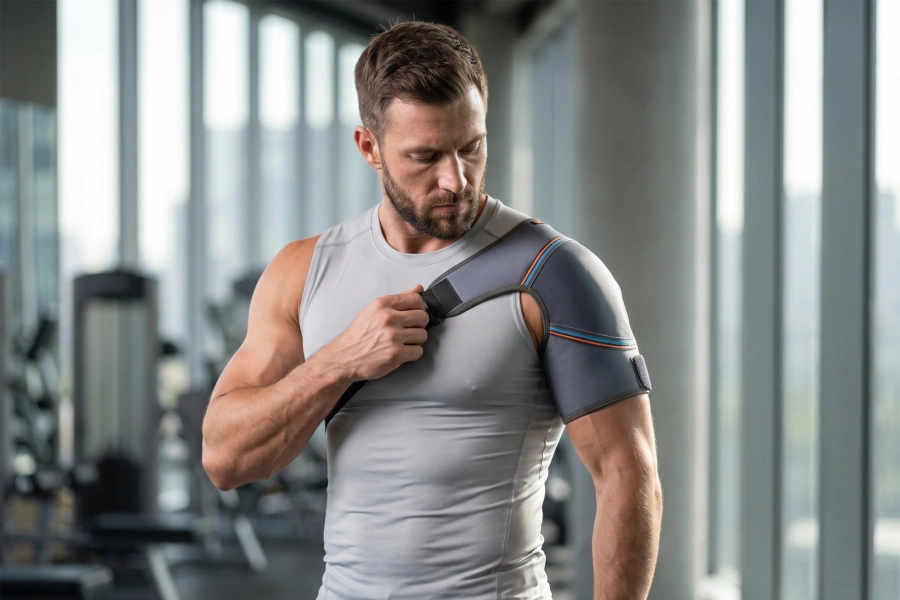
Your shoulder is only as strong as the football shoulder brace protecting it, and on the field that’s non-negotiable. Whether you’re strapping into a football shoulder brace for game-day prevention or working back from an AC joint injury, the right pick comes down to a fit that locks in without restricting your blocking and tackling, materials that survive sweat-soaked four-quarter games, and a support level that matches your injury stage rather than what looks good in an ad.
If you need serious post-dislocation stability, DonJoy Shoulder Stabilizer SPA or Breg Shoulder Stabilizer are your safest bets. For everyday shoulder stability during practice, Medi Shoulder Action or DonJoy/Sully Shoulder Support are solid options. A football shoulder brace can help limit risky abduction and external rotation and give you confidence on contact—but it’s a support tool, not a replacement for rehab or medical care.
Grab your top pick, size it correctly using our guide, and get back to training.