
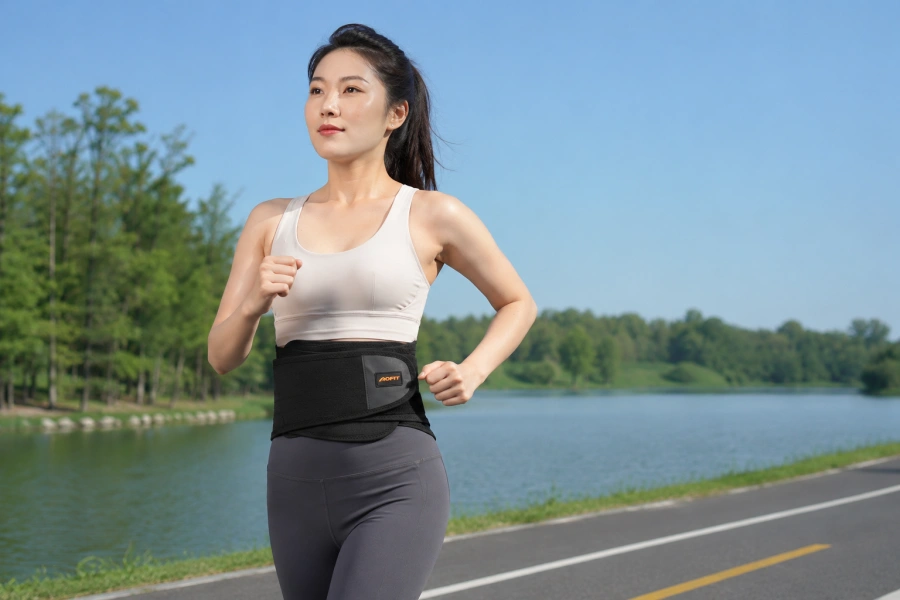
One sprained ankle or bruised shin is all it takes to learn that the right protective gear sport for your activity is the difference between playing through the season and sitting out with an ice pack. What you need on a soccer field looks nothing like what you need on a skateboard. A flimsy pair of shin guards or the wrong knee braces won’t do much when it counts. Whether you’re gearing up for your first rec league game, coaching a team of nervous beginners, or nursing an old joint injury that makes you a little more cautious, this guide covers what protective gear sport you need, sport by sport, and why each piece matters.
What Sports Protective Gear Is Required for High-Contact & Collision Sports?
In collision sports, bodies slam into other bodies, sticks meet faces, and the margin for error shrinks fast. Protective gear gets more specific and more non-negotiable, sport by sport.
Tackle football sits at the top of the list. The mandatory kit is a helmet, chin strap, shoulder pads, mouthguard, and a full seven-piece pad set. Helmets need a facemask, a secured four- or six-point chin strap, and NOCSAE certification. Skip any of that, and you’re skipping the sports padding that disperses hits across the hips, thighs, knees, and tailbone.
Ice hockey has its own non-negotiables. Hockey Canada requires a CSA-certified helmet and facial protector for every player, goaltenders included. Minor and female hockey also require a BNQ-certified throat protector. A mask attachment doesn’t count as a substitute. As of August 2024, that neck protector became mandatory for every player and on-ice official under 18. Mouthguards are compulsory in some divisions, optional in senior play.
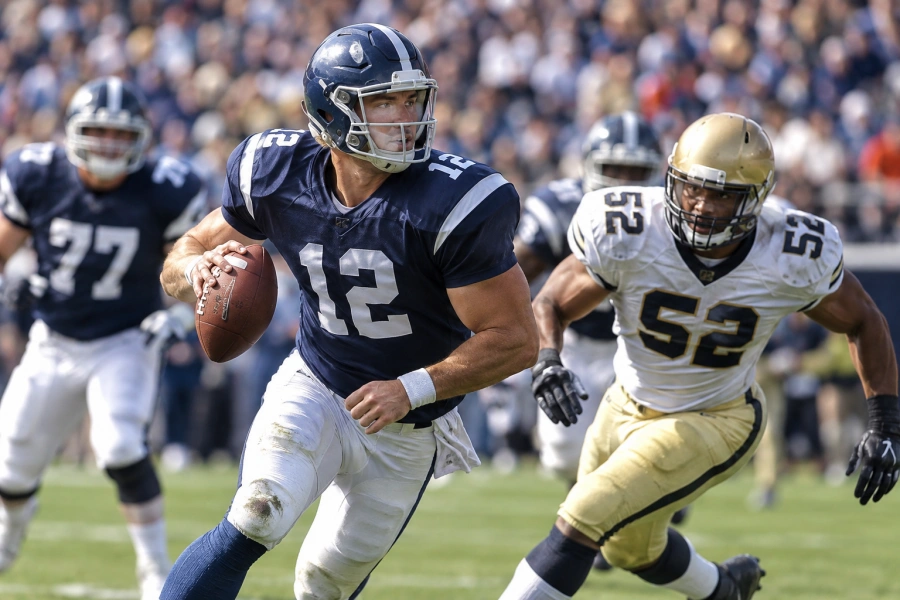
Rugby plays by different logic. Scrum caps and shoulder pads exist and help, mostly with scalp cuts and cauliflower ear, but the RFU doesn’t mandate them. It’s largely a personal call, as long as gear meets World Rugby standards.
Baseball and softball land somewhere in between. Catchers need a helmet, chest protector, shin guards, and throat guard. That part’s firm. Batters’ face protection is often left up to the league.
Across all of it, the same principle holds. Impact-absorbing foam and hard-shell layers disperse force before it reaches your body. And where joints are the weak spot, athletic braces for the knee, ankle, and elbow limit excessive motion instead of cushioning blows.
Essential Sports Protective Gear for Ball & Field Sports
Ball and field sports look less brutal than football or hockey, but the rules still draw hard lines around what’s mandatory versus what’s smart. The gaps between the two are where most injuries happen.
Soccer keeps its list short but firm. Shin guards and proper footwear are non-negotiable under FA rules. Shin guards need to be the right size, the right material, and offer “reasonable protection.” They must be fully covered by socks, not just strapped on and left exposed. A mouthguard isn’t required, but military sports safety guidelines flag it as worth adding alongside the shin guards and boots. For buyers stocking soccer protective clothing for athletes, splitting inventory into training-grade and match-grade shin guards covers most demand.
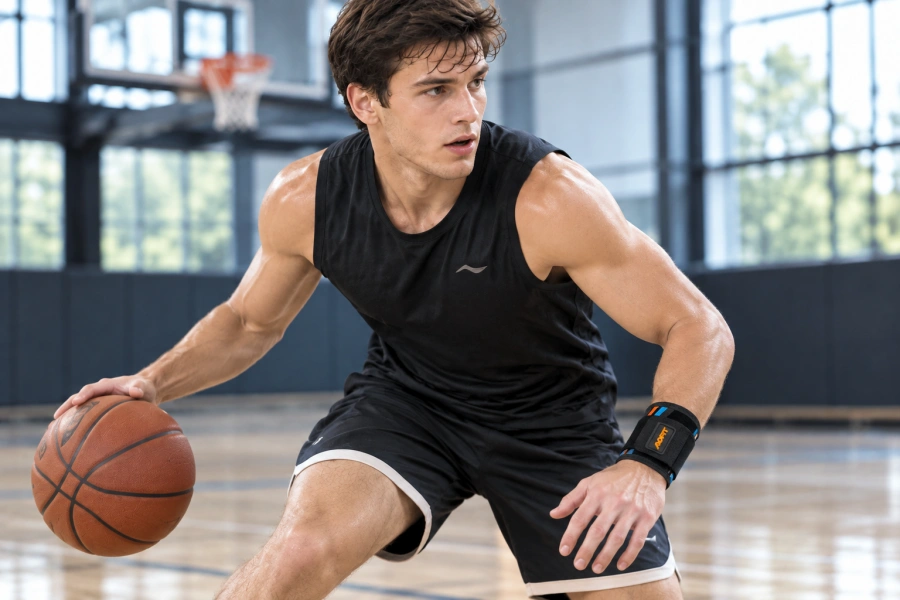
Basketball doesn’t mandate ankle protection at all. The only universal requirement is footwear. Everything else (high-tops, external ankle braces, taping systems) is about prevention, not compliance. Players with a history of rolled ankles lean toward high-top shoes and rigid braces. Higher-level players often go the opposite direction, choosing low-profile shoes with lighter support and relying on tape or minimal knee braces for sports. Either way, ankle and knee protection here is about reducing repeat injury.
Lacrosse splits by gender, and the difference matters. Men’s and boys’ play requires a NOCSAE-certified helmet, face mask, shoulder pads, arm pads, gloves, mouthguard, and a cup. Goalies add a throat guard and chest protector. Women’s and girls’ lacrosse skips the helmet in most leagues but requires eyewear meeting ASTM F3077, plus a mouthguard. Starting September 1, 2026, English lacrosse organizations using a non-deformable ball will make that eyewear mandatory whenever a face-masked helmet isn’t already required.
Across all three sports, ankles and knees take the brunt of stopping, cutting, and landing. That’s where compression gear and stabilizing braces earn their keep.
Protective Gear for Wheeled & Action Sports
Wheels and boards change the math entirely. Instead of one big hit, you’re often dealing with repeated falls, so helmet protection has to be built for a different kind of abuse.
Cycling helmets sold in the U.S. must meet CPSC 16 CFR 1203, a single-impact standard. Europe runs on EN 1078, with EN 1080 covering kids’ helmets specifically. Riders wanting extra performance often look for Snell B-90 or B-95 certification on top of the baseline.
Skateboarding and roller sports need something tougher: ASTM F1492, a multi-impact helmet standard built for the reality that skaters fall over and over, not once. Coverage matters too. A good skate helmet wraps around the back of the head, since backward falls are so common. And a bike helmet and a skate helmet aren’t interchangeable unless the label says so on both counts.
Snowboarding and skiing helmets follow EN 1077, ASTM F2040, Snell RS-98, or CSA Z263.1, always paired with goggles for eye protection.
The Rest of the Kit
Wrist guards matter here. An action-sports guide calls them the “second-most critical unit after the helmet” because they cut FOOSH fracture risk by 50–60%. Add knee and elbow pads (EN 1621-1 Level 1 for higher-speed riding) and, for bike-park or off-road use, a back protector rated EN 1621-2. Impact-rated eyewear meeting EN 166 F or Z87+ rounds out serious setups.
Breaking Down the Core Types of Sports Protective Gear
Every piece of gear has a job. Some absorb impact, some limit movement, some just make you feel steadier on your feet. Knowing which is which changes how you shop.
Helmets absorb and disperse impact energy before it reaches your skull. That’s the baseline defense in any contact sport.
Mouthguards cushion the jaw and teeth, cutting down on cracked teeth and jaw trauma.
Padding on shoulders, elbows, knees, and hips covers bony, exposed joints, softening the blow from falls and collisions.
Goggles shield the eyes from flying debris and high-speed impact.
Wrist guards restrict overextension and twisting, propping up the joint under load.
Chest and throat guards protect the sternum, collarbone, and airway from direct hits.
Groin protection covers a high-risk zone in any collision sport.
Knee Braces: Three Categories, Different Functions
Knee braces for sports split into three types.
Prophylactic knee braces guard uninjured knees against impact.
Functional knee braces stabilize a joint after ligament damage.
Rehabilitative knee braces limit range of motion post-surgery or post-injury.
Compression knee gear works differently—it supports circulation, reduces swelling, and sharpens proprioception, but it won’t stop dangerous joint displacement the way a rigid brace can.
The data backs this up. One randomized study found prophylactic knee braces significantly reduced MCL injuries among defensive players. An NFL offensive lineman study found braced players suffered major knee injuries at 0.013 per player versus 0.049 unbraced. Risk reduction ranges from 10% to 58% across studies, and a few even report increased risk. For ankles, though, evidence is more consistent. Bracing paired with balance training reliably lowers sprain rates, especially for repeat offenders.
How to Choose the Right Protective Gear for Sports?
Rule one: match the sports protective gear to the sport. Standards aren’t universal. A football helmet, a hockey helmet, a ski helmet, eye protection, a mouthguard, and a shin guard are built for different impact and injury risks, and their certification labels reflect that.
Rule two: check for the actual certification mark, not a vague “protective” label on the packaging. Football helmets need NOCSAE ND002/ND004 plus SEI. Hockey helmets need CSA. Ski and snowboard helmets need EN 1077, ASTM F2040, Snell RS-98, or CSA Z263.1. Other gear has its own standards too: eye protection may need ASTM F803, and sport-specific pads or guards should carry the applicable certification for that sport.
Rule three: fit matters as much as certification. Gear that shifts, slips, or loosens during play isn’t doing its job, no matter how good the label looks.
How to Check Protective Gear for Sports Fit
For helmets, the front rim should sit 1–2 finger-widths above the eyebrows.
Helmets should sit level, not tilted back, covering the forehead.
With all straps fastened, there should be no side-to-side or front-to-back rocking.
The athlete should be able to yawn, talk, or breathe deeply without the gear shifting. A snug strap is the quick test.
Try to rotate or pull the gear. It should move as one unit with the body part it protects.
If the gear no longer lines up with the body—ear holes with ears, knee pads over kneecaps, mouthguard on teeth—the fit has already failed.
Gearing Up by Experience Level
Beginners should buy the sport-required certified baseline model that fits well, skipping pro-level features they don’t yet need.
Regular club athletes should prioritize fit systems and stronger retention over cosmetic upgrades.
Competitive athletes can move to refined padding and liners, but only within the correct certification class. Boxing shows this: new fighters need a mouthguard, hand wraps, and training gloves first, with headgear added once a coach clears them for contact.
Sports Protective Gear for Athletes with Joint Instability or Past Injuries
Old injuries have long memories. If you’ve rolled an ankle twice in the past year or felt your knee buckle mid-pivot, your body is telling you something the rest of your gear bag can’t fix on its own. Athletic braces stop being optional and start being strategy.
Ankles have the strongest evidence behind them. Systematic reviews show semi-rigid ankle braces cut sprain rates by roughly 50–70%, especially in high-inversion sports like basketball, volleyball, and soccer. The benefit is even bigger for athletes with a prior sprain. One randomized trial found bracing lowered re-injury risk by about 47% compared to neuromuscular training alone. Basketball is the clearest case: constant landing, cutting, and contact make repeat ankle injuries common, and current research shows no meaningful drop in performance from wearing a brace.
Timing matters. Wear ankle support during training, scrimmages, and games—the high-risk moments. After a severe sprain, guidelines suggest continuous bracing for 6–12 months during risky activity.
Choosing Between Lace-Up and Semi-Rigid Ankle Support
Lace-up braces suit mild-to-moderate instability and everyday recurrence prevention inside a regular shoe.
Semi-rigid braces offer stronger mechanical restriction, better suited for contact sports and serious re-injury protection.
Knee Bracing: Sport Gear vs. Medical-Grade Support
Not every knee brace does the same job.
Standard sports padding and compression sleeves focus on warmth, mild compression, and light support—fine for minor discomfort or general prevention.
Medical-grade knee braces, like Bauerfeind’s GenuTrain S, are built for real instability: ligament damage, meniscus issues, patellar tracking problems, or swelling. These braces add side stabilizers, hinges, and straps that limit abnormal movement instead of just cushioning it. If you’re shopping around MCL/LCL protection, hyperextension control, ACL injury history, or meniscus support, you’re already in medical-grade territory.
Matching Protective Sports Gear to Your Sport and History
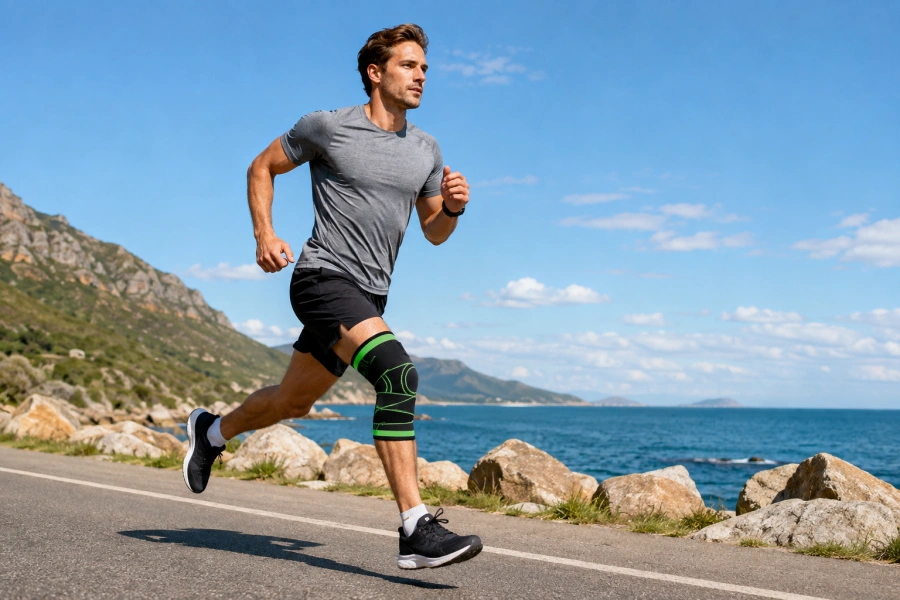
Running: Lightweight knee braces or ankle support work for mild-to-moderate instability or a history of ankle sprains. If your knee gives out or buckles repeatedly, move up to a stronger support brace.
Basketball: Ankle protection comes first. Add a hinged or stabilizing knee brace if there’s an old knee injury or lateral instability.
Badminton: Constant lunging, stopping, and direction changes stress both joints. Past-injury players typically pair ankle support with a light-to-moderate knee brace.
When to Size Up Your Support
Consider stronger, more structured bracing if any of these apply:
Two or more sprains or slips in the past 12 months
Frequent feelings of instability, giving way, or rolling during activity
Regular participation in basketball, badminton, volleyball, soccer, or cutting/jumping drills
You’re returning to play after an injury
For anyone rebuilding trust in a joint that’s already failed once, the right brace is about staying in the game without repeating the same setback.
Frequently Asked Questions About Sports Protective Gear
Is protective gear ever legally mandatory? It depends on the league. Boxing, cricket, football, cycling, skiing, and baseball all treat helmets and head protection as mandatory or strongly recommended under official rules. Eye protection lands on the “should wear” list for badminton, basketball, baseball, softball, lacrosse, hockey, tennis, soccer, volleyball, water polo, fencing, golf, and paintball. In collision sports, mouthguards, helmets, face masks, and chest protectors edge close to required, even where the rulebook says “recommended.”
Do casual athletes need pro-grade gear? Not always. Low-frequency, low-contact training calls for mid-range gear with solid certification and good fit. High-impact sports (skateboarding, hockey, boxing, cycling) deserve better protection regardless of skill level. Training several times a week wears out foam and straps faster, which pushes even casual athletes toward professional-grade upgrades sooner than they’d expect.
How often should gear get replaced?
Helmets: 3–5 years, sooner after any hard hit.
Mouthguards: every season or about six months.
Shoulder pads and padding: 2–4 years.
Gloves: 6–12 months with heavy use.
Watch for cracked shells, flattened foam, loose straps, or gaps in coverage. Any of those means it’s time.
Conclusion
No personal best is worth a torn ligament. Whether you’re lacing up cleats for weekend soccer or hitting the trails on two wheels, the right protective gear sport by sport makes the quiet difference between playing tomorrow and sitting on the sidelines nursing an injury. We’ve walked through helmets, mouthguards, shin guards, and everything in between. Athletic braces and supportive padding are for anyone who wants to keep showing up, season after season, joint intact and confidence high—not just the pros or people already hurt.
So before your next game or ride, take five minutes to check your gear bag. If your knees, ankles, or wrists have ever felt a little “off” mid-play, don’t wait for a real injury to take it seriously. Explore aofitbrace.com‘s braces that move with you, so your future self can still play pain-free years from now.