
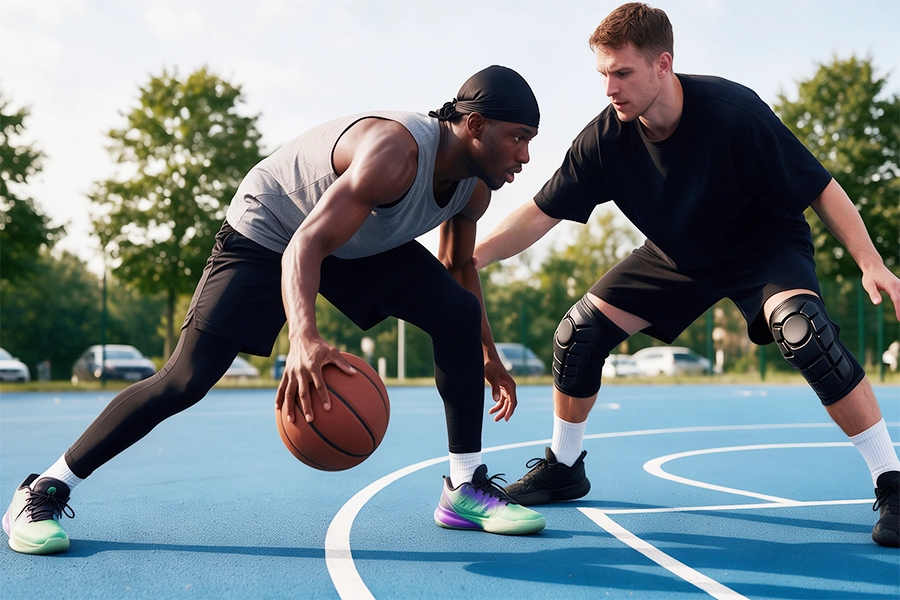
Basketball looks smooth on TV, but on the court you deal with hard cuts, awkward landings, and bodies crashing into your space. One bad step on someone’s foot, and your season can be over before the second quarter. Injuries are bound to happen, so focus on how much you can do about them. Basketball protective gear won’t make you invincible, but the right pieces support the joints that take the most punishment, from ankle sprain prevention to knee, elbow, and finger protection. Below, you’ll see how common basketball injuries happen, what protective gear can and can’t do, and how to match the right support to your position, age, and injury history, so you spend more time playing.

Why Is Basketball Protective Gear Necessary?
According to a systematic review, lower-body injuries account for about 75% of all basketball injuries, with sprains and strains making up roughly 55% of the total. Protective gear targets these vulnerable spots by absorbing impact, limiting unnatural joint movement, and keeping minor tweaks from turning into severe injuries.
| Body area | Share of injuries |
|---|---|
| Ankle | 33.1% (most common) |
| Fingers | 19.3% |
| Lower limb overall | ~75% |
| Lower limb overall | 63.7% (ankle 21.9%, knee 17.8%) |
Injury rates vary across leagues and tracking methods, but the pattern holds. Ankles, knees, and fingers take the hit.
How Injuries Happen
- Jumping and landing: About 28.1% of injuries happen during a jump or landing. Land on someone’s foot, roll an ankle outward, or let a knee cave inward, and you risk an ankle sprain, Achilles strain, or torn ACL.
- Sudden stops and cuts: Braking hard puts heavy shear force on the knee. When your foot sticks to the floor while your upper body keeps rotating, the ACL and meniscus take the damage.
- Contact: Shoulders, elbows, hips, and knees take direct blows during drives and box-outs. Rebounds, passes, and reach-in defense frequently jam fingers, leading to sprains, dislocations, and fractures.
- Falls: Bracing a fall with an open hand can sprain the wrist or fracture the scaphoid bone. Unchecked falls also send knees and hips straight into the hardwood.
- Repetitive load: Thousands of jumps and stops wear on the kneecap, patellar tendon, Achilles, and shins, causing overuse injuries that build up gradually over a season.
What Basketball Protective Equipment Can and Cannot Do for Injury Prevention
In a randomized trial of high school players, a lace-up basketball ankle brace cut acute ankle injuries by about 68%. Players wearing braces had 0.47 injuries per 1,000 exposures, compared to 1.41 in the control group (HR 0.32).
What Basketball Protective Gear Does Well
- Ankle sprain prevention: Braces, tape, and high-top shoes limit excess inward roll while boosting joint awareness and confidence.
- Re-injury protection: Braces offer the clearest benefit after a previous sprain.
- Return to play: Gear shields an existing injury and limits risky movement so you can keep training.
What It Cannot Do
- Gear cannot stop collisions, landing errors caused by fatigue, or bone fractures.
- Evidence on stopping first-time sprains remains mixed, so pushing braces on every healthy player overstates the case.
- No reliable evidence shows that standard basketball knee braces prevent ACL tears.
Basketball Protective Gear List: Types, Purpose and Who Needs Each One
Ankles, knees, the head, face, hands, and wrists take most of the damage in college basketball. In NCAA men’s basketball, the ankle accounts for 22.2% of injuries, the knee 13.0%, the head and face 11.3%, and the wrist and hand 10.1%. By injury type, sprains lead at 30.4%, followed by contusions at 14.3% and strains at 13.9%. Match your protective gear to those specific risks, and you cover most of what can go wrong on the court.
Quick Comparison Table
| Basketball Gear | What it does | Who needs it | What to check |
|---|---|---|---|
| Ankle sleeve | Light compression, warmth, and joint awareness | Beginners, low-volume players, no major injury history | Breathable stretch fabric, edges that stay flat, left/right fit, snug without causing numbness |
| Lace-up ankle brace | Limits excess inward and outward roll to prevent sprains and steady landings | Past sprains, guards and wings, players who cut and stop hard | Adjustable crossing straps, fits inside the shoe, allows clean running and jumping, sized with a trainer or doctor |
| Hinged or rigid ankle brace | Restricts abnormal side-to-side motion | Repeated sprains, post-ligament injury, doctor-recommended use | Hinge range, shell coverage, shoe compatibility, effect on natural gait |
| Knee sleeve/basketball knee pads | Compression, warmth, mild support, and protection from scrapes and bruises | Frequent floor contact, mild knee fatigue | Breathable stretch, silicone grip strips, patella opening or full cover, no pinching behind the leg |
| Knee brace | Adds stability through straps, side support, or hinges | Old knee injuries, post-surgery rehab, doctor advice | Support direction, hinge design, patella positioning, range of motion. |
| Padded elbow sleeve | Reduces scrapes and bruises from hard falls and collisions | Drivers, rebounders, teens, outdoor players | EVA foam thickness, elbow-tip coverage, secure grip, easy arm bending |
| Wrist support | Compression and light stability for the wrist | Wrist fatigue, heavy shooting and passing volume, fall risk | Thumb hole, hook-and-loop strap, thin palm side for ball feel, quick-dry fabric |
| Finger sleeves basketball | Limits excess finger bending and protects joints and skin | Old finger injuries, recovery from sprains, frequent rebounders | Single-finger fit, breathable fabric, clean ball feel, league-legal if taped or splinted |
| Basketball mouthguard | Cuts the risk to teeth, gums, lips, and jaw | Anyone in contact play, especially bigs, teens, and players with braces | Custom fits best; boil-and-bite needs complete molding, braces require an orthodontic model, never share |
| Padded compression shorts basketball | Muscle compression, warmth, and skin protection across thighs, hips, and glutes | Long sessions, cold gyms, players who hit the hardwood often | Moisture-wicking, flat seams, durable stretch recovery, league dress code. Does not replace knee or hip braces |
| Basketball shoes | Grip, cushioning, side stability, and landing protection | Everyone | Outsole pattern matched to the court surface, heel lock, midsole cushion, secure laces, replace once tread wears down |
Protection Levels at a Glance
- Light: ankle sleeves, knee sleeves, wrist supports, finger sleeves, compression sleeves for basketball, compression shorts, and basic elbow pads. These suit routine training, mild fatigue, and scrape prevention.
- Moderate: lace-up ankle braces, stabilizing knee braces, thicker elbow pads, and boil-and-bite mouthguards. Pick these after a sprain or when you absorb frequent collisions.
- High: hinged knee braces, rigid ankle braces, and post-surgical or rehab braces. A doctor, physical therapist, or certified athletic trainer should select the model and set wear time.
- Baseline: basketball shoes. While they do not replace a medical brace, every player needs them. Grip, heel lock, and lateral stability stay steady through every stop, cut, and landing.
The AAOS also recommends knee pads and elbow pads for basketball players to guard against bruises and scrapes.
Basketball Ankle Braces and Supports: Lace-Up vs. Semi-Rigid for Ankle Sprain Prevention

Not every basketball ankle brace does the same job. The right pick depends on how much movement you need to restrict and how much space you have inside your shoe.
The clearest data comes from a randomized trial tracking 1,460 high school players across 46 schools. Among athletes with a prior sprain, players wearing a brace recorded 0.83 injuries per 1,000 athletic exposures, compared to 1.79 for those without one. That translates to roughly 61% lower risk (HR 0.39, P=0.028). Research reviews back lace-up and semi-rigid models over plain elastic sleeves, which offer minimal mechanical support.
Lace-Up vs Semi-Rigid vs Elastic Sleeve
| Type | How it works | Support | Mobility | Best for |
|---|---|---|---|---|
| Lace-up | Fabric wraps the joint while laces or figure-eight straps snug down to slow sudden inward rolls. | Medium–High | High | Daily training, games, past sprains |
| Semi-rigid | Molded plastic stays, hinges, or air cells physically block inward and outward rolling, held by straps. | High | Medium | Unstable ankles, repeat sprains, return to play |
| Elastic / compression sleeve | Knit or neoprene fabric provides compression, warmth, and joint awareness without rigid stays. | Low–Medium | Highest | Mild soreness, light practice, backup support |
The simple rule: grab a semi-rigid brace when you need firm control against rolling outward. Pick a low-profile lace-up when you need room to cut, sprint, and jump. Pass on sleeves if your ankle frequently gives out.
Who Should Prioritize a Brace
- Anyone who sprained an ankle in the past 6–12 months
- Players whose ankles give out or roll often
- Athletes returning from a lateral ligament injury
- Guards, wings, and frontcourt players who jump, stop, cut, and absorb contact
- Anyone playing on slick hardwood or through dense tournament schedules
When to See a Doctor
Get evaluated by a sports medicine specialist or orthopedic clinician if you notice any of these signs:
- You cannot walk or bear weight on the foot.
- Pain and swelling increase after rest and ice, or fail to settle after 1–2 days.
- The joint shows little improvement after 5–7 days, or your ankle remains weak and keeps buckling.
- You spot visible deformity, severe bruising, or experience numbness, cold toes, or tingling.
- The brace causes worsening swelling, pain, or numbness that loosening does not relieve.
- You still cannot handle single-leg balances, jogging, jumping, and lateral cuts without pain before returning to full competition.
Which Basketball Knee Protection Do You Need?
These three products look alike on a shelf, but they solve very different problems.
| Type | What it does | Best for | Cannot replace |
|---|---|---|---|
| Knee sleeve | Provides compression, warmth, mild swelling control, position feedback, and light cushioning. Offers no structural ligament support. | Mild soreness, patellar tendon or kneecap discomfort, everyday training | Structural support for ACL or MCL instability |
| Basketball knee brace | Uses straps, side supports, or hinges to limit unwanted side-to-side and rotational movement. | Post-ligament injuries, knee instability, post-surgery rehab, doctor-directed use | Proper medical diagnosis, rehab, and muscle recovery |
| Basketball knee pads | Uses foam or gel to absorb direct impact from hard falls, dives, and collisions. | Outdoor asphalt or concrete courts, aggressive floor play | Joint alignment, ligament stability, pain treatment |
How to Choose
- Mild soreness or stiffness: Pick a thin, breathable sleeve. It works well if you want warmth and joint feedback and your knee never gives out. Just keep in mind that better joint awareness does not fix an unstable ligament.
- Ligament or kneecap problems: Work with a doctor or physical therapist to pick your brace. A hinged model lets the joint bend while checking for dangerous lateral shift. The extra hardware is bulky, which can make deep squats, hard stops, and full bends awkward. Feeling stable does not mean your knee is ready for full-contact runs.
- Rough outdoor courts: Look for basketball knee pads with high-density foam over the kneecap and padding along the sides. Vented compression sleeves protect movement well, whereas heavy, thick padding can keep you from bending your knee cleanly. More bulk is not always better.
What Gear Can’t Replace
Build hip strength (particularly the gluteus medius and maximus) to stop your knees from caving inward on hard landings. Add core control, overall lower-body strength, and progressive landing and cutting drills. Work back up to full-speed games in stages. A tighter brace should never be used to mask pain just to stay on the floor.
Basketball Elbow Sleeves, Wrist Supports and Finger Protection: Protecting the Upper Body
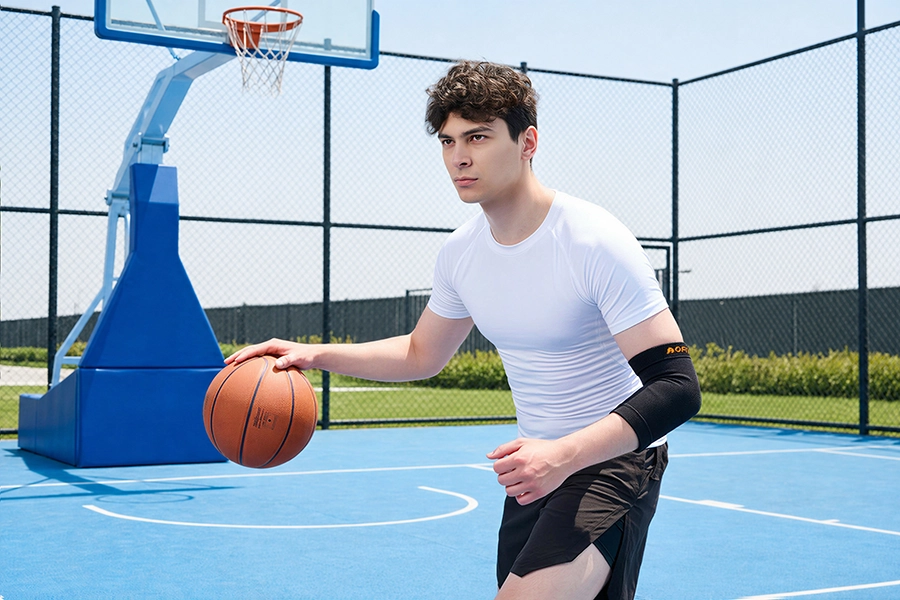
Your hands and elbows touch the ball on every possession, and they take the brunt of floor burns, jams, and hard falls. Protective gear should help cushion those hits without getting in the way of your shot.
Basketball Elbow Sleeves and Pads
Elbow protection works well for players who dive for loose balls, play on rough asphalt, take frequent contact, or deal with chronic scrapes. It also stabilizes the arm during rehab work.
- Lightweight elastic elbow sleeve: Look for breathable knit fabric, flat seams, and silicone grip strips inside the cuffs. These give you mild compression for shooting, dribbling, and regular practice.
- Foam or gel padded sleeve: This is the better choice for floor dives and hard collisions. Make sure the padding covers both the elbow point and the top of the ulna, rather than protecting only the sides of the joint.
- Outdoor use: Choose an abrasion-resistant outer fabric that holds up on blacktop. Avoid thick, stiff designs that bunch up or fight you when you bend your arm.
Protect your shooting feel:
– Padding shouldn’t run far down your forearm, where it can drag against your shooting release.
– Test the fit: bend and extend your arm fully, take a mock shot, and drop into a push-up. Switch sizes or brands if the sleeve rolls down, leaves deep indentations on your skin, or limits your bend.
– For surface scrapes, a flexible stretch sleeve moves better than a rigid shell. For impact protection, look for targeted soft padding instead of hard plastic rings.
Wrist Supports
Wrist supports help players manage past sprains, joint instability, post-game soreness, or weak joint awareness.
- Choose an elastic compression wrap or an adjustable hook-and-loop strap for games and workouts. Both steady the joint while allowing your wrist to flex and your forearm to rotate.
- Avoid stiff splints, thin cut-in straps, and braces with thick padding right on the heel of your palm. They disrupt dribbling, chest passes, your wrist snap, and your grip on the ball.
- For rehab, a brace with a palmar stay limits movement to help tissue rest. Wear it strictly on your doctor or physical therapist’s schedule, not all day long.
Test it on the court: Dribble one-handed, fire a two-handed chest pass, snap your wrist on a follow-through, and make a firm fist. The fit needs to be snug without cutting off circulation. If the edges curl, the wrap slides out of place, or material pinches the base of your thumb, adjust the size. Loosen or take it off immediately if your fingers go numb, cold, pale, or increasingly sore.
Finger Protection
- Mild jams or sprains: Elastic finger sleeves, athletic tape, or soft guards absorb repeated contact while keeping the joint functional. Never wrap tape tight enough to restrict blood flow. Check skin color, temperature, feeling, and swelling right after you tape up.
- Splints: Rigid splints protect fingers from further damage after significant injuries. Leaving a finger immobilized too long causes stiffness, so keep splint use short-term and reintroduce pain-free movement as the injury heals.
Stop wearing it if you notice: worsening pain, numbness, tingling, pale or bluish fingertips, skin cold to the touch, increased swelling, or raw skin. If you lose feeling or notice color changes, take the gear off immediately.
How to Choose Basketball Protective Gear?

Match basketball protective gear to your injury history
- Past ankle sprain: A recent sprain raises your odds of rolling the joint again. Wear well-fitted basketball shoes with a secure lace lock, and add a basketball ankle brace or tape if a medical professional recommends it.
- Knee history: Choose a knee brace that covers the entire joint, stays firmly in place, and allows full bending. Bracing supports the knee, though it cannot replace rehabilitation. If you experience persistent swelling, obvious joint instability, constant pain, or trouble bearing weight, stop playing and see a doctor.
- Eye history or high-risk vision problems: Regular glasses offer zero collision protection, so choose polycarbonate sports goggles certified for athletic use. For conditions that risk partial or total vision loss in one or both eyes, pediatric sports medicine guidelines advise wearing protective eyewear every time you play.
- Teeth, braces, or mouth injuries: Pick a custom or well-fitted clear basketball mouthguard, and never share it.
- Instability, numbness, deformity, or lingering pain: Thicker padding will not fix structural damage. Get a professional medical evaluation before buying gear.
Choose basketball protective gear by Age
Size kids by their exact height, weight, foot length, and thigh and knee circumference. Whatever they wear must stay secure through hard stops, cuts, and jumps.
- Shoes: Pick the right size and court-appropriate outsole, check that laces are intact, and tie them tight before every session.
- Mouthguard: A snug, clear fit is essential for kids and teens with braces, past dental injuries, or frequent game contact.
- Knee, elbow, and hip pads: These suit kids who hit the floor often or train hard. Look for lightweight, breathable pads without hard plastic protrusions.
- Head protection: Headgear must sit securely without sliding around, blocking peripheral vision, covering the nose or mouth, or featuring hard, protruding parts.
Choose basketball protective gear by Position and Playing Style
| Player type | Main risks | Priority gear |
|---|---|---|
| Guards, fast drivers | Hard stops, cuts, landings, contact with defenders | Well-fitted shoes, mouthguard, ankle support if you have a sprain history (professional advice), goggles if needed |
| Forwards, bigs | Box-outs, post contact, rebounding landings | Mouthguard, goggles, knee or thigh padding, targeted braces for old injuries |
| High-volume players | Frequent jumps, contact, heavy training | Light, breathable mix of shoes, mouthguard, and injury-specific support. Skip bulky gear that limits motion |
| Recreational players | Unstable technique, occasional collisions | Shoes and mouthguard first. Add ankle, knee, or eye protection if you have a history or risk |
| Perimeter shooters | Less contact, but still landings and eye contact | Well-fitted shoes, mouthguard by personal risk, sports goggles for eye history |
Guards and forwards facing heavy contact need a functional mouthguard. Regardless of position, gear should never restrict motion, slip, obstruct vision, or pose a collision hazard to other players.
Check League Rules Before You Buy
FIBA rules allow:
- Padded upper-arm, thigh, and lower-leg guards
- Compression clothing
- Qualifying head protection
- Knee, shoulder, and ankle braces
- Injured-nose protectors
- Clear mouthguards
- Non-dangerous sports glasses
FIBA bans any gear that could hurt other players. Hard guards, casts, or braces on the fingers, hands, wrists, elbows, or forearms are typically barred, even with protective padding over them. Headgear cannot cover the face, feature openings around the face or neck, or include protruding pieces.
Referees can inspect all equipment before tip-off, and any unlisted gear requires approval from the FIBA Technical Commission.
Choose Basketball Protective Gear: Ankle, Knee and Elbow Support Categories
Choose by injury history first, then by product name. Each category below moves from light to firm support.
Ankle Support
- No injury history: Choose an elastic or thin compression sleeve. It suits guards who need maximum freedom of movement.
- One past sprain: Choose a lace-up ankle brace for basketball. You can adjust the compression, and it fits inside most game shoes.
- Repeated sprains or “giving way”: Choose semi-rigid ankle support. Check your shoe space first to ensure a proper fit.
Neoprene sleeves come in 2 mm, 3 mm, or 5 mm options. Thin versions slip into shoes easily, while thicker cuts deliver extra warmth and joint stability.
Knee Support
- No injury history: A knee sleeve is enough. Check the breathability, thickness, and grip before picking one.
- Kneecap pain after jumping: Look for a patella-stabilizing knee brace built with an open patella or stabilizing ring.
- Ligament history or post-surgery return: Choose a hinged knee brace for basketball. Follow your clinician’s advice on setting the range of motion.
Size by thigh or knee circumference.
Elbow Support
- Light protection: Choose a thin basketball elbow sleeve.
- Frequent falls or contact: Choose padded elbow protection for basketball. Compare pad coverage and make sure your shooting arm can bend naturally.
- Limited motion or rehab: An adjustable ROM elbow brace controls your joint range during recovery.
Conclusion
Nobody plans to get hurt. A rolled ankle or tweaked knee happens in a split second, often mid-game when you feel at your best.
First, basketball protective gear adds a layer of joint defense, but it does not replace a proper warm-up and smart habits. Second, the right piece depends on your injury history, age, position, and the level of support you need. Third, match the gear to your actual risk, whether you need ankle sprain prevention or protection for your knees and elbows.
Run through the checklist, pick the support level that fits your game, and check our ankle, knee, and elbow categories to find your match.