
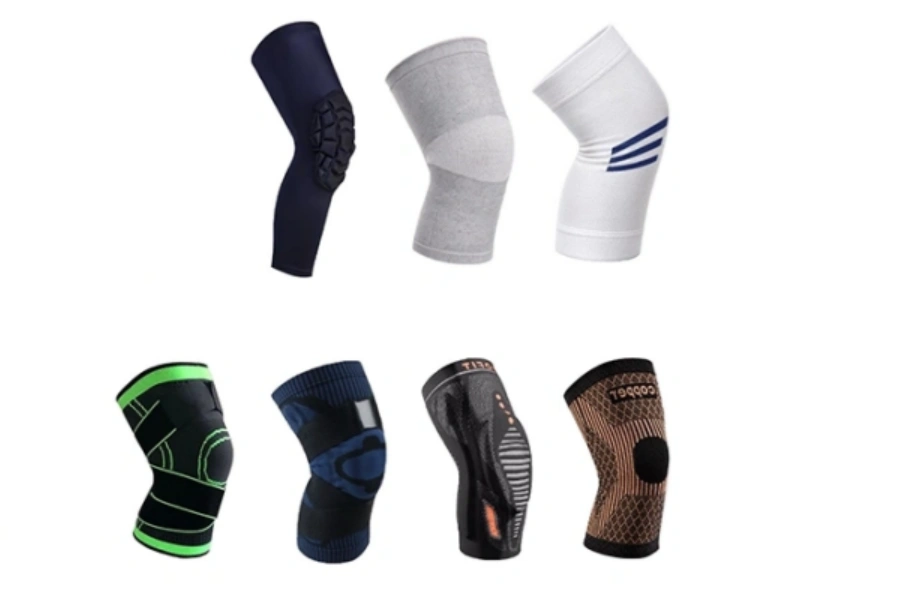
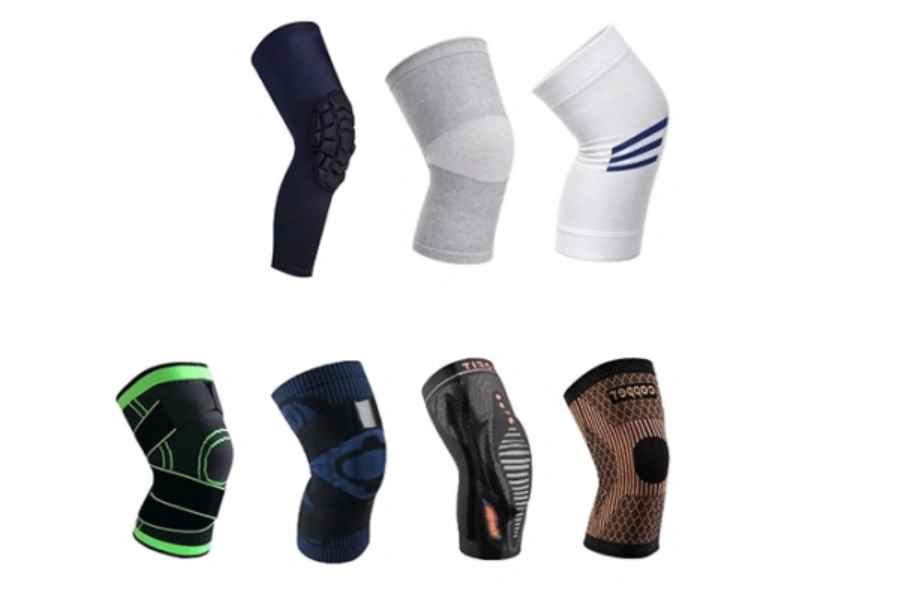
A knee brace looks simple—some fabric, a few straps, and maybe a metal hinge. But the gap between a compression knee sleeve that feels snug and a brace that protects a healing ligament comes down to knee brace design, and most product pages never explain it. Too little support and you risk re-injury. Too much and you’re strapped into gear that holds you back. Here’s a practical way through it. We’ll take a brace apart piece by piece, compare light, moderate, and high support levels, and look at everything from sleeves to hinged knee braces. Then we’ll match each type to specific injuries and activities, and cover what quality looks like, including custom OEM/ODM options for brands and buyers.
Knee Brace Design Explained: Core Components and How Each Part Works
The Six Core Components
|
Component |
How it works |
Effect on support and fit |
|---|---|---|
|
Brace body (fabric) |
Wraps the thigh, knee, and calf to provide baseline compression, warmth, and joint awareness. Makers usually use neoprene, elastic knit, or composite fabric. |
Stretchy fabric fits better and moves easily, but fabric alone provides little mechanical stability. Over time, elastic fatigue weakens its compression and grip. |
|
Hinges |
Mounted on the inner and outer knee, these link the thigh and calf sections. Dual-axis or polycentric hinges track the knee’s natural path while limiting side-to-side motion and twisting. |
These provide the foundation for maximum support. Adjustable ROM hinges can stop movement at 15°, 30°, 60°, or 90°. |
|
Side stays |
Aluminum, steel, fiberglass, or flexible spring strips run along the sides of the joint to transfer load directly into the thigh and calf. |
Stiffer stays resist bending and twisting better, but they add weight, press harder on the leg, and restrict movement. |
|
Straps |
Straps wrap around the thigh, calf, and back of the leg to anchor the hinges and control tension. |
If straps sit too loose, the brace slips down and loses its hold. Pulled too tight, they leave deep marks, cause numbness, and restrict circulation. |
|
Patella features |
Open cutouts, ring pads, star pads, or adjustable straps hold the kneecap in proper alignment. |
A patella stabilizer guides kneecap tracking and spreads out pressure. When the cap shifts out of line, you get soreness or a catching sensation. |
|
Padding |
Foam, silicone, or viscoelastic pads cushion the kneecap, tibial plateau, hinge mounts, and bony contact points. |
Cushioning absorbs impacts and keeps hard components comfortable. Thick padding adds bulk and heat, and heavy pads behind the knee bunch up during deep bends. |
Functional braces and rigid ligament supports combine stays, hinges, shells, and straps into a working mechanical system. By comparison, a standard compression knee sleeve relies almost entirely on the fabric body.
Knee Brace Materials at a Glance
|
Material |
Stretch and support |
Breathability |
Warmth |
Durability |
Best for |
|---|---|---|---|---|---|
|
Medium-high, even compression |
Low-medium |
High |
Medium-high |
Sports warmth, mild stability, cold weather | |
|
SBR |
Strong compression, lower cost |
Low (needs perforation or mesh) |
High |
Medium |
Budget braces (e.g., 56% SBR, 32% nylon, 7% spandex, 5% polyester) |
|
SCR/CR |
More stable, softer rebound than SBR |
Low-medium |
High |
Medium-high |
Mid-range braces with skin comfort |
|
Nylon |
Limited alone; blended with spandex |
Medium-high |
Low |
High |
Outer layers, straps, knit sleeves |
|
Polyester |
Low-medium, depends on knit |
Medium-high |
Low-medium |
High |
Sporty outer layers, quick-dry liners |
|
Knitted elastic |
Zoned compression |
Medium-high |
Low-medium |
Medium-high |
Long wear, slim fit |
|
Mesh |
Low support |
High |
Low |
Medium |
Rear-knee and high-sweat panels |
A standard neoprene knee brace pairs an SBR or neoprene core for compression and heat retention with a nylon or polyester outer face to resist abrasion. Adding spandex improves fit, while mesh panels behind the knee let excess heat vent.
Design Details That Separate Good Knee Braces from Average Ones
ROM control: Pins, stops, or limiter blocks set hard boundaries on how far the joint can bend or straighten. This limits hyperextension and protects healing ligaments after surgery, with angle settings you can open up as physical therapy progresses.
Polycentric hinges: The hinge pivot shifts forward and back as the leg bends. This tracks your actual joint movement instead of bunching up, slipping down the leg, or digging into the skin.
Anti-slip systems: Silicone beads, textured rings, and rubberized webbing grip the leg to stop the sleeve from sliding. These only work if the sleeve fits properly and straps are tensioned correctly, as excess rubber friction against loose fabric will only pull on your skin.
Ventilation: Perforated side panels, rear mesh, and thinner-weave zones keep heat and sweat from building up inside the sleeve.
Graduated compression: Changing knit density or strap tension creates a gradual pressure drop from the lower leg upward. This keeps the brace firmly planted without leaving tight constriction bands at the borders. High-end builds combine this medical-grade knit with rigid hinges, anchor straps, and viscoelastic patella rings for stable, all-day wear.
Popliteal relief: A soft cutout, mesh window, or thinner swatch of fabric behind the knee prevents the material from bunching, pinching the skin, or cutting off blood flow whenever you sit or squat.
Knee Brace Support Levels: Light vs. Moderate vs. High Support Compared
|
Level |
Typical build |
Best for |
Stability vs. freedom |
Main limit |
|---|---|---|---|---|
|
Light |
Elastic sleeve, knit compression, patella cutout, or simple patellar tendon strap. No stays or hinges. |
Mild pain, swelling, joint awareness during sport, early mild arthritis |
Low stability, maximum freedom |
Cannot control ligament instability, knee buckling, or post-surgery healing |
|
Moderate |
Soft wraparound design, crossing straps, one or two semi-rigid stays, or flexible hinges |
Moderate pain, mild to moderate instability, sports protection |
Medium stability, wide range of motion |
Cannot hold specific joint angles; inadequate for severe ligament tears or post-op care |
|
High |
Rigid bilateral stays, mechanical hinges, thigh and calf arms, and multiple straps (typical functional ligament braces) |
ACL/MCL instability, side-to-side shifting, obvious giving way |
High stability, less freedom |
Bulky, heavy, and requires precise measurements. Does not fix general aches |
|
Rehabilitative |
Long-leg frame, adjustable hinges, flexion/extension stops, and lockable settings |
Protected movement after surgery or severe injury |
Maximum joint control, minimal freedom |
Heaviest and hardest to put on. Must be set by a doctor or orthotist |
|
Unloading |
Rigid frame, medial and lateral uprights, hinges, and upper and lower straps that shift load off the worn compartment |
Single-compartment osteoarthritis |
Strong side-to-side control and load shifting, moderate bend |
Ineffective for whole-knee arthritis. Often needs professional fitting or customization |
Quick Sorting Rule
Fabric only = light
Fabric plus crossing straps or semi-rigid stays = moderate
Rigid uprights on both sides plus mechanical hinges = high
Lockable, with range-of-motion limits = rehabilitative
Frame with angle adjustment that moves load off one compartment = unloading
Fit Matters as Much as Level
Sizing a compression sleeve depends on thigh and calf circumference. Soft moderate braces require extra checks around kneecap alignment, seam placement, and strap tension. For high-support, rehabilitative, and unloading braces, the mechanical hinges must track the knee’s natural bending axis. If you have an irregular leg shape, joint deformity, or chronic brace slippage, a custom unloader works best. Off-the-shelf models cost several hundred dollars.
What Goes Wrong at Each End
Too little support fails to control sideways shifting, rotation, and sudden giving way, particularly after a ligament injury or during high-impact sports. Following surgery, inadequate support lets healing tissue move past its safe range.
Too much support creates different problems:
Over-tightened straps cut off circulation.
Heavy, stiff frames cause chafing, pressure points, and an unnatural gait that leads people to stop wearing them.
Misaligned hinges generate abnormal shear forces and cause the brace to slide down.
Incorrect lock angles block necessary joint motion, while an over-adjusted unloader shifts excessive pressure onto the opposite side of the knee.
Types of Knee Braces: From Compression Sleeve to Hinged Knee Brace and Unloader
|
Type |
Design |
Best for |
Caution |
|---|---|---|---|
|
Compression knee sleeve |
Elastic knit or neoprene tube without hinges. Retains warmth and improves joint feedback. |
Mild swelling, general knee aches, low-grade arthritis flares |
Cannot stabilize ACL or PCL tears or protect post-op movement. If worn too tight, it causes numbness or skin discoloration. |
|
Open-patella knee brace |
Sleeve featuring a padded circular cutout directly over the kneecap |
Anterior knee pain, kneeling discomfort |
Lacks the structural support needed for torn ligaments or bone fractures |
|
Patella stabilizer brace |
Built with a lateral buttress, C-pad, or adjustable tracking straps |
Recurrent subluxation, patellar tracking issues |
Does not stabilize ACL or PCL injuries. Excessive side pressure will aggravate joint pain. |
|
Thigh and calf cuffs linked by rigid side hinges, sometimes fitted with ROM stops |
MCL or LCL sprains, contact sports |
Standard side hinges cannot stabilize a complete ACL or PCL tear. | |
|
Functional ligament brace |
Dual uprights, rigid shells, and counter-force straps that block rotational and back-and-forth joint shift |
Healed ACL, PCL, or collateral ligament deficiencies |
Unsuitable for fresh surgical repairs. Movement limits require clinical setup. |
|
Post-op ROM brace |
Full-length uprights with adjustable angle dials, frequently locked in extension |
Early-stage recovery following ACL, PCL, or meniscus repairs |
Do not alter the hinge settings on your own. |
|
Unloader knee brace |
Three- or four-point pressure frame that shifts load off one side of the joint |
Medial-compartment osteoarthritis |
Ineffective for widespread arthritis or patellofemoral cartilage wear |
|
Knee immobilizer |
Rigid stay panels that hold the leg fully straight |
Acute trauma, limited strictly to brief emergency use |
Prolonged wear causes joint stiffness, muscle loss, and blood clot risks. |
|
Impact sleeve/pad |
Flexible sleeve with high-density foam, EVA, or gel padding over the kneecap |
Volleyball, wrestling, construction work |
Absorbs direct surface impacts, but provides zero structural joint stability. |
Prophylactic, Functional, and Rehabilitative
Prophylactic knee brace: Athletes wear these on uninjured knees in football, rugby, or hockey to shield the medial collateral ligament. They do not stabilize an already damaged ligament.
Functional knee brace: Stabilizes an unstable knee during physical work and athletic training after an injury or reconstruction. Clear its unrestricted use with your surgeon before wearing it early in recovery.
Rehabilitative knee brace: Safeguards healing tissue while gradually restoring joint flexion across stages. It works alongside physical therapy, never as a replacement.
Hinged Knee Brace Design: Hinge Types, Side Stays and Ligament Support Mechanisms
A knee doesn’t bend around a single fixed point. It rolls and slides at the same time, and that one fact drives most hinge design decisions.

Hinge Types Compared
|
Hinge |
Motion and fit |
Design traits |
Cost and best use |
|---|---|---|---|
|
Uniaxial |
Rotates around one fixed center, tracking the knee’s shifting rotation path least accurately. |
Simple, light, and built with few parts. Can ride up the leg, creating pressure and shear. |
Lowest cost. Best for basic hinged braces, short-term post-op recovery, and mild to moderate side-to-side instability. |
|
Dual-axis |
Two adjacent pivots follow the knee’s combined bend path with less slip against the thigh and calf. |
Dual pins or dual links that balance joint stability with manufacturing complexity. |
Mid-range cost. Suited for sport braces and moderate MCL/LCL instability. |
|
Polycentric |
Multiple links create a shifting rotation center that closely matches natural roll-and-slide, staying in position better. |
Reduces front-to-back slide and spreads joint-line pressure across a wider area. |
Highest cost. Built for ACL/PCL reconstruction, clear lateral instability, and high-activity users. |
Polycentric hinges usually win on paper, but real-world performance still comes down to whether the hinge center lines up with the wearer’s knee joint line.
When comparing suppliers, ask for:
Hinge type and joint-line alignment tolerance
Flexion range
Valgus/varus stiffness
Hinge weight
Fatigue cycle data
Side Stay Materials and MCL/LCL Protection
|
Material |
Stiffness |
Weight |
Durability and notes |
|---|---|---|---|
|
Injection-molded plastic |
Low–medium |
Low |
Corrosion-resistant, but carries higher fatigue and heat-deformation risks. Suited only for mild instability. |
|
Engineered polymer (nylon, glass-fiber) |
Medium–high |
Low–medium |
Better fatigue resistance; provides dependable support for moderate MCL/LCL instability. |
|
Aluminum |
High |
Medium |
Corrosion resistance depends on surface finish. Metal can crack after repeated bending, so guard against edge tenderness. |
|
Stainless steel |
Very high |
High |
Excellent fatigue life and corrosion resistance, but adds noticeable weight for the wearer. |
|
Carbon fiber |
Very high along the fibers |
Very low |
Resists fatigue and corrosion well. Requires careful impact and edge design, and carries the highest manufacturing and repair cost. |
MCL protection means resisting valgus force. Medial and lateral stays, rigid hinges, and cross-joint straps work together as counter-support.
LCL protection means resisting varus force. Hinge alignment is critical here, because misaligned side loads quickly turn into sore pressure spots.
Stiffer stays alone don’t equal more stability. You also need to dial in the thigh and calf wrap area, strap placement, hinge alignment, padding thickness, and anti-rotation structure.
Reliable validation includes static varus/valgus loading, cycle fatigue, strap slip, hinge wear, and side displacement across several flexion angles.
Adjustable ROM and Drop-Lock Mechanisms
Dial or slider systems set flexion and extension limits, usually in 10° steps. Some models offer an extension limit of about -10° to 30° and open flexion up to about 30°.
Drop-lock hinges lock automatically at preset angles, commonly 0°, 15°, 30°, 45°, with some models also offering -10°, 0°, 10°, 20°, 30° extension locks.
Early after surgery, the brace is often locked near full extension. As rehab progresses, you open the range gradually to reduce the risk of joint stiffness.
Typical adjustment flow:
Unlock the dial.
Set flexion and extension endpoints separately.
Lock the dial.
Match both hinges.
Check standing and bending.
Target angles, lock timing, and weight-bearing status must come directly from a doctor or physical therapist. Both hinges need identical settings. Mismatched sides can twist the brace, damage the hinge, and load the knee unevenly.
How to Choose a Knee Brace by Activity?
|
Activity |
Support level and style |
What to look for |
|---|---|---|
|
Running |
Light. Compression sleeve, open-patella sleeve, or patellar tendon strap. Pick a lightweight soft-hinge model if you manage past ligament instability. |
Thin four-way stretch fabric, silicone grip strips, and a breathable mesh panel behind the knee. Skip hard shells and anything that restricts bending. Running demands continuous flexing and leg swing, so stiff braces feel bulky and drag down your stride. |
|
Cycling |
Light to moderate. Compression sleeve or patella stabilizer. Use a soft-hinge model for long rides or mild joint laxity. |
Thin, low-friction fabric that wicks sweat quickly. A ventilated cutout keeps fabric from bunching behind the knee on every pedal stroke. Reliable grip and all-day comfort matter far more than impact padding. |
|
Weightlifting |
Moderate. Elastic compression or patella stabilizer. Step up to a soft-hinge or open-patella brace for heavy squats or old injuries. |
The brace must stay locked in place through deep knee bends while letting your joint travel through its full range. Look for adjustable straps, a grippy inner lining, and low-profile side stays. |
|
Contact and ball sports |
Moderate to high. Soft or rigid hinged knee brace. Switch to a medical-grade functional brace after a ligament tear. |
Dual side hinges, crossing support straps, and solid anti-slip systems handle hard cuts, sudden stops, jumps, and direct collisions. Prophylactic braces are common across football and rugby, and rigid hinges offer stronger protection than soft ones. |
|
Motocross |
High, with impact protection. CE-certified knee-shin guard built with a hard shell, mechanical hinges, and foam. |
Choose an extended design that covers the knee down through the shin and anchors cleanly inside your boot. |
Padding and Shell Choices
EVA foam: Light and cheap for low to moderate impacts, though it packs down and loses its bounce after repeated compression.
PU foam: Holds up longer and maintains its structure better than standard EVA.
Gel pads: Provide targeted cushioning around the kneecap for cycling, kneeling, and light contact. Make sure the pad does not add awkward bulk over the joint.
Hard shell: Necessary for sliding out on dirt or deflecting flying debris. Check that the inner liner and hinges keep the plastic cap off your kneecap.
Quick Selection Rules
Match support to risk. If your knee is healthy, a basic sleeve gives you all the support you need. Move to a hinged brace only when you have documented instability, prior ligament damage, or genuine collision risk.
Avoid unnecessary rigidity. Immobilizers and heavy locking braces freeze joint motion. They belong in early rehab or post-op care, never in routine training.
Aim for enough support with full movement. Added stiffness brings extra bulk and skin irritation, with little real upside for healthy movement.
Prioritize grip and airflow. A brace that slips down your leg during sprints or heavy sets protects almost nothing. In warm weather, good ventilation matters more than extra structural pieces.
Test before you commit. Run through a deep squat, a lunge, a flight of stairs, a running leg swing, and a hard directional cut. The brace should stay flat, hold its position, leave the back of your knee unpinched, and let you bend freely.
OEM/ODM Knee Brace Development: Custom Design Options at AOFIT
Most custom brace projects succeed or fail on the strength of the initial brief. AOFIT builds OEM/ODM knee braces directly from reference samples, sketches, or technical drawings. The engineering team translates those inputs into working 2D and 3D drawings, so buyers do not have to start from scratch.
What You Can Customize
Support level: elastic knee brace, compression knee sleeve, soft hinged knee brace, or rigid hinged knee brace builds tailored for sport, post-op recovery, joint stability, or medical channels.
Hinges: aluminum hinges, high-strength polymer, and reinforced fabric. Sport models can use a polycentric hinge design with a tuned ROM. Basketball braces run about 0°–140°, while long-distance running braces sit around 0°–120°.
Fit: CAD design mapped from leg geometry, joint alignment, 3D scans, or multi-point measurements. Sample fitting can hit measurement tolerances below 1 mm.
Patella zone: open cutouts, ring stabilizers, foam or gel pads, and targeted support inserts.
Straps: strap count, width, routing paths, crossing structures, and buckle positions.
Sizing and branding: compression level, length, size grading, custom colors, fabric combinations, logos, labels, and retail packaging.
Materials and Processes
|
Material |
Typical use |
|---|---|
|
Neoprene (SBR/SCR) |
Warmth, compression, cushioning, post-op and arthritis braces |
|
Knitted fabric (nylon, polyester, bamboo charcoal, polypropylene) |
Breathable, lightweight sport sleeves |
|
Mesh, stretch fabric, Lycra |
Ventilation, fit, and flexibility |
|
Composites and aluminum |
Rigid frames and lateral stability |
Carbon fiber is an option, though structure, cost, and certification need confirmation during engineering review. Production processes include precision cutting, knitting, lamination, heat pressing, reinforced stitching, and molding.
From Brief to Shipment
Brief: share reference samples, photos, drawings, and your target price.
Engineering: select hinge type, ROM, patella design, strap layout, and size grading.
Materials: verify thickness, elasticity, breathability, and durability.
Sampling: finished prototypes take 3–7 working days.
Testing: test wear fit, ROM, compression, and durability, then freeze the spec.
Production: mass manufacturing takes 10–25 working days.
MOQ: fully custom sport braces start at 500 pieces per size, per color. Stock items accept 500 mixed sizes and styles.
AOFIT operates under an ISO 13485 quality system, supplies FDA-related and CE-class products, and ships to 160+ countries.
Conclusion
A knee brace works only when it fits the job. Keep three points in mind. First, support level drives design. Compression sleeves handle mild soreness, reinforced braces steady the patella, and hinged designs protect unstable ligaments. Second, materials and fit matter as much as features, because a brace that slips or irritates your skin ends up in a drawer. Third, choose for your injury and activity.
Find your support level in the comparison table, then check your pick against the quality checklist. If you have severe pain or your knee gives way, see a doctor. If you’re a coach, therapist, or brand building a line, contact us to discuss OEM/ODM design, materials, and sampling.