
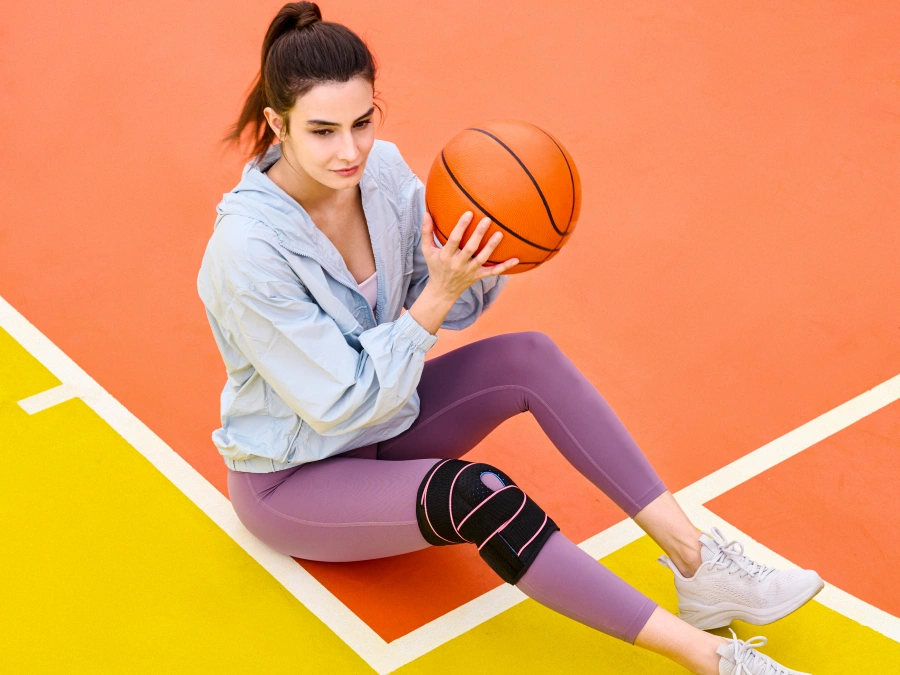
Knee pain never shows up at a convenient time. It hits mid-sprint, on a hard landing, or three sets deep into squats, putting your training plan on hold. The right support won’t make you invincible, but it lets you train with confidence. Pick the wrong one, though, and you’re stuck with a sleeve that slides down or a brace that’s overkill for your sport.
This guide narrows down the best sports knee support for your activity and budget, starting with quick picks and how each option was evaluated. You’ll find eight standout braces, a breakdown of compression sleeves, patellar straps, stabilized braces, and hinged braces, along with six buying criteria and sport-by-sport recommendations.
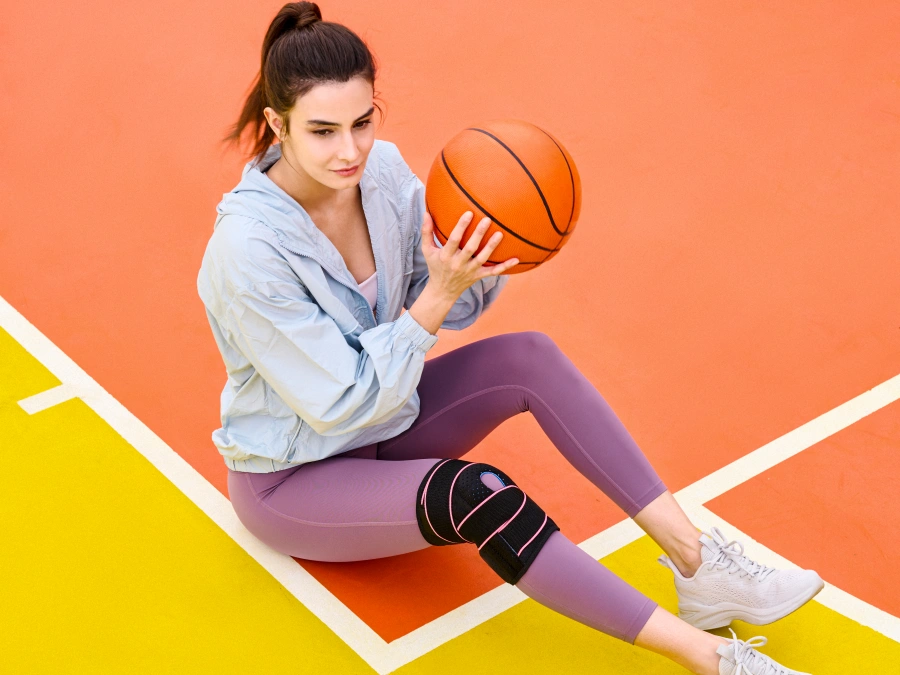
Comparison Table: 8 Best Sports Knee Supports Side by Side
|
Product |
Best For |
Support Level |
Side Stabilizers |
Adjustment |
Price (Per Knee) |
Main Limitation |
|---|---|---|---|---|---|---|
|
AOFIT Sports Knee Support |
Basketball, running, volleyball, gym training |
Light–moderate |
No; silicone patella ring |
Pull-on, elastic compression |
~$10–25 |
Not suitable for serious ligament instability |
|
Bauerfeind GenuTrain |
Running, gym workouts, mild patellar pain |
Moderate |
Flexible side stays |
Pull-on, anatomical fit |
~£90 (UK) / €62.15 (EU) |
Premium price; precise sizing required |
|
Shock Doctor Ultra Knit Knee Support |
Running, recreational sports, mild patellar instability |
Moderate |
Yes, dual side supports |
Pull-on, open-patella design |
~$61.99 |
No rigid hinges for severe instability |
|
Modvel Compression Knee Brace |
Gym workouts, walking, running, light lifting |
Light–moderate |
No |
Pull-on, silicone grip ridges |
~$13–17 |
Contains latex; no rigid stabilization |
|
CAMBIVO Knee Brace 2-Pack |
Gym training, jogging, hiking, yoga |
Light–moderate |
No (standard version) |
Pull-on, silicone grip cuff |
~$8.50–10 |
Limited support for high-impact sports |
|
NEENCA Knee Brace |
Walking, hiking, cycling, light gym training |
Moderate |
Yes, spring stabilizers |
Elastic fit; adjustable straps on selected models |
~$19.99–29.99 |
Not designed for severe instability or high-impact sports |
|
EXOUS Knee Brace Support Protector |
Strength training, squats, recreational sports |
Moderate–firm |
Yes, flexible side stabilizers |
Four-way adjustable straps |
Price varies; verify current listing |
Bulkier neoprene construction; not a rigid hinged brace |
|
Bodyprox Knee Brace With Side Stabilizers |
Basketball, volleyball, running, mild knee discomfort |
Light–moderate |
Yes, flexible spring stabilizers |
Dual adjustable straps, open patella |
~$12.99–29.99 |
Insufficient support for serious ligament injuries |
1. AOFIT Sports Knee Support – Best Overall for Basketball, Running and High-Impact Training

AOFIT makes 3D-knit knee compression sleeves for athletes who want lightweight support that stays in place. The fabric is a nylon and elastic blend. Product specs list each sleeve at about 130g, though some retail pages claim around 100g, so actual weight depends on the size and cut.
The breathable knit wraps your knee, quad, and calf with even stretch. A silicone ring around the patella keeps the sleeve from shifting sideways during sprints, hard cuts, jumps, and lunges. That makes it far easier to wear through distance runs and basketball games than stiff neoprene.
Product listings rate the sleeve at 15–20mmHg, giving you light-to-moderate compression. That range works well for knee injury prevention, post-run stiffness, and mild knee pain relief during exercise, including squats, box jumps, and functional workouts. It has no hinges or metal stays, so do not rely on it for ACL tears or serious ligament injuries.
The standard sports sleeve sells for about $10–25 in sizes S–XXL. Measure your knee circumference with a slight bend to pick the right size.
Why We Recommend It
Why it made the list: It combines a breathable 3D knit, a stabilizing silicone patella ring, and dependable compression at a low retail price point.
What it can do: It holds up through basketball, running, volleyball, cycling, and fast-paced training where you need full mobility rather than rigid bracing.
Best for: Active runners and court players, or brands building an athletic knee compression sleeve line. It will not support unstable ligaments or protect a knee after surgery.
Confirm before contacting: Sample availability, lead times, and MOQ.
2. Bauerfeind GenuTrain – Best Knee Support for Running and Gym Training
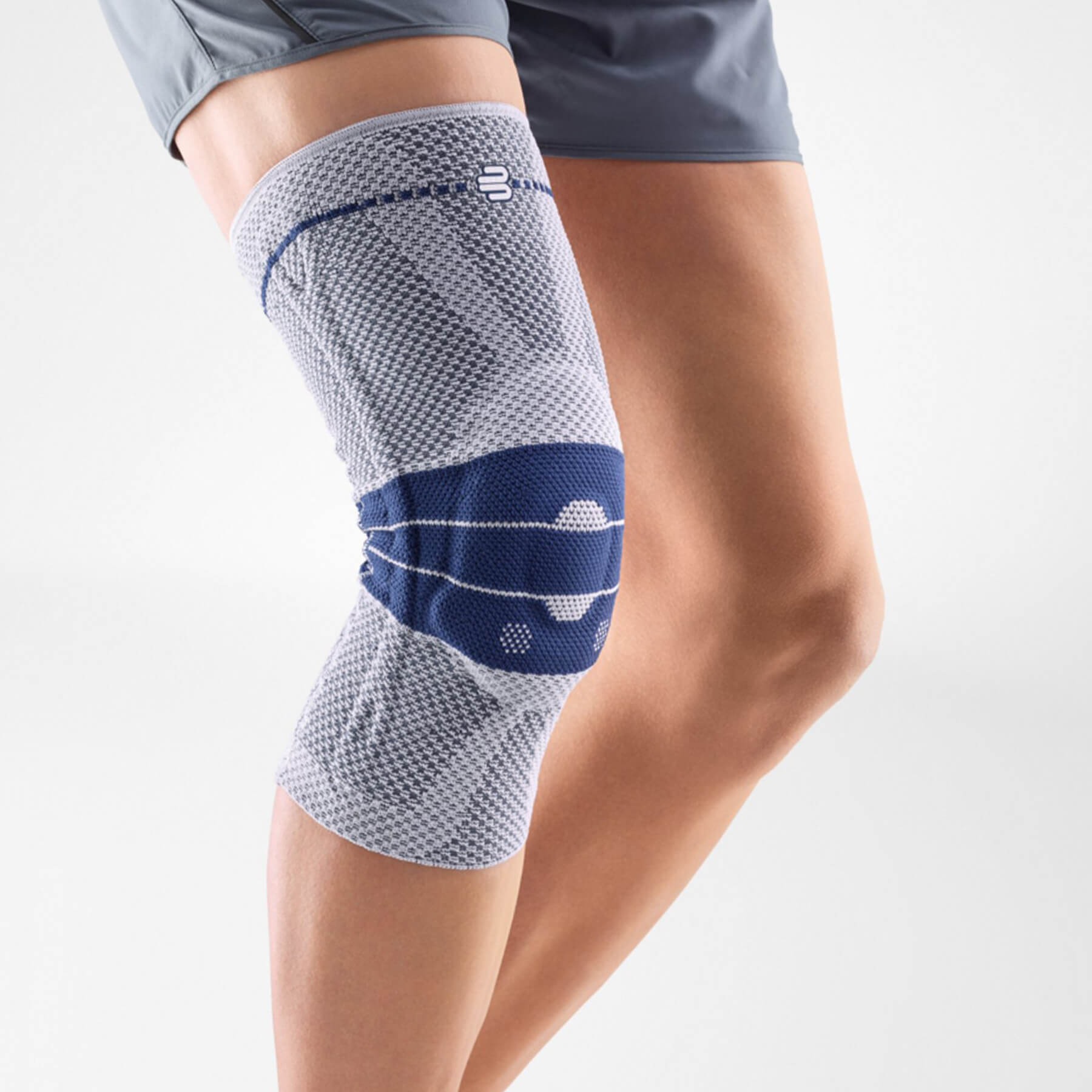
GenuTrain is a thin, medical-grade knit sleeve built around the Omega+ Pad, a soft viscoelastic cushion that encases the kneecap. It functions as a runner’s knee support and a low-profile patella-stabilizing knee brace, rather than a rigid, hinged ACL knee brace.
The contoured pad redistributes pressure around the patella and guides the joint through bends, runs, and squats. Meniscus Wings and Hoffa Stitches extend the cushion toward the meniscus and the fat pad beneath the kneecap, providing gentle massage and proprioceptive feedback as you move. That steady stimulation helps soothe patellofemoral soreness and delivers knee pain relief during exercise. Flexible side stays keep the sleeve from rolling down while adding light lateral stability.
For running, it spreads impact around the kneecap and reduces post-run tightness. The slim knit interferes less with your natural stride than bulky neoprene or mechanical braces. For the gym, it handles squats, lunges, and leg presses by supplying continuous compression and sensory feedback under load without locking the joint.
Price: Expect to pay about £90 in the UK and about €62.15 through European retailers. The hinged GenuTrain S runs about $209.90. If you require mechanical kneecap tracking correction, compare the GenuTrain P3.
Good fit:
– Mild patellofemoral pain
– Post-workout swelling or tightness
– Mild instability without giving way
Not the main brace for:
– ACL, PCL, MCL, or LCL injuries needing restricted movement
– Repeated giving way
– Post-surgery protocols
– Locking or acute swelling
Why We Recommend It
Why it made the list: It combines an unrestrictive knit sleeve with targeted patellar padding, actively managing joint pressure instead of merely retaining heat.
What it can do: It supports running, squats, lunges, cycling, and machine training with minimal bulk.
Best for: Athletes with mild patellar discomfort who prioritize mobility and comfort over rigid bracing. It does not suit ligament injuries or contact sports needing hinges.
Confirm before contacting: Check whether your regional market lists a compression value for the standard GenuTrain, verify current local pricing, and measure for your exact size.
3. Shock Doctor Ultra Knit Knee Support – Best Open-Patella Knee Brace for Running

Shock Doctor‘s Ultra Knit is an open-patella sleeve with dual side supports, listed under Level 3 maximum protection. Sold individually, it targets patellar instability, meniscus discomfort, mild ligament sprains, and hyperextension.
The open patella takes pressure off the front of your knee while compressing and steadying the surrounding tissue. Dual side supports keep the joint from collapsing inward or outward during quick cuts and landings. That makes it a practical runner’s knee support if you want knee pain relief during exercise without feeling locked in place.
You do give up the rigid support of a full hinge. The four-way stretch knit bends naturally and fits cleanly under athletic gear, but it cannot manage heavy contact or severe side-to-side wobble. Treat it as a brace for running and recreational sports—jogging, treadmill intervals, light trail outings, basketball, volleyball, or tennis. Do not rely on it for torn ligaments or post-surgery recovery.
Price: about $61.99.
Why We Recommend It
Why it made the list: It combines an open patella, side supports, and a flexible knit at a price well below Bauerfeind’s.
What it can do: It suits road running, gym treadmill sessions, daily training, and low-to-moderate-intensity court or field sports.
Best for: Runners with mild patellar instability or front-knee pain. If you have obvious lateral instability or need ACL/PCL protection, buy the hinged Ultra Knee Support instead.
Confirm before contacting: Check your size against the below-the-knee measurement, and verify whether the listing shows the knit or hinged version.
4. Modvel Compression Knee Brace – Best Budget Knee Sleeve for General Workouts

Modvel makes a hinge-free knee compression sleeve, sold mostly in two-packs for everyday training. The two-pack lists at about $33.24, or $25.99 on promotion, which comes out to $13 per sleeve.
The sleeve uses a blend of 70% nylon, 20% latex, and 10% spandex, lined with silicone grip ridges. A four-way stretch 3D knit delivers about 360° even compression without restricting joint movement. At about 0.5 inches thick, it slips under sweatpants during squats, lunges, or daily walks. Product specs and buyer reviews describe the fabric as breathable and sweat-wicking. Keep the latex content in mind if you have skin sensitivities.
Compression is light to moderate. Reviewers describe the fit as supportive without feeling too tight during squats, lunges, leg extensions, and treadmill runs. The sleeve provides a steadier feel, holds in warmth, and offers mild knee pain relief during exercise, though it will not correct alignment or add joint strength.
Durability and Limits
Durability: Several owners report getting about a year of normal use and note that the sleeve keeps its stretch after washing. Hand wash it, and avoid the dryer and bleach.
Limits: There are no hinges, rigid side stays, or adjustable straps. It will not protect against ACL, PCL, MCL, or LCL tears, a knee that buckles, visible swelling, or post-surgery recovery. For meniscus tears or severe arthritis, use it only alongside medical care.
Why We Recommend It
Why it made the list: At about $13 per sleeve, it is the lowest-cost option here, backed by a 4.7/5 score across 1,656 Walmart seller reviews and a flexible knit that lets you move freely.
What it can do: It suits gym workouts, squats, lifting, treadmill runs, walking, hiking, and light joint support during recovery.
Best for: Casual lifters and walkers who want cheap, low-profile comfort. Skip it for contact sports or ligament injuries.
5. CAMBIVO Knee Brace 2-Pack – Best Budget 2-Pack for Gym and Recreational Sports
CAMBIVO sells its pull-on knee compression sleeve in a two-pack built for gym workouts, jogging, hiking, tennis, yoga, and all-day wear. The fabric is a breathable 3D nylon knit with four-way stretch, cut low enough to sit comfortably under pants or workout leggings. Certain versions also include side stabilizers, a patella gel pad, or an anti-slip weave.
This is a standard slip-on elastic sleeve that stays up using graduated compression and a silicone grip around the top cuff. It does not have hook-and-loop straps, so you cannot customize patellar or lateral tension the way you would with a hinged or cross-strap brace. Even so, most runners and lifters report light-to-moderate joint support, mild knee pain relief during exercise, and less lateral wobble during squats and lunges.
Price and value: Retail pairs run between $16.99–$19.99 per 2-pack (marked down from an original $29.99 list price), while Walmart lists a side-stabilizer option at $15.43.
Why We Recommend It
Why it made the list: You get two sleeves for $8.50–$10 per sleeve, broad size coverage, and a steady 4.2/5 public rating across buyers.
What it can do: It delivers reliable warmth and a stable feel for walking, jogging, trail hiking, yoga, tennis, machine circuits, and moderate squats.
Best for: Budget-conscious gym-goers and recreational athletes who want both knees supported. Skip this model for high-impact sports like basketball, soccer, volleyball, or CrossFit, and look for medical-grade bracing if you are recovering from surgery or a torn ligament.
Confirm before contacting: The source material does not outline minimum order quantities (MOQs), sample terms, or OEM packaging options, so check those directly with the supplier.
6. NEENCA Knee Brace – Best Structured Support With Stabilizers
NEENCA builds a moderate-support brace using side spring stabilizers, a patella gel pad, elastic compression fabric, and hook-and-loop straps. Certain models use two springs on each side—four in total—limiting side-to-side wobble while still letting your joint bend. That makes it a practical patella-stabilizing knee brace if you need firmer control than a standard sleeve without the bulk of a hinged brace.
How the Support Works
Dual side stabilizers: These reinforce the inner and outer knee, handling mild to moderate instability and extra lateral load.
Patella gel pad: Rings the kneecap to improve fit and distribute pressure evenly.
Compression layer: The elastic knit applies steady pressure and warmth. Product listings claim it supports stability and knee pain relief during exercise, though it remains well short of a medical-grade hinged brace.
Adjustable straps: Some versions include two hook-and-loop fasteners or a patellar tendon strap, allowing you to tune the overall fit and kneecap pressure independently.
It holds up well for walking, hiking, light gym sessions, stationary cycling, and low-to-moderate-impact workouts. For sports like basketball, soccer, or tennis that demand sudden cuts, hard stops, and jumps, the lateral support falls short. A hinged brace is the safer call for those.
Price
Most listings price a single brace around $19.99–29.99, with certain stores listing models between $22.46–25.97 and heavier-duty builds running $39.98 or higher.
Why We Recommend It
Why it made the list: Few mid-priced braces manage to combine four-spring side stabilization with a targeted gel pad and multi-point strap adjustment.
What it can do: It delivers reliable lateral support for hiking, walking, light lifting, and cycling, while aiding general knee injury prevention during low-impact workouts.
Best for: Anyone who wants an athletic knee wrap with more physical structure than an elastic sleeve. Skip it if you need post-surgery immobilization or protection during high-impact sports involving hard cuts.
Confirm before contacting: The source material leaves out MOQ, sample policies, and private-label or OEM terms. Ask suppliers about these details directly, and verify the specific stabilizer count on the exact model you plan to order.
7. EXOUS Knee Brace Support Protector – Best for Lateral Stability in Stability-Focused Training
EXOUS makes an open-patella neoprene brace built around a four-way adjustable strap system. This patella-stabilizing knee brace provides moderate-to-firm support across the inner knee, outer knee, and kneecap. It comes in a single adjustable size designed to fit thighs measuring up to 20-21 inches above the knee.
Two wide main straps secure the brace above and below the joint, while two narrower cross straps wrap around the patella to fine-tune pressure over the patellar and quadriceps tendons. Flexible side stabilizers reinforce the MCL and LCL areas.
Users regularly highlight the brace’s lateral stability during squats, lunges, split squats, leg presses, and machine extensions. EXOUS also lists it for basketball, soccer, rugby, and tennis, though it will not replace a hinged post-surgery brace or a custom unloader.
Why We Recommend It
Why it made the list: Four adjustable straps paired with flexible side stabilizers offer much firmer lateral control than a basic pull-on sleeve.
What it can do: Guides straight knee tracking under heavy squats and strength work, while aiding knee injury prevention in recreational cutting sports.
Best for: Lifters and casual athletes who need a structured athletic knee wrap. It is not built for ligament rehabilitation or high-impact competition.
Confirm before contacting: Minimum order quantities, sample terms, and private-label options are unlisted, so ask the supplier about them directly.
8. Bodyprox Knee Brace With Side Stabilizers – Best for Court Sports and Meniscus-Related Support
Bodyprox makes budget patella stabilizing knee braces built with flexible spring side stabilizers, a silicone patella gel pad, an open kneecap, and dual adjustable straps. The product page lists it for sports, daily movement, and joint pressure relief, making it the lightest stabilized option on this list.
Court sports fit: The side stabilizers add inner and outer support for hard stops, shuffles, and jumps in basketball and volleyball. The open patella leaves room to bend, and the straps let you tune compression between warm-ups and games. You get light-to-moderate support rather than rigid hinge control. For clear instability or contact play, choose a double-hinge model for stronger lateral stability.
Price and sizing: The Amazon US listing generally sits around $16.99, within a range of $12.99–$29.99. Sizes run XS, S/M, L, and XL, so check the size chart before ordering.
Why We Recommend It
Why it made the list: It pairs side stabilizers, a gel pad, and adjustable straps at one of the lowest prices here, backed by a massive review base.
What it can do: It handles basketball and volleyball training, running and jumping drills, and day-to-day wear with mild joint discomfort.
Best for: Players with mild pain or slight instability who want a flexible athletic knee wrap. Skip this model for diagnosed ligament injuries or high-contact sports.
Confirm before contacting: MOQ, sample terms, and private-label options are not published in the source material, so ask the supplier directly.
How to Choose a Sports Knee Brace?
1. Size and fit.
Measure with a flexible tape while standing with your leg relaxed. Always follow the brand’s specific chart, because generic S/M/L sizing is rarely accurate. A proper fit stays put through squats and lateral moves without rolling or pinching. Take off any brace that causes persistent numbness or pain. For bulk orders, request a measurement diagram, size tolerances, and the exchange policy. A six-size range (S–XXXL) fits far more leg shapes than one-size products.
2. Material and care.
Common fabrics include nylon, polyester, spandex, and neoprene. One listed compression model uses 68% nylon and 32% spandex with four-way stretch. For hard training, choose moisture-wicking, quick-drying fabrics you can throw in the washing machine. A thick neoprene knee sleeve retains therapeutic warmth, but it adds bulk and traps heat in warm environments. Check the care label for wash temperature limits and drying instructions.
3. Support type and adjustability.
Knee sleeve: Fastest to put on, with light support.
Patellar tendon strap: Very low profile, but only targets the tendon.
Wraparound brace: Adapts to swelling and leg shape.
Hinged brace: Controls side-to-side movement, but it’s heavier and slower to put on.
Adjustable straps let you dial in the fit, though they can snag on clothing and take longer to wrap. A knee sleeve with two integrated straps offers a practical middle ground.
4. Sport fit.
|
Sport |
Prioritize |
|---|---|
|
Running |
Low weight, ventilation, no slipping |
|
Basketball |
Patellar and lateral support, free flexion |
|
Skiing |
Hinges, cross-straps, low bulk under clothing |
|
Weightlifting |
Firm compression or long wraps (about 72 in), enough flexion for deep squats |
|
CrossFit |
Sweat management, quick adjustment, flexible support |
5. Price tier.
Entry products (basic sleeves or straps) run about US$9–23.
Mid-range braces with adjustable straps or side stabilizers cost about US$28–67.
Premium hinged models list around US$176–178.
Higher prices pay for machined hinges, resilient materials, and wider size ranges, which not every sport requires. For routine training, put your budget toward fit and non-slip grip before paying for rigid hardware.
6. Durability and safety. Inspect the stitching at strap anchor points, hinge mounts, and reinforced seams. Ask suppliers for elasticity retention data after repeated wash cycles, alongside skin-contact safety certifications. For sourcing, calculate total landed cost—factoring in replacement straps, packaging, compliance testing, and freight rather than unit price alone.
Best Knee Support by Sport: Running, Basketball, Volleyball, Soccer, Weightlifting, Skiing
Cuts, landings, and twists load your knee in different ways, so a brace that protects a marathoner can fail a point guard. Match support stiffness to the forces your sport creates.
Running: Repetitive impacts and constant bending put miles on the joint with very little side-to-side force. Common issues include patellofemoral pain, IT band friction, and patellar tendon overuse. Choose a lightweight knee compression sleeve or a patella stabilizing brace. The AOFIT Sports Knee Support uses breathable fabric and a pad around the kneecap, providing 20–30 mmHg of listed compression. It handles sustained runs far better than a bulky hinged brace.
Basketball: Hard jumps, sudden stops, and sharp pivots raise your risk of ACL injuries, patellar tendinitis, and meniscus tears. Start with a compression brace that features a patella pad, like the NBA-licensed Bauerfeind Sports Knee Support NBA. If you have past ligament laxity, choose built-in side stays or hinges to keep your cuts and landings stable.
Volleyball: Constant jumping and deep squats concentrate strain on the patellar tendon. A patellar tendon strap works well as a focused jumper’s knee brace, while a full-circle sleeve cushions repeated floor landings. Look for full range of flexion, moisture-wicking material, and an elastic fit that will not slide on impact.
Soccer: Sprints, abrupt cuts, and single-leg strikes call for a thin compression sleeve as your base layer of protection. If you have an MCL or ACL injury history, step up to a flexible hinged brace. Pick a low-profile design that slides under shin guards and stabilizes the joint without restricting your stride.
Weightlifting: Heavy squats drive high patellofemoral pressure with minimal lateral movement. Wear a neoprene knee sleeve: pick 5 mm for CrossFit and mobility work, or 7 mm for heavy squats, powerlifting, and Olympic lifting. Reliable options include the Bells of Steel Classic (7 mm SBR/neoprene blend), AEOLOS (100% neoprene), and Jupiter (heavy neoprene, anti-roll). Aim for roughly 30 cm in length and a secure fit that stays locked in place at the bottom of a squat.
Skiing: Rigid ski boots transfer twisting forces and valgus/varus torque directly into the knee joint. Choose a light, flexible hinged brace that slides under ski pants. The GenuTrain S sets the benchmark for lateral stability here. Skip thick 7 mm lifting sleeves, which bunch up against boot collars and outer shells.
Conclusion
The best sports knee support matches your sport and your knee.
Three takeaways from this list:
Type comes first. Compression sleeves, patellar straps, stabilized braces, and hinged braces solve different problems. Pick the category before you compare brands.
Use the six buying criteria. They keep your decision focused on fit and support.
Your sport shapes the pick. Running, basketball, volleyball, soccer, weightlifting, and skiing each call for something different.
Now put it to work. Open the comparison table, shortlist two or three braces that fit your activity and budget, and double-check sizing before you order. If you want a strong all-rounder for basketball, running, or high-impact training, start with the AOFIT Sports Knee Support.
Knee injury prevention works best before you feel pain. Your knees absorb the impact of every sprint, jump, and landing, so get the right support in place early.