
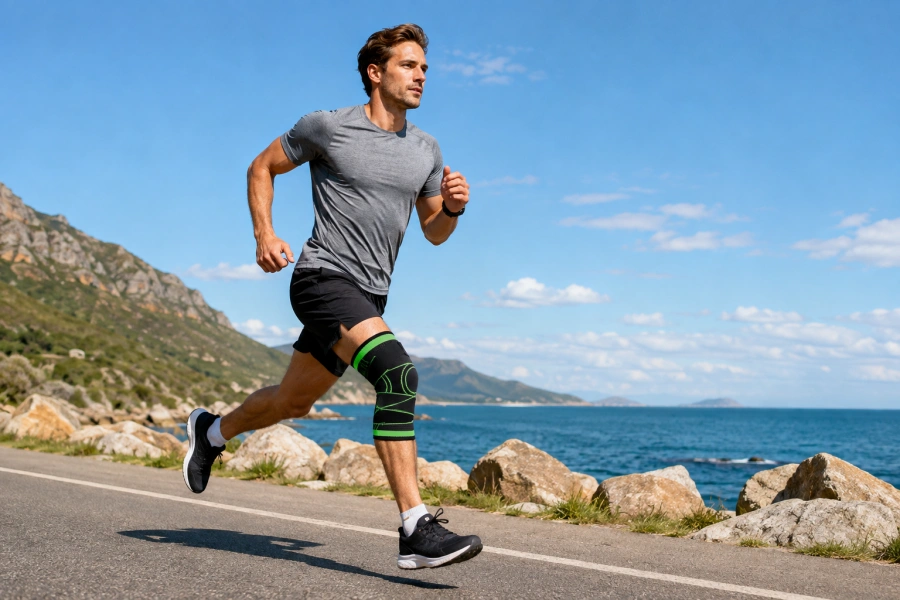
Runner’s knee, patellar tendonitis, and IT band flare-ups sideline more marathoners and weekend joggers than shoe blowouts ever will. The right knee brace for running can mean the difference between pushing through your training block and starting over from zero.
We tested six standout knee braces for running this year: compression sleeves for everyday mileage and rigid stability braces for post-injury comebacks. We broke down who each one is built for and why. Whether you’re managing a meniscus tear, easing into your first 10K, or tired of guessing which strap holds up past mile ten, you’ll find a clear answer below. You also get a sizing and fit guide so you don’t end up with something that slides, pinches, or does nothing at all.
Bauerfeind GenuTrain – Best Overall Knee Brace for Running
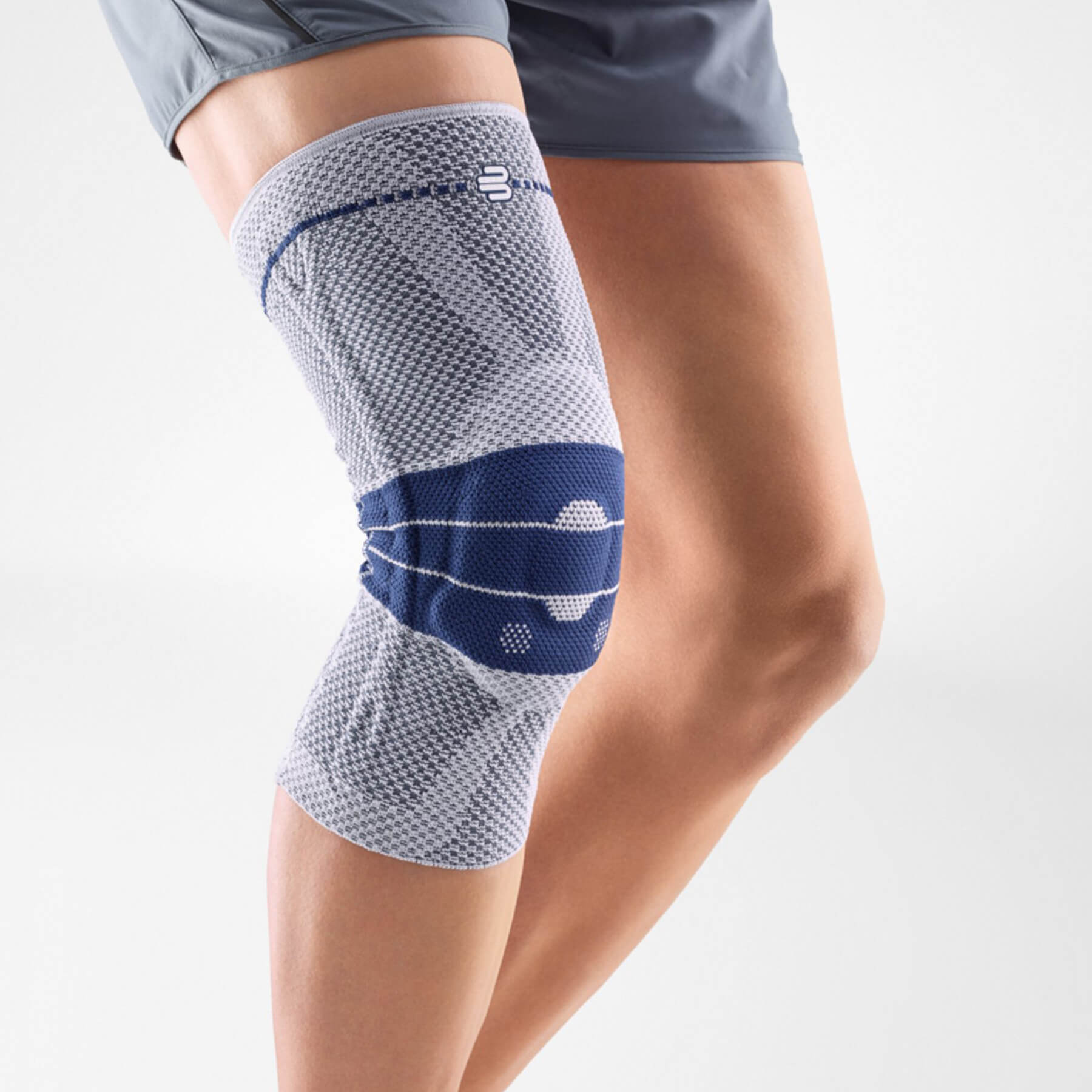
The GenuTrain is made in Germany from a medical-grade knitted fabric — a blend of polyamide, SEBS, TPU, spandex, cotton, PU, and silicone.
The standout feature is the Omega+ Pad, a ring-shaped cushion positioned around the kneecap. It targets the Hoffa fat pad and meniscus base zones, stabilizing the patella while cutting down on swelling. It also delivers proprioceptive feedback that helps your brain track where your knee is in space. That matters when fatigue sets in around mile 18.
This brace is for runners logging serious weekly mileage who deal with mild-to-moderate knee pain, swelling, or fatigue but don’t have a diagnosed patellar tracking issue. If you’ve got confirmed patellofemoral pain syndrome (PFPS) or classic runner’s knee, look at Bauerfeind’s GenuTrain P3 instead. It’s built for kneecap alignment problems and runs $199.90 (sometimes $139.93 on sale) versus the standard GenuTrain’s $99.90.
The tradeoffs: it costs more than a basic compression sleeve, sizing needs to be precise, and it’s not machine washable. For runners who want structure and feedback, that’s a fair trade.
NEENCA Professional Knee Brace – Best for Runner’s Knee & General Soreness
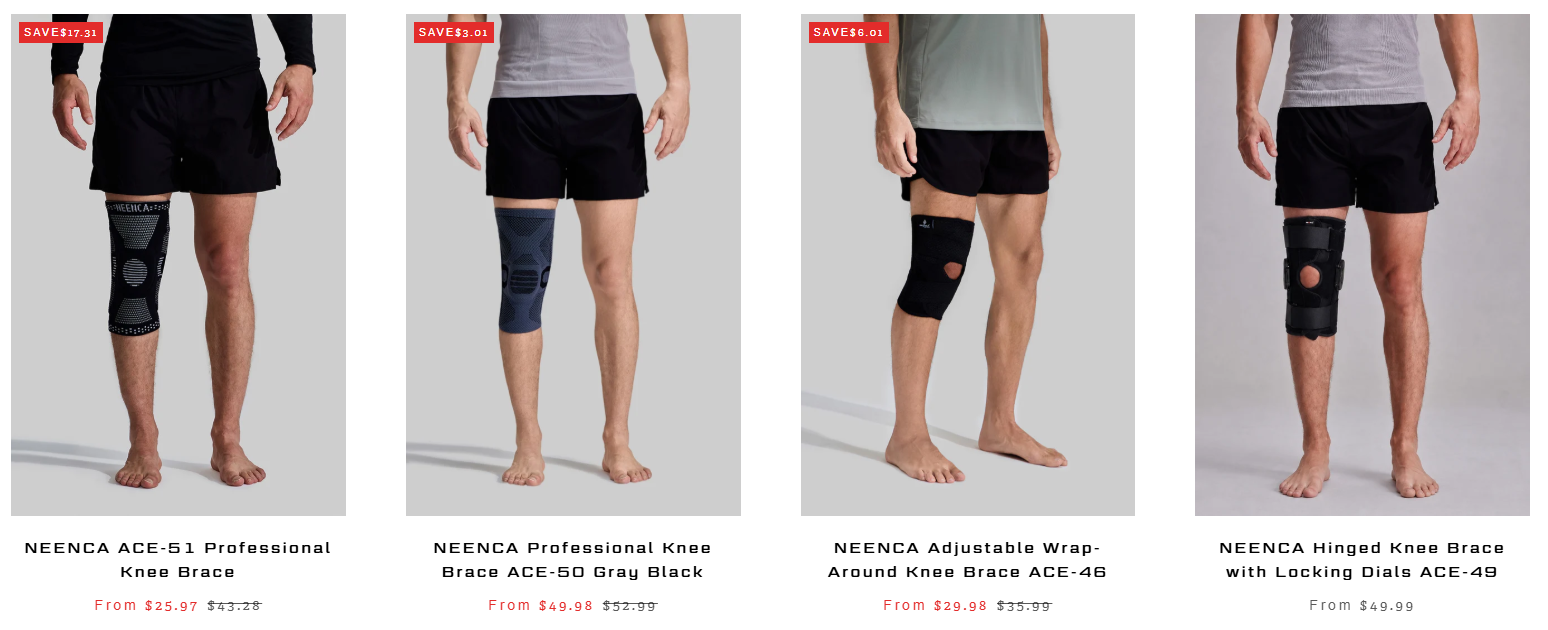
Most knee pain runners deal with is inflammation, mild instability, and that nagging ache after a long run. That’s what NEENCA built this brace to handle.
Two features drive the design. Patella gel pads wrap around your kneecap, giving centered support without locking the joint down. That works well for patellofemoral pain syndrome and classic runner’s knee. Side spring stabilizers control lateral wobble, the kind that flares up with IT band knee pain on uneven terrain. The nylon-spandex blend with mesh ventilation panels stays breathable enough for summer marathon training.
This is a pull-on compression knee sleeve. That matters because it’s excellent for runner’s knee treatment, mild meniscus discomfort, and general joint soreness from jogging or gym work. If you have an acute ACL or PCL tear, skip this one. You need a rigid hinged brace, not compression support.
Pricing runs from $25.97 to $39.98 for standard versions. Higher-spec models reach $49.98–$54.99.
Third-party testing scored it 8.9/10, naming it a top pick for runner’s knee, mild meniscus issues, and arthritis flare-ups. Amazon reviewers consistently praise the pain relief and all-day comfort. Complaints cluster around sizing accuracy and long-term durability, so measure carefully before you order.
AOFIT Compression Knee Brace – Best Value for Everyday Runners
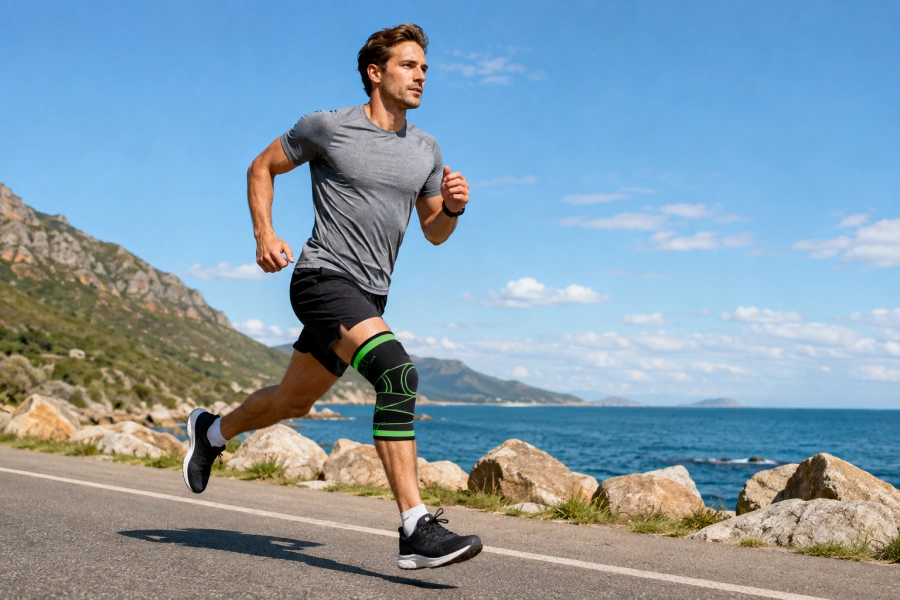
Not every runner needs German engineering or hinged support. Sometimes you need a knee brace for jogging that doesn’t cost more than your shoes. That’s where AOFIT’s Knitted Knee Sleeve With Adjustable Straps for Running & Gym earns its spot.
This lightweight compression knee sleeve is for daily miles. It is not designed for injury recovery. Adjustable elastic Velcro straps dial in the fit. Anti-slip silicone strips keep it from sliding down your calf mid-run, a common complaint with cheaper sleeves. The composite fabric breathes and absorbs sweat, making it comfortable through summer training blocks.
This brace is for mild discomfort, patella tracking comfort, and circulation support during easy runs and gym sessions. It is not for post-surgical stability or a torn meniscus. If you’re dealing with real ligament instability, this won’t cut it. You need a hinged or rigid structure, not soft compression.
Pricing ranges from $19.99 to $34.99, depending on the model.
AOFIT’s copper knee sleeve line reports functional compression after 50+ wash cycles. That’s a reasonable value benchmark if you’re rotating braces through weekly laundry.
This is the best knee stability brace for recreational runners who want mild support without bulk or a big price tag.
Bodyprox Patella Tendon Strap – Best Budget Option for Patellar Tendonitis
Fourteen dollars gets you two of these. That explains why the strap shows up on so many “try this first” recommendations for patellar tendonitis and jumper’s knee.
It’s a neoprene and silicone band with Velcro closure, weighing about 0.07 kg and roughly 0.8 cm thick. You position it just below the kneecap, directly over the patellar tendon — about 1–2 cm under the patella’s lower edge. That placement matters. Too high and you’re compressing the wrong tissue. The silicone gel padding applies focused pressure there, redistributing load away from the inflamed tendon when you run or jump.
Sizing runs one-size-fits-most, covering roughly 13–18 inches of knee circumference. Fit should feel snug enough to resist slipping but loose enough to slide one finger underneath. If you can’t do that, it’s too tight.
This strap takes pressure off an irritated patellar tendon during jogging or jump-based training. It won’t help IT band knee pain or a meniscus tear.
Runners testing whether tendon compression eases pain before committing to a pricier strap like Pro-Tec ($19.95) or Breg ($11.99–$25.99, depending on sales) will find this useful. At $14 for two, it’s a budget option — a reasonable start before upgrading to more precise sizing or added support.
Medi Genutrain / Genumedi PT – Best for Long-Distance & Repetitive Motion
Marathon training doesn’t care about your knee’s opinion. Twenty miles a week turns into forty, and suddenly every step is a repetitive-motion argument your joint is losing. The Genumedi PT was built for exactly that fight.
The core feature is an integrated silicone patella ring, shaped to sit around the kneecap rather than on top of it. Medi lets you adjust the strap pressure individually, so you’re not locked into one tension setting for every run. That matters when your knee swells differently on a hot 18-miler than it does on an easy recovery jog.
Two 3D thigh pads target specific muscle groups to help stabilize the joint through repeated flexion. Most compression knee sleeves hold things in place. The Train knitted fabric adds intermittent compression massage as you move, reducing swelling mile after mile.
Sizing runs precisely. Thigh circumference ranges span 37–58 cm across seven standard sizes, with an extra-wide option reaching 61 cm. Calf sizing follows the same tiered structure, 25–46 cm standard, up to 46 cm extra-wide.
This is the pick for runners logging serious weekly volume who need patella centering and adjustable compression.
Hely Weber Shields II – Premier Choice for Runner’s Knee Alignment
Patella maltracking is a mechanical problem, and mechanical problems need mechanical fixes. That’s the philosophy behind the Shields II. Instead of relying purely on compression, this brace uses a Trakaderm™ U-shaped buttress — a rubber-backed pad positioned directly against the outside edge of your kneecap. You place it soft-side down, right at your symptomatic contact point, and it physically nudges the patella away from where it’s rubbing wrong.
This matters for anyone dealing with patella tilt, glide issues, or subluxation. Regular compression sleeves squeeze the whole joint. The Shields II targets one specific tracking problem instead.
Two versions exist: the standard Shields II (6674) and the Shields II Hinged Brace (6675). The hinged version adds removable medial/lateral supports, useful if you’re managing mild MCL or LCL sprains alongside patellofemoral pain syndrome.
At just 9 inches long, it’s a low-profile design with no bulky hinges digging into your leg on mile 15. Application takes four steps: center the brace with your leg extended, align the buttress to the kneecap’s outer edge, then secure the lower flap followed by the upper flap.
Sizing runs true to mid-patella circumference, from XS (10–12 in) through XXL (19–21 in), so measure before ordering.
Compared to compression-based options like GenuTrain, the Shields II corrects alignment rather than just stabilizing the joint. If your knee pain traces back to tracking problems specifically, that distinction matters.
How to Choose the Best Knee Brace for Running?
Match support level to Injury Type:
Front-of-knee pain, the kind that flares on downhills or stairs, points to patellofemoral pain syndrome or classic runner’s knee. Your fix is a patella-tracking sleeve or an open-patella design with a buttress or gel pad. Something built to keep the kneecap centered without smothering the joint.
Pain sitting just below the kneecap is a different animal. That’s patellar tendonitis, jumper’s knee, and it responds to a patellar tendon strap worn directly over the tendon, not a full sleeve. Compression needs to be focused, not general.
Outside-knee pain usually means IT band knee pain, and the fix location matters here. The strap goes above the knee, not around it, to cut friction where the IT band crosses the joint.
Clicking, catching, or joint-line pain when you twist? That’s often a meniscus signal. A compression knee sleeve with stabilizers handles mild irritation.
If you’re feeling real instability — the knee wants to give out — step up to a hinged or side-stay brace instead.
Match support level to running scenario:
Short daily miles call for lightweight, low-profile compression that won’t rub.
Marathon training demands moisture control and a fit that won’t slip after mile 15 of sweat.
Trail runs and sprint work, with their unpredictable footing, usually need more structure than a basic sleeve provides.
One more rule worth repeating: don’t over-brace. If your pain is mild, general soreness, a rigid hinged brace is overkill. Use the least supportive option that matches your injury. Your knee will thank you, and so will your stride.
Fit & Sizing Guide: How Tight Should a Running Brace for the Knee Be?
Put the running brace for the knee on, then slide your index and middle fingers between the fabric and your skin at each strap or edge. If they slide in easily, you’re good. Can’t get two fingers under there? Too tight. Room for a third finger? Too loose. Keep your leg straight while you check—bent knees throw off the reading.
Too tight causes numbness, tingling, skin discoloration, and restricted blood flow. If you get any of those, loosen your knee support brace for running immediately and remeasure.
Too loose means the knee support brace for running slides, rolls, or migrates when you run. Then it stops stabilizing anything.
Measuring for size:
Most brands measure thigh circumference 15 cm (6 inches) above the center of your kneecap. Longer braces also check mid-patella and calf circumference.
Measure first, match to the chart, then do the two-finger check. Walk a few steps, bend your knee a couple of times. No sliding, no pinching, no numbness—that’s your fit.
Price Comparison: Knee Braces for Running Across Budgets
Fourteen dollars or a hundred and forty. The knee braces for running market spans that range, and prices track pretty closely with function.
Under $20: Basic compression sleeves like Decathlon’s knee support (£9.99–£14.99) or Mueller Sport Care ($21.99) cover mild soreness and preventive support. No hinges, no lateral reinforcement — just fabric doing fabric things.
$20–$40: Side reinforcements show up here. Decathlon’s Level 2/3 supports (£24.99–£39.99), ZAMST EK-1 ($34.99), and Shock Doctor sleeves ($25.99–$30.99) add structure without full rigidity. Most recreational runners land here.
$40–$70: Patella tracking and strap adjustability enter the picture. DonJoy’s AirSport+ ($41.92) and Bauerfeind’s Sports Knee Strap ($59.99) target runners with recurring issues, not just occasional aches.
$70+: Hinged, medical-grade builds. ZAMST ZK-7 ($79.99), DonJoy Webtech ($99.99), Riixo Knee Cuff ($138.50). Buy this tier only if you’ve got a diagnosed instability problem — otherwise you’re paying for support you don’t need.
Conclusion
Whether you’re managing early-stage runner’s knee, recovering from a meniscus tear, or logging your first 5K, the right knee brace for running comes down to matching the brace type to your specific issue. Sleeves for general compression and warmth. Straps for patellar tendon pain. Hinged braces for real stability after injury.
Bauerfeind’s GenuTrain remains the gold standard for a reason, but AOFIT’s compression knee sleeve delivers nearly identical support at a fraction of the cost. “Best” doesn’t always mean “most expensive.”
Give any new brace at least two runs before judging it. Your knees will log the miles either way. Make sure they’re protected while they do.