
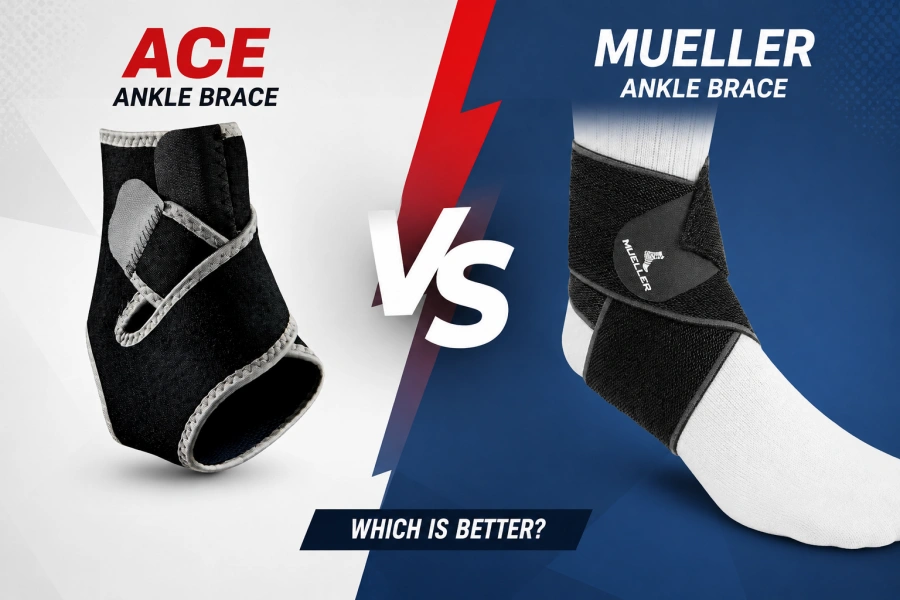
Your ankle is throbbing, you’ve got a game coming up, and you’re standing in front of two shelves: Ace vs Mueller ankle brace. Both promise support. Both claim to be the fix. But which ankle stabilizer actually earns its price tag when you’re mid-sprint or recovering from a nasty roll?
The better brace depends on what you’re asking it to do. A lace-up ankle brace built for basketball’s lateral cuts won’t necessarily help someone easing back into running after a sprain. So let’s break down where Ace and Mueller each pull ahead, based on real support levels, materials, and the specific ways your ankle moves.
Ace Ankle Brace: Key Features and Best Use Cases
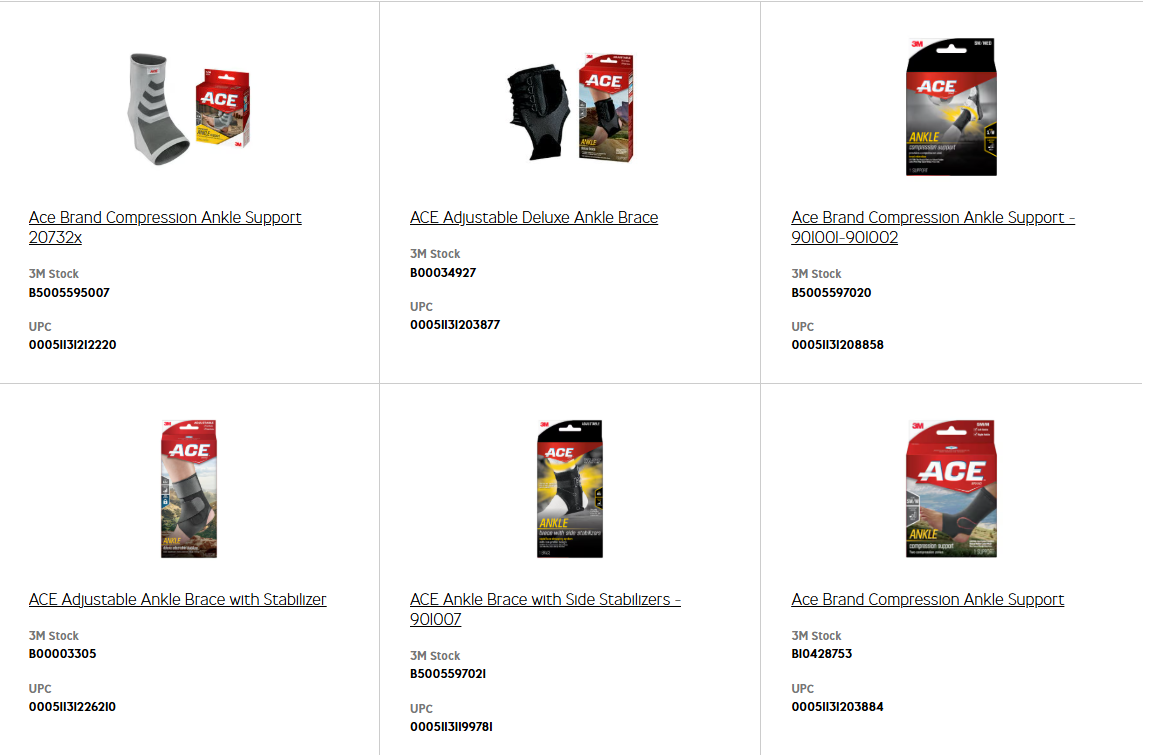
ACE built its ankle brace lineup around one idea: accessible support without the bulk. Price this thing out, and you’ll land somewhere between $9.98 and $17.27, depending on which version you grab. That makes ACE the go-to compression ankle sleeve for people who don’t want to drop $50+ on protection they’ll wear a few times a week.
The lineup breaks down into four main types:
-
Compression/Neoprene Ankle Support — Support level 1. Breathable, latex-free neoprene with an Elasto-Preene blend. Built for daily wear, not competitive sports.
-
Adjustable Compression Support — Support level 2. Neoprene blend, nylon, and spandex combo for moderate stabilization.
-
Side Stabilizer Brace — Adds steel stabilizers to the neoprene/latex/polyester mix. Lower price ($9.98–$10.97), but noticeably more support.
-
Deluxe Lace-Up Brace — A nylon, polyester, elastane, and neoprene build with a quick-lace strapping system for a tighter, more customizable fit.
That materials mix neoprene blended with nylon, spandex, or elastane, is why ACE braces feel flexible. They keep your ankle comfortable while offering enough compression to remind your joint where it should be.
Where ACE actually shines:
Real-world feedback points to two clear winners: people on their feet all day (retail workers, teachers, anyone doing 8-hour shifts) and folks easing back into light activity after a minor sprain. The adjustable compression models get consistent praise for balancing support and all-day comfort. That’s exactly what you want during ankle sprain recovery, when you’re not sprinting, just walking without wincing.
Where it falls short:
ACE is everyday ankle joint support, not game-day gear.
Ask ACE to handle a pickup basketball game with hard cuts and quick pivots, and the compression-only models buckle. Users report needing the side-stabilizer version, or looking elsewhere entirely, for anything involving lateral movement or contact.
Mueller Ankle Brace: Core Features and Best Use Cases
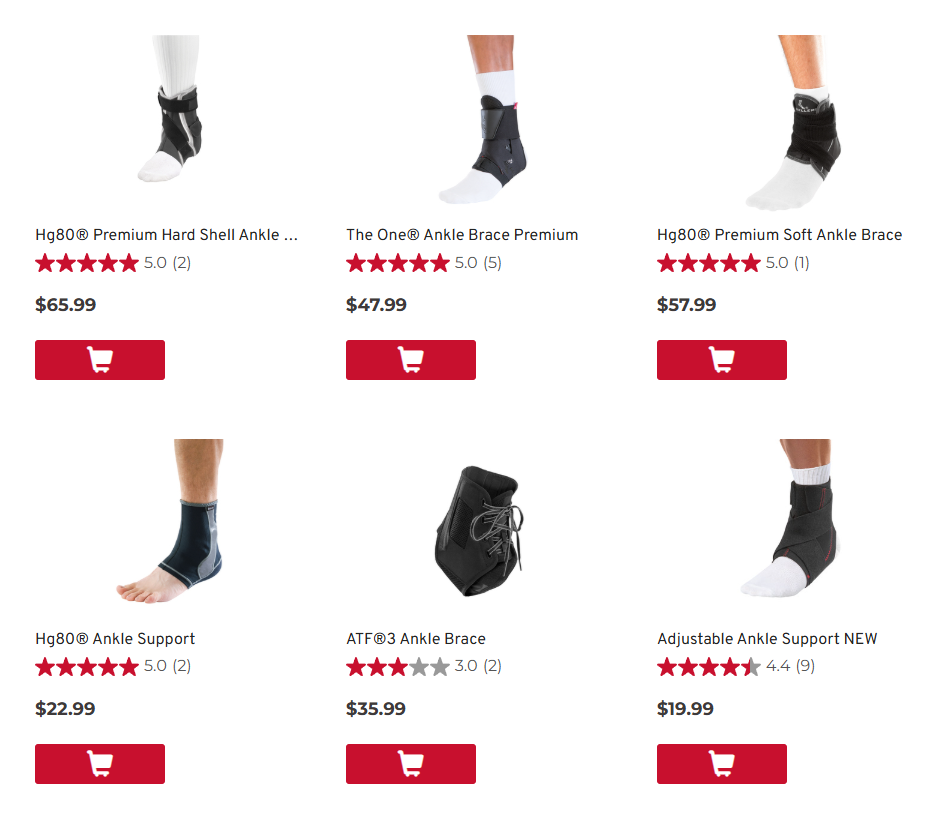
Mueller ankle brace plays a different game entirely. Where ACE bets on flexibility, Mueller bets on lockdown. This is a mid-to-high support ankle stabilizer built for the moment your foot plants wrong on a hardwood floor and needs to stay put.
The flagship model, and what makes it different
The ATF2 Ankle Brace anchors the lineup, retailing between $29.90 and $38.34—roughly double what you’d pay for ACE’s compression sleeves. Mueller’s lace-up ankle brace design uses a crossing strap system that mimics a figure-8 wrap around the joint, clamping down on the side-to-side rolling motion that causes most sprains. Product listings even note you can re-lace as necessary to maintain support, which matters when you’re three sets into a volleyball match and the brace starts loosening.
There’s also an Adjustable Ankle Stabilizer, marketed for sore, weak, sprained, strained, or arthritic ankles. It uses a patented strapping system for what Mueller calls “firm and even support,” wrapped in a soft neoprene blend that keeps things warm without sacrificing movement.
Who does the ankle brace actually work for?
Mueller ankle brace earns its price tag with athletes who cut, pivot, and land hard—basketball, volleyball, soccer. One reviewer summed it up: “great for sports,” specifically volleyball, where lateral stability under fatigue matters most. It’s also the better pick for chronic ankle instability, repeated rolling, or getting back into training after a moderate sprain.
The tradeoff: support versus comfort
Users flag Mueller ankle brace as durable and capable of strong support—multiple reviews describe it as “keeping the foot and ankle tight” for long-term use. But that stability has a cost. A handful of complaints mention stiff plastic stays and rubbing during extended wear. This isn’t a compression ankle sleeve you forget you’re wearing. It’s a medical-grade ankle brace that reminds you it’s working, which is the point when you need real ankle joint support during recovery.
Ace vs Mueller Ankle Brace: Key Comparison Dimensions
|
Dimension |
ACE Ankle Brace |
Mueller Ankle Brace |
|---|---|---|
|
Support level |
Medium — flexible compression |
Medium-high — rigid stabilizers + lacing |
|
Best for |
Walking, light jogging, daily wear |
Basketball, soccer, tennis, badminton |
|
Price range |
$15–$18 |
$29.99–$34.99 (up to $40–$46.99 for hard-shell models) |
|
Cost per wear |
$0.10–$0.18 |
$0.15–$0.29 |
|
Comfort/weight |
Lighter, thinner, low-profile |
Bulkier, firmer, less “forgettable” |
Support is the tiebreaker. ACE ankle brace controls inversion and eversion at a moderate level — fine for a light sprain or general ankle joint support, but it won’t hold up against a hard cutback on the court. Mueller’s rigid side stabilizers and strap-locking system are built specifically for that lateral movement, which is why it’s the go-to ankle brace for basketball, soccer, and any sport with sudden direction changes.
Price tells the same story from a different angle. Mueller ankle brace runs roughly 1.5 to 2 times more expensive than ACE ankle brace, and that gap isn’t arbitrary — you’re paying for structural reinforcement, not just fabric. If you’re doing the math on cost per use, ACE ankle brace wins for anyone wearing a brace 100–150 times for commuting or office days. Mueller ankle brace’s higher per-wear cost ($0.15–$0.29) still pencils out if it’s preventing a re-injury during 120–200 training sessions.
Who each ankle brace fits:
-
Choose ACE if you’re managing mild discomfort, recovering from a minor sprain, watching your budget, or need something you can wear all day without your ankle feeling weighed down.
-
Choose Mueller if you’ve got a history of rolled ankles, need serious lateral stability for sports, or you’re prioritizing injury prevention.
Construction explains the comfort gap, too. Mueller’s strap-and-shell design locks the joint down hard — great for stopping a roll, less great for eight hours at a desk. ACE’s slip-on elastic build trades some rigidity for range of motion, which is exactly what you want in a compression ankle sleeve meant for all-day, low-intensity use.
How to Choose ACE vs Mueller Ankle Brace Based on Injury Severity?
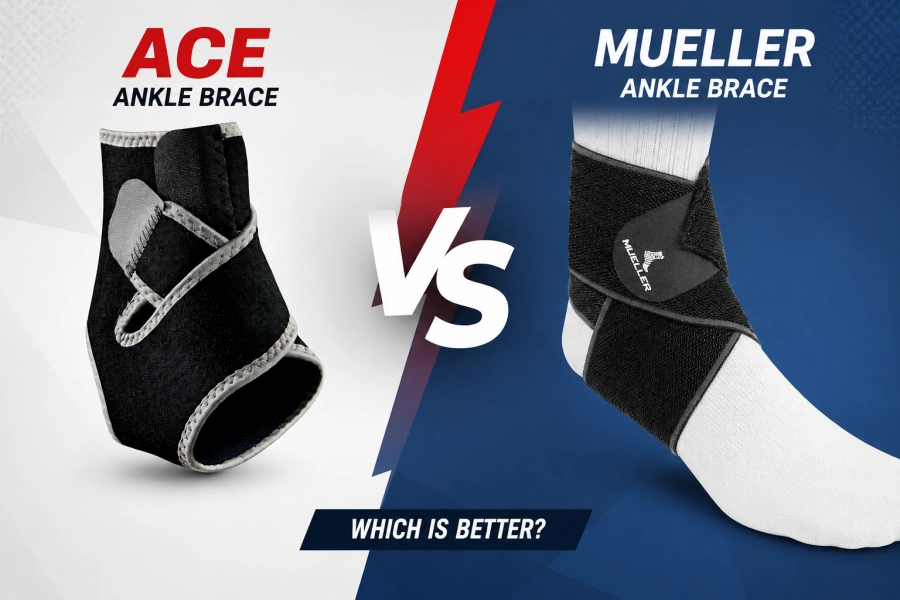
Injury severity should drive your decision here. Below is a breakdown by healing stage, mapped to ACE vs Mueller Ankle Brace.
Mild Instability or Everyday Prevention
If your ankle just feels a little “off”—no swelling, no real pain, just a vague sense that it might give out—ACE has you covered. You’re not trying to restrict movement, just looking for a reminder to stay stable during walks or light workouts, plus a bit of compression. ACE’s compression sleeve does exactly that, without making your ankle feel like it’s wrapped in a brick.
Moderate Sprains or Recent Sports Injuries
Twisted your ankle in last week’s pickup game? Still swollen, still unsteady on your feet? This is where Mueller comes in. Its adjustable stabilizer uses a figure-eight strap system—the same technique athletic trainers use when taping ankles—that locks down inversion and eversion. As for sizing, one adjustable Mueller stabilizer design covers Men’s US 4.5–14 and Women’s US 6.0–15.5, so most people won’t need to hunt for a specific size.
Matching Your Ankle Brace to the Healing Timeline
-
Days 1–7 (Acute Phase): Start with ice, compression, and elevation. As for bracing, lace-up or air-cushioned designs control swelling and get you moving again faster than a basic elastic wrap.
-
Weeks 4–6 (Recovery Phase): Clinical guidance generally favors functional bracing.
-
Grade 2 Sprains: Some protocols recommend wearing a lace-up brace continuously while awake for up to 12 weeks, with avoidance of inversion and full plantar flexion during the first 6 weeks.
-
Returning to Sport: Both bracing and taping lower the risk of re-injury—bracing just tends to be more convenient for everyday use.
Dealing with chronic instability? Rotate between the two: ACE for low-intensity days, Mueller for cutting, jumping, or direction changes. If your ankle keeps giving out during activity, functional support will always beat a simple elastic sleeve.
Choosing ACE vs Mueller Ankle Brace by Sport Type
Not every sport stresses your ankle the same way. Basketball demands lateral lockdown. Running wants you to forget the brace exists. Match the wrong design to the wrong sport, and you’re either sacrificing performance or leaving your joint exposed.
High-impact jumping and cutting sports (basketball, volleyball, soccer)
The Mueller ATF2 is built for this category. Its internal strapping system uses rigid plastic side stays to lock down inversion and eversion, the motion that causes most sprains during a jump-land-cut sequence. The shell is 1000 denier polyester, a fabric strength rating reserved for high-abrasion athletic gear. That tells you Mueller doesn’t mess around on durability.
Sizing runs XS to XL, covering EU 38–48. European retail listings price the ATF2 between €29.90 and €58.00, depending on the seller. The pricing shows you’re paying for structural reinforcement, not branding.
For basketball, volleyball, and soccer, look for lace-up ankle brace designs with cross-strapping or rigid stays. The Mueller ATF2 fits that bill, alongside comparable models like Med Spec ASO or McDavid 195. All three stop the roll without killing your vertical.
Running and walking
Running asks for the opposite tradeoff. ACE’s Adjustable Ankle Brace and Sport Deluxe Ankle Stabilizer use a three-strap adjustable system in breathable, stretchy materials. They are low-profile so they fit under a running shoe without altering your gait. The ACE Side Stabilizers version adds lateral support while keeping that thin, flexible build.
Running punishes bulk. A brace that changes your stride or crowds your shoe’s fit does more harm than the instability it’s meant to fix. For mild looseness without an active injury, a lightweight, breathable compression ankle sleeve works better than a rigid one.
ACE vs Mueller Ankle Brace Purchase Decision Guide
|
Your Situation |
Pick |
|---|---|
|
Budget under $18 + mild sprain + light activity |
ACE Ankle Brace |
|
Budget $20–30 + repeated rolling/instability + high-intensity sport |
Mueller Ankle Brace |
|
Moderate budget but injury is mild |
Start with ACE Ankle Brace, upgrade if instability persists |
Conclusion
It depends on what your ankle needs. For a mild sprain or daily preventive support during runs, the ACE Ankle Brace’s flexibility and lower price make it the practical pick. For a moderate-to-severe sprain, or when you’re cutting and pivoting on the basketball court, Mueller’s rigid lace-up design delivers the joint-locking stability your ankle can’t get from compression alone.
Match the brace to your injury severity and sport. Comparing an ACE vs Mueller ankle brace side by side skips the trial and error and the returns.
If you’re unsure, browse our full ankle support brace collection at AOFIT. You can filter by support level, activity type, and budget, so your next brace gets you back on the field.