
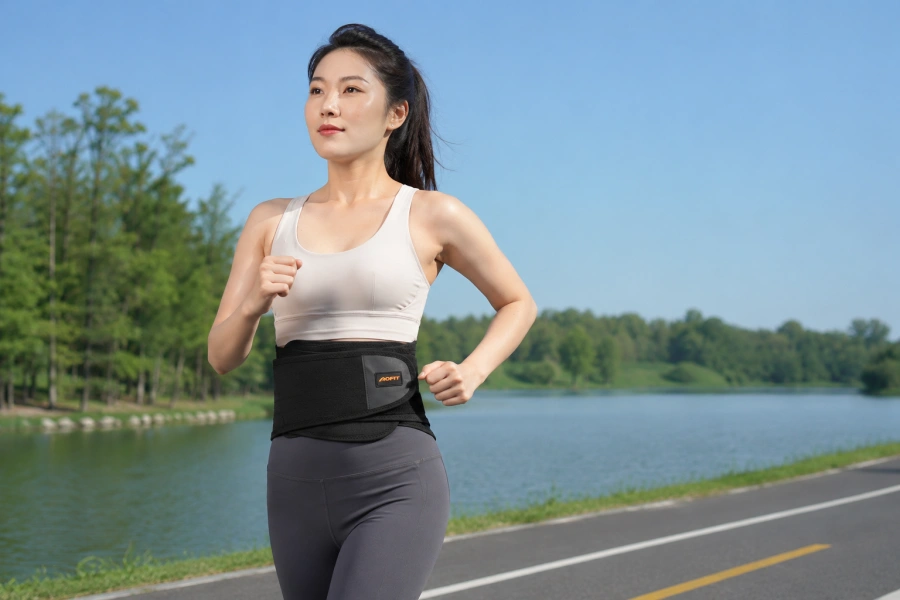
Every mile you push through lower back pain is a mile your body is working against you — not with you. A dull ache creeping in around kilometer three hits differently than a sharp flare-up that’s been keeping you off the road. Either way, the right best lower back brace for running can shift you from a frustrating rest day to a personal best.
The problem? Dozens of braces crowd the market. Some are flimsy elastic bands. Others are full clinical-grade lumbar supports. Pick the wrong one and you’re out money — and still hurting.
So we tested and researched ten expert-recommended braces built for runners. For each one, we break down:
Who it’s for
What it does well
Where it falls short
Mueller Lumbar Support Back Brace
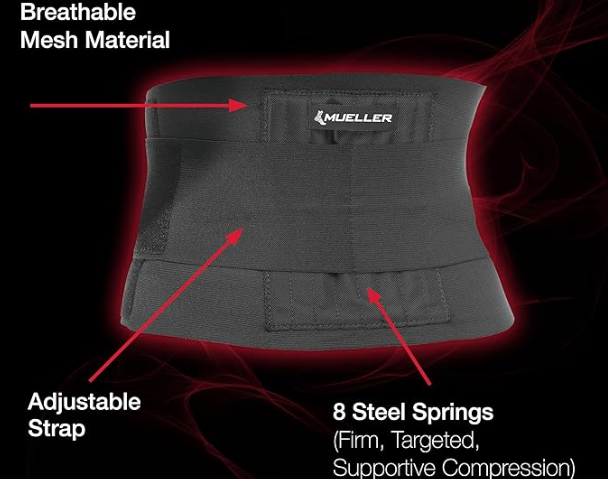
Four flexible steel springs. One removable lumbar pad. A dual-layer pull strap system that lets you dial compression before mile one and ease it back after. This is the Mueller Adjustable Lumbar Back Brace in plain terms — a medium-support back brace for lower back pain relief built for people who split their day between a warehouse floor and a weekend jog.
Best for: Casual runners (pace > 6:30 min/km) dealing with ongoing muscle fatigue or mild lower back weakness
Not ideal for: Speed intervals, long-distance racing, or runners with latex sensitivity
Price: $30–$70 depending on retailer
What works on the run:
– Internal side pieces resist rolling, so it stays flat during easy jogs
– The breathable fabric runs cooler than most foam-padded braces
– You can adjust compression fast — between warm-up and full stride
Where it shows limits:
– The upper edge can press into your ribs during deep forward bends
– Fast sprinting raises the risk of it sliding — tuck it under your shirt, not over
– It can limit natural hip rotation, which runners who drive with a pelvic swing will notice
Think of it as a transition brace. It works well in the recovery-to-running phase. It’s less useful as a long-term part of a serious training routine.
BAXMAX Back Support Belt
Most running braces stretch. That’s the problem. BaxMAX doesn’t.
The patented 5:1 compound pulley system delivers five times the compression force of a standard elastic brace. That puts it closer to medical-grade lumbar support than any other brace near this price (~$74.95). The non-elastic Kevlar-stitched nylon keeps its shape through every stride. It stays firm mid-run. Elastic bands lose tension as you move — this one doesn’t.
Best for: Runners dealing with chronic lower back conditions — disc herniation, sciatica, or recurring lumbar compression — who still need to train
Not ideal for: Runners who need full hip rotation or prefer minimal gear feel
Price: ~$74.95 (Amazon, Walmart); ~$69 in-clinic
What makes it different on the run:
– Thin, porous mesh fabric doesn’t trap heat — a real advantage in long-distance or warm-weather training
– Dual Velcro + pulley locking gives you two separate anchor points. They resist shifting during high-impact movement
– Need to adjust compression mid-run? One pull of the handle does it — no stopping, no re-wrapping
– The 5-year durability warranty backs up the build quality. Most sport braces won’t come close to that
Where it pulls back:
– Stiffer than elastic options — runners with a strong pelvic drive will feel the restriction
– The pulley system takes a few practice runs to feel natural
This is the orthopedic back support running pick. It’s built for runners who aren’t just sore — you’re managing a real condition and still need to train hard.
Bauerfeind LumboLoc Forte
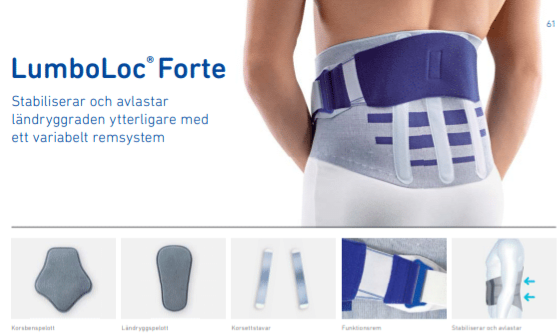
German engineering doesn’t settle for “good enough.” The LumboLoc Forte proves that. It’s a semi-rigid lumbar brace with shaped corset stays, a height-adjustable functional strap, and two swappable support pads. You can target either the lumbar or sacral region — based on where your pain sits.
Best for: Runners dealing with facet joint osteoarthritis, mild spondylolisthesis, or chronic muscle weakness who need medical-grade support without a hard plastic shell
Not ideal for: Runners who need full pelvic rotation or prefer a minimal-gear feel
Price: €179.95–€220.50 (upper-tier investment; reimbursable under European health insurance and US HCPCS L0627)
What makes it work on the run:
– 360° abdominal compression holds your trunk stable through every stride — no hard shell needed
– Three strap positions let you adjust lordosis support to your condition — high for facet relief, mid for flat-back support, low for lumbosacral stability
– Breathable elastic knit stays low-profile under running gear — no bulk, less heat buildup
Where it pulls back:
– The corset stays cut into dynamic hip mobility — pace-focused runners will notice it
– The price is a real barrier, and there’s no cheaper option built to this standard
This is the clinical-grade lumbar brace for athletes who’ve outgrown basic elastic bands. You need a structured, prescribed solution that holds up over real training miles. This one does.
BraceAbility Lower Back Brace for Running
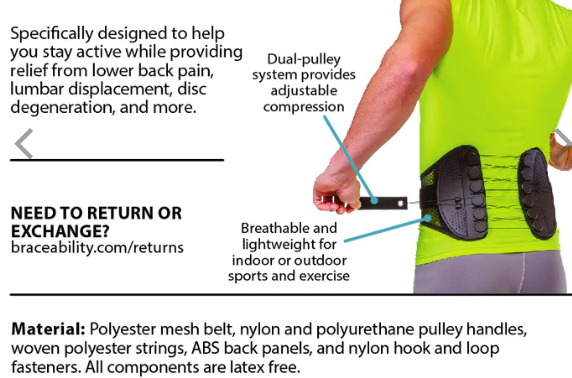
Semi-rigid support, no clinical bulk. That’s what the BraceAbility Adjustable Lower Back & Spine Pain Lumbosacral Corset Brace delivers.
Four posterior stays locked in lumbar control. Two anterior panels wrap the lower abdomen. The side zones stay flexible, so your hips can rotate the way your stride needs. Hi-tech mesh pulls heat and moisture away — no sweat trap by mile two.
Best for: Runners with recurring mechanical low back pain — facet arthropathy, mild degenerative disc disease — getting back to impact training after a flare-up
Not ideal for: Runners with no symptoms who want prevention-only support, or anyone who needs rigid immobilization
Price: Mid-range (~$30–$60)
What works:
– Low-profile cut keeps the brace clear of your ribs during arm swing
– Universal fit (28–60 in circumference) with dual pull-straps you can tighten mid-run
– Mesh construction runs cooler than neoprene options
Where it pulls back:
– Not a long-term solution for daily use — physical therapists advise weaning off as your core strength builds
– Silicone gripper lining is not confirmed on this model; firm strap tension is your main defense against slipping
Start with this brace during your first return-to-run sessions. As your pain fades and hip stability improves, scale back how much you rely on it.
Sparthos Back Support Belt
Sparthos lands at $28.99 at Walmart, or $27–35 on Amazon. At that price, most braces force a trade-off. This one holds up better than most.
The SSBBR02 model uses a 90% polyester / 10% nylon shell with four-way stretch elastic and 3D knitting technology. Different zones of the knit apply different compression levels. Pull both sides of the outer dual-strap system, and you can boost support on the spot — no gear swap needed.
Best for: Casual runners (5–10 km, low-to-moderate pace) with mild lumbar discomfort. Works well at a desk and on a trail.
Not ideal for: Half-marathons or longer runs, runners who sweat a lot, anyone who needs anti-slip silicone grip
Price: ~$28.99–$35
What works:
– Removable lumbar pad targets L3–L5 — reposition or remove it based on where your pain sits
– Breathable mesh stays cool enough for runs under 45 minutes
– Dual adjustable straps let you increase compression mid-run without stopping
Where it pulls back:
– No silicone gripper lining — sweat cuts friction, and the brace can ride up during hard strides
– Multi-layer construction traps heat on longer runs. Past 90 minutes, chafing and heat buildup become real issues
– Built for day-to-day activity, not race-day performance
It works best as a back support belt for exercise that doubles as a running brace. Great for short recovery jogs. Less suited for race day.
FlexGuard Support Lower Back Brace
Lightweight, adjustable, and built for runners who need support without that stiff, clinical feel. FlexGuard lands in the mid-range price zone — and it owns that spot.
The double-pull Velcro strap system is what earns this brace a place on the list. Outer straps adjust in under five seconds mid-run. No stopping. No re-wrapping. On descents, you need to crank up compression fast — this lets you do that without breaking stride.
Best for: Casual-to-moderate runners (road or light trail) with mild lumbar fatigue or muscle strain
Not ideal for: Long trail runs over 90 minutes, heavy sweaters, or runners managing serious disc conditions
Price: Mid-range (~$25–$45)
What works:
– Semi-rigid internal stays target L3–L5 without blocking hip rotation
– Perforated neoprene cuts heat buildup on shorter runs
– Flat and compact — fits right inside a running vest
Where it pulls back:
– Neoprene traps heat past the 60-minute mark. Wear it over a thin synthetic base layer, not bare skin
– No silicone grip lining. Sweat builds up, and the brace drifts during hard strides
– Sizing runs M–L. Runners outside the 28–44 in waist range won’t find a fit here
It’s a solid elastic lumbar support band for short recovery runs and light training days. Keep your expectations matched to that, and it delivers.
Corflex Lace Align Lumbar Orthosis
Post-surgery runners don’t need a “sport” brace. They need a spine specialist’s answer to one question: how do I move again without breaking what was just fixed?
The Corflex Lace Align LO is built for that. It covers L1-to-sacrum stabilization with a heat-moldable ABS posterior panel and Outlast® thermal fabric. The dual Power-Pull pulley system lets you adjust compression mid-stride — no unwrapping needed.
Best for: Post-op runners (post-discectomy, post-fusion) cleared for light jogging by a spine specialist — not performance athletes
Not ideal for: Speed work, long runs, or anyone without a diagnosed lumbar condition
Price: DME/clinical channel pricing (insurance-reimbursable in many cases)
What works:
– Power-Pull tabs let you dial compression in seconds — tighter during flares, looser for mobility
– CoolMesh™ + Outlast® fabric handles heat well enough for short, controlled sessions
– Two sizes (S/M, L/XL) cover most patients — easy to size
Where it pulls back:
– Rigid panels limit trunk rotation — your running gait will change
– Higher intensities can build abdominal pressure. That may cut into deep breathing
– No manufacturer endorsement for running. This brace is built for rehab and regular movement
Treat this as a return-to-movement brace, not a running accessory. Use it with physician supervision. Keep the pace easy. Phase it out as your spine gets stronger.
ComfyMed Premium Lumbar Support Back Brace
Medium support, adjustable, built for people who refuse to stop moving. The CM-102M is not a medical device. It’s a back support belt for exercise made for the runner who also lifts at work, chases kids, and still gets easy miles in on weekends.
The dual-compression band system is the real draw. Fasten the main belt first. Then pull each outer band through the metal D-rings to set your own intensity level. Light jog? Ease the bands back and leave the lumbar pad out. Heavier effort? Add the pad and cinch both bands tighter.
Best for: Easy-to-moderate runners with mild lumbar fatigue — those using the brace across work shifts and weekend runs
Not ideal for: Active sciatica below the knee, post-surgical stabilization, or race-pace efforts
Price: Mid-range (~$30–$50)
What works:
– Narrower front panel cuts down on hip flexion restriction — fits better with running shorts waistbands
– Removable lumbar pad attaches anywhere via hook-and-loop — pull it out as your core gets stronger
– Washable, quick-dry materials make it easy to use day after day
Where it pulls back:
– D-ring hardware adds front-panel bulk under tight race tops
– Medium support sits well below medical-grade LSO braces — not enough for disc herniation or acute instability
– Postpartum runners should hold off on this one until later recovery stages — not suited for a return to impact training too soon
Use it hard at the warehouse. Run easy with it after. It handles both — just don’t ask it to handle more than that.
Neotech Care Back Brace Lumbar Support
Neoprene runs warm. That’s the whole point.
Mesh-fabric braces focus on airflow. The Neotech Care lumbar belt does the opposite. It traps heat against your lumbar muscles. This keeps muscle temperature up and cuts out that cold, stiff feeling before your first stride.
Best for: Cold-weather runners and those with chronic morning stiffness. You need passive warmth plus moderate compression on easy jogs (50–70% max heart rate).
Not ideal for: Summer long runs over 60 minutes, high-intensity intervals, or runners who overheat easily.
Price: Mid-range (~$25–$55)
What works:
– Neoprene holds your muscle temperature 2–4°C above baseline. That’s a real plus for pre-run warm-up and stiff mornings.
– Double-pull elastic straps let you dial compression up or down between warm-up and full stride.
– It covers L1 to the sacrum with enough height to stay clear of the rib cage.
Where it pulls back:
– Above 25°C, heat buildup past the 30–40 minute mark becomes a real issue.
– Skip it for HIIT or sprint work. Trunk rotation feels restricted under load.
– Wear a thin moisture-wicking base layer under the brace. Direct skin contact plus sweat creates friction and raises rash risk on longer runs.
Best-use protocol: Strap in 10–15 minutes before your run. Do dynamic hip and pelvic warm-ups. Start slow. On summer runs, wear it through the first 20–30 minutes, then take it off. Your lower back needs to breathe.
This is a cold-season running injury prevention brace. It’s not built for all conditions.
Vive Lumbar Support Back Brace
Soft neoprene, a removable triangular lumbar pad, and a dual-strap tension system that cinches in seconds — the Vive is not a rigid LSO. It’s a compression back brace for running built for light jogging, long shifts, and everything in between.
Best for: Runners with mild-to-moderate chronic lower back pain, muscle strain recovery, or sciatica. You need daily support that holds up through light exercise — this brace delivers that.
Not ideal for: High-impact intervals, trail runs over 60 minutes, or post-surgical stabilization.
Price: ~$20–$40
What works:
– 360° wrap plus dual tension straps keep the brace in place through easy jogging — no bulk, no shifting
– The removable lumbar pad targets L3–S1. Pull it out as your core gets stronger
– Fits waist sizes 26–64 across two sizes. Unisex design and low-profile fit work under most running gear
Where it pulls back:
– No rigid stays mean a 10–20% reduction in range of motion — less than half what a rigid LSO cuts
– Neoprene traps heat past the 45-minute mark, so longer runs can get uncomfortable
– Skip this one for structural instability or post-fusion return-to-run situations
Think of it as a back support belt for exercise that does its job all day long — not just during your run.
How to Choose the Best Lower Back Brace for Running: Key Features
Here’s what separates a brace built for the road from one built for a desk chair.
Profile: Stay Out of the Way
A running brace needs to disappear on your body. Total thickness should stay at ≤ 5–8 mm — not the 15–25 mm bulk of post-surgical hardware. Back panel height sits in the 18–23 cm range, front panel 12–15 cm. That geometry covers L1–S1 without riding up into your ribs on every arm drive.
Quick field test: do a full arm swing at shoulder height. The brace edge catches your ribcage? It’s not built for running.
Rotation: Don’t Freeze What Running Needs
Your torso rotates 10–15° at an easy pace. Sprint work pushes that past 20°. A brace that locks rotation doesn’t support your run — it fights it.
The right structure uses flexible or semi-rigid zones. That means narrow stays (8–12 mm wide) along the spine, plus elastic mesh on the sides. The back panel controls flexion and shear. Side panels stay clear and don’t get in the way.
Self-test: high-knee jog in place for one minute. Breathing feels tight? Can’t twist naturally? That brace doesn’t work with your gait.
Anti-Slip: The Combination That Holds
One anti-slip method is never enough for runners. High-friction fabric alone loses grip as sweat builds up. Silicone strips alone trap heat and create pressure points. Ultra-tight compression alone blocks breathing and cuts rotation.
Here’s the combination that works: high-friction fabric across the main contact zone + narrow silicone strips (3–5 mm wide) at the upper and lower edges. This pairing targets the two most common failure points — vertical drift and edge curl — without squeezing out your exhale.
Quick Adjustment: Seconds, Not Stops
Uphill climbs need more compression. Aid stations need less. A front-mounted dual-pulley or pull-tab system handles both — in under 3–5 seconds, single-handed, without breaking stride.
Look for front tabs within 10–15 cm of center. That way, you reach them without twisting. Tactile click-stops for “climb mode” versus “flat mode” are a big plus — no guessing mid-run.
Sopport:Match Your Situation to the Right Level
|
Runner Scenario |
Recommended Level |
|
Healthy, high mileage, no pain |
Flexible |
|
Mild-to-moderate LBP, active training |
Semi-rigid |
|
Early return-to-run post-flare |
Semi-rigid |
|
Post-surgical / acute instability |
Rigid — no running yet |
Sizing and Fit: Measure for a Running Back Brace
Wrong size, wasted money. Measure your lumbar waist, not your pants waist. Stand tall and relaxed. Find the space between your navel and iliac crest. That’s where the brace sits. Wrap a soft tape measure around the widest point of that zone, parallel to the floor. Breathe at a steady pace. One finger of slack. Measure twice, average the result.
Three fit tests before your first run:
Deep breath test — Take a full inhale. The brace should feel snug, not suffocating. Can’t finish a slow 10-second breath cycle? It’s too tight.
Forward bend test — Hinge 45°. The lower edge shouldn’t dig into your thigh or curl upward into your ribs.
High-knee test — 20 reps. Less than 2 cm of vertical drift means it fits. More than that, and you’ll be adjusting every mile.
Between sizes? For running, size down — provided you pass all three tests. Your core expands under effort. High-impact movement needs a brace that stays put. A roomy fit at the start line turns into a loose, shifting mess by mile two.
Conclusion
Your back shouldn’t be the reason you stop running. The ten braces reviewed here cover a wide range of needs:
Lightweight compression for casual joggers
Semi-rigid lumbar support for injury recovery
Medical-grade orthotic options for runners with chronic conditions
There’s no single best pick for everyone. The right brace is the one that fits your body, your pace, and your pain profile.
So don’t overthink it. Match your symptoms to the right support level. Get your measurements right. Then start with one of the expert-recommended picks above.
Start a new business of custom lower back braces or update your product lines? Reach out AOFIT, your reliable custom brace manufacturer, if you’re unsure. We will satisfy you with the perfect ODM/OEM solution.