
The wrong neck brace does more than cause discomfort — it can slow your recovery or leave an injury without proper support. Choosing between a soft and rigid neck brace depends on the type and severity of your neck issue.
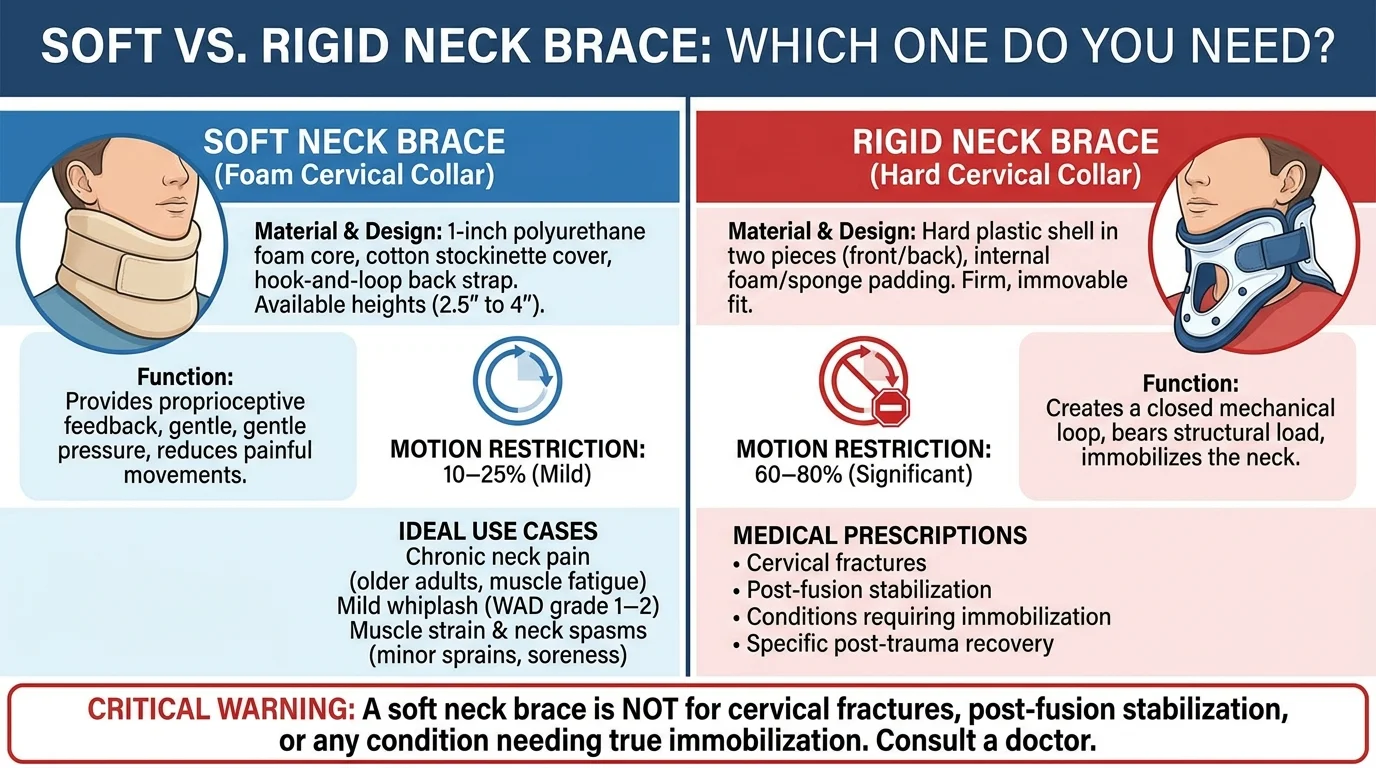
This guide gives you a clear, side-by-side breakdown of both options. By the end, you’ll know which type fits your situation and why.
What Is a Soft Neck Brace? And Who Uses One?
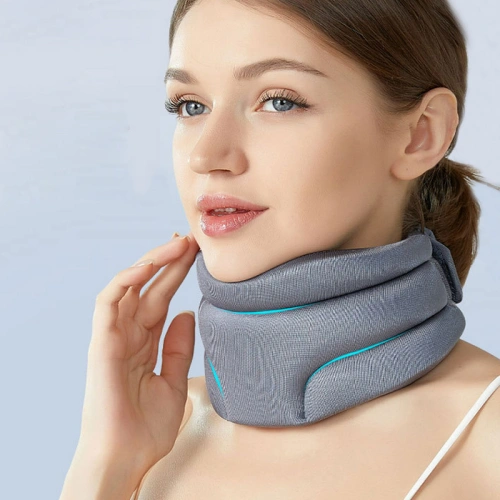
A soft neck brace (also called a foam neck collar or foam cervical collar) has a 1-inch polyurethane foam core. A cotton stockinette cover wraps around it. A hook-and-loop strap at the back holds everything in place. It comes in heights from 2.5 to 4 inches. The right height fills the gap between your collarbone and chin, keeping your head in a neutral position.
A soft collar cuts your neck range of motion by 10–25%. That’s enough to reduce sudden, painful movements. But it’s far from the 40–60%+ restriction a rigid plastic collar provides. Its main job is proprioceptive feedback. The gentle, all-around pressure tells your brain where your neck is. It nudges you away from the positions that cause pain.
Who Uses One?
- Chronic neck pain sufferers — older adults with muscle fatigue or early-stage degenerative changes use these most.
- Mild whiplash (WAD grade 1–2) — after a minor car accident, short-term wear can reduce discomfort.
- Muscle strain and neck spasms — minor sprains, sports soreness, or tension stiffness. The collar gives short-term comfort.
One hard limit: A soft foam neck collar is not right for cervical fractures, post-fusion stabilization, or any condition that needs true neck immobilization. For those cases, a rigid neck brace is not a choice — it’s a requirement.
What Is a Rigid Neck Brace? And Why Doctors Prescribe It?
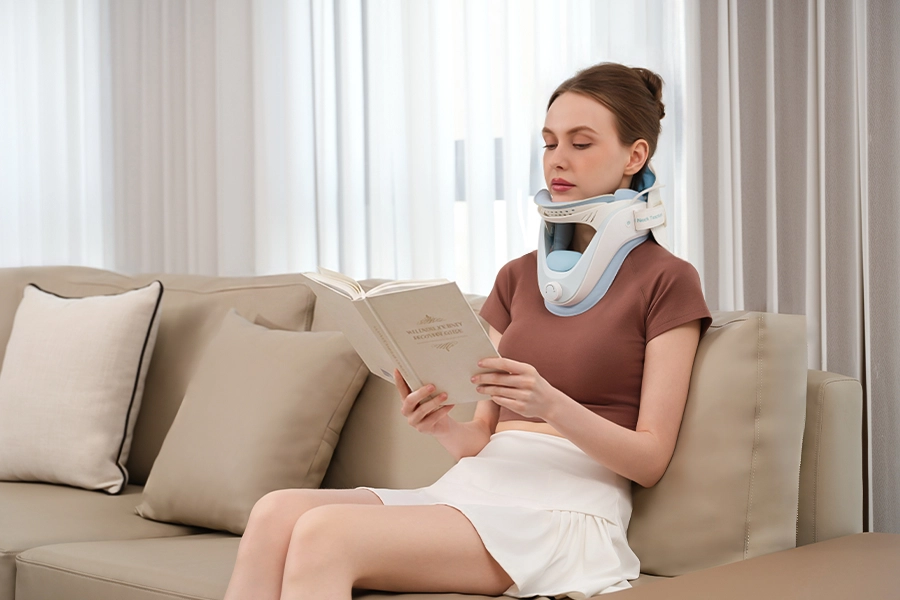
A rigid neck brace — also called a hard cervical collar or hard neck brace — uses a hard plastic shell split into two pieces. One piece sits at the front, one at the back. Velcro straps hold them together. Inside, removable foam or sponge padding cushions the chin, occiput, sternum, and clavicle. The fit must be firm. You should not be able to nod your head up and down or turn it side to side.
A rigid cervical neck brace cuts the range of motion by 60–80% across flexion, extension, rotation, and lateral bending. Researchers confirm this using three-dimensional motion capture — tracking full neck movement with and without the brace. The brace works through contact at multiple points: the chin, occiput, sternum, and clavicle form a closed mechanical loop. The hard shell bears the structural load. The padding spreads surface contact and reduces skin friction. Some models include thoracic or chin extensions for even tighter control over C0–C7.
Why Doctors Prescribe a Rigid Neck Brace
A rigid orthopedic neck brace appears in specific, serious medical situations:
- Cervical fractures
- Post-surgical stabilization
- Cervical instability
- Acute trauma and emergency transport
The Rigid Collars Doctors Prescribe Most
- Philadelphia Collar — Semi-rigid foam reinforced with front and back plastic panels. The front throat opening allows for tracheostomy care. You’ll see this one used often in emergency rooms and after surgery.
- Miami J Collar — Hard plastic shell with replaceable padded liners. It restricts flexion, extension, and rotation during recovery from neck injury due to fracture or fusion. Pair it with a thoracic extension for better control of the lower cervical spine.
- Aspen Vista Collar — A two-piece hard collar with adjustable height and 24-hour wear protocols. NHS guidelines say the fit is correct once the wearer can no longer nod or turn their head.
For severe instability, doctors move to cervicothoracic orthoses — SOMI braces, Minerva braces, or in the most critical cases, a HALO device. The HALO anchors to the skull and delivers close to 100% cervical immobilization.
Soft vs Rigid Neck Brace: Head-to-Head Comparison
Here’s a full breakdown across every dimension that matters.
Support Strength: How Much Do They Restrict Movement?
| Dimension | Soft Cervical Collar | Rigid Neck Brace |
|---|---|---|
| Range of motion reduction | ~17.4% | ~62.9% |
| Restriction level | Light — a gentle reminder | Moderate to high — mechanical control |
| Planes restricted | Partial | Flexion, extension, rotation, lateral bending |
| Mechanism | Proprioceptive feedback | Hard shell + multi-point contact loop |
Materials and Build
Soft cervical collar:
– Polyurethane foam or sponge core wrapped in cotton or breathable mesh
– Single-loop design with Velcro closure
– Gently conforms to your chin and collarbone with light compression
Rigid neck brace:
– High-density polyethylene (HDPE) plastic shell built in two pieces — front and back
– Removable, washable foam liners at the chin, occiput, sternum, and clavicle
– Models like the Miami J and Philadelphia collar span from jaw to collarbone for three-plane control
Comfort, Breathability, and Daily Wearability
Soft cervical collar advantages:
– Strong breathability — foam and mesh hold up fine in summer heat or for sensitive skin
– Light, pillow-like pressure that most people handle well during desk work or short drives
– You can nod gently and turn your head a little
Rigid neck brace realities:
– Plastic shells trap heat and moisture. You need to remove the liner and clean your skin every day
– Contact points at the chin, collarbone, and behind the ears carry a real pressure-sore risk
– Swallowing and speaking feel restricted and awkward
– The bulky profile won’t fit under a shirt collar.
Wear Duration and Long-Term Risk
Soft cervical collar: Clinical guidelines point to no more than 4 hours per day, mixed with active movement and physical therapy. For acute whiplash, most guidelines cap continuous wear at 10 days. Past that point, the risk reverses. Keeping your neck still for too long weakens the muscles you’re trying to protect. That leads to more dependence and a higher chance of chronic stiffness.
Rigid neck brace: Post-surgical and fracture protocols often call for 24-hour wear lasting weeks or months — but a physician always supervises this. Studies show that extended rigid immobilization past 6 weeks speeds up muscle loss and joint stiffness. The standard path is to move toward part-time daytime wear, then switch to a soft collar, then phase it out fully once imaging confirms the spine is stable.
Price: What You’ll Pay
| Type | Typical Price Range | Notes |
|---|---|---|
| Soft cervical collar | $15 – $50 | OTC, no fitting fee, easy to buy multiples for rotation |
| Rigid neck brace | $80 – $300 | Medical-grade brands (Aspen, Ossur, Miami J); price can include professional fitting and replacement liner costs |
How to Choose: Match Your Condition to the Right Neck Brace
The Core Decision Path: Start With Your Symptoms
- Mild neck pain, postural soreness, or short-term support needs → Soft cervical collar. Your cervical spine doesn’t need locking down. It needs a gentle reminder to stop moving in the ways that hurt.
- Moderate sprain, suspected strain, pain with movement, but no confirmed bone injury → Get a medical evaluation before you decide. This is the gray zone. Your neck may need more or less restriction than you think. You could end up with a soft collar or a semi-rigid one.
- Confirmed fracture, dislocation, post-surgical fixation, or documented instability → Rigid neck brace. Your cervical spine needs structural control. A hard brace is the only option that provides it.
- Whiplash or a pinched nerve → Pause before you reach for anything. Ask yourself first: Is there arm numbness, radiating pain, weakness, or dizziness? Yes to any of those — or the pain followed a collision, fall, or impact — that’s a see-a-doctor-first situation. Not a buy something online tonight situation.
The Hard Line: See a Doctor Before Buying Anything
Go get evaluated if any of these apply:
- Neck pain after any clear trauma
- Suspected fracture, dislocation, or post-surgical
- Numbness, tingling, radiating pain into your shoulder or arm, or grip weakness
- Pain that worsens at night or keeps getting worse, not better
Matching Neck Brace Type to Real-Life Scenarios
Sleeping with a neck brace
Comfort and low pressure come first. A soft cervical collar is the right choice for overnight wear in most cases. Rigid braces don’t suit extended sleep use. The exception: your physician has prescribed one for 24-hour immobilization during fracture or post-surgical recovery.
Driving
A rigid, hard neck brace creates a serious safety problem behind the wheel. It blocks the rotation you need to check mirrors and blind spots. Light support from a soft collar is the most practical option for driving.
Office work and long sitting sessions
A foam neck collar worn in short stretches can help correct posture and ease muscle tightness. Rigid braces don’t belong here. They’re medical fixation devices, not ergonomic tools.
The Quick-Reference Decision Table
| Your Situation | Right Choice |
|---|---|
| Mild neck ache / desk-work soreness | Soft cervical collar |
| Post-whiplash pain, no confirmed structural damage | Medical evaluation first; soft to semi-rigid likely |
| Numbness, radiating pain, grip weakness | Medical evaluation — do not self-select |
| Fracture / post-surgical / confirmed instability | Rigid orthopedic neck brace |
Key Buying Factors Beyond “Soft or Rigid”
Fit First: Measure Before You Order
A neck brace that’s 2 cm too wide drops cervical restriction below 50%. That defeats the whole point of wearing one. Too tight, and skin pressure climbs above 32 mmHg — the level where pressure sores start forming within two to three hours.
Two measurements matter:
- Neck circumference — measure at the widest point just below the Adam’s apple, with a soft tape held level. Take the reading twice and average the two. Add 0.5–1 cm as a comfort allowance.
- Neck height — measure straight down from your chin’s lower edge to the notch between your collarbones, with your head in a neutral position.
Put the brace on, then do a quick check. You should fit one or two fingers between the brace edge and your skin.
Material and Breathability: The Long-Wear Reality
Wear a neck support brace more than four hours a day, and breathability stops being about comfort. It becomes a health issue.
Solid foam without ventilation holes pushes skin surface temperature up by 3–4°C over a two-to-four-hour wear period. Mesh-covered or perforated designs hold that rise to around 1–2°C. Skin rash rates for solid foam over two or more weeks of continuous wear run at 20–30%. Perforated or mesh-lined designs bring that number below 10–15%.
You run warm, sweat a lot, or have sensitive skin? Go for a cervical neck brace with a moisture vapor transmission rate above 2,000 g/m²/24h. Buy two to three replacement liners so you can rotate them through the wash each day.
Practical Features That Add Up Over Time
- Adjustability — Look for 6–10 cm of circumference adjustment through Velcro or slide buckles. This handles natural weight changes and means you won’t need to reorder every time your fit shifts a little.
- Washability — Removable pads that air-dry within eight hours make daily hygiene easy to manage. Check that liners detach in under two minutes and survive a 30–40°C wash without shrinking more than 3–5%.
- X-ray compatibility — Most rigid orthopedic neck brace shells use radiolucent plastics — HDPE, PP, or PC — that stay clear in imaging.
How Long Should You Wear a Neck Brace?
Soft tissue injuries and whiplash: Keep it short. Most guidelines cap soft cervical collar use at 7–10 days for sprains and whiplash with no fracture involved. Prolonged wear weakens the muscles you’re relying on. NIH systematic reviews have confirmed this pattern.
Fractures and post-surgical cases: The timeline stretches much longer. A rigid cervical neck brace after a cervical fracture or multi-level ACDF usually runs 12 full weeks, tracked by imaging. Single-level fusions with anterior plate fixation may need just 2–6 weeks.
How to Know It’s Time to Reduce Wear
Watch for these clinical signals:
- Imaging shows stable bone healing with no displacement
- Resting pain has dropped (lower VAS score)
- Removing the brace for short periods doesn’t spike your pain
Once cleared, follow a structured weaning schedule. The LHSC 15-day protocol starts with two brace-free hours each morning and evening. You add time each day until day 15, when the collar comes off for good. Mayfield’s approach moves faster — brace-free time increases by 30–60 minutes per day, finishing the transition in 1–2 weeks.
One rule applies across all cases: the moment your spine is confirmed stable, pair the weaning process with physical therapy. Isometric neck exercises during the reduction phase rebuild the muscles that immobilization broke down.
FAQ: Quick Answers to the Most Common Questions
Is a neck brace a treatment on its own?
No. A neck support brace plays a supporting role. It protects and stabilizes the area. Your real recovery comes through healing, therapy, and time — the brace just helps hold things steady while that happens.
When should I stop and see a doctor right away?
Put the brace down and get evaluated if you notice any of these:
– New or worsening numbness, tingling, or arm weakness
– Loss of balance or sudden clumsiness
– Trouble breathing or swallowing
– Bowel or bladder changes
– Fever, redness, or drainage near a surgical wound
These are not neck brace problems. These are medical emergencies.
Conclusion
Choosing between a soft and rigid neck brace doesn’t have to be confusing. The answer is simple: match the brace to the injury.
Ready to find the right fit? Browse our collection of orthopedic neck braces at aofitbrace.com. Get back to moving with ease, comfort, and peace of mind.