

The first time your lower back locks up mid-backswing, you probably won’t reach for a foam roller. You’ll reach for your phone and type some version of “golf back brace, does it actually work?” into Google at 11 pm, desperate for an honest answer. You wish you’d found that night a guide with a real self-check to know if you need support or rehab first, an honest look at whether a brace weakens your core over time, and exactly how long to wear a back brace for golfing before you don’t need it anymore.

When a Golf Back Brace Helped and When It Did Not
Not all back brace support for golf is equal, and the difference matters more than price. Your first brace, a soft, stretchy compression sleeve, might be comfortable and easy to wear under a golf shirt. But it will do almost nothing for the sharp twinge you feel at the top of your backswing.
A controlled golf‑swing study measured what happens to your lumbar spine with different types of support. Without any brace, lumbar extension at the finish position hit 44°, with after‑impact angular velocity of 191°/sec—that’s the twisting speed your lower back absorbs on every single swing. A soft corset brought extension down slightly to 38°, but the hard corset dropped it to 28°, cutting angular velocity to 94°/sec. Researchers found the reduction was statistically significant only with the hard corset, not the soft one.
That explains many golfers’ experience exactly. Your golf back pain may come from over‑rotation and hyperextension through your follow‑through, classic golf swing mechanics that trigger back pain. A rigid or semi‑rigid lumbar support brace genuinely helps during full swings because it physically limits that excess twisting motion. The soft brace feels nice, but it isn’t doing the mechanical work your body needs.
Should You Wear a Back Brace for Golf?
Before you buy anything, run through this checklist.
Ask yourself:
Is the pain mechanical? Does it flare with bending, rotating, or the downswing, then ease when you rest?
Is it localized to your low back or pelvis, not shooting down your leg?
Can you still walk, stand, and rotate without your body shutting down?
Does compression or support genuinely make it feel better, not just numb?
If you answered yes across the board, a golf back brace is a reasonable trial. Braces work best for pulled muscles, moderate low‑back ache, lumbar instability, sciatica flare‑ups, incipient disc issues, or post‑op stabilization. They support you while you fix swing mechanics and build core strength.
If your pain is sharp, spreading, or radiating, stop. A brace isn’t designed to override a worsening injury pattern, and playing through that is how a tweak becomes a season‑ending problem.
Matching the Right back brace for golfing to Your Pain Level
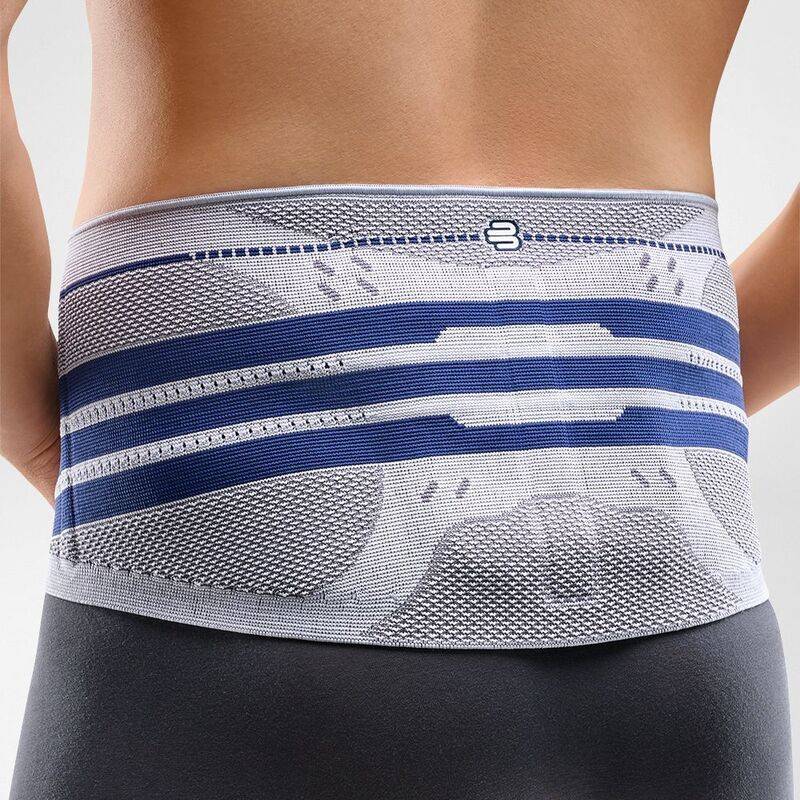
Mild to moderate pain, want mobility: low‑profile lumbar compression brace (e.g., Bauerfeind LumboTrain).
Pain centered around pelvis/rotation instability: sacroiliac support belt (e.g., X‑Factor Belt, Bauerfeind Sacroloc).
Stronger symptoms needing real stabilization: more rigid support like the Zamst ZW‑5, though expect some swing restriction.
Fit matters just as much as type. It should feel snug enough to support your trunk without choking your breathing or your backswing—the “one‑finger test” between brace and skin is a good gut‑check before you head to the first tee.
When a Golf Back Brace Makes Sense and When Rehabilitation Comes First?
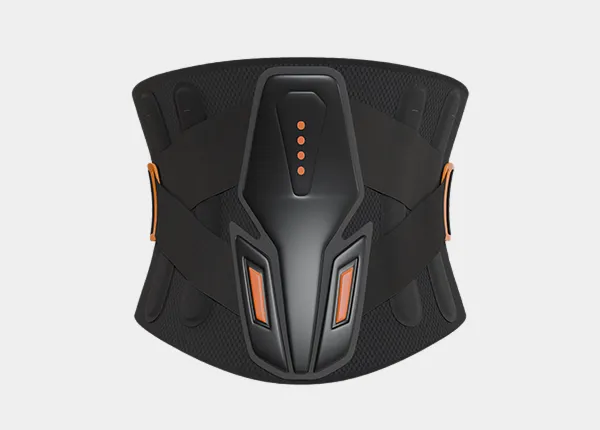
A golf back brace is a tool for a specific job. It works best when symptoms are mild to moderate, like lumbar strain, nonspecific low back pain, or that nagging feeling that you’re twisting too far on the downswing. Semi‑rigid models with internal stays are the go‑to recommendation here because they reduce pain, sharpen your posture and proprioception, and physically limit excessive rotation and shear force on your spine.
But rehabilitation comes first if your pain keeps returning, if there’s an obvious strength or mobility deficit, or if the discomfort is starting to limit how you function off the course too. A randomized trial of 30 amateur golfers found that trunk stabilization plus lower‑extremity strength training beat golf‑swing exercises and stretching alone, improving pain, disability, and balance. Both groups still gained driver distance and ball speed, meaning you can fix the root cause without sacrificing performance.
If you’re flaring up right now, rest for 1 to 2 days, alternate heat and ice, and use pain medication as needed. Add deep tissue massage or acupuncture once the acute pain settles. After a real flare‑up, one spine clinic recommends holding golf for 4 weeks, then easing back in with ROM stretches and core work before progressing to 9, then 18 holes.
Does a back brace for golf Weaken Muscles?
A systematic review of 35 studies looked at whether lumbar orthoses cause trunk muscle weakness. The conclusion: no conclusive scientific evidence supports that fear. Muscle‑work measurements varied inconsistently across studies, meaning some showed minor changes, others showed none, and none pointed to a clear pattern of decline.
A separate meta‑analysis stated that continuous brace use does not lead to muscle weakness, muscle loss, or reduced motor function. Real‑world data backs this up too. In a 6‑month study on adolescent girls wearing rigid scoliosis braces, researchers found no significant difference in back muscle strength or endurance. Wear time didn’t matter either.
Shorter‑term studies tell the same story. A 3‑week LSO study on healthy adults showed the brace increased trunk stiffness and shifted some neuromuscular responses, but nothing detrimental after 3 hours of daily wear. And a 4‑week ultrasound study found zero measurable atrophy in abdominal or lumbar muscles.
The real risk is what you stop doing because you’re wearing the brace. Skip your core work, and any support device becomes a crutch. Keep training, and the golf back brace stays a tool, not a replacement for strength.
A Practical Golf Back Brace Use Timeline
Weeks 1–2 (acute phase): Wear it near‑continuously, including during golf. This is when compression and rotation‑limiting support matter most.
Weeks 3–6 (tapering phase): Shift to activity‑only wear. One published back‑brace taper works like this:
Days 1–3: 1 hour off daily
Days 4–6: 2 hours off daily
Days 7–9: 4 hours off daily
Days 10–12: 8 hours off daily, continuing stepwise
A similar activity‑based model moves from 6 hours on/4 off in week three, down to under 2 hours a day by week six, then stops entirely by week seven.
Discontinuation rule: Keep increasing time out of the brace until you feel no muscle fatigue or pain. That’s your signal to stop, not a calendar date. Over 50% of physicians recommend a weaning period lasting 1–6 months for musculoskeletal bracing generally, so don’t rush it if symptoms linger.
How to wear a golf back brace?
Measure around your navel. For most golf‑specific braces, small runs 27–35 inches, medium 35–43 inches, large 43–51 inches, and some brands stretch coverage from 25 to 55 inches across S to 3XL. Grab a tape measure before you buy.
For golf posture correction that holds up on the course, look for low‑profile, flexible lumbar support built for rotation. Circular compression and non‑bulky construction matter more than raw stiffness. You want dual adjustable elastic straps or a Velcro tension system, so you can loosen or tighten support hole‑to‑hole as your body changes through 18 holes.
Check that the support is snug enough to stay put through putting, half swings, and full swings. It should not ride into your ribs or hips when you hinge or rotate. And it should not slip when you sit in the cart or bend to tee up. The goal is smart load transfer. You get less shear stress on your spine and the same freedom in your hip turn.
Put it on at the lumbar region, with the lower edge at your waistline. Tighten in small steps, then test your turn and swing speed before committing to a full round. If it feels restrictive at any point, loosen it. Modest tension works better than maximum tension.
Which Type of Golf Back Brace is Best?
Pick the golf back brace that matches what’s actually going on in your body. Treat it like a diagnosis.
Mild stiffness, want to keep swinging freely. Reach for a compression belt or low‑profile lumbar support. These use circular compression and posture cueing to keep you mobile.
Pain that flares during rotation. Get a semi‑rigid brace with stays. Plastic or metal stays limit excessive rotation and cut shear force through the swing. This changes how your body moves.
Pain centered low near the tailbone or hips. That’s SI joint territory. A sacroiliac belt with pelvic compression, adjustable tension straps, and massage pads targets that region.
History of disc issues, sciatica, or instability. Choose a structured rigid brace with stronger stays and higher compression.
For fabric, prioritize breathable or moisture‑wicking materials since you’ll be wearing this for four‑plus hours in the sun. Structured models have 4 to 7 stays. More stays mean firmer support. Budget golf‑specific braces run $39.99–$49.99, while specialty sports‑medical brands price higher.
Real‑World Golf Back Brace Test
What genuinely improves:
Less lower‑back flare‑up as the round wears on, especially past hole 9
Noticeably better posture maintenance—you stop slouching into your stance on tired holes
Reduced reliance on the brace itself as your core strength catches up over a few weeks
Start wearing it only when symptoms flare, not from the first tee. That shift alone changes everything. The brace works as a posture reminder, not a substitute for actual core control. Paired with a real pre‑round warm‑up and cool‑down stretching, it does its job quietly.
What still needs work: the golf back brace never fixes swing mechanics compensations. Reverse spine angle, over‑arching, underwing—those show up no matter how snug the support feels. If your back pain treatment plan stops at bracing, you’re missing the mechanical piece. A coach or a simple phone recording will tell you what your body’s still doing wrong.
For context, a clinical case study following a golfer through 7 visits over 4 weeks saw disability scores drop from 26% to 10%, with pain‑avoidance scores falling right alongside it. The biggest gains weren’t comfort‑related—they were full spinal range of motion, better hip mobility, and pain‑free plank holds. That’s the real marker. Comfort tells you the brace is working. Movement quality tells you you’re actually healing.
When You Should Stop Golf and Get Medical Advice?
No brace, no matter how rigid, should talk you into playing through certain signals. Sharp, intense pain that worsens as the round goes on means stop immediately. Same if warm‑up movements don’t ease things at all, or if the ache centers on your spine and wakes you at night.
Get evaluated right away if you notice:
Shooting pain into your buttock or leg
Numbness, tingling, weakness, or foot‑drop sensations
Bowel/bladder changes or saddle‑area numbness
Pain following a fall, fever alongside severe back pain, or unexplained weight loss
If pain lingers past 2–3 weeks despite rest, or persists 48–72 hours after a round, get a sports medicine review before you touch a driver again.
Conclusion
A golf back brace is a tool. Like any tool, it works best when you know exactly why you’re reaching for it. If your pain is fresh, sharp, and under 48 hours old, brace up and let it do its job. If it’s dull, lingering, or radiating into your leg, that’s your body asking for rehab. And if you do wear one, treat it as training wheels—wean off as your core strengthens, not as a permanent crutch.
So grab that self‑check list, be honest about where you land, and give yourself a firm 4–6 week timeline either way.