

It’s 2 a.m., you’re propped up on three pillows, and every time you shift even slightly, panic sets in: am I supposed to keep a shoulder immobilizer on all night? If you’ve just had shoulder surgery, dealt with a dislocation, or you’re deep in rotator cuff recovery, this question probably feels bigger than it should.
Yes, sleeping with a shoulder immobilizer is usually essential, but how you wear it matters just as much as whether you do. Below, we’ll walk through exactly how long to keep your shoulder sling on at night, which sleep positions actually protect your healing tissue, and the small adjustments that can turn restless, achy nights into real, restorative sleep.
Should You Sleep With a Shoulder Immobilizer?

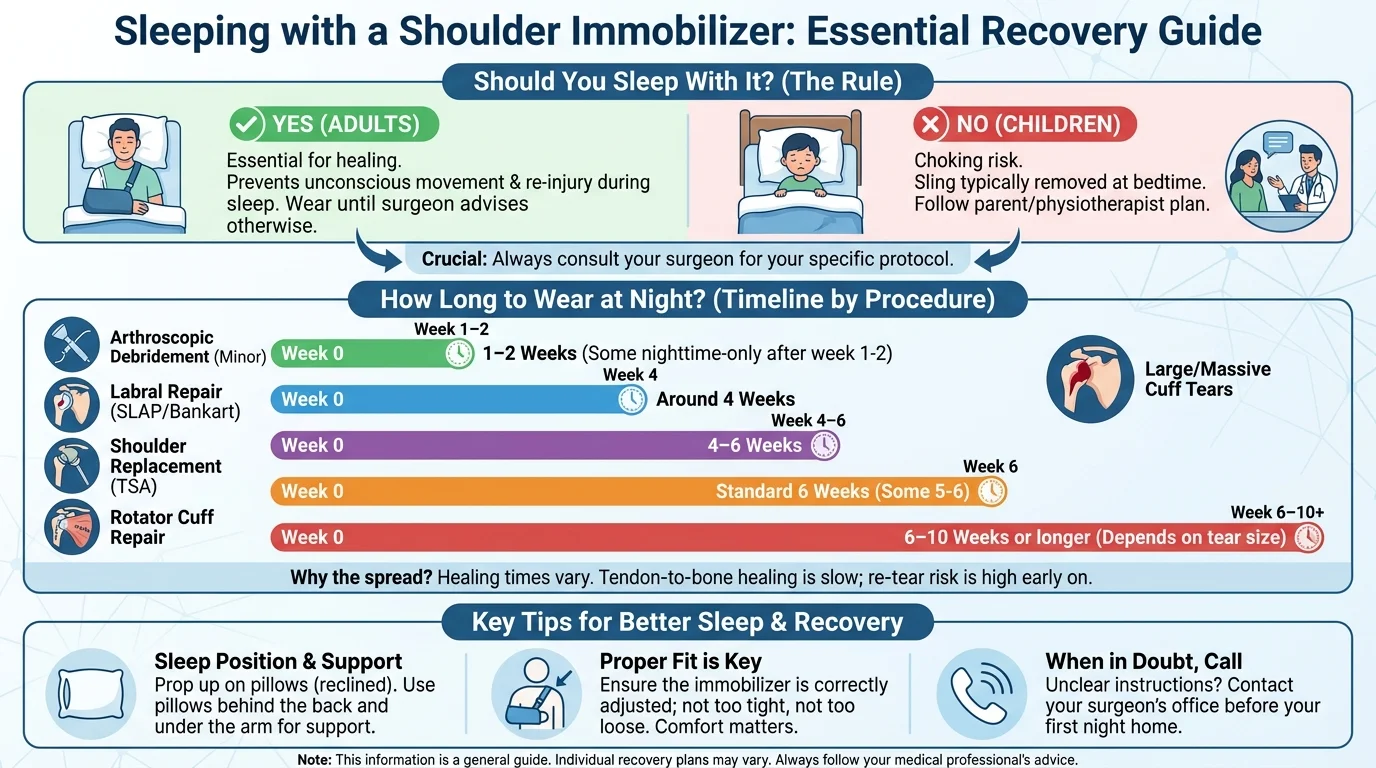
Yes, if you’re an adult recovering from shoulder surgery or a shoulder dislocation, you should sleep with your shoulder immobilizer on unless your surgeon tells you otherwise. Your shoulder does most of its healing while you’re unconscious and unaware of every twist and turn you make.
Children are the exception. Because of choking risk, kids typically have their sling or immobilizer removed at bedtime, with a parent or physiotherapist confirming the exact plan beforehand.
If you left the hospital without clear post-surgery shoulder sling instructions, don’t guess. Call your surgeon’s office before your first night home. Sleep protocols vary depending on the procedure—a rotator cuff repair has different needs than a dislocation.
How long to wear a shoulder immobilizer at night depends on your surgeon’s timeline, which is often measured in weeks.
How Long to Wear Your Shoulder Immobilizer at Night?
The answer depends on what kind of surgery you had, and the timelines range from a couple of weeks to well over a month.
A quick breakdown by procedure:
-
Arthroscopic debridement (minor arthroscopy): 1–2 weeks at night. Some surgeons allow nighttime-only wear after the first week or two.
-
Labral repair (SLAP or Bankart): Around 4 weeks at night is typical.
-
Shoulder replacement (anatomic or reverse TSA): 4–6 weeks at night is the common range.
-
Rotator cuff repair: 6 weeks at night is standard, with some major repairs specifying 5–6 weeks.
-
Large or massive cuff tears: This can stretch to 6 weeks or longer—sometimes 6 to 10 weeks, depending on how extensive the tear was.
Why such a big spread? It comes down to what’s healing. Tendon-to-bone healing is slow, and the re-tear risk is highest in those early weeks after rotator cuff repair. Labral repairs need moderate protection while the soft tissue matures. Shoulder replacement patients have a stable implant, but surrounding tissue still needs guarding against dislocation. Simple debridement, without a major repair to protect, needs the least time.
One NHS guide for rotator cuff repair puts it plainly: “Always wear the sling at night for the first five to six weeks.” Other discharge instructions echo this, specifying six weeks postoperatively with continuous night wear.
If your surgeon gave you a number—2, 4, or 6 weeks—that’s your number. Confirm your exact stop date with your surgeon or physiotherapist rather than guessing based on how healed you feel.
Best Sleep Positions With a Shoulder Sling With Immobilizer
-
The safest setup after shoulder surgery or a dislocation recovery is semi-reclined on your back, propped up at 30–45 degrees. A wedge pillow works well here, or you can stack three to four regular pillows behind your head and upper back to mimic that angle. The goal is to keep your shoulder slightly elevated so fluid doesn’t pool overnight, and to reduce the chance of rolling onto the injured side while you sleep.
-
Don’t stop at your back and head. Slide an extra pillow underneath your sling to support your elbow and forearm, keeping your arm close to your chest, near heart level. Aim for roughly a 90-degree elbow bend, a horizontal forearm (or just slightly elevated), and about 10–15 degrees of space between your arm and your torso. Your hand should stay visible, and it should feel warm—not tingly, not swollen, not discolored.
-
If your surgeon has cleared side-sleeping, stick to your unaffected side only. Tuck a pillow in front of your chest to fully support the shoulder immobilizer and injured arm, and wedge another pillow behind your back so you don’t accidentally roll over in your sleep. This matters especially during rotator cuff surgery sleep position adjustments, when the repair is still fragile.
-
Two positions are off-limits: lying on the injured shoulder and sleeping on your stomach. Both compress healing tissue and can twist the joint in ways your recovery can’t afford right now.
-
Most guidance recommends this semi-reclined setup for the first two to four weeks, sometimes extending to six weeks depending on your procedure.
Checking Your Shoulder Immobilizer Fit for Safe Overnight Wear
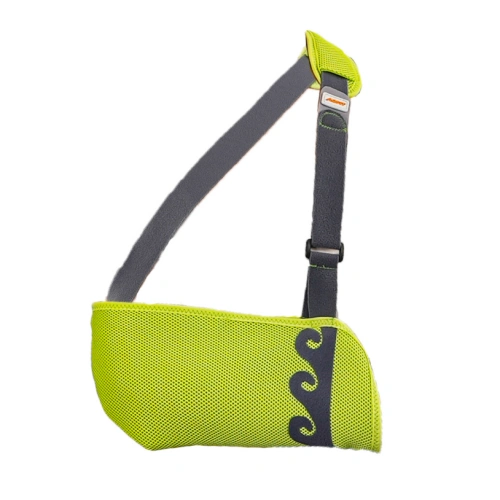
A good shoulder immobilizer makes or breaks your night. Too loose, and your arm slides out of position while you sleep. Too tight, and you’re cutting off circulation to fingers that need steady blood flow to heal. The goal is simple: snug enough to limit movement, never tight enough to restrict circulation.
Here’s what a proper shoulder immobilizer looks like. Your forearm and hand should rest slightly above elbow height—never dangling low. Your elbow should sit at roughly 90 degrees, tucked securely into the corner of the sling. You should be able to slide one or two fingers between the strap and your skin. Anything tighter than that, and you’re asking for trouble.
Warning Signs to Check Immediately
Before you drift off, and if you wake up during the night, run through this quick check:
-
Swelling in your hand or fingers
-
Numbness, tingling, or pins-and-needles
-
Cold fingers, or a noticeable temperature difference between hands
-
Color changes—pale, blue, or purple tinting
-
Increased pain or skin irritation from the strap
A fast circulation test: press on a fingernail, then release. Color should return within about two seconds. Longer than that suggests your shoulder immobilizer is cutting off blood flow.
Quick Self-Check Method
Wiggle your fingers—open, close, stretch. Movement should feel smooth, not numb. Compare both hands for temperature and color side by side. If your hand hangs lower than your elbow, readjust. That’s a common cause of overnight swelling.
If anything feels off and adjusting the strap doesn’t fix it, call your surgeon.
When to Contact Your Doctor About Immobilizer Discomfort?
Call your surgeon or head to urgent care if you notice numbness, tingling, or a burning sensation that won’t ease up, or spreads further down your arm. Same goes for pain that feels disproportionate to your injury, especially if elevation and medication aren’t touching it. Color changes—fingers turning pale, gray, blue, or dusky—paired with coldness or worsening swelling are not “wait and see” situations.
A useful benchmark: elevate your arm, wiggle your fingers, and give it 30 minutes. No improvement? Call. If you can’t move your fingers at all, treat it as urgent, not tomorrow-morning urgent.
Watch the shoulder immobilizer itself, too. A strap that’s soaked through, torn, foul-smelling, or oozing needs attention, as does red, blistered skin along its edges.
Choosing the Right Shoulder Immobilizer Brace for Comfortable Sleep
Not all shoulder immobilizer braces are built for six weeks of nighttime wear. Some feel fine for an afternoon and turn miserable by 3 a.m. If you’re shopping for a replacement or upgrading from whatever the hospital handed you, a few design details make a real difference.
-
Look for breathable materials first. A mesh liner or moisture-wicking fabric keeps skin from getting damp and irritated overnight. A stiff, non-breathable sling can’t manage that after hours of body heat. Soft binding along the edges matters too, since anything rough will rub raw by week three.
-
Pressure distribution is the next big factor. Some designs use a shoulder ring or wide padded straps that spread weight across your torso instead of digging into your neck and collarbone. That’s the difference between waking up sore and waking up rested.
-
Adjustability shouldn’t be an afterthought. Quick-release buckles and telescopic straps let you loosen or tighten things without fully waking up or waking your partner. This matters most when you shift positions in your sleep, which everyone does whether they mean to or not.
-
Fit matters more than sizing labels suggest. A generic “one size fits all” sling works for plenty of people, but if your shoulders or chest fall outside average measurements, look for adjustable strap lengths or customizable abduction pillow angles instead. Low-profile, lightweight designs also help. Bulky braces tend to shift and dig in when you roll over, undoing whatever careful positioning you started with.
Conclusion
Sleeping with your shoulder immobilizer is essential for the recovery timeline your surgeon mapped out for you. Keep the shoulder immobilizer on as instructed, prop yourself up with pillows in a reclined or semi-upright position, and check that fit every single night before you drift off.
If your current shoulder immobilizer brace is leaving you sore, slipping off, or keeping you wide awake, it might be time for an upgrade. A well-designed shoulder sling for sleeping can make all the difference between dreading bedtime and actually looking forward to rest. Contact us for comfortable sleep.