
You feel that ache in your wrist after typing all day, lifting, or gripping a barbell. It’s your body waving a red flag. If you’ve started shopping for relief, you’ve noticed one word popping up everywhere: neoprene. But what makes this material the go-to for wrist support, and is it the right choice for your situation?
Not all wrist braces work the same. Knowing why neoprene is so popular could save you from buying the wrong product. We’re breaking down what neoprene is, how it compares to other materials, and why it’s used in everything from carpal tunnel splints to gym wraps. After reading, you’ll know how to pick and use a neoprene wrist brace that actually helps.
What Is Neoprene? Understanding The Material Behind Your Wrist Brace
Neoprene is a synthetic rubber, technically polychloroprene, engineered for wrist support. Most wrist braces on the market use it at 3mm (⅛ inch) thickness, though you’ll find variations at 3.2mm and even 6mm for heavier-duty support needs.
Why Neoprene Works For Wrist Support
Four properties make this material stand out:
Elastic — it stretches to fit snugly around your wrist without losing shape
Compressive — delivers steady wrist support compression without fully immobilizing your joint
Heat-retaining — traps warmth, which helps with stiffness and circulation
Durable — resists tearing, abrasion, and heat-aging far better than basic fabric alternatives
That combination is why neoprene shows up in everything from medical-grade splints to gym wraps.
Standard vs. Perforated Neoprene
Not all neoprene wrist braces feel the same on your skin.
Standard neoprene prioritizes warmth and firm support — great if you’re recovering from an injury or need serious wrist stabilizer strength.
Perforated neoprene, on the other hand, is built with tiny holes that let sweat and heat escape. If you’re after a breathable wrist brace for all-day wear at a desk or during workouts, perforated is usually the smarter pick.
Before you buy, check the latex content. Many braces now use 100% latex-free neoprene (CR), which matters if you have sensitive skin or a known allergy. Cheaper neoprene blends sometimes still contain latex, so read the label closely.
Core Functions of A Neoprene Wrist Brace: Compression, Heat Retention & Stabilization
Three mechanisms do all the heavy lifting inside a neoprene wrist brace. Strip away the marketing language, and what you’re buying is compression, warmth, and structural support — each solving a different piece of the pain puzzle.
Compression: Squeezing Out The Swelling
Wrist support compression works through simple physics. External pressure limits fluid buildup around irritated tissue, which keeps swelling in check and takes some of the pain down a notch. If you’re dealing with tendonitis, overuse strain, or that dull ache after a heavy lifting session, this is the mechanism doing most of the work. Product descriptions for heat-and-compression braces consistently link this squeeze effect to reduced inflammation, especially during repetitive strain or overload — think typing marathons or high-rep training blocks.
Heat Retention: Warmth That Supports Healing
Closed-cell neoprene traps body heat against your skin. That warmth isn’t just comfort — it’s commonly linked to increased blood flow and better circulation around the joint. More circulation means better oxygen delivery to soft tissue, which supports the healing process after injury. This is why a wrist brace for tendonitis often leans on neoprene specifically, rather than a cooler fabric alternative.
Stabilization: Keeping Your Wrist In Neutral
Some wrist braces go beyond compression and add a rigid insert — a palmar stay or pre-shaped metal splint running along the palm side. This piece physically blocks excessive flexion, holding your wrist near 0–15° of extension, with some designs targeting 0–5° as “true neutral.” That neutral position matters because it reduces pressure on the median nerve and limits tendon drag — both key for a carpal tunnel wrist splint. Many construction specs blend neoprene with materials like Coolmax polyester (roughly 80/20 ratios) to balance this structural support with breathability.
How Neoprene Wrist Braces Help With Carpal Tunnel Syndrome?
Carpal tunnel syndrome comes down to pressure on the median nerve inside the carpal tunnel. Bend your wrist forward or backward for too long, and that pressure spikes. That’s why you wake up at 2 AM with your hand tingling — you’ve been sleeping with a flexed wrist for hours.
A neoprene wrist brace fights this by locking your wrist into a neutral, straight position. Neutral is where median nerve pressure sits at its lowest, and every degree of flexion or extension pushes that pressure back up.
Why Night Wear Neoprene Wrist Support Matters Most
Most guidance points to nighttime as the priority window for a carpal tunnel wrist splint. You can’t control your wrist position while asleep — your brace does that job for you.
Typical usage looks like this:
Wear it every night, without skipping
Try it for 2–4 weeks as a starting point
Some cases need up to 8 weeks before real improvement shows up
Fit should feel snug, not tight — no numbness, no swelling, no cutting off circulation
Day vs. Night: When to Wear Neoprene Wrist Support
Mild symptoms usually only need nighttime protection. If pain shows up during light daytime activity too, adding daytime wear on top of nighttime use is the common next step. Daytime versions still need to allow enough hand function to work, type, or grip without feeling completely locked down.
What To Look For In A Neoprene CTS Brace?
Skip pure compression sleeves. For carpal tunnel specifically, prioritize:
A palmar stay or metal splint that holds a neutral position
Neoprene for comfort and warmth during long overnight wear
A fit that stays fixed all night without pinching
How Neoprene Wrist Braces Help With Sprains, Tendonitis & Post-Injury Recovery?
A rolled ankle gets all the sympathy, but wrist sprains sideline just as many people — usually after a fall, an awkward landing, or a bad twist during sport. Neoprene wrist braces step in here for one core reason: they limit excessive movement while cutting down on pain and swelling, without locking the joint solid.
Acute Phase vs Recovery Phase: Two Different Jobs
Right after injury, when swelling peaks, the priority is compression paired with light immobilization. Adjustable hook-and-loop straps let you dial pressure up or down as swelling shifts hour to hour. Pairing that compression with cold therapy is a common way to reduce pain and inflammation faster.
Once swelling drops and movement feels closer to normal, the brace’s job flips. Instead of restricting, it starts supporting — using neoprene’s warmth and mild compression to boost blood flow while you gradually cut back on all-day wear.
Mild-To-Moderate Sprains And Tendonitis
Neoprene wrist wraps are built for mild to moderate wrist sprains. The wraparound design protects against re-injury while staying adjustable. Some braces go further, specifically naming minor strains and post-injury or cast-removal use.
For a wrist brace for tendonitis, three things do the work: compression, support, and warmth. Tendons respond well to heat, which is why chronic tendon injuries pair so naturally with neoprene over cooler fabrics. A typical pacing plan: wear it most of the day during acute flare-ups, then shift to activity-only use as symptoms ease, tapering off over roughly 6–8 weeks.
Arthritis And Post-Cast Recovery
A wrist brace for arthritis leans on the same logic — retained heat soothes painful joints, easing stiffness in mild-to-moderate osteoarthritis or rheumatoid arthritis, with some designs trimmable around swollen knuckles.
After a cast comes off, wrists stay weak and swollen. Adjustable neoprene braces with removable stays or aluminum supports bridge that gap, offering stability without the stiffness of a cast.
Best Applications For Different Lifestyles: Sports, Office & Daily Use
Not every wrist brace belongs in every situation. What works for a max-effort deadlift will feel like overkill at your desk, and what’s comfortable for eight hours of typing won’t hold up under a barbell.
Weightlifting and Heavy Training
Heavy lifts require serious wrist stabilizer strength. Look for 5mm neoprene sleeves with adjustable straps. The Rehband RX Wrist Support Power Max is built for dynamic movements and heavy loads. That thickness gives you compression, warmth, and joint stability all at once. Most adjustable options fit 5–10-inch wrist circumferences, with some one-size designs covering 5.5 to 8.5 inches.

Basketball and High-Motion Sports
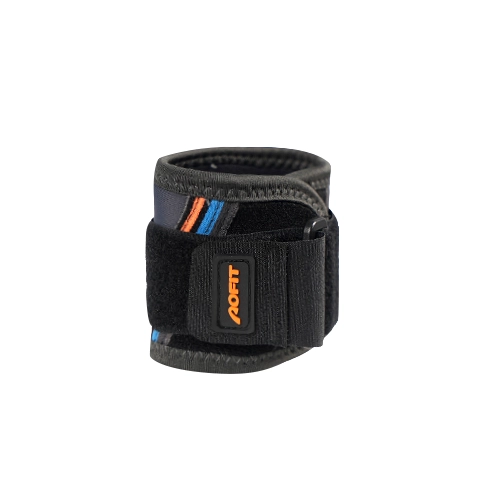
Basketball wrist sleeve needs a different function. Bulky, rigid braces kill your ball control and wrist flexibility. Go with light-to-moderate support that’s snug and quick to adjust. Perforated neoprene works well here because sweat and heat buildup are constant issues during high-intensity play.
Office And All-Day Wear
Sitting at a desk for six to eight hours calls for breathable wrist brace construction. Perforated neoprene lets heat and moisture escape without sacrificing the compression you need for typing strain, mouse fatigue, or general desk-job discomfort. This elastic wrist support is light, low-profile, and comfortable enough to forget you’re wearing it.
How To Choose The Right Neoprene Wrist Brace?
Adjustability: Straps, Loops, And Fine-Tuning
Skip single-strap designs. Multi-strap hook-and-loop closures let you apply zoned pressure. You can tighten where you need stability and loosen where you need movement. Three adjustable straps beat one every time for customizable compression. A thumb loop matters too, because it anchors the brace in place during one-handed application and stops the whole thing from twisting as you wear it.
Sizing: Measure Before You Buy
Measure your wrist at its narrowest point, just above the wrist bone. Most universal braces cover ranges like 14–21.5 cm (5.5–8.5 in) or 16–23 cm (6.3–9.1 in). Fit should feel snug, not restrictive. It needs to be firm enough for support, but never tight enough to cause numbness, tingling, or discoloration. If your fingers turn white or throb after putting it on, size up or loosen the straps.
Left, Right, Or Universal?
Many neoprene wrist braces are bilateral, which means you can flip the support panel to switch hands. Others come as strict Left Hand or Right Hand versions. Check this before ordering. The splint and thumb hole won’t line up otherwise. Unisex labeling usually just means broader sizing, not different function. Go by wrist circumference, not gender labels.
Match Support Level To Your Symptoms
Soft neoprene wraps work best for mild strain, daily fatigue, or general elastic wrist support without limiting range of motion. Splint-reinforced braces are better for a carpal tunnel wrist splint, tendonitis flare-ups, or post-cast stabilization. They use removable metal or aluminum stays to give you more structure.
Quick checklist: multi-strap closure, thumb loop, clear sizing chart, splint vs. soft-compression label, and correct hand orientation.
Proper Usage Tips & Safety Precautions For Neoprene Wrist Braces
The One-Finger Fit Test
After fastening the strap, slide one finger between it and your skin. That’s the sweet spot.
If two or three fingers slide in easily, it’s too loose.
If you can’t get one finger in at all, it’s too tight.
Check finger color and temperature within minutes of putting it on. Numbness, tingling, throbbing, or fingers turning white or purple mean loosen it immediately. Swelling shifts throughout the day, so recheck fit roughly every hour early on — morning snugness often turns into afternoon tightness.
Keep Your Wrist Neutral
Think handshake position, not bent up or down. If your wrist stabilizer has a rigid stay, it belongs on the palm side, aligning your wrist with your forearm.
How Long To Wear Neoprene Wrist Support
Activity-triggered pain (typing, lifting, gripping): wear only during the trigger, not all day
Daytime rehab use: start at 15 minutes twice daily, build to 30 minutes, then up to an hour
Nighttime for carpal tunnel wrist splint use: 6–8 hours, starting with 2–4 hours for the first few nights
Avoid 24/7 wear during recovery — it can weaken surrounding wrist muscles over time
When to Stop and Adjust Neoprene Wrist Brace
Increasing pain, coldness, numbness, or skin discoloration means to take it off and refit it looser. If a wrist brace for arthritis or tendonitis feels more painful the longer you wear it, that’s a sign of improper positioning, not something to push through. Sensitive skin? Perforated neoprene reduces trapped heat and sweat. Never wear it while driving, operating machinery, or swimming unless labeled waterproof.
Conclusion
Your wrist deserves more than a generic bandage—it needs support that works with how your body moves. Neoprene does that: it stretches, breathes, insulates, and compresses at once, so you get wrist support and compression that adapts to whatever you’re doing, whether that’s grinding through a workout, typing through back-to-back meetings, or letting an old injury heal.
The takeaway is simple. Neoprene is chemistry doing exactly what your joints need. Once you know what to look for (fit, thickness, closure type), choosing the right neoprene wrist brace stops feeling like guesswork.
Try one on, feel the difference, and give your wrists the support they’ve been asking for.