
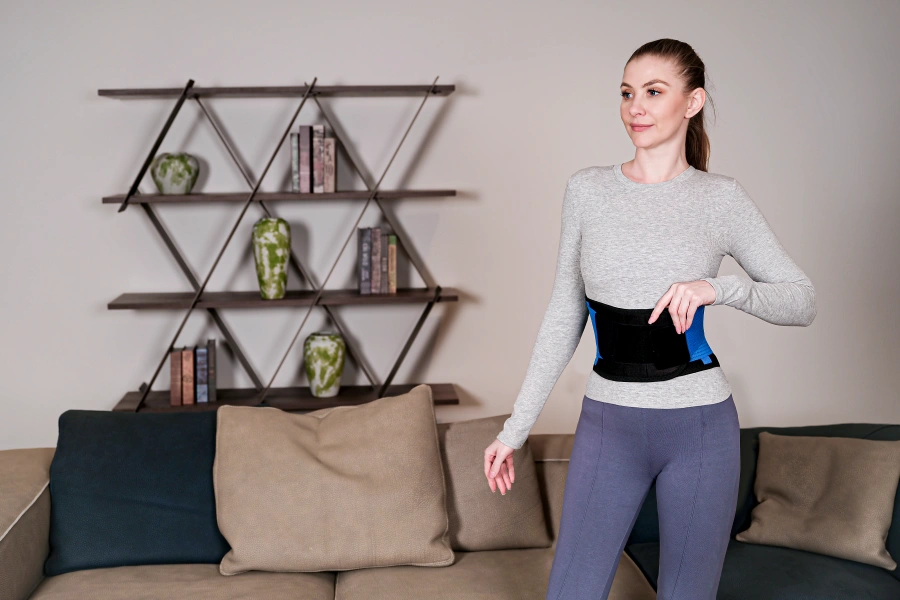
That nagging ache in your lower back doesn’t care that you have a life to live—it just wants your attention in the middle of a workout, a workday, or a good night’s sleep. If you need a neoprene back brace that does what it says, you’ve come to the right place. Lots of options claim to fix everything, but compression and support are not all the same.
We tested and compared breathability, adjustability, and real support for conditions from herniated discs to weekend warrior injuries, so you don’t have to. Whether you need serious lumbar support for heavy lifting or a lightweight brace to wear all day, we’ve picked six standouts worth your money in 2026, plus what to look for to find your perfect match.
AOFIT Neoprene Back Brace — for All Major Sports
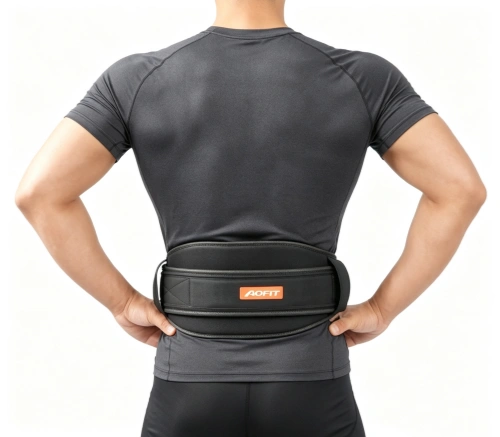
Fitness folks, this one’s built for you. AOFIT markets its Y218 neoprene back support squarely at bodybuilders, lifters, and anyone who treats the gym like a second home. It’s not trying to be everything to everyone. It’s trying to be your workout companion, and it mostly delivers.
The neoprene back brace comes in three colors (pink, purple, black) and a size range from XS to XXL, so fit isn’t the problem here. AOFIT’s sizing advice is simple: measure around your belly button, and if you land at the top of a range, size up. Good rule of thumb for any adjustable back brace, honestly.
What makes it sport-ready:
– Adjustable, flexible straps that move with you, not against you
– Breathable panels
– Flexible stabilization bars for real compression back support
– Two adjustable closures for a locked-in fit
– High-quality neoprene construction throughout
For context, most sports back braces use 3–5mm neoprene for lighter, breathable support, or 7–10mm for heavier, warmer compression. AOFIT doesn’t publish its exact thickness, but the breathable panel design suggests it’s aiming for that middle ground—support without turning your torso into a sauna.
Pricing runs $27.99 for the posture corrector variant, up to $57.77 for the full back brace on their retail page. That’s a wider range than most competitors, so check which SKU you’re actually buying before checkout.
One more thing: AOFIT holds CE, ISO 9001, and ISO 13485 certifications. It signals we’re serious about quality control, not just slapping a logo on generic neoprene.
Best for: Lifters and fitness enthusiasts who want a lower back pain support belt that stays put through squats, deadlifts, and everything in between.
Mueller Lumbar Support Back Brace — The Highest Overall-Rated Neoprene Back Brace

Thirty-one thousand reviews don’t lie. Mueller’s Adjustable Lumbar Back Brace with Removable Pad has that many on Amazon while holding steady at 4.4 out of 5 stars — a sign the product has been winning over back-pain sufferers for years.
Walmart tells the same story: 4.4/5 from 757 ratings and 470 written reviews. One reviewer titled their post “Excellent lumbar and abdominal support,” which sums up the general sentiment pretty well. This is a long-selling orthopedic back support with the numbers to prove it.
Why it earns “best overall”:
A removable lumbar pad that cushions and compresses the lower back for concentrated relief right where you need it
Adjustable compression that works for daily wear, not just gym sessions
Sizing options including One Size Fits Most (28″–50″ waist) and a Small variant for smaller frames
Pricing usually lands between $28.99 and $35.18, though some sellers list it as high as $41.99 depending on SKU and packaging, so compare listings before you buy.
Who it’s built for:
– Desk workers dealing with lower back pain support needs after hours of sitting
– Mild-to-moderate chronic back pain sufferers who want daily compression, not rigid medical bracing
– Standers and lifters — warehouse workers, retail staff, anyone on their feet who needs lifting support baked into their routine
FEATOL Back Brace Support Belt — 360-Degree All-Around Compression Neoprene Back Brace
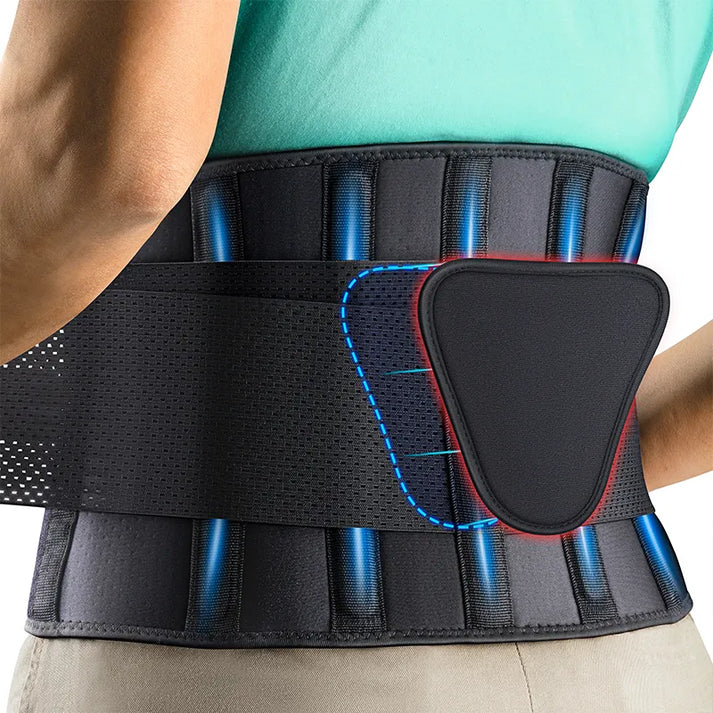
Four support strips, one belt, 360 degrees of coverage—that’s the pitch behind FEATOL’s Back Brace Support Belt, and it holds up.
The design uses 4 strong support stays placed around the back—two on each side plus reinforcement through the rear panel. That’s a standard industry layout: side stays stop the belt from rolling or shifting, and the rear structure resists bending under load. FEATOL calls this “360 stronger support,” and the description matches how it performs. This is a compression back support built to keep its shape through bending, lifting, or a long shift on your feet.
Sizing is where this brace gets interesting. Instead of separate men’s and women’s cuts, FEATOL runs one unisex design across six sizes, measured at waist/navel level.
That’s one of the widest ranges we found while testing adjustable back braces for this list. If you’ve never found a back brace for men or a back brace for women that fits your frame instead of a “one-size-fits-most” fantasy, this is worth a look.
The removable lumbar pad adds extra cushioning right at the curve of your lower back—handy for heavy lifting, warehouse shifts, or long stretches on your feet. Take it out for lighter, all-day wear. Leave it in when you need firm push-back against strain.
FEATOL’s product listings also flag it for herniated disc support and sciatica-related discomfort. This is conservative daily support, not a medical treatment, so pair it with your doctor’s guidance rather than using it in place of one.
Iron Bull Strength Belt — Weightlifting Neoprene Back Brace Belt
The Iron Bull Strength 6-inch auto-lock belt is built to make you stronger under the bar. It skips daily-wear pretense and goes straight for squats, deadlifts, and heavy Cross Training sessions.
The specs that matter:
– Nylon + neoprene construction in black
– 6-inch anatomical contoured width, front-to-back
– 4-inch Velcro strap paired with an auto-lock roller buckle
Cinch it once, and a mechanical lock holds the tension. No slipping mid-set, no re-tightening between reps. Standard Velcro belts are faster to put on but rely on adhesive grip under heavy load; the auto-lock version wins on stability when the weight gets serious. Velcro wins on comfort and quick adjustments.
How the 6-inch width performs:
The wider profile covers more of your abdominal area, boosting that “braced” feeling during squats. Reviewers consistently note stronger trunk stability at heavy loads. During deadlifts, especially for lifters with shorter torsos, the belt can dig into the hip crease when bending to grab the bar. Shifting it slightly higher usually fixes that.
This is a lower back pain support tool for training, not injury management. Don’t wear it for hours at your desk; only during working sets, so your core muscles don’t start relying on it instead of firing on their own.
Price and fine print: Expect around $40 retail, with comparable 6-inch auto-lock belts running closer to $34.95 elsewhere. One catch: at 6 inches wide, it exceeds IPF competition limits (4 inches max), so it’s training gear only, not comp-legal.
Best for: Lifters chasing max effort in the squat rack.
WellaBack Back Brace — The Bold New Back Pain Relief Solution of 2026
Consumer Health Digest named WellaBack its “Best Back Brace for Back Pain” in the 2026 rankings, putting it in the same conversation as BraceAbility, SEROLA, Mueller, and DonJoy. That’s notable company. WellaBack isn’t trying to out-muscle any of them, though. It’s playing a different game.
What sets it apart:
Breathable mesh panels that don’t trap heat during a full workday. Dual-strap adjustability for a fit that actually stays put. And a low-profile construction that’s thin enough to disappear under a work shirt.
This is a back brace for men and women who need something invisible, not intimidating. Officially, WellaBack targets lower-back pain, posture support, and chronic lower-back pain relief. Translation: it’s built for the desk-bound, the posture-slumped, and anyone whose lower back aches after sitting too long.
Where it doesn’t compete: WellaBack isn’t marketed for sciatica specifically, and it skips the heavier-duty structure some conditions need. Compare that to Mueller’s approach — a 9-inch main elastic band, 4-inch outer straps, and four flexible plastic stays. Mueller builds for compression and stability. WellaBack builds for comfort you forget you’re wearing.
Pricing: A single unit runs $59.99, but bulk pricing drops fast. Two units at $39.99 each, three at $34.99, four at $29.99. If you’re buying for a household with more than one back-pain sufferer, that math adds up quickly.
Best for: Anyone prioritizing all-day comfort over maximum compression — think office workers and postural pain sufferers, not heavy lifters chasing a herniated disc support solution.
How to Choose a Neoprene Lumbar Support Based on Your Needs?
Match the brace to your situation.
Light desk pain or commuting discomfort: Go with moderate compression, lightweight builds, and breathable inner linings. Dual adjustable straps that cover up to the hip bone (without feeling like a corset) work best here.
Heavy lifting or long shifts on your feet: You want side pulls, a wider rear panel, and taller rear coverage, typically 20–25cm. That extra coverage spreads pressure over a bigger surface, which matters when you’re bending and lifting repeatedly.
Strength training: Look for thicker padding and visible vertical stays. These stop the belt from folding or rolling and keep your spine from over-flexing under load. Trade-off: less comfort for more stability. Fine for training sessions, not ideal for all-day wear.
Poor posture or slouching after long sitting: Skip the heavy-duty stuff. Lightweight, breathable support you can wear for hours matters more than raw compression here.
Why neoprene? It compresses and retains heat. That combo reduces muscle wobble while warming tight tissue—useful for overuse injuries, minor strains, and general recovery. Most product listings say “helps warm muscles” or “promotes blood circulation.” That’s not marketing fluff; it’s the actual mechanism.
If you’re wearing it 6+ hours a day, prioritize breathable neoprene with terry-cloth lining or mesh perforation over thick heat-retention designs. Adjustable compression also prevents the sweaty, suffocating feeling that kills long-term compliance.
Sizing, done right:
– Measure your waist at navel level, standing straight, breathing normally—don’t suck in.
– Use a soft tape measure directly on skin, not over clothes.
– Measure twice to confirm.
– Between sizes? Size down for stronger compression, size up for all-day comfort.
– Never order by pant size—brace sizing runs on waist inches or cm, not denim numbers.
Conclusion
Whether you’re nursing a herniated disc, muscling through deadlifts, or just trying to survive an 8-hour desk shift, there’s a neoprene back brace on this list built for your exact situation.
So stop scrolling and comparing. Pick the option that fits your life, order it, and give your spine the backup it’s been asking for. Relief shouldn’t wait until 2027.