
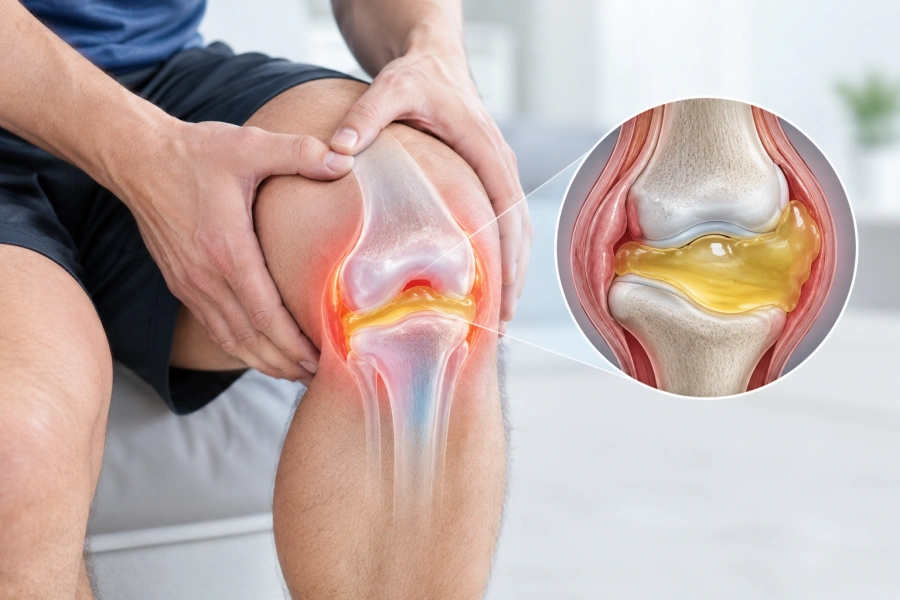
Your knee suddenly looks like it swallowed a golf ball, and every step feels tight, warm, and off. That’s the classic sign of a joint effusion knee: fluid buildup your body triggers as a protective, though uncomfortable, response to injury, overuse, or arthritis flare-ups. The good news is most cases respond well to the right home care and support, so there’s no need to panic or rush to the ER.
In this guide, I’ll walk you through what’s happening inside your joint, the proven first-72-hour treatment protocol that actually reduces swelling, and how a properly fitted knee brace for swelling can speed up recovery. By the end, you’ll know precisely which treatment path fits your situation, and when it’s time to call a doctor.
What Is a Joint Effusion Knee? Symptoms & Causes
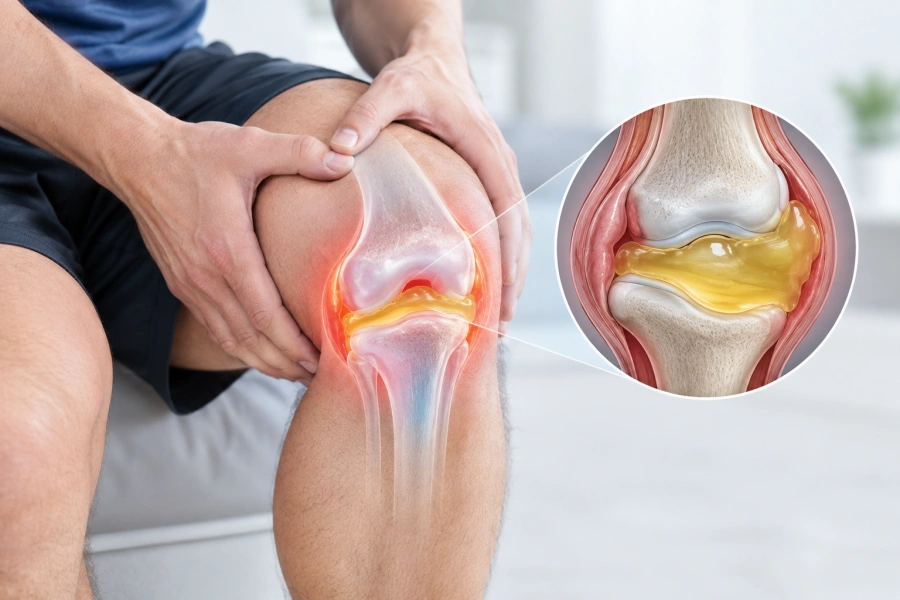
A joint effusion in the knee happens when your synovial membrane produces more fluid than your body can reabsorb. That excess synovial fluid pools inside the joint capsule, and your knee blows up like a balloon. It’s your body’s inflammatory response kicking into overdrive, usually triggered by injury, infection, overuse, or an arthritis flare.
Recognizing the Symptoms:
A knee joint effusion doesn’t look like the other side. You’ll notice:
Visible swelling around the kneecap, sometimes obvious even in your pants
Pain or tenderness that’s dull, achy, or sharp enough that weight-bearing feels impossible
Stiffness that feels like bending or straightening is locked up
Limited range of motion — you can’t fully extend or flex
Warmth and redness where inflammation is active
A heavy or stuck sensation in the joint
Grading the Severity
|
Severity |
What It Looks Like |
|---|---|
|
Mild |
Slight puffiness, minor ache, movement mostly normal |
|
Moderate |
Noticeable swelling, stiffness, difficulty with stairs or squatting |
|
Severe |
Can’t bear weight, hot/red skin, sharply restricted motion |
Fluid on the Knee Causes:
Trauma: ACL tears, meniscus damage, fractures — swelling hits fast, sometimes within hours
Overuse: Running, repetitive kneeling — swelling builds gradually
Arthritis: Knee osteoarthritis, swelling, rheumatoid arthritis, gout — recurring, often with morning stiffness
Infection: Bacterial or viral causes, marked by fever and intense pain
Systemic inflammatory conditions: Autoimmune or crystal-related disorders
Red, Hot, and Swollen Or Something Worse?
Redness and warmth alone usually point to standard inflammation. But add fever, severe redness, and sharp pain that’s rapidly worsening, and you’re likely looking at septic arthritis — a scenario requiring immediate medical attention.
Step-by-Step Home Treatment: How to Treat Knee Joint Effusion in the First 48-72 Hours
What you do in the first 72 hours determines how fast your knee heals. Mess this window up, and you’re looking at weeks of unnecessary swelling. Get it right, and you’ll cut recovery time significantly. The RICE method for knee swelling is still the gold standard, backed by decades of clinical use. Here’s how to execute it.
Rest — But Not Total Immobility
Stop the activity that triggered the swelling. For the first 24–72 hours, minimize walking, running, jumping, or deep squats. If weight-bearing hurts, use crutches, a walker, or lean on something sturdy. You don’t need to lie in bed for three days, but you do need to remove load from the joint so the inflammation can settle.
Ice — Timing Matters More Than You Think
Apply ice for 15–20 minutes every 2–4 hours. Most people need consistent icing for the first 2–3 days, especially during that 48–72 hour swelling peak. Never put ice directly on skin — wrap it in a thin towel first. If you feel tingling, numbness, or notice your skin turning white, stop immediately.
Compression — The “Snug, Not Strangling” Rule
Wrap the knee with an elastic bandage or knee compression sleeve. The goal is snug enough to support, loose enough to breathe. Quick self-check: can you slide one or two fingers under the wrap? Is your skin still warm? Are your toes normal-colored, not tingling or purple? If yes, you nailed it. If swelling worsens afterward, loosen it and reassess.
Elevation — Higher Than You Think
Prop your leg above heart level, not just on a footstool. Lying down with pillows under your calf and ankle works far better. Keep this up at night too — gravity drains excess synovial fluid buildup.
Medication: Acetaminophen vs NSAIDs
|
Drug |
Best For |
Typical OTC Dose |
Avoid If |
|---|---|---|---|
|
Acetaminophen |
Pain relief, sensitive stomachs |
325–650mg every 4–6 hrs (max 4,000mg/day) |
Liver disease, heavy alcohol use |
|
Ibuprofen/Naproxen (NSAIDs) |
Pain + inflammation |
Ibuprofen 200–400mg every 6–8 hrs (max 1,200mg/day) |
Ulcers, kidney issues, blood thinners |
Your 48-72 Hour Action Plan
Daytime: Ice every 2–4 hours, 15–20 minutes each
Resting: Elevate above heart level with pillow support
Moving around: Light compression via wrap or brace
Pain flares: Take one medication type — never stack acetaminophen and NSAIDs together
Once resting pain fades and swelling visibly drops, start gentle movement — short walks, slow knee bends, ankle pumps. If symptoms spike within hours of trying, you pushed too hard, too soon.
Knee Brace & Compression Support: The Missing Piece in Joint Effusion Knee Recovery
Most people skip this step, and it costs them weeks of recovery time. RICE handles the acute phase. Compression handles what comes next. A properly fitted knee brace for swelling or compression sleeve applies gentle, consistent pressure that supports circulation, limits ongoing swelling, and reduces stress on the joint every time you move.
Knee Sleeve or Knee Brace? It Depends on Instability
Knee Sleeve: Best for mild-to-moderate joint effusion knee cases with no instability. Great for daily wear, general activity, and home management.
Knee Brace with stabilizing support: Needed when there’s post-injury or post-surgical instability, especially lateral instability the knee can’t handle on its own.
Compression Levels That Matter
|
mmHg |
Best For |
|---|---|
|
8–15 |
Minor swelling, general circulation support |
|
15–20 |
Mild swelling, arthritis, everyday wear |
|
20–30 |
Significant swelling, shorter recovery sessions |
For a knee compression sleeve for effusion, 15–20 mmHg covers most mild cases. Bump to 20–30 mmHg for heavier swelling during active recovery.
Open vs. Closed Patella
Closed-patella sleeves give straightforward compression, ideal for general effusion. Open-patella sleeve designs have a cutout over the kneecap that reduces direct pressure, making them a better fit for patellar pain or post-surgical swelling.
Sizing Rule: Measure at the exact landmark your brand specifies, usually above or around the kneecap. Snug is right. Painful or circulation-restricting is wrong. When between sizes, go smaller for stretch sleeves, larger for rigid braces.
Material Check: Prioritize breathable, medical-grade elastic fabric. It holds compression without numbing your skin during all-day wear.
Medical Treatment for Joint Effusion Knee Options: When Home Care Isn’t Enough
Three days of RICE and compression, and your knee is still the size of a grapefruit? That’s your signal to see a doctor. Some cases of joint effusion in the knee need medical intervention beyond home care.
Knee Arthrocentesis: When Aspiration Makes Sense
Doctors turn to knee arthrocentesis when they suspect infection, crystal-induced arthritis (gout or pseudogout), bloody effusion from trauma, or when swelling is severe enough to limit motion and cause significant pain. The procedure serves double duty — it diagnoses the cause and relieves pressure at the same time.
If infection is even a possibility, the fluid gets pulled and sent to the lab before any steroids go anywhere near that joint. Injecting steroids into a potentially infected knee makes things worse, not better.
Knee aspiration recovery typically means 24–48 hours of relative rest, then avoiding running, heavy lifting, and high-impact activity for 1–2 weeks. Most people notice reduced pressure and better range of motion during this window. A short-term “post-injection flare” — temporary soreness — is normal and not a red flag.
Corticosteroid Injections for Persistent Swelling
For osteoarthritis flares with visible effusion or crystal arthritis (once infection’s ruled out), corticosteroid injections work well. Common doses run 6mg/mL betamethasone or 20–40mg triamcinolone, often mixed with a local anesthetic.
Relief usually kicks in within 1–2 weeks and lasts anywhere from 1 to 12 weeks. Interestingly, steroids tend to work better on knees with actual fluid present versus dry, swollen joints.
Risks stay low — infection rates sit around 1 in 10,000 injections — but doctors cap frequency at 3–4 injections per knee per year. Needing more than that usually means it’s time to rethink the treatment plan.
Red Flags That Mean Emergency Care
Fever, inability to bear weight, intense pain with hot, red skin — these point toward septic arthritis. If you’re also immunosuppressed, have a prosthetic joint, or symptoms are rapidly worsening, get to urgent care or an orthopedic specialist immediately. Suspected infection gets aspirated first, cultured, then treated with IV antibiotics right away — no waiting.
When to Seek Emergency Medical Care?
A swollen knee doesn’t always wait for a doctor’s appointment. Some situations need care within hours. Knowing which is which could save your joint or your life.
Go to the ER immediately if you notice these signs:
Severe pain that makes touching or moving the knee unbearable
Inability to bear weight or walk at all, even a few steps
Visible deformity or a joint that looks “out of place”
Rapid swelling right after a fall, twist, collision, or sports injury
Complete loss of motion where the knee can’t bend, straighten, or function
Suspected Infection Is an Emergency
A single joint that becomes hot, red, swollen, and painful, combined with fever, chills, or feeling run down, suggests septic arthritis. Don’t wait overnight on this.
Your risk climbs higher if you’ve had recent surgery, joint injections, joint replacement, an open wound or bite, diabetes, or a weakened immune system. Any new hot, swollen joint under these conditions needs urgent evaluation.
When “Wait and See” Runs Out
If swelling persists beyond 3 days to a week without improvement, or keeps recurring monthly, stop waiting and schedule care promptly. Significant functional loss (can’t walk, can’t bend) always overrides the observation window, regardless of timeline.
How Long Does Knee Effusion Take to Heal?
How long your knee stays swollen depends entirely on what’s causing it. Here’s the breakdown by cause.
Mild sprains or overuse: A few days to 1–2 weeks. Most people see swelling drop within 48–72 hours.
Ligament or meniscus injuries: Several weeks to 6–8 weeks. If you need surgery, recovery runs 8 weeks to 12 months, depending on severity.
Fractures or major structural damage: Weeks to months of lingering effusion.
Knee osteoarthritis swelling: Often months; sometimes it becomes a long-term issue you manage rather than fix once.
Infection: Usually weeks, with antibiotics lasting 2–6 weeks depending on the pathogen.
One warning sign: if your knee ballooned within 4 hours of an injury, that’s not a typical mild sprain. It often means ligament, meniscus, or bone damage.
Factors that speed or slow recovery:
Underlying cause (overuse heals fastest; arthritis and infection take longer)
How quickly you start treatment (starting within 24–48 hours improves outcomes)
Age and overall health
Consistent RICE method and brace use
Body weight and joint load
Four Stages to Track Your Progress
Swelling drops — usually within 2–3 days for mild cases
Range of motion improves — bending and straightening feel less locked
Weight-bearing returns — walking and stairs stop aggravating things
Stability holds — no re-swelling within 24 hours after activity
Treatment Method Comparison: Which Approach Fits Your Situation?
Not every swollen knee needs the same treatment. Here’s what actually works.
|
Method |
Best For |
Recovery Time |
Cost Range |
Needs a Professional? |
|---|---|---|---|---|
|
Home care (RICE + ROM exercises) |
Mild, recent, non-infectious swelling |
Check for improvement in 24–48 hrs; full resolution often within 2 weeks |
Low — ice packs, wraps, braces |
No, unless symptoms worsen |
|
Knee arthrocentesis procedure |
Large or persistent effusions needing fast decompression |
1–7 days for symptom relief |
$115 (small joints), $175 (large joints), $125+ with ultrasound guidance; Medicare patients typically pay $12–$77 out-of-pocket |
Yes, physician-performed |
|
Physical therapy |
Restoring function, preventing recurrence |
Weeks, based on frequency and severity |
Roughly $80/session (self-pay) |
Yes, therapist-guided |
|
Surgery |
Structural damage or treatment-resistant cases |
Weeks to months |
Highly variable, generally the highest cost |
Yes, surgical evaluation required |
Quick decision logic:
Mild, non-infectious swelling → start with home care
Large or persistent fluid buildup → consider arthrocentesis or injection
Need strength and stability back → add physical therapy
Structural damage or repeated flare-ups → get surgical evaluation
Home care and physical therapy work together, not as replacements for each other. Surgery only enters the picture when imaging confirms mechanical damage that conservative care can’t fix.
FAQ: Common Questions About Joint Effusion Knee Treatment
Can knee effusion go away on its own?
Often, yes. Many mild cases tied to overuse or minor injury clear up with rest and basic home care alone — no injections, no scans, no drama.
Can I exercise with knee effusion?
Skip painful, high-impact moves early on. But gentle range-of-motion work and light rehab exercises help reduce stiffness and swelling once acute pain settles.
Does a knee brace help with fluid on the knee?
Yes. A knee brace stabilizes the joint and can offload pressure during movement, which helps limit ongoing swelling. That’s why partial- or non-weight-bearing braces are commonly recommended.
What if home care doesn’t work?
If swelling won’t budge after a few days to two weeks, it’s time for medical evaluation. Options include anti-inflammatory medication, corticosteroid injection, physical therapy, or fluid drainage via aspiration.
What’s the most common cause of chronic knee effusion?
For adults over 50, osteoarthritis tops the list. Rheumatoid arthritis, gout, infection, bursitis, and repeated meniscus or ACL strain follow close behind.
Conclusion
Catch the warning signs early. Use the RICE method during the first 48-72 hours. Give your knee the mechanical support it needs to heal properly instead of resting and risking re-injury. A knee brace for swelling manages pressure and supports active healing while you get back on your feet. Treat your knee with a real plan.
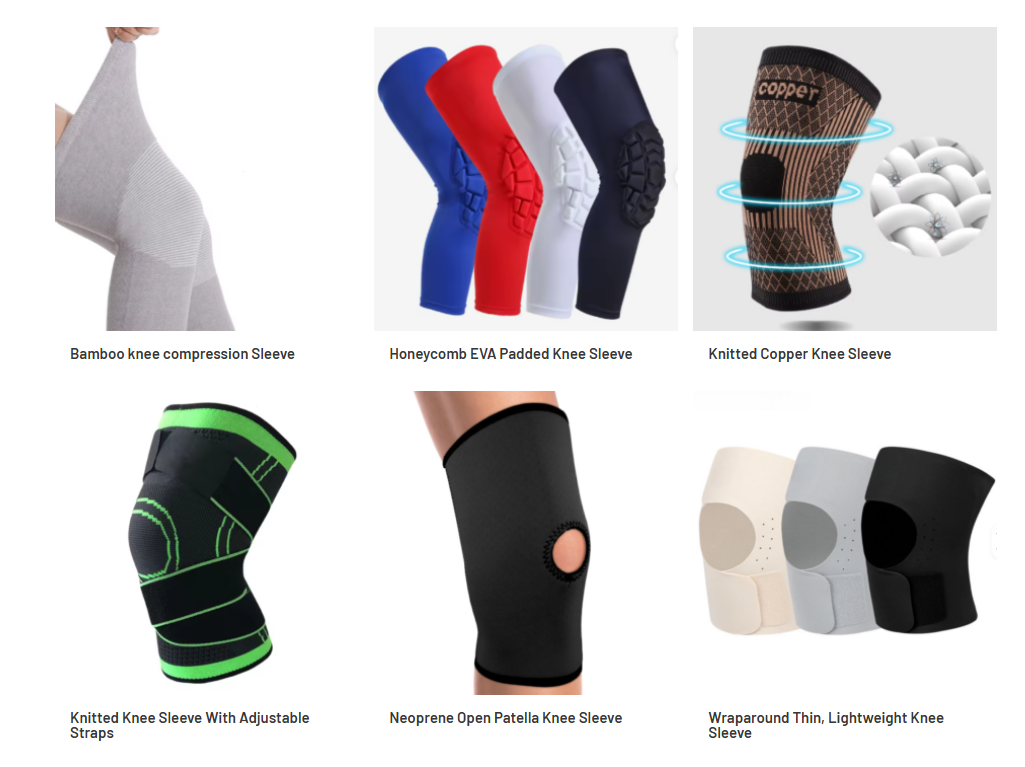
Ready to take the next step? Explore our compression sleeves and effusion-specific braces at AOFIT.