

You wouldn’t put a bandage on a broken bone. But that’s exactly what millions do when they grab any elbow sleeve off the shelf for their injury. Lateral epicondylitis, golfer’s elbow, tendinopathy — each demands a different kind of support. Yet most guides lump them together like they’re all the same ache.
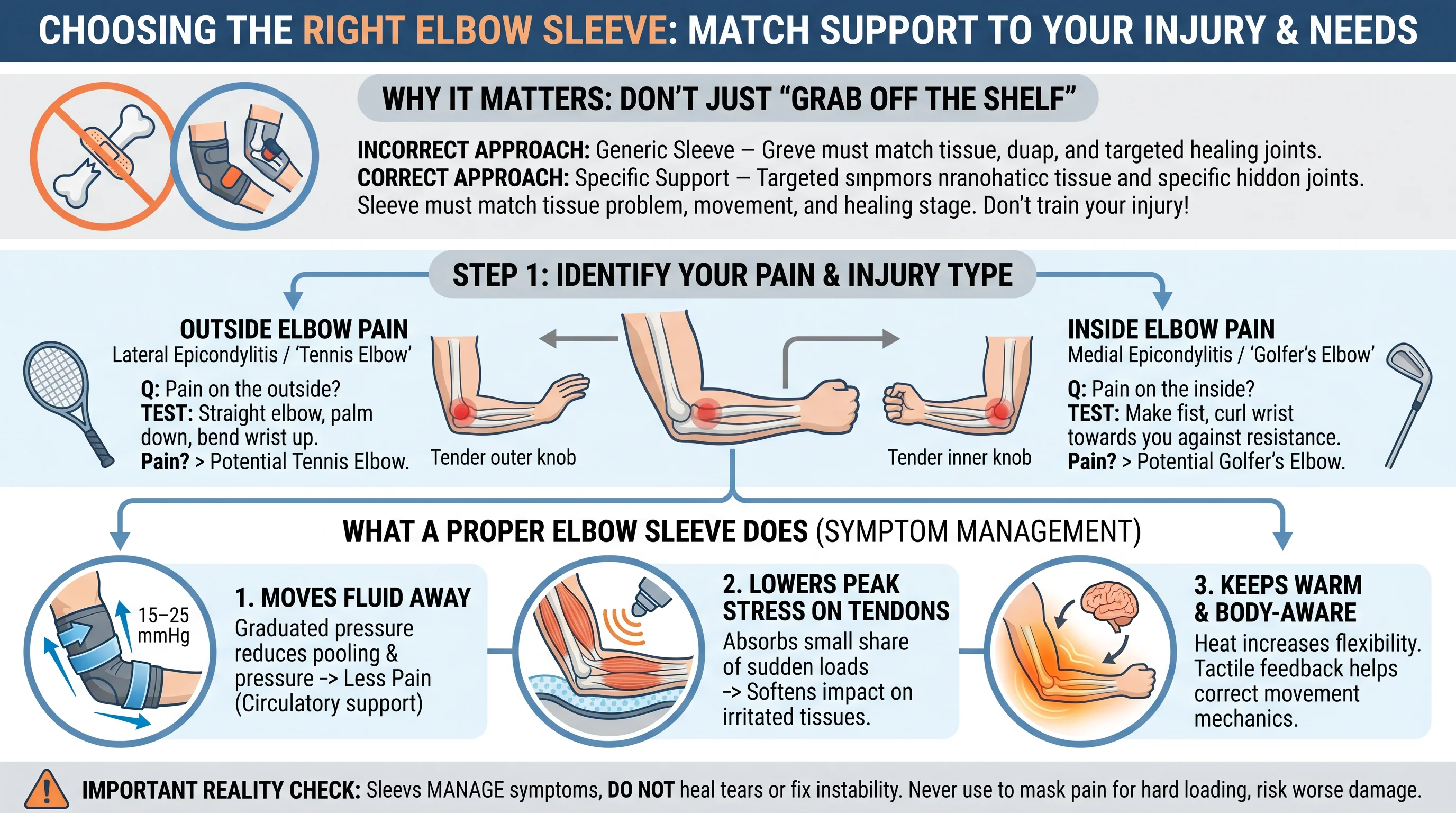
Here’s the truth: the right sleeve doesn’t just “feel tight.” It matches your specific tissue problem, your movement pattern, and your healing stage. Keep wearing the wrong one, and you’re training your injury rather than recovering from it. Let’s fix that.
What Does an Elbow Sleeve Do for an Injured Elbow?
Slide an elbow sleeve onto an injured arm, and three things happen at once.
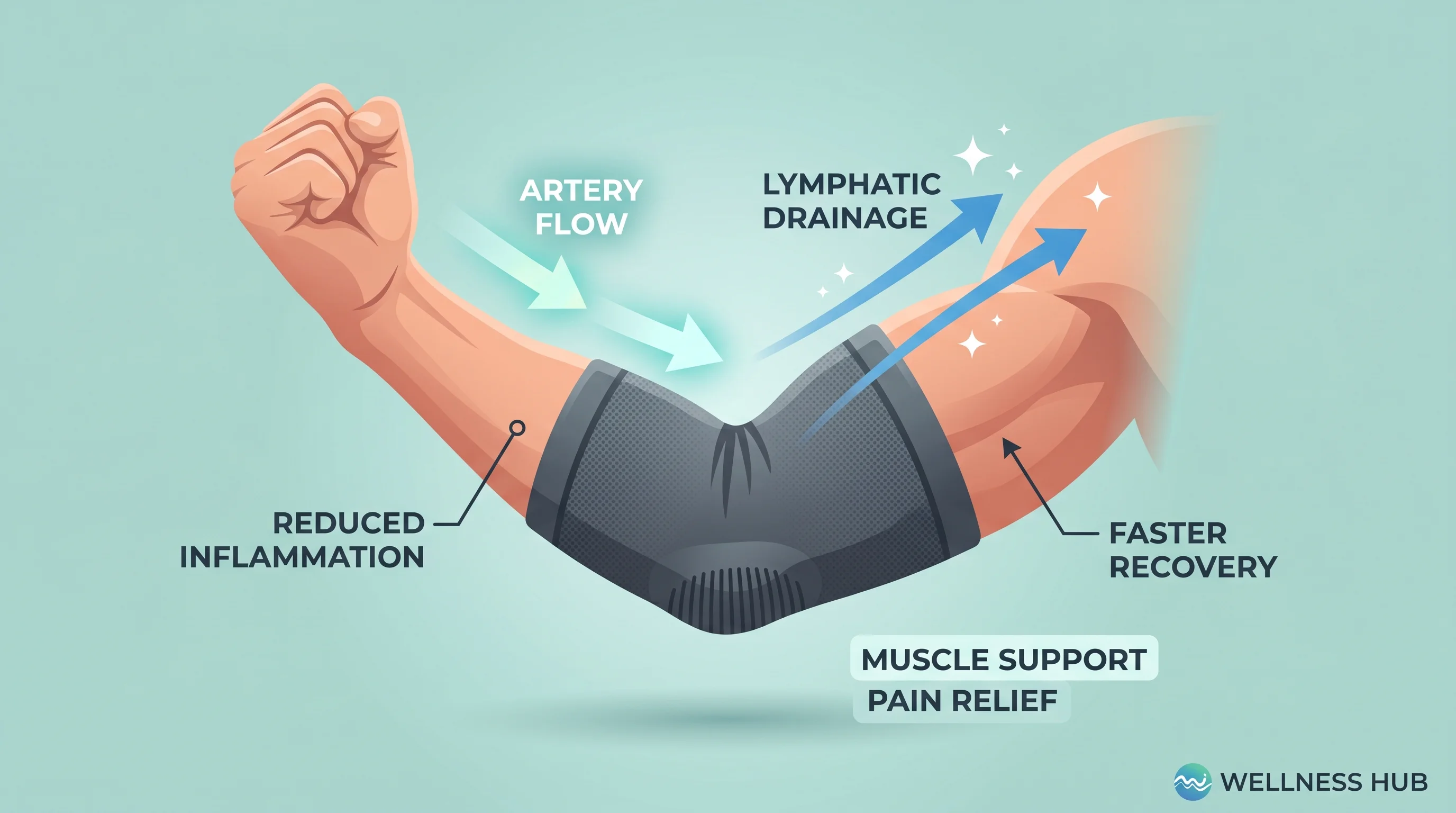
- It moves fluid. A well-fitted compression sleeve for elbow pain works in the 15–25 mmHg range. That gentle, graduated pressure pushes venous blood and lymphatic fluid away from swollen tissue. Fluid stops pooling around the joint. Less buildup means less pressure. Less pressure means less pain. It’s basic circulatory physiology working in your favor.
- It lowers peak stress on your tendons. A grip, a lift, a backhand swing — each one sends sudden, sharp forces through the muscles around your elbow. A compression sleeve takes a small share of that load. It softens the impact before it hits an already-irritated tendon. The difference isn’t huge, but it’s real.
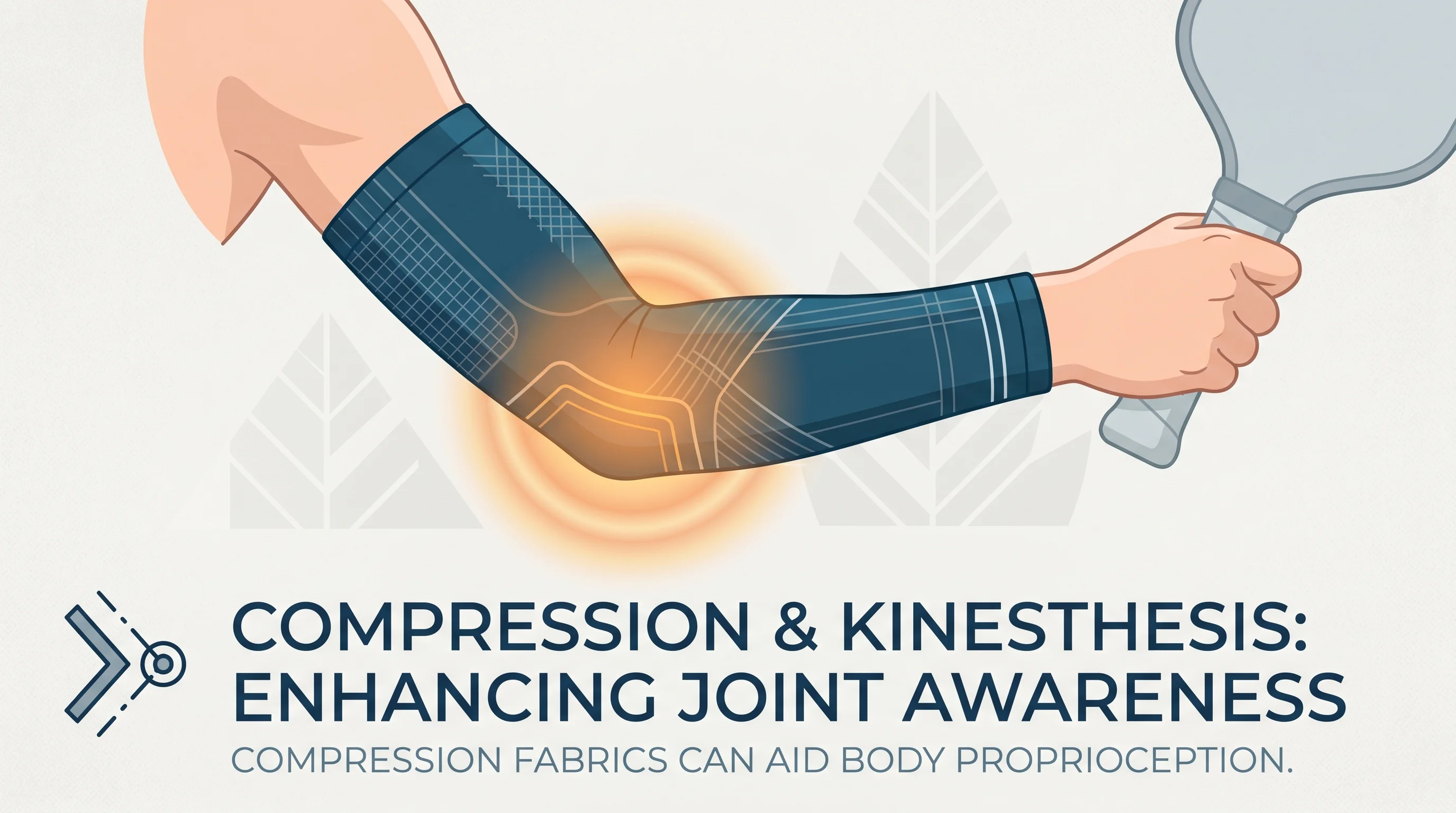
- It keeps things warm and body-aware. Heat makes tissue more flexible. Plus, you get constant tactile feedback — that steady sense of “something is holding this together.” That awareness nudges your movement patterns in a better direction. Good mechanics matter, especially when bad mechanics caused the problem to begin with.
Here’s the honest part, though: an elbow sleeve manages symptoms. It doesn’t heal. It won’t rebuild a torn tendon. It won’t fix serious joint instability. Use it to mask pain while loading your elbow hard, and you risk making the damage worse underneath.
Step 1 — Identify Your Injury Type Before Buying Anything
Start by locating your pain. Press your fingertip into the sore area. Answer this one question: Is the pain on the outside of your elbow, or the inside?
Outside Elbow Pain vs. Inside Elbow Pain
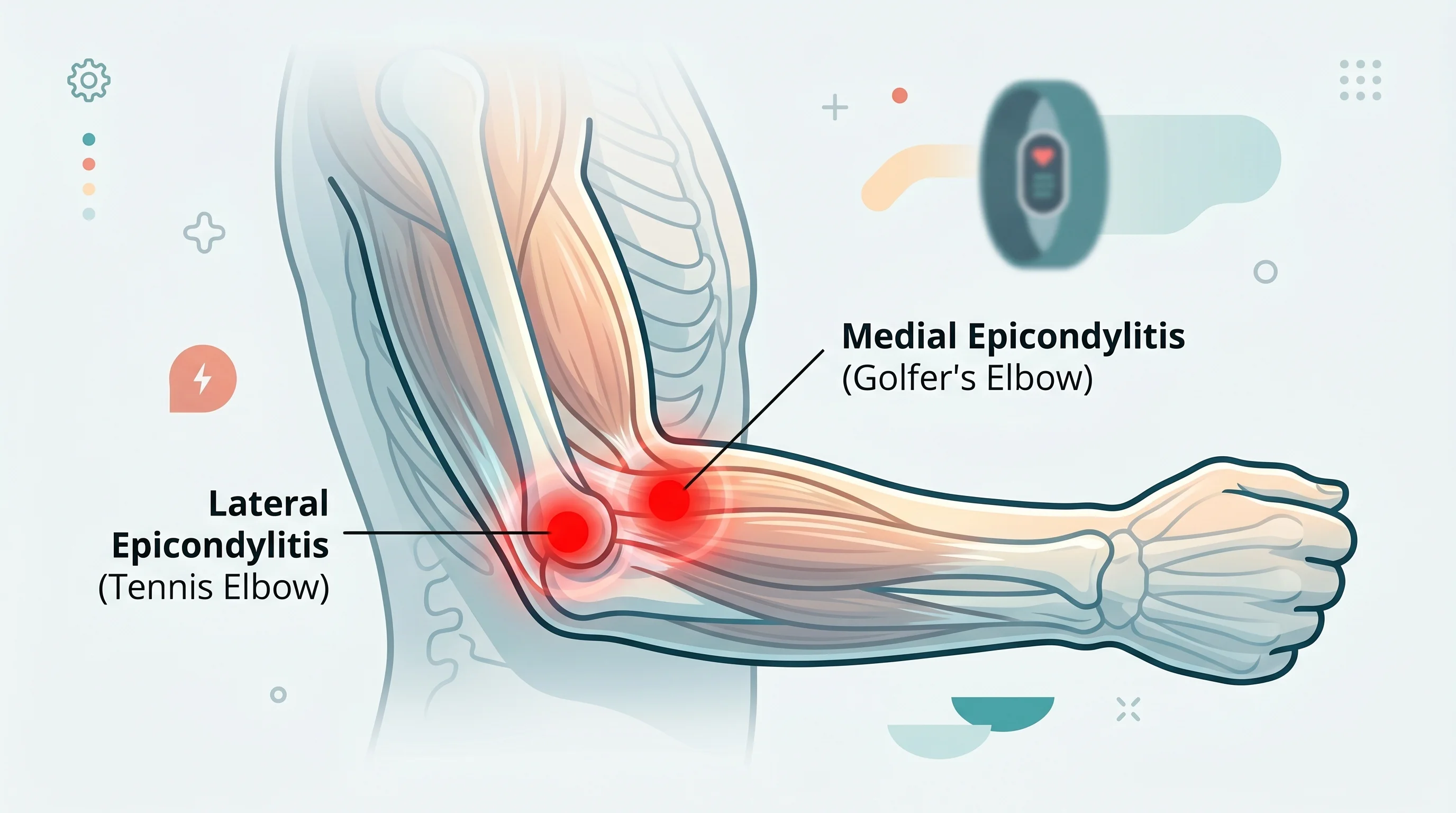
- Pain on the outer elbow (lateral side) points to tennis elbow — the medical term is lateral epicondylitis. The tender spot sits right on the bony knob on the outside of your elbow. Try this quick test to check: hold a half-full water bottle with your elbow straight and palm facing down. Now bend your wrist upward. Sharp pain in the outer elbow? That’s a strong signal.
- Pain on the inner elbow (medial side) points to golfer’s elbow — medial epicondylitis. Make a fist and curl your wrist toward you against resistance. Ache flares on the inside? You’re dealing with this one.
Is the Pain Deep in the Joint, or Along a Tendon?
- Deep, spread-out aching that’s hard to pinpoint with one finger leans toward arthritis or chronic joint degeneration. You need a sleeve that covers the full joint, 7–10 cm above and below the elbow crease, with moderate compression around 20–30 mmHg.
- Sharp, pinpoint pain you can press with one finger, barely noticeable at rest but spiking to a 7–8 out of 10 during certain movements? That’s tendonitis territory. A targeted counterforce strap will do far more than a general compression sleeve.
Step 2 — Match Your Injury to the Right Type of Elbow Support
Tennis Elbow & Golfer’s Elbow → Counterforce Strap
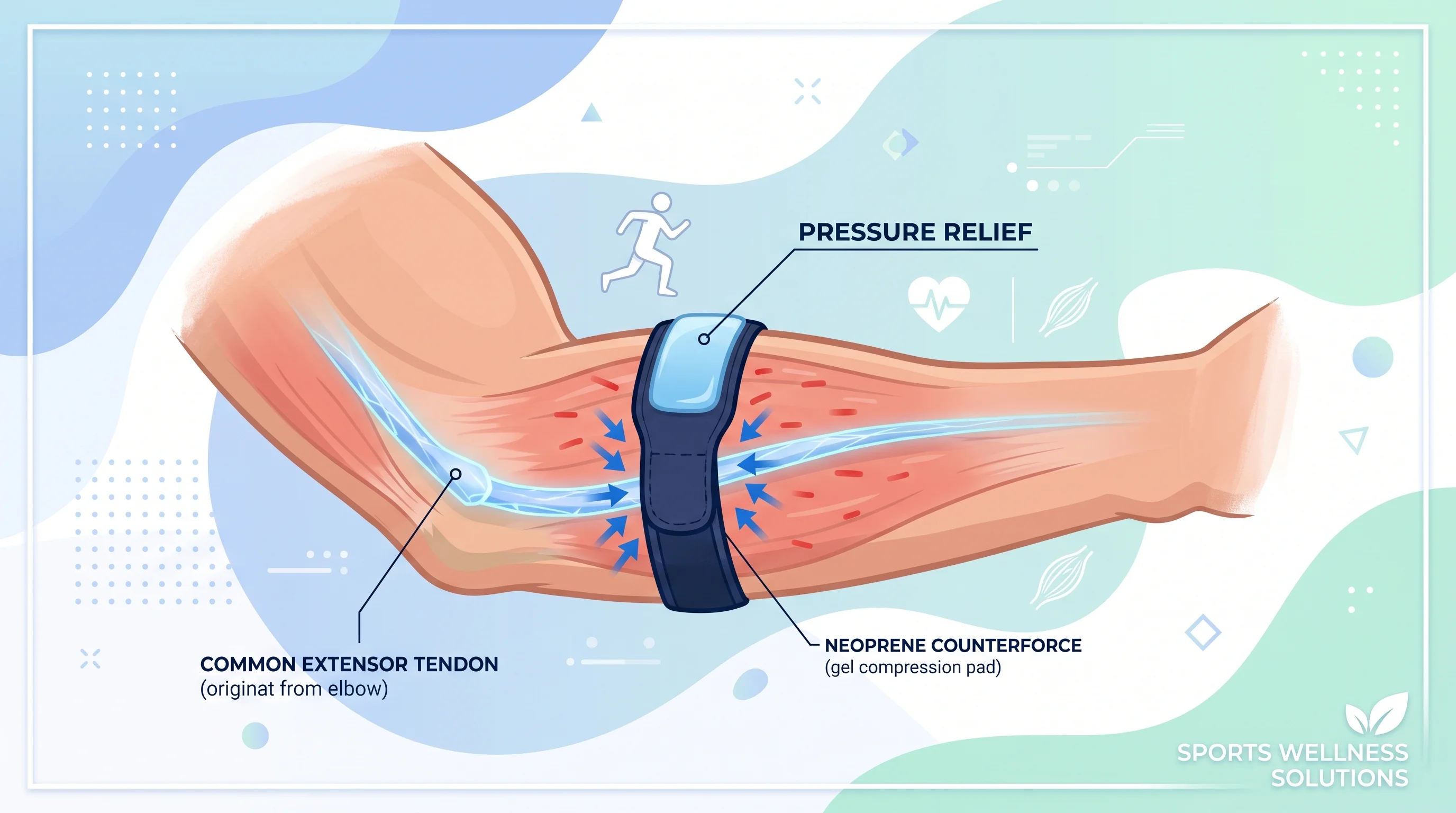
Lateral and medial epicondylitis require a counterforce strap — the kind with a built-in padded pressure point.
The logic is straightforward. A strap intercepts the force before it reaches the damaged tendon attachment. It doesn’t compress the whole joint. Instead, it redirects tension through the muscle belly — away from the inflamed epicondyle.
Placement is everything here.
- Tennis elbow: Position the pad 1.3–2.5 cm below the outer bony knob of your elbow. You’re targeting the extensor muscle belly.
- Golfer’s elbow: Move the pressure point to the thicker part of your forearm, about two finger-widths below the inner elbow. Shift it left or right until a resisted wrist curl no longer triggers pain.
The fit check: non-padded areas should accept one finger with no struggle. Seeing skin discoloration, tingling, or increased hand swelling? It’s too tight — loosen and reposition right away.
Mild Tendonitis, General Soreness & Sport Prevention → Compression Sleeve
A compression sleeve for elbow pain is the right call with no single, sharp hot spot to target. Think diffuse aching after long training sessions, mild inflammation, or pre-activity protection for a joint that’s been giving you trouble. Aim for 15–25 mmHg. That range supports fluid movement and warmth without cutting off your motion.
Arthritis, Chronic Stiffness & Cold-Weather Discomfort → Soft Neoprene Sleeve
A neoprene elbow sleeve has a different goal — comfort over control. The material traps body heat, eases morning stiffness, and keeps circulation moving. It works best for joints that ache from cold and stillness rather than a direct injury.
Ligament Sprains, Hyperextension & Post-Surgery → Hinged Brace
A standard elbow sleeve isn’t built for this job. Hinged or rigid braces exist to control the range of motion. They stop the elbow from moving in directions it shouldn’t while healing.
Instability, a significant sprain, or post-operative recovery all need this level of support. Use it alongside medical guidance to set how much movement is safe at each stage.
The Quick-Match Table
| Your primary symptom | Right support type |
|---|---|
| Pain at the tendon attachment point; grip triggers it | Counterforce strap with pad |
| Diffuse soreness, light inflammation, sports prevention | Compression sleeve |
| Chronic stiffness, arthritis, wants warmth | Soft neoprene sleeve |
| Instability, sprain, hyperextension, post-surgery | Hinged or rigid brace |
Elbow Sleeve vs Elbow Brace vs Forearm Strap — Which One Do You Need?
- An elbow sleeve wraps your entire joint in 360° compression — covering 20–25 cm of tissue. It boosts circulation, reduces mild swelling, and keeps the joint warm. Think of it as a full-hug for a tired, constantly achy elbow.
- An elbow brace (hinged or rigid) does something different at a structural level — it physically controls how your elbow moves. Metal or plastic supports limit dangerous ranges of motion. This tool is built for instability, post-surgical recovery, or serious ligament damage. It’s not the right pick for everyday tendon soreness.
- A forearm strap — also called a counterforce brace or tennis elbow strap — is a narrow, focused band worn about 2 cm below the elbow crease. Its job is specific: pull muscle tension away from the damaged tendon attachment point.
Quick-decision guide:
| Your situation | Right tool |
|---|---|
| Chronic aching, mild swelling, general stiffness | Elbow sleeve |
| Tennis elbow, golfer’s elbow, epicondylitis | Forearm strap |
| Instability, post-surgery, ligament damage | Hinged elbow brace |
| Tennis elbow during high-load sports | Sleeve and strap, layered |
Key Buying Factors: Compression Level, Material, and Activity Type
Compression, material, and how you use your elbow — these three factors work together. Get them right, and the elbow sleeve works. Get one wrong, and the others can’t save you.
Compression Level: Match the Number to Your Stage of Recovery
The industry measures compression in mmHg (millimeters of mercury). For elbow sleeves, three ranges matter:
- Light compression (8–15 mmHg): A gentle wrap feeling. You can slip one finger underneath with no effort. This is your everyday wear level — chronic stiffness, office use, long travel days, post-workout recovery.
- Moderate compression (15–20 mmHg): That finger goes in, but you feel resistance. Good for the recovery window between two and six weeks post-injury. Swelling has settled, but the joint still feels unreliable.
- Firm compression (20–30 mmHg): Snug and tight. Built for training sessions — CrossFit, Olympic lifting, high-load sport — not all-day wear.
Your injury stage matters as much as your injury type:
| Recovery Stage | Recommended Compression |
|---|---|
| Acute (first 24–72 hours, visible swelling) | Light–moderate; avoid sustained 20+ mmHg |
| Sub-acute (weeks 2–6, swelling easing) | Moderate (15–20 mmHg) |
| Return to sport (week 6+, functional training) | Moderate–firm during activity; drop back to light after |
| Chronic low-grade discomfort, daily prevention | Light compression, full-day comfort |
Material: The Trade-Off Is Always Warmth vs. Breathability
Three materials lead the elbow sleeve market. None of them is the best for every situation; each one solves a different problem.
- Neoprene (3–7 mm thick) traps heat hard. That extra warmth loosens stiff joints in a real, measurable way. It’s the right material if cold makes your elbow feel worse, or if you’re lifting heavy and want that elastic rebound effect under load. The trade-off: neoprene doesn’t breathe. Sweat has nowhere to go except out of the edges. In long training sessions or warm climates, it gets uncomfortable fast.
- Copper-infused knit (nylon/polyester + 5–15% copper fiber + spandex) sits in the middle. It breathes better than neoprene and has mild antibacterial properties that cut down on odor during long wear. One honest caveat: that antibacterial effect fades after 30–50 machine washes. This material works well for wearing through a workday, traveling, or during the 2–6 week recovery phase, where you need something between “athletic” and “clinical.”
- Knit elastic fabric (nylon or polyester + 10–25% spandex) is built for breathability and long wear. High-quality versions hold at least 85% of their original elasticity after 50 washes. This is your material for racket sports, running, and any situation where free movement and all-day comfort matter.
Activity Type: The Whole Picture
- Heavy lifting (CrossFit, Olympic weightlifting, powerlifting): Go with a neoprene sleeve and firm compression (20–30 mmHg). Wear it during training only. The thickness gives you that joint-stabilizing “spring effect” you feel during a deep squat or overhead press. Take it off between sessions.
- Racket sports and golf (tennis elbow or golfer’s elbow management): Pick a lightweight knit or copper-infused sleeve with light-to-moderate compression (10–20 mmHg). You need full range of motion through a swing — nothing bunching at the elbow crease. Over a two-hour match, breathability isn’t optional.
- All-day wear (desk work, mild chronic discomfort, travel): Light compression, knit or copper-infused fabric, seamless or flat-seam construction to prevent pressure marks. You should be able to forget you’re wearing it after an hour.
FAQ: Elbow Compression Sleeves for Injury & Sports
How do I measure for the right size?
Measure the circumference at your elbow’s center. Keep your arm relaxed and elbow bent about 30°. Some brands also ask for your forearm or upper arm at its widest point.
Between two sizes? Go snugger for weightlifting or high-load sports. A good fit lets you bend pain-free to 90–120° with no marks left after 30 minutes. Tingling fingers or pale skin? Size up right away.
How tight should it feel?
Aim for a 4–6 out of 10 on the tightness scale. You want noticeable compression — not a struggle. After taking it off, mild indentation marks should fade within 5–10 minutes. Sliding more than 2–3 cm during movement means it’s too loose. Numbness or cold fingertips means it’s too tight.
Can I wear it while working out?
Yes — that’s exactly where it earns its place. Put on your elbow sleeve for weightlifting during working sets, not warm-up sets. For tennis or golf, keep it on through the full session. Any continuous activity beyond two hours? Take it off for 10–15 minutes mid-session. Your tissue needs to breathe.
Elbow sleeve or counterforce strap — which is better for tennis elbow?
Both. It depends on the moment.
- The tennis elbow sleeve works best for all-day office wear and general circulation support.
- The counterforce strap works best for gripping a racket or barbell. It puts direct pressure right below the epicondyle.
For high-load sessions, layer them: sleeve first, strap on top.
Can I sleep in it?
Most sports medicine guidelines say no. Hours of static compression overnight raise stiffness and circulation risk. This is especially true with snug neoprene styles. The sleeve belongs on a working elbow, not a sleeping one.
How long should I keep wearing it?
For an elbow sleeve for tendonitis and similar overuse injuries, the usual window is 4–12 weeks. Here’s how to structure it:
| Weeks | Wear pattern |
|---|---|
| 1–2 | All pain-triggering activity; 4–8 hrs/day max |
| 3–6 | High-load tasks only; begin strengthening work |
| 7–12+ | Matches and heavy sessions only; phase out step by step |
Wearing it non-stop without building underlying strength misses the point. The sleeve supports your elbow — it doesn’t fix it on its own.
Do compression sleeves work?
For elbow sleeve for tendonitis and mild-to-moderate epicondylitis — yes, with one key note.
Compression reduces swelling, improves local circulation, and lowers peak tendon load during activity. The honest picture: sleeves control symptoms during activity. They don’t rebuild tissue. To see real recovery, pair the sleeve with progressive strengthening and load management. That combination does the actual healing.
Conclusion
You now know that not all elbow pain is the same — and neither are the solutions. Matching your specific injury to the right type of support is what separates a quick recovery from a lingering one.
Ready to stop guessing? Explore our custom elbow brace solution, designed for your injury and your movement.