


That nagging ache in your wrist is more than just an inconvenience. Millions of people deal with carpal tunnel syndrome, tendinitis, sprains, or chronic joint inflammation. For them, wrist pain chips away at everyday life, little by little.
A wrist brace is often the first tool a doctor recommends. Yet most people slip one on without understanding why it works — or how to get more out of it. Wrist pain relief is about more than “keeping things in place.” The mechanics are deeper than that. Knowing them can make a real difference in your recovery.
This guide covers it all: the science, the conditions, the right fit, and the honest limits of what orthopedic wrist support can do for you.
What Is a Wrist Brace and How Does It Work for Pain?
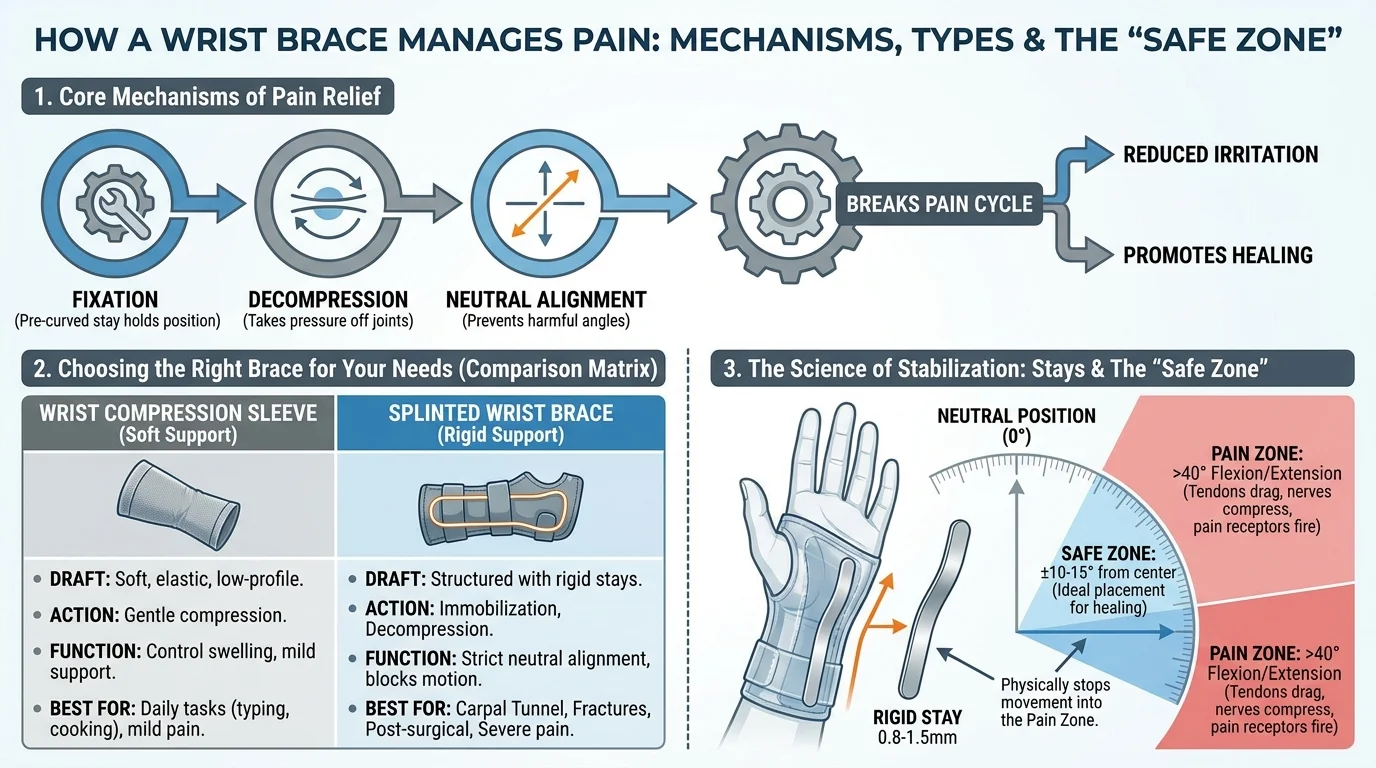
At its core, a wrist brace is a mechanical support device. It tackles pain through three key actions: fixation, decompression, and neutral alignment. These three mechanisms break the cycle of irritation that stops injured wrists from healing.
Not all wrist braces are built the same. Two distinct types exist, and the difference matters:
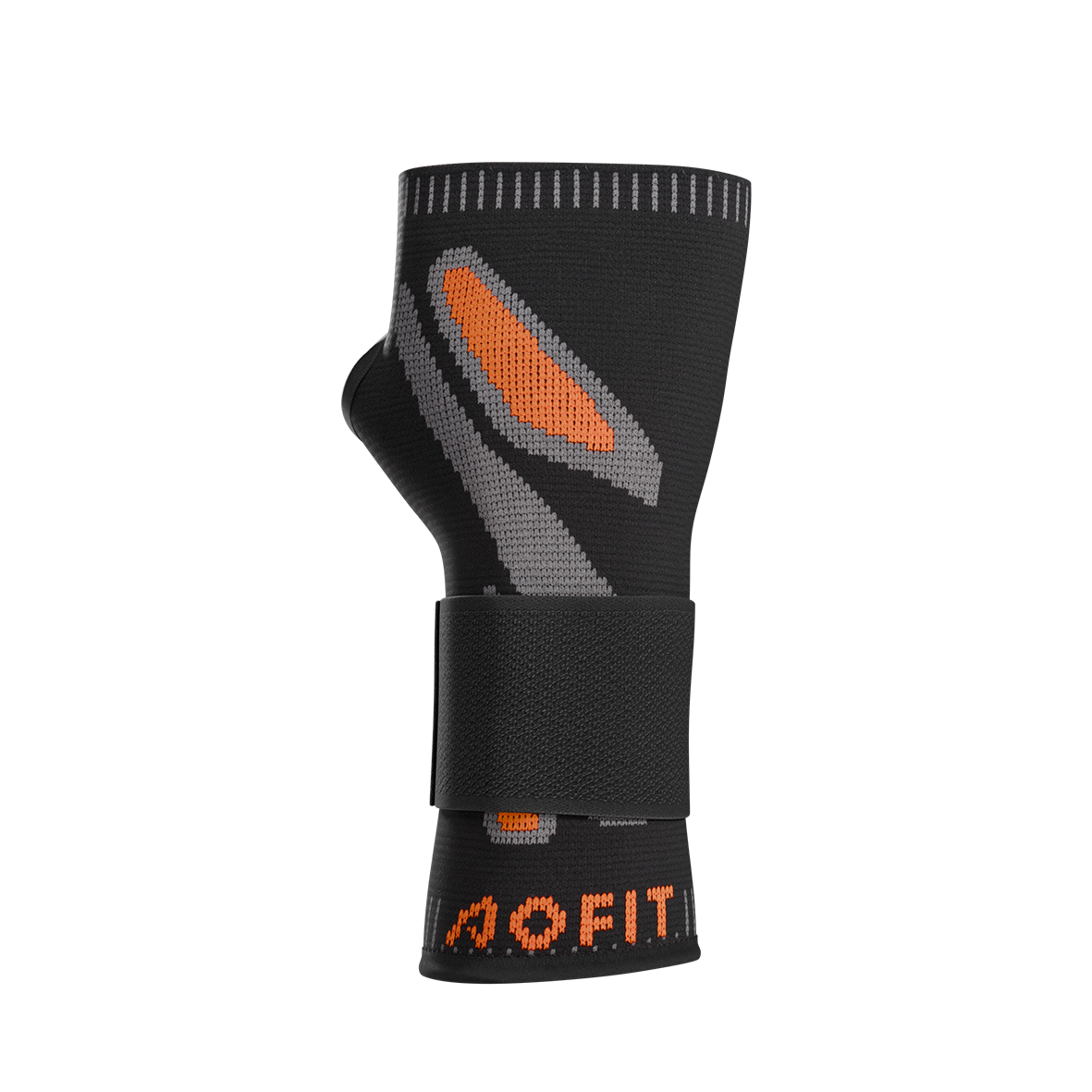
- Wrist compression sleeves — soft, elastic, low-profile. They deliver gentle compression to control swelling and give your wrist mild joint support during activity. Great for typing, cooking, and everyday tasks.

- Splinted wrist braces — structured with rigid metal stays. They offer partial or full wrist immobilization, take pressure off stressed joints, and hold the wrist in strict neutral alignment. These are the go-to choice for carpal tunnel, fractures, and post-surgical recovery.
The right structure decides how well the brace cuts your pain — not just how comfortable it feels on your wrist.
Stabilization and Immobilization: The First Line of Pain Defense
An injured or inflamed wrist gets hurt again with every flex, every reach, every keystroke. The wound never gets a chance to close. A wrist stabilizer or immobilization splint breaks that cycle. It works by blocking the motion itself, physically stopping the joint from moving into the pain zone.
How Rigid Stays Block the Pain Trigger?
The metal or plastic stay inside a wrist brace is engineered with a purpose.
A standard aluminum stay runs 0.8–1.5 mm thick. It comes pre-curved into a neutral or slight palmar-flexed position. That holds your wrist within ±10–15° of center — the safe zone. Past 40° of flexion or extension, tendons start dragging, nerves compress, and pain receptors fire. That’s the danger zone the stay keeps you out of.
Orthopedic and emergency medicine share a foundational rule: immobilize the joint above and the joint below the injury. A well-designed splint spans from the mid-palm to the mid-forearm — 14–18 cm total. That span creates a closed mechanical loop. It keeps the wrist from ever reaching its pain threshold.
Two stay configurations cover different needs:
- Palmar stay only — controls hyperextension; ideal for keyboard and mouse-related wrist strain
- Palmar + dorsal dual stays — limits both flexion and extension; best for acute sprains in the first 1–2 weeks of recovery
What Immobilization Does to Pain
A wrist immobilization splint applied to an acute sprain drops NRS pain scores by 2–4 points within 24–72 hours. That’s a 30–50% reduction, which clinicians call meaningful relief.
For chronic conditions like wrist tendinitis or early-stage carpal tunnel syndrome, the numbers are strong too. Consistent daytime wear over 1–2 weeks delivers 20–40% improvement in nighttime pain and morning stiffness. Grip strength recovers alongside that.
The reason is straightforward. Less motion means less tissue shear. Less friction builds up in the tendon sheath. Fewer inflammatory signals flood the joint. Wrist immobilization sits alongside NSAIDs as a first-line pain management tool — non-invasive, immediate, and repeatable.
Neutral Alignment and Nerve Pressure Relief: Why Wrist Position Matters
Your wrist angle is not a minor detail. It decides whether your nerve stays under quiet, steady pressure — or fires off pain signals all night.
Here is the core physics: the carpal tunnel is a fixed channel. Its walls don’t flex. Bend your wrist even 30° into flexion, and the pressure inside that channel can triple. At neutral, that baseline sits at a quiet 5–7 mmHg — the same as resting venous pressure. Low. Safe. No damage.
What Happens to the Median Nerve When Wrist Position Shifts
The median nerve runs along the palm side of the wrist, surrounded by flexor tendons. Shift the wrist out of neutral, and three things happen at once:
- Mechanical bending — The nerve path curves. Stress concentrates at the bend point.
- Tendon sheath swelling — Off-neutral positions increase tendon friction. That friction causes micro-damage and edema, eating into the tunnel’s limited space.
- Microvascular shutdown — Pressure above 30–40 mmHg cuts blood flow to the nerve. You get the numbness, tingling, and burning that mark carpal tunnel syndrome.
Why a Carpal Tunnel Wrist Brace Changes the Equation?
A carpal tunnel wrist brace worn during sleep holds the joint within ±5–10° of neutral. That one constraint keeps tunnel pressure in the low, safe range through all 6–8 hours of sleep. Most people with mild-to-moderate CTS notice real wrist pain relief within one to two weeks of wearing it consistently overnight.
The mechanism is straightforward. Neutral alignment keeps the tunnel at or near its widest cross-sectional area. The nerve lies straight. Tendon friction drops. Swelling pulls back over time. The whole inflammatory cycle settles down — not from any drug or procedure. The wrist joint support stops feeding the problem every single night.
Compression and Swelling Control: Managing Inflammation from the Outside In
Swelling is not just a symptom — it is a pressure problem. Tissue fluids flood the joint after an injury or inflammatory flare. They crowd the nerve endings. Pain rises not because something new breaks, but because the fluid squeezes what is already there. That is where a wrist compression sleeve earns its place.
How Does External Pressure Clear the Swelling?
Compression works from the outside in. A sleeve delivering circumferential pressure raises tissue pressure just enough to slow fluid leaking from capillaries into surrounding tissue. Less fluid escapes. At the same time, the veins and lymphatic vessels get gentle, steady support. Think of it like a slow pump — pushing built-up fluid back into circulation faster than your body can do it alone.
Two things happen as a result. Swelling growth slows down. Existing fluid clears out faster.
As that fluid pulls back, nerve endings face less pressure and stretch. Pain thresholds rise. The sharp, aching feeling of wrist inflammation starts to ease.
Material Matters
Not every sleeve delivers the same result:
- Elastic knit fabric — breathable, gradient pressure, best for all-day wrist inflammation reduction
- Neoprene — stronger heat retention, around 15–25 mmHg, better for short-term activity support
- Gel-pad inserts — add focused local pressure over specific pain points like the carpal tunnel region
Which Conditions Benefit Most from Wrist Brace Pain Management?
Six distinct conditions respond well to wrist brace support, and each one responds for a different reason.
Carpal Tunnel Syndrome
CTS sits at the top of the list. The evidence behind it is the strongest of any condition here. Clinical guidelines support a carpal tunnel wrist brace as a first-line conservative treatment. This holds especially true for mild-to-moderate cases with symptoms under a year old. Night-time wear delivers the clearest benefit. Holding the joint within 0–15° of extension through 6–8 hours of sleep cuts off the nerve compression that causes tingling, numbness, and those 3 a.m. wake-ups.
Wrist Tendinitis and Tenosynovitis
Rest is the core principle behind treating tendon inflammation. A wrist tendinitis brace delivers that rest without forcing you to stop everything. For mild cases, an elastic wrist compression sleeve reduces friction well enough. For moderate-to-severe tendinitis, a rigid-stay splint is the better choice. It limits the pulling motions that reinjure already-inflamed tissue. De Quervain’s tenosynovitis — the gripping, twisting pain along the thumb-side of the wrist — calls for a combined thumb and wrist splint design.
Wrist Sprain Recovery
Sprains follow a staged recovery. Your brace choice should follow the same stages. In the first 72 hours, pair a firm supportive splint with ice and elevation to control swelling. From day three onward, switch to an adjustable brace. This lets you build gradual movement while still protecting against the rotational loads that re-tear healing ligaments. Wrist sprain recovery moves faster with joint protection during activity.
Osteoarthritis, Rheumatoid Arthritis, and Post-Surgical Rehabilitation
These three conditions share one core need: wrist joint support that reduces mechanical stress without cutting off function.
- Osteoarthritis patients get the most benefit during high-demand tasks — prolonged keyboard use, gripping tools, or repetitive lifting. These are the moments where joint friction and shear forces drive pain.
- Rheumatoid arthritis wrists are prone to swelling, weakness, and gradual instability. They respond well to daytime functional bracing plus gentle night-time support during flare periods.
- Post-surgical and post-cast recovery uses an adjustable orthopedic wrist support to bridge the gap between rigid immobilization and full independent movement. It protects the healing site while reintroducing load at a controlled pace.
The common thread across all six conditions: the brace controls the mechanical environment in which the injury lives. Change that environment, and the body’s own repair process can keep pace.
Wrist Brace vs. Wrist Support Sleeve: Which One Relieves More Pain?
The Core Difference Comes Down to Control
- A wrist compression sleeve delivers continuous, low-level support. The elastic fabric puts 10–25 mmHg of pressure around the joint. That pressure cuts minor swelling, warms the joint, and sharpens proprioception — your body’s sense of how the wrist is moving. The result: about 20–40% improvement in mild, diffuse aching. Your range of motion drops by around 10–20%, so typing, cooking, and light lifting still feel close to normal.
- A wrist brace with a rigid palmar stay works on a different principle. The metal or plastic bar locks the joint into a narrow safe range, cutting flexion and extension down to just 10–20% of your normal range. That restriction is the whole point. Less movement means less tissue shear. Less shear means less pain — fast. In acute sprains and moderate-to-severe injuries, patients report 50–70% pain reduction during the first critical days.
Match the Tool to the Pain Level
- Mild pain (0–3/10) — fatigue, light aching, early-stage inflammation
A wrist compression sleeve is the right call. It manages swelling, cuts muscle fatigue, and gives enough wrist joint support to get through a full workday without restriction. Is discomfort still there after a week? Step up to a structured wrist brace. - Moderate pain (4–6/10) — pronounced tendinitis, repeated sprains, chronic overuse
Use a mid-support wrist stabilizer during the day. It’s rigid enough to limit the angles that aggravate the injury, and flexible enough to keep you functional. At night or during rest, switch to a brace with a palmar bar. It delivers deeper wrist pain relief once the joint stops compensating. - Severe pain (7–10/10) — acute fracture, serious ligament tear, post-surgical recovery, or nighttime carpal tunnel symptoms
A carpal tunnel wrist brace or rigid splint is the right choice here. Immobilization is the treatment. A compression sleeve alone can’t hold the wrist in neutral alignment. It won’t stop the nerve compression or tissue re-injury that keeps severe pain spiking.
How to Wear a Wrist Brace to Get Real Pain Relief?
Fit is everything. Even the best wrist brace on the market does almost nothing if it sits crooked, pulls too tight, or lets your wrist drift out of position while you sleep.
Here is the exact sequence that gets results:
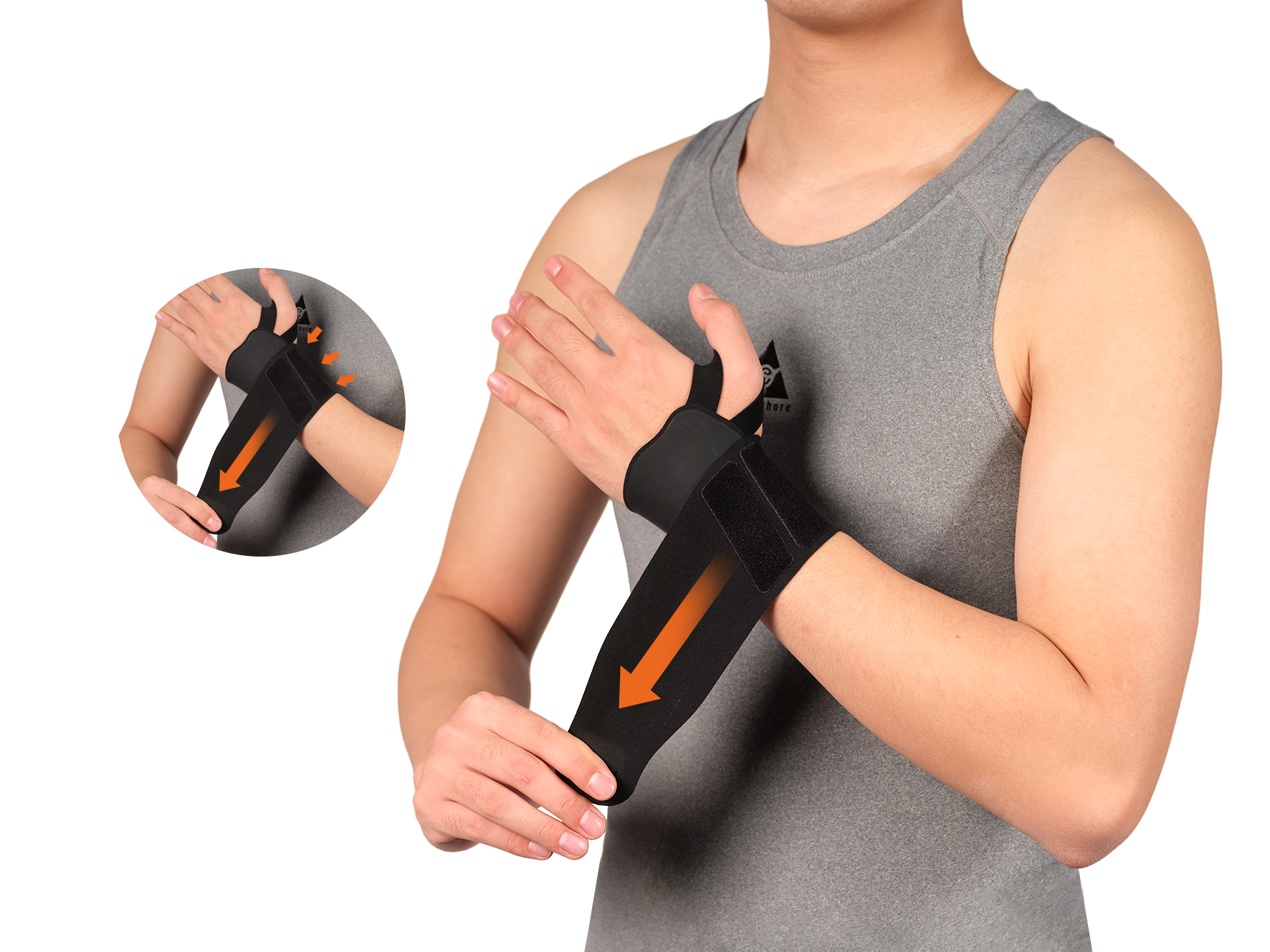
- Position the rigid stay along your palm side. The splint insert runs along the underside of your wrist and hand — not the top.
- Slide your hand in with your thumb through the cutout or loop. The brace should sit flat and centered, not twisted.
- Fasten the strap closest to your wrist first. Work outward from there. Tighten each strap a little at a time until the support feels firm.
- Check your wrist line. It should be straight.
- Test your fingers. Light movement should still feel easy.
How Tight Is Too Tight?
- The rule is simple: snug, not constrictive. You should be able to bend your fingers at the knuckles. The brace edges should meet or overlap a little. Fingers going numb, tingling, or turning bluish? Loosen it right away. Over-tightening does not improve wrist pain relief. It cuts circulation and irritates the very nerves you are trying to protect.
- A too-loose fit brings its own problem. The wrist stabilizer shifts during movement. Your wrist loses neutral alignment. At that point, the wrist brace stops doing its job.
Day Wear vs. Night Wear
- For daytime use, wear your wrist compression sleeve or structured brace during the activities that trigger pain — repetitive tasks, carrying loads, and long keyboard sessions. All-day wear is not always needed.
- For carpal tunnel wrist brace users, nighttime wear is often where the biggest gains happen. Symptoms flare during sleep because most people curl their wrists without realizing it. A rigid night brace holds the joint steady through all eight hours. This keeps tunnel pressure low, calms the median nerve, and cuts down on morning stiffness.
- Got a new brace? Build up your wear time in steps. Start with 15 minutes twice a day. Move to 30-minute sessions. Then push toward an hour before going longer. Steady, consistent wear over time is what drives lasting wrist inflammation reduction.
How Long Should You Wear a Wrist Brace for Pain?
Match your wear schedule to your situation:
- Daytime office use: Put your wrist brace on before high-demand tasks — long typing sessions, mouse-heavy work, data entry. Wear it for 2–6 hours, not a full eight-hour stretch. Every 60–90 minutes, take it off for 5–10 minutes. Do gentle wrist circles and finger stretches during that break.
- Gym training: Strap up for heavy, wrist-loaded movements only — bench press, overhead press, deadlifts. Keep wearing for 45–90 minutes. Remove it the moment your session ends.
- Nighttime carpal tunnel relief: Wear your carpal tunnel wrist brace for the full 7–8 hours of sleep. Most people see real improvement within 2–4 weeks of consistent overnight use.
- Acute sprains (first 72 hours): Near-constant wear makes sense here — up to 12–20 hours daily. Cut back wear time as swelling and pain ease past day three.
The Risk of Wearing It Too Long
Clinicians agree on one point: continuous, all-day bracing backfires. Too much wrist immobilization weakens the surrounding muscles. It also tightens the joint capsule and can build a psychological dependence on the brace. Use it as a targeted tool — paired with stretching and strengthening — not a permanent fixture.
What a Wrist Brace Can and Cannot Do for Pain Management
Know what a wrist brace does well. Also know where it stops. That balance keeps you from wasting weeks on the wrong expectations.
What a wrist brace delivers:
- Reduced pain: it stabilizes the joint and blocks the movements that trigger flare-ups
- Swelling control through compression and limited motion
- Real relief for carpal tunnel syndrome, tendinitis, arthritis, and repetitive-strain conditions
- Safer recovery after sprains or surgery
- Better sleep
What a wrist brace cannot do:
- Cure the root cause — nerve compression, tendon damage, arthritis, fracture — the wrist brace manages symptoms, but the cause needs separate treatment
- Replace a proper diagnosis when pain is severe or keeps coming back
- Fix ongoing overuse or poor ergonomics on its own — nothing changes if the habits don’t change
A brace works best as part of a bigger plan. Pair it with physical therapy, ergonomic adjustments, and a medical check-up if symptoms stick around. The brace holds things together. The full plan gets you better.
Conclusion
A wrist brace can help reduce pain, improve stability, and support recovery from a wide range of wrist conditions. While no single brace is right for everyone, choosing the appropriate level of support can make a meaningful difference in both comfort and function.
At AOFIT, we develop custom wrist support solutions designed for different injury types, activity levels, and rehabilitation needs. Explore our collection to find the support that best fits your customers or patients.