
Shoulder bursitis is frustrating. It lingers. It flares up mid-reach, cuts into your sleep, and slowly shrinks the life you’re used to living.
A bursitis shoulder support sounds like a simple fix, but does it do anything real beyond making your arm feel strapped in? The honest answer is more complex than a yes or no. It matters too, because wearing the wrong support or wearing the right one the wrong way can push your recovery backward.
This guide gives you a clear, practical breakdown of what the evidence says. You’ll see when a shoulder brace helps, and how to use it as part of a real recovery plan.
What Is Shoulder Bursitis and Why Does It Cause Persistent Pain?
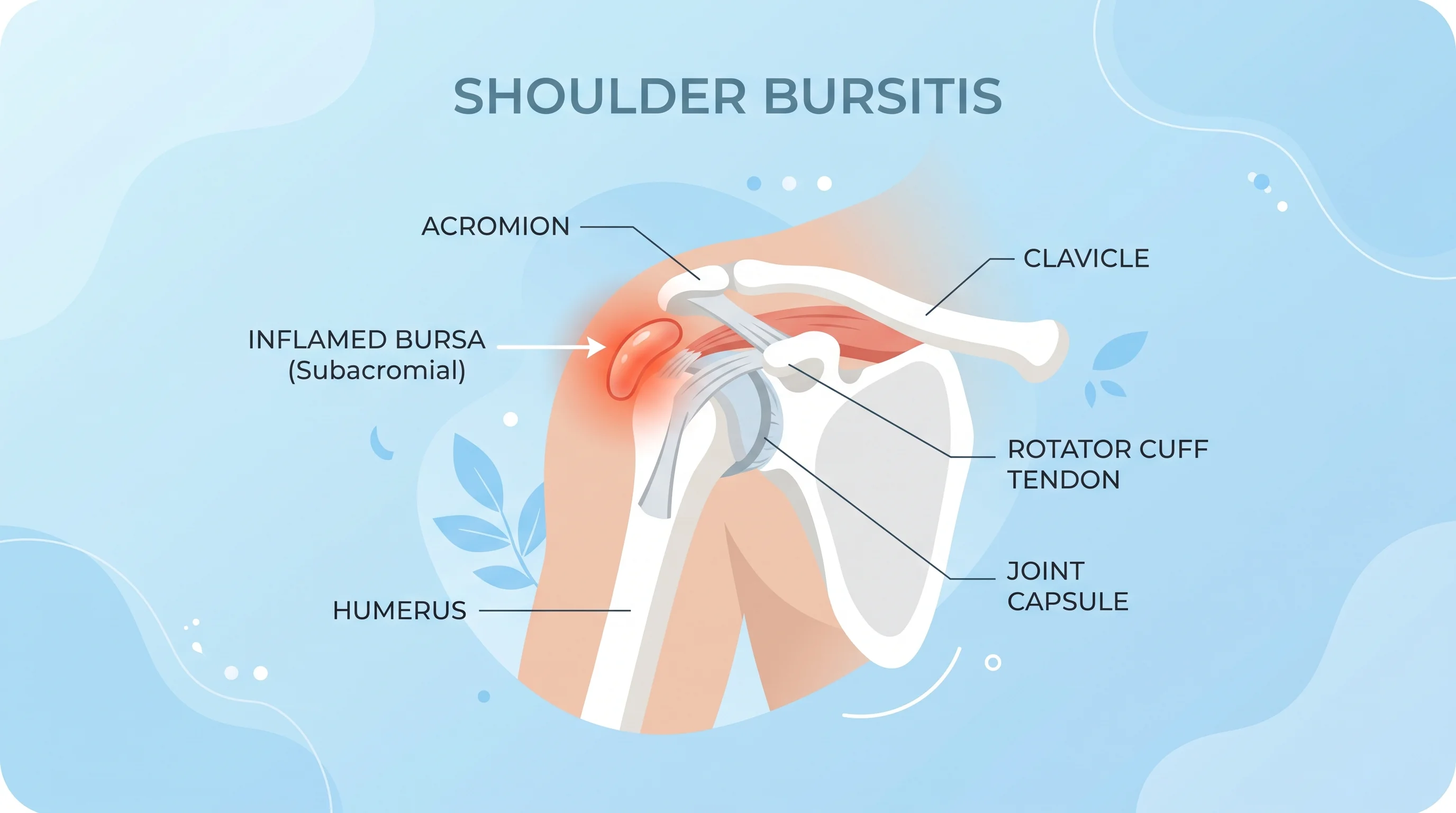
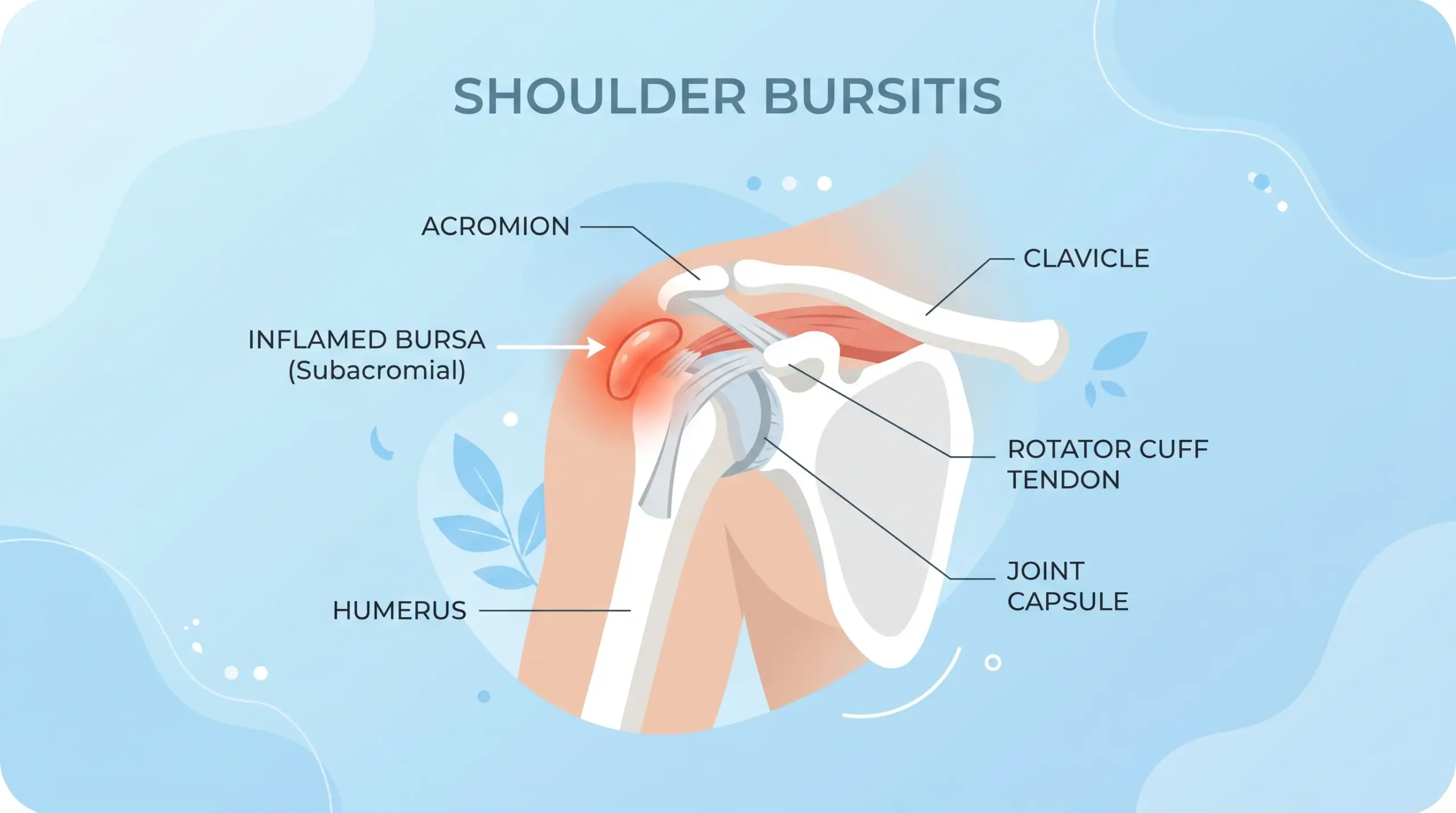
There’s a small, fluid-filled sac sitting between your rotator cuff tendons and the bony arch of your shoulder. It’s called the subacromial bursa — and under normal conditions, you’d never know it existed. Its whole job is simple and unglamorous: reduce friction, absorb shock, and let your arm move overhead without resistance.
Get it inflamed, though, and that quiet usefulness becomes a loud, persistent problem.
Shoulder bursitis — more precisely subacromial bursitis — develops when that bursa sac gets compressed, irritated, or aggravated by repetitive movement. Reaching overhead, painting a ceiling, throwing a ball, even pulling on a jacket. Each motion drives the bursa between two hard surfaces: the acromion above, the humeral head below.
Why the Pain Keeps Coming Back
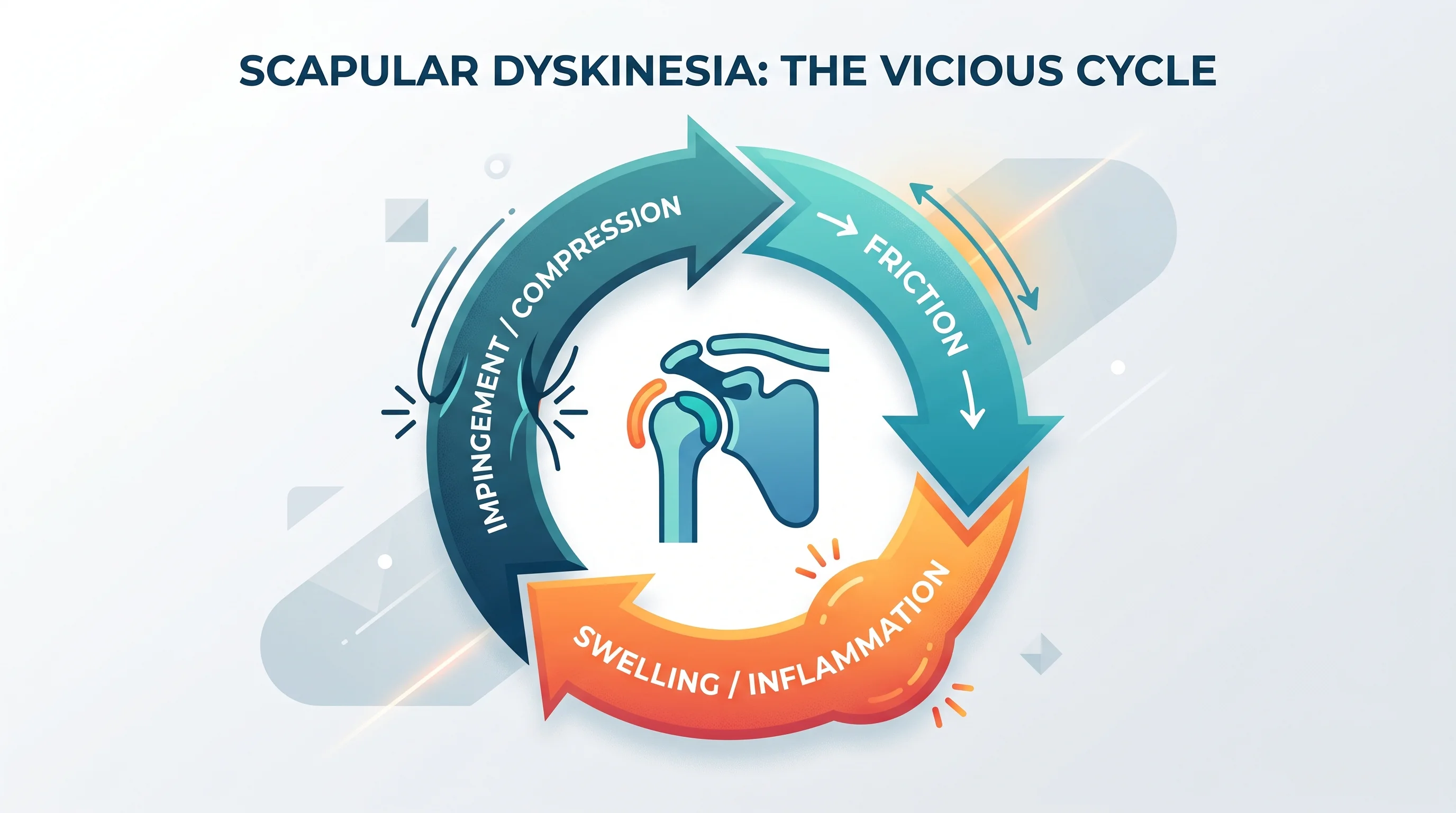
- Friction irritates the bursa → inflammation and swelling begin
- Swelling reduces the space in the shoulder joint → impingement worsens
- More impingement means more friction → pain escalates
The shoulder also refuses to rest. Dressing, reaching, lifting, sleeping — almost every movement you make during the day passes through this joint. That steady, low-level stress keeps the irritation alive, long after the original trigger has passed.
So shoulder bursitis inflammation doesn’t clear up fast on its own. That’s why managing joint mechanics plays such a big role in recovery.
So Does a Bursitis Shoulder Support Help?
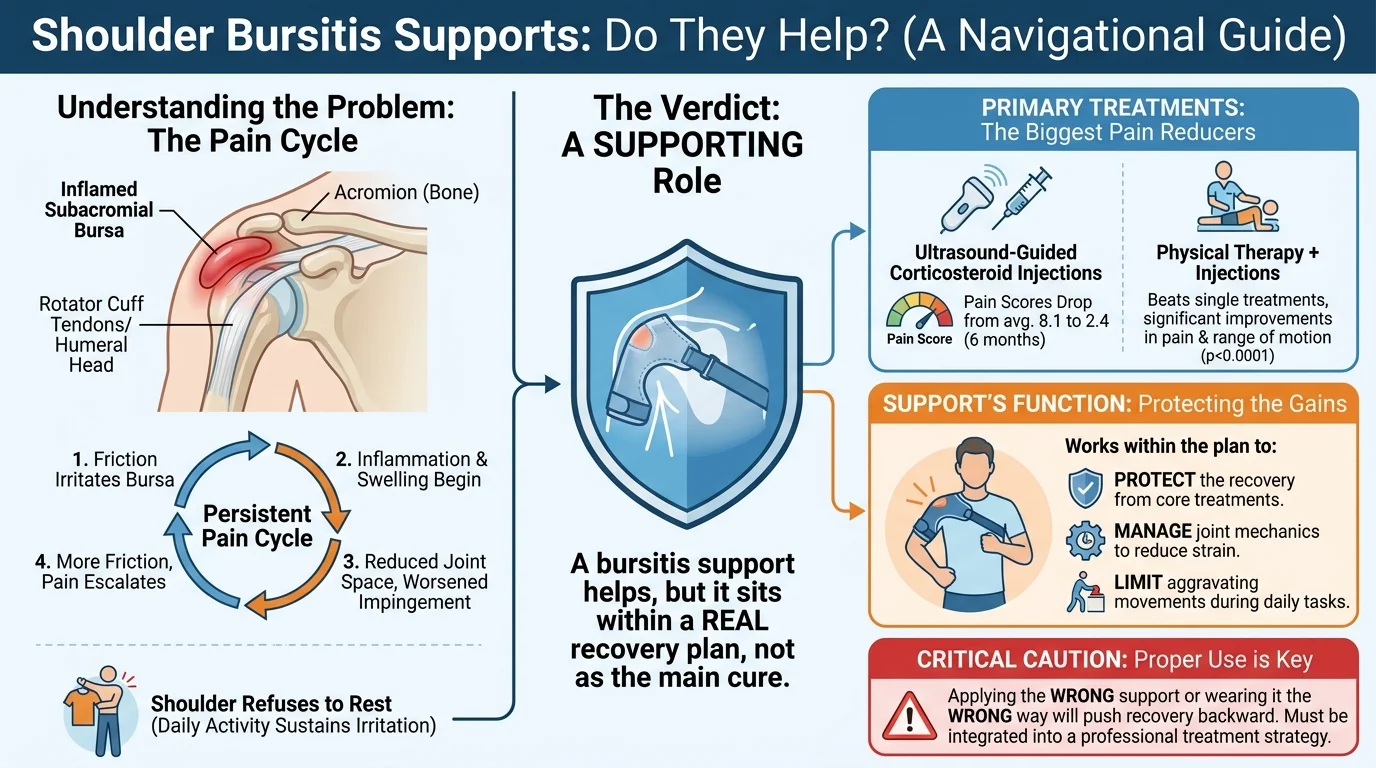
Here’s the short answer: a bursitis shoulder support helps, but it plays a supporting role, not the main one.
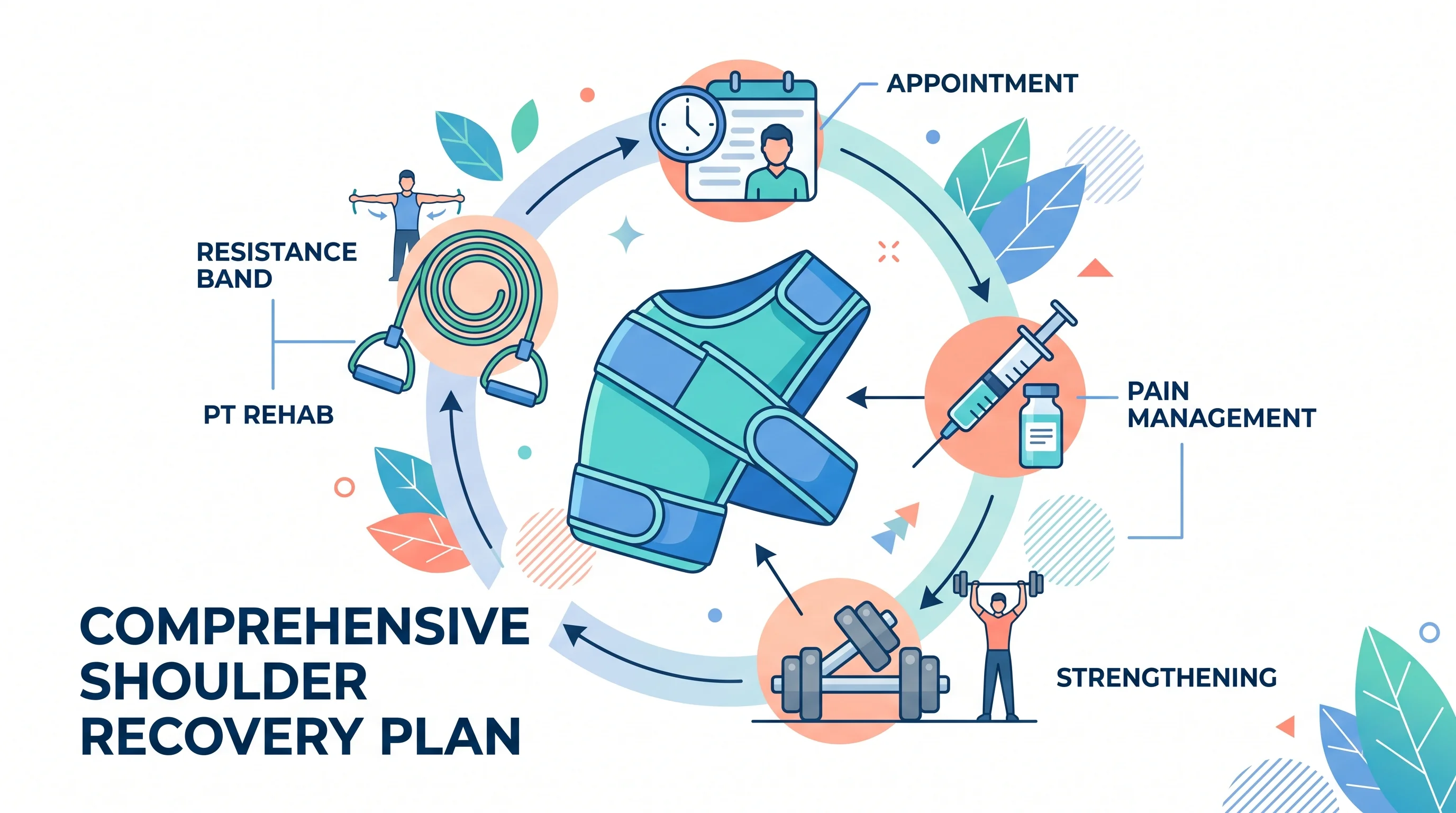
The clinical evidence is clear. The biggest pain reductions in shoulder bursitis inflammation come from core treatments. Ultrasound-guided corticosteroid injections drop average pain scores from 8.1 down to 2.4 over six months. Physical therapy combined with injections beats either treatment on its own, with significant improvements in pain and range of motion (p<0.0001). A subacromial bursitis shoulder brace works within that treatment plan — it protects the gains those treatments create.
What the Bursitis Shoulder Support Does and Doesn’t Do
A shoulder compression sleeve for bursitis works best in three situations:
- Your pain sits at NRS 4–5 or above, breaking your sleep or blocking daily tasks
- Overhead movement or arm abduction past 60–90° triggers flares with consistency
- You’re in the middle of a shoulder bursitis recovery plan and need to protect your progress between sessions
In those situations, a rotator cuff bursitis support limits the joint angles that press on the bursa. It cuts down inflammatory load through gentle compression. You can move through your day without re-injuring tissue that’s still healing.
What it cannot do: replace the range-of-motion gains from active exercise, or match the anti-inflammatory effect of injections. Research is also clear that patients with the lowest long-term recurrence rates committed to physical therapy, not passive support alone.
The Risk of Over-Relying on a Brace
Your pain drops to NRS 2–3 and training moves along well. Wearing a shoulder stabilizer brace full-time at that point can start working against you. Reduced muscle engagement, lower motor recruitment, creeping stiffness, these are real risks.
The smarter path: wear your shoulder impingement brace during high-demand periods: commuting, desk work, household tasks. Then cut back on it step by step as your rotator cuff builds strength again. Had a corticosteroid injection recently? The first two to four weeks are where a shoulder brace gives the most protection. Sudden pain relief after an injection often creates overconfidence; a shoulder brace keeps that in check.
4 Specific Ways a Shoulder Bursitis Brace Reduces Pain and Supports Recovery
1. It Limits the Movements That Keep Reinjuring You
Research on subacromial bursitis points to the 60–120° abduction arc as the range where the bursa sac faces maximum compression. Overhead reaching, throwing, swimming strokes, even tucking in a shirt at the back. These motions drive the bursa between two hard surfaces, over and over again.
A well-designed shoulder impingement brace contains that range. Strap-and-wrap designs hold active abduction to around 60° or below — just clear of that painful arc. Users report a 50–70% reduction in reflexive overhead reaching while wearing one throughout the day. That’s not just comfort. That’s fewer injuries stacked on top of injuries.
Clinical guidance is direct: wear a subacromial bursitis shoulder brace to rest the joint and cut down movement during peak pain periods. That means a few hours a day for mild flares, and full-day use for severe ones.
2. Gentle Compression Controls Swelling and Eases Inflammatory Pressure
An inflamed bursa fills with fluid. In serious cases, that fluid buildup raises internal pressure so high that even sitting still becomes painful.
A shoulder compression sleeve for bursitis applies light-to-moderate pressure — in the 20–30 mmHg range, about the same as a standard elastic bandage. That compression does two things at once. It slows further fluid buildup in the bursa cavity. It also supports venous and lymphatic return to clear the swelling that has already built up.
This is the compression principle from the RICE protocol — rest, ice, compression, elevation — applied on a steady schedule. Pair it with ice therapy, and a rotator cuff bursitis support lets you hold 15–20 minutes of cold compression, 3–4 times a day, even while moving around the house. Patients using this approach report 1–3 points of immediate pain reduction on the VAS scale — a level that clinicians classify as a meaningful response.
3. It Protects Function Without Forcing Complete Rest
Complete immobilization sounds like the right call during a painful flare. It isn’t. Clinical guidelines are clear: prolonged inactivity leads to joint stiffness, muscle loss, and a longer recovery. The goal is to stop moving in ways that cause damage.
A shoulder stabilizer brace creates that line. It narrows the active range to a safe corridor — 0–60° flexion and 0–45° abduction — while still leaving room for low-risk daily movement: typing, writing, eating, dressing without overhead reach. Basic life continues. The joint heals.
A structured shoulder bursitis recovery program might include:
- 10–15 scapular squeezes, shrugs, and depression movements a day — held for 5–6 seconds per repetition
- Door-frame isometric presses — 5 seconds held, 15 repetitions — keeping rotator cuff strength up without stressing the bursa
Wearing an orthopedic shoulder support during these exercises adds passive stability. Each movement feels safer and more tolerable. Over 2–3 weeks, this approach cuts the risk of muscle strength loss — the kind that shows up as a grade 1 or greater drop on manual muscle testing after extended rest.
4. Proprioceptive Feedback Rewires How Your Shoulder Moves
A bursa sac shoulder support applies steady pressure against your skin, muscles, and the nerve receptors around the joint. That pressure sends a constant stream of position feedback to your brain. As your arm approaches the edge of a restricted range, the brace pulls and tightens. You feel it before you consciously think about it.
That sensation changes your movement below the level of active decision-making. Reflexive overhead reaches slow down. Fast arm swings become less frequent. The sudden compressions that aggravate shoulder bursitis inflammation happen less often — because your nervous system has learned the boundary.
This principle is well established in sports medicine: ankle and knee compression braces cut re-injury rates by 20–50% through the same proprioceptive effect. Shoulder brace designers draw directly from that evidence.
In practice, patients wearing a shoulder bursitis pain-relief brace for 1–2 weeks report that risky movement patterns start to feel unnatural — and safer substitutions begin to occur on their own. Add that to the mechanical and compression effects, and this shift in movement behaviour lines up with VAS pain reductions of 2–3 points and fewer nighttime wake-ups from shoulder pain.
When Should You Wear a Shoulder Support for Bursitis?
A bursitis shoulder support isn’t a set-it-and-forget-it tool. Putting it on at the right time — and taking it off at the right time — matters as much as wearing it at all. Here’s how to approach each phase of recovery.
Acute Flare (Days 0–5): Wear More, But Not All Day
Pain peaks in the first 48–72 hours. Your NRS score hits 5 or above with overhead movement? Full daytime wear makes sense at that point. Pair it with ice therapy — 15–20 minutes, 3–4 times per day — and apply cold right after any shoulder use.
By days 3–5, pain starts easing. Shift to wearing your shoulder impingement brace around specific tasks rather than all day. Aim for one to two hours before and after demanding activities. Between those windows, do gentle pendulum swings. That small movement protects joint mobility. It also helps you avoid frozen shoulder as a second problem down the line.
High-Demand Activities: Work and Sport
- Jobs with repeated overhead reaching call for a different approach. Treat your rotator cuff bursitis support as a load limiter. Put it on before the shift starts. Cap sessions at 3–4 hours maximum, then remove it for a 5–10 minute movement break. Ice and stretch after each session.
- For overhead sports like tennis, swimming, or volleyball, skip the brace during warm-up. Save the shoulder stabilizer brace for the high-intensity part of training. Take it off right after — then ice and do light stretching.
After Injection or Physical Therapy: Step Down Over Time
- A corticosteroid injection leaves a vulnerability window for the first 5–14 days. Wear your orthopedic shoulder support during outings and before high-load tasks. At physiotherapy sessions, take it off — your muscles need to do the stabilizing work themselves.
- From weeks 2–6, cap total wear at 2–3 hours per day. Reserve it for tasks that genuinely push your shoulder hard. Pain drops to VAS 3 or below, and you can dress and lift without support? Start cutting back use. Your spontaneous shoulder movement drops by half over one to two weeks — that’s a sign. Book a reassessment with your physiotherapist before stiffness takes hold.
The Risks of Wearing a Shoulder Bursitis Brace
1. Wearing It Too Long Stiffens the Joint
A shoulder bursitis recovery brace is designed for short windows — not all-day wear. Clinical guidance is clear: remove it every 2–3 hours and move the joint for 5–10 minutes before putting it back on. Try pendulum swings or gentle assisted flexion. Nothing aggressive — just enough to remind the joint it’s still being used.
For acute flares, complete immobilization should last no longer than 24–48 hours. Past that point, stiffness builds faster than inflammation clears.
2. Poor Fit Creates New Problems
A shoulder compression sleeve for bursitis worn too tight restricts circulation and irritates skin. After fitting, press a fingertip for two seconds — colour should return within two seconds. You should also be able to slide two fingers under each strap. Can’t do that? It’s too tight.
Check your skin every 2–3 hours. Redness that stays more than 30 minutes after removal is a signal to loosen the fit or stop wearing it for the day.
3. Relying on It Instead of Rebuilding
A rotator cuff bursitis support manages pain. It does not fix posture, rebuild weakened muscles, or break the habits that caused the flare. Use it during high-pain days and demanding tasks. Don’t use it as a substitute for the 1–2 exercise sessions per day that restore real function. Skip those sessions and the brace becomes a revolving door — take it off, and the same weakness and the same pain are still there waiting.
How to Choose the Right Bursitis Shoulder Support?
Match the Type to Your Stage of Recovery
- Compression sleeves work well for mild-to-moderate bursitis during everyday activity. They deliver 10–15 mmHg for general daily support, or 20–30 mmHg during more inflamed periods. That’s enough to ease swelling and keep the joint moving through office work, light tasks, and driving. What they won’t do is stop you from making movements that aggravate a bad flare. Is pain sharp? Is overhead reach blocked? A sleeve alone won’t cut it.
- Structured shoulder stabilizers step in for moderate-to-severe cases. They pair adjustable compression with range-of-motion control. This limits the high-risk abduction arc while still leaving room for the 45–90° movement your rehab exercises need. Look for at least 2–3 independent adjustment straps at the front, back, and underarm. These let you place focused pressure over the subacromial area, not just a general squeeze across the whole joint.
- Slings and immobilizers are short-term tools. Use them for acute flares with severe pain, or at night when rolling onto the shoulder keeps irritating the bursa. Keep the elbow bent at 90°, wrist supported, and neckband adjusted so it sits flat without pulling. Switch to a stabilizer or compression sleeve within a few days to a few weeks. Long-term immobilization stiffens the joint faster than it heals the bursa.
Four Features Worth Checking Before You Buy
- Breathability. A support worn for 8–12 hours needs perforated neoprene, moisture-wicking fabric, or a mesh panel over the shoulder.
- Day versus night design. Daytime supports need anti-slip grip to hold position through movement. Night supports need soft edges and zero hard buckles or plastic parts that press into skin during sleep. These are two separate product types. One support trying to do both tends to do neither well.
- Adjustability. Fixed-tension designs are a sizing gamble. Acute inflammation shifts day to day — yesterday’s comfortable fit can become today’s circulation problem. Multiple Velcro or tension straps let you fine-tune the fit as swelling changes.
- Gel pad compatibility. A removable gel insert placed over the shoulder peak lets you combine cold therapy with compression at the same time. It targets the exact spot where the bursa sits.
Getting the Fit Right
Two measurements cover most shoulder brace sizing: upper arm circumference (taken about 4 inches above the elbow) and chest circumference for designs that wrap across the torso. Land between sizes? Go smaller and loosen the adjustment straps. Don’t go larger and hope the fit tightens up on its own.
Put it on, wait 3–5 minutes, then run through these three checks:
- Stability — do 10–15 shoulder flexions to about 45°. The brace should hold its position without sliding.
- Circulation — check your fingers and forearm for numbness, tingling, or unusual cold. Any of these signals the compression or underarm strap is too tight.
- Movement — you should reach desk height and manage basic dressing without strain. Pulls hard against those movements? The fit needs adjustment.
Check your skin every 2–3 hours. Redness that stays more than 30 minutes after removal means the fit is too tight — loosen it, don’t push through.
Conclusion: Choose the Right Support Solution for Your Market
A bursitis shoulder support can help provide compression, stability, and comfort for people managing bursitis-related discomfort, especially during daily activities or recovery periods. However, the effectiveness of a support depends on the right design, materials, and fit for different user needs.
For brands, distributors, and healthcare suppliers looking to develop customized orthopedic supports, working with an experienced manufacturer is essential. With professional OEM/ODM capabilities, we help partners create reliable brace solutions with customized designs, materials, packaging, and specifications to meet their target markets.
Contact us today to discuss your custom orthopedic support requirements and explore tailored solutions for your customers.