
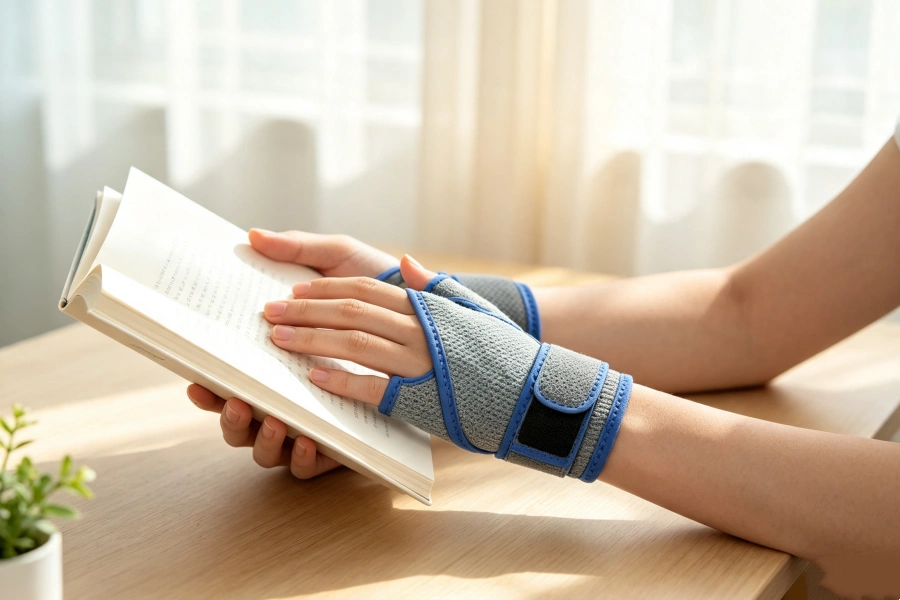
Does a thumb splint for arthritis really help, or is it just another waste of money? If you’ve ever winced while gripping a toothbrush, twisting a doorknob, or even holding a book, you know how debilitating thumb arthritis can be. The promise of a simple, inexpensive thumb splint sounds almost too good to be true. But before you buy one or dismiss it altogether, let’s examine what the evidence actually says—and whether that small piece of fabric and plastic could be the relief you’ve been searching for.
Does a Thumb Splint Help Arthritis?
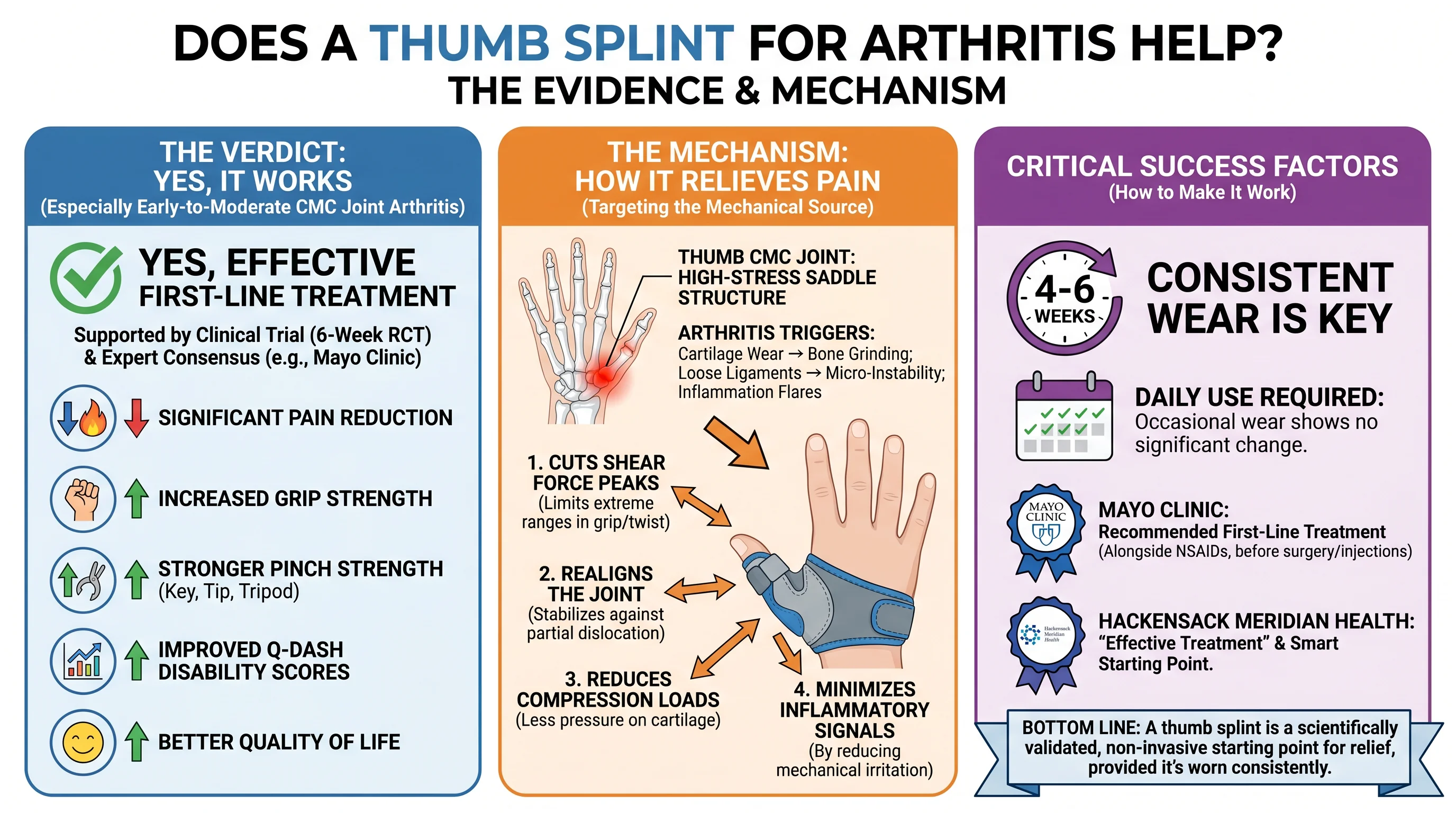
The evidence is clear: yes, thumb splints work — and for early-to-moderate CMC joint arthritis, they work well.
A 6-week randomized controlled trial followed patients with early-stage basal joint arthritis. All wore a prefabricated CMC–MCP immobilization splint. The splint group showed significant improvements across every measure tested. Pain dropped. Grip strength climbed. Pinch strength — key, tip, and tripod — all got stronger. Q-DASH disability scores went up. Quality of life improved. The control group? No significant changes in any category.
Mayo Clinic lists thumb immobilization splints alongside NSAIDs as a genuine first-line treatment — before injections, before surgery. Hackensack Meridian Health calls it an “effective treatment” and a smart starting point.
One honest caveat: consistent wear matters. Most protocols call for at least 4–6 weeks of daily use to see real results. Occasional wear won’t move the needle.
How a Thumb Splint Relieves Arthritis Pain (The Mechanism)
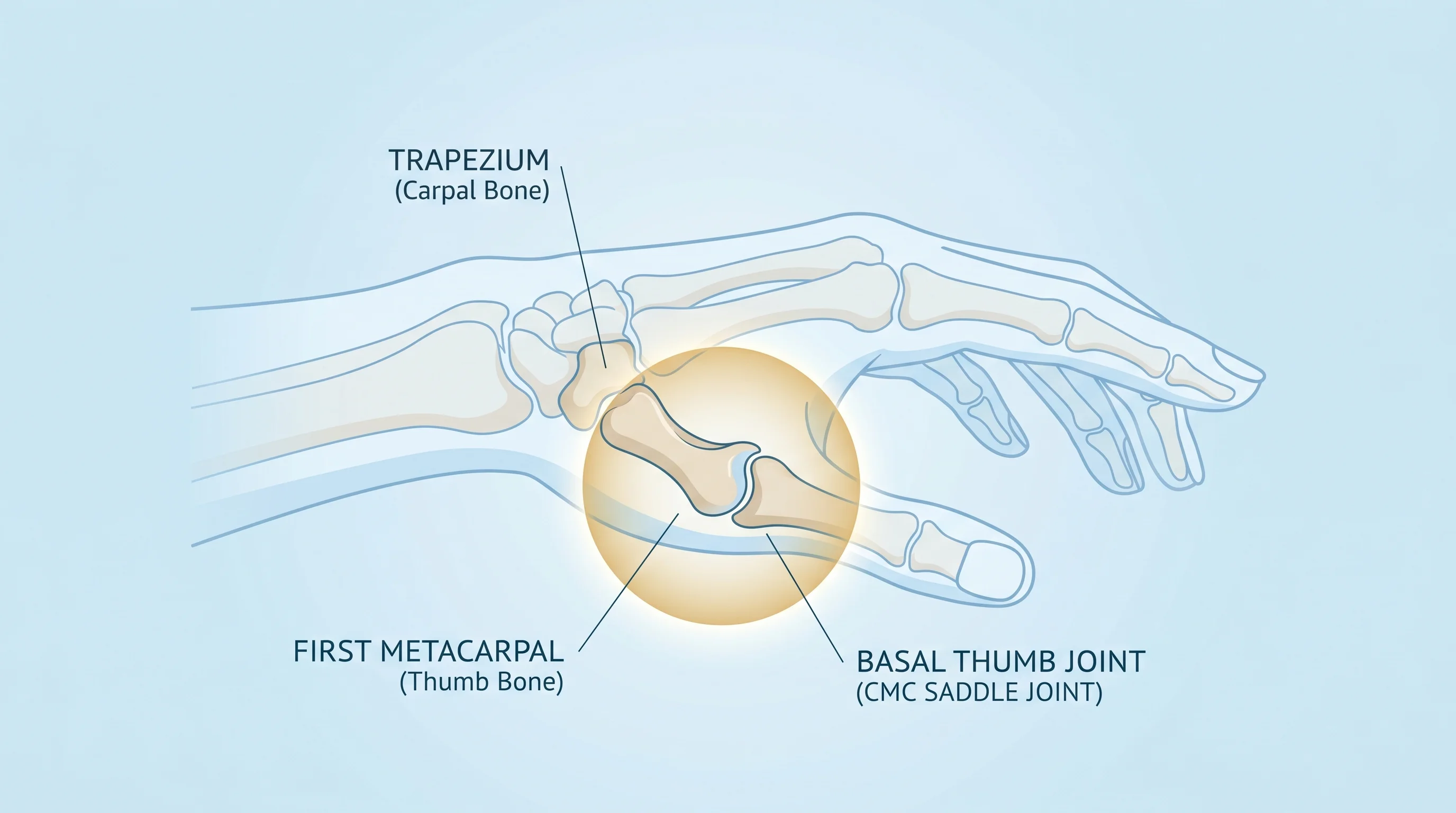
Your thumb’s CMC (carpometacarpal) joint is a saddle-shaped structure built for a wide range of motion: pinching, rotating, gripping, opposing. That versatility comes at a cost. Every time you pinch a lid or swipe your phone, the joint takes on high shear forces and compression loads — hitting the cartilage surface hardest. Arthritis triggers three problems at once:
Cartilage wears down → bone starts grinding against bone
Ligaments loosen → the joint develops micro-instability and partial dislocation, which raises shear stress
Synovial inflammation flares → inflammatory signals boost every pain signal the joint sends
A thumb splint for arthritis doesn’t mask that pain. It targets the mechanical source of it.
Four Ways a Thumb Splint Works
1. Cuts the shear force at its peak
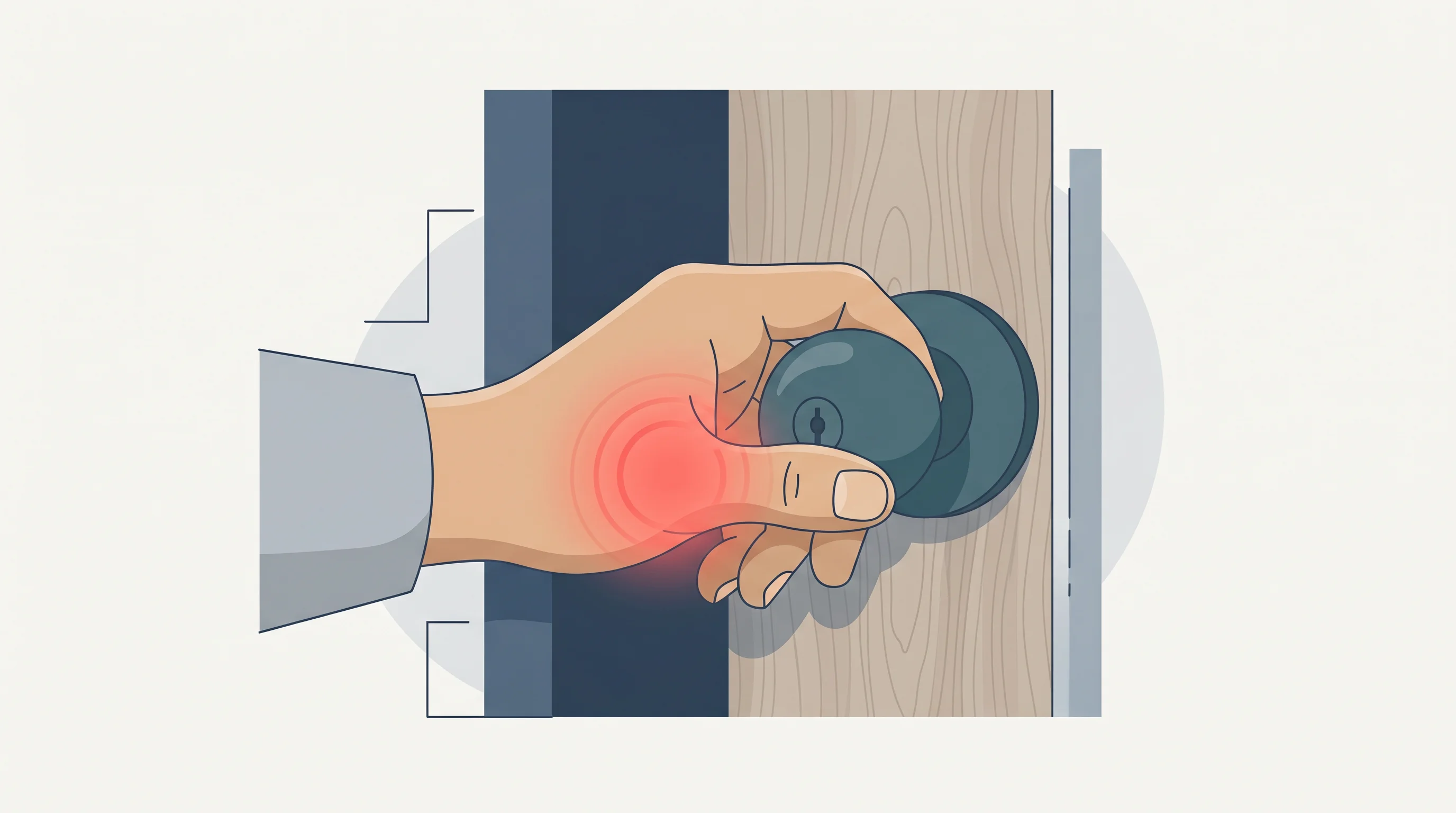
Pinching, twisting, and gripping are the exact movements that spike CMC joint pressure the most. A rigid thumb splint limits the extreme ranges where shear force peaks. Less movement in those danger zones means fewer pain flare triggers per day.
2. Realigns the joint, redistributes the load
A well-fitted basal joint arthritis splint holds your thumb in a neutral or gently abducted position. That alignment matters. It shifts force away from the damaged cartilage surface. The brace structure absorbs part of the load, too. Contact stress drops, and pain receptors fire less often.
3. Stops the micro-movement that feeds inflammation
Even tiny, involuntary thumb shifts can tug on an inflamed synovial lining — again and again. A thumb immobilization splint cuts out that low-level, constant irritation. Less mechanical agitation gives the inflammatory cycle fewer reasons to restart.
4. Gives your muscles a break from overcompensating
An unstable joint forces surrounding muscles to co-contract just to hold things together. This compresses the joint even harder. A CMC joint thumb brace takes over that stabilizing role instead. Muscles relax. Compression drops. That’s part of why clinical data shows grip and pinch strength increase after 6 weeks of consistent splint use — pain drops, and the muscles can work for you.
What a Thumb Splint Can and Cannot Do for Arthritis?
Knowing what a thumb splint does and what it doesn’t help you get the most from it.
What a thumb splint can do:
Reduce pain by resting and stabilizing the basal joint.
Improve hand function for pinch-heavy and grip-heavy tasks that your thumb controls
Build grip and pinch strength over a consistent wear period
Fit around your routine
What a thumb splint cannot do:
Reverse arthritis or rebuild cartilage
Replace surgery once conservative care stops being enough
Work for everyone
Rigid vs. Soft vs. Custom: Which Type of Arthritis Thumb Brace Is Right for You?
Rigid Thumb Splints: Maximum Support When You Need It Most
A rigid thumb splint is your heavy-hitter. It has a hard plastic or metal core, a firm structure, and limits CMC and MCP joint movement. This is the option built for moderate-to-severe basal joint arthritis, post-surgical recovery, or heavy tasks like hauling groceries or working in the garden.
The real sweet spot for rigid braces? Nighttime wear. Your thumb moves without you knowing it while you sleep. A hard-shell thumb immobilization splint stops that unconscious movement, cuts morning stiffness, and gives inflamed tissue a real rest cycle.
The typical wear schedule looks like this:
Weeks 1–3: Wear your rigid brace during painful activities (opening jars, turning handles) and all night
Weeks 4–6: Scale back to high-load tasks and flare-ups only. Swap in a soft brace for lighter day-to-day use
Soft Neoprene Thumb Braces: Your Everyday Daytime Option
Rigid is the night shift. A soft neoprene thumb brace for arthritis is the day shift.
Neoprene flexes. Your thumb can bend, pinch, and push — so you can type, drive, text, and handle light housework while still getting gentle CMC joint compression and warmth. That warmth helps with stiffness, especially in the morning or in cold weather.
A soft thumb splint should feel snug and supportive — not painfully tight. Fingers going numb or tingly? Loosen the brace right away.
This type works best for early-to-moderate thumb carpometacarpal arthritis, where keeping function matters just as much as easing pain. It won’t lock your joint down — and that’s the whole point.
Custom Thermoplastic Orthotics: Off-the-Shelf Not Working?
A large analysis compared prefabricated soft splints vs. short thermoplastic custom-made splints for thumb CMC osteoarthritis. The results were surprising. Pain relief, grip strength, and pinch strength outcomes did not differ meaningfully between the two groups. Prefabricated soft splints even scored slightly higher on functional disability scores than custom ones.
So when does custom make sense?
Standard rigid or soft options aren’t controlling your pain
You have visible joint deformity or unusual hand proportions
Your work demands high precision — musicians, craftspeople, surgeons
A hand therapist molds thermoplastic material to your hand, sets the exact CMC support angle, and maintains the movement range your job requires. That precision costs more: custom orthotics run $100–$300+, compared to $20–$60 for a soft prefabricated brace and $40–$100 for a rigid option.
Quick Comparison: Which Thumb Brace Fits Your Situation?
|
Rigid |
Soft Neoprene |
Custom | |
|---|---|---|---|
|
Best for |
Moderate–severe arthritis, nighttime, heavy tasks |
Mild–moderate arthritis, daytime wear |
Failed standard braces, deformity, precision needs |
|
Support level |
High |
Medium |
Medium–High (fitted to you) |
|
Activity range |
Limited |
Full daily function |
Custom-configured |
|
Price range |
$40–$100 |
$20–$60 |
$100–$300+ |
|
Best time to wear |
Night + flares |
Day |
Varies |
How to Choose the Best Thumb Splint for Arthritis?
Match the Thumb Brace to Your Severity Level
Mild arthritis: A short thumb splint (also called a thumb spica or thumb post) works well here. It blocks the extreme ranges that trigger pain while keeping your hand free for everyday tasks.
Moderate arthritis: Step up to a thumb-wrist brace. The extra wrist coverage takes pressure off the connection between your CMC joint and wrist — a pain pattern Mayo Clinic recognizes. This style suits both daytime use and nighttime wear.
Severe arthritis or visible joint deformity: Go with a firmer, night-rest style splint. The focus shifts from staying functional on the move to giving your joints full rest and controlling inflammation overnight.
One thing worth knowing: more rigid does not mean better. Over-supporting a mild case can weaken the muscles around your joint and slow your recovery down.
Get the Fit Right
A well-fitted thumb pain relief brace should feel secure — not tight or cutting off circulation. Put it on, then run through this quick three-point check:
Does your basal joint feel stable, and is the pain clearly lower?
Can your fingertips move with enough freedom for your regular tasks?
Any numbness, tingling, cold fingers, or extra swelling? Those are signs the brace is too tight — loosen it or go up a size.
Buying online without trying first? Pick an adjustable velcro strap version. Thumb swelling changes throughout the day — this is common with rheumatoid arthritis — and adjustable closures let you fine-tune the fit as your hand changes.
Prioritize Breathability for Long-Term Wear
Wearing a neoprene thumb brace for arthritis close to full-time is common — the 4–6 week protocol often calls for it. Comfort matters here. A brace that traps heat or irritates your skin is one you’ll stop wearing.
Look for lightweight, breathable lining that stays cool and doesn’t create friction. Older adults and anyone with sensitive skin should check for hypoallergenic, non-irritating interior materials. Smooth, well-covered edges also matter — rough seams cause pressure sores over long wear periods.
Match Your Splint to Your Daily Situation
|
Scenario |
Best Choice |
|---|---|
|
Housework, phone use, light tasks |
Short thumb splint — keeps movement, cuts pain |
|
Nighttime pain or morning stiffness |
Night-rest rigid thumb splint — stops unconscious twisting |
|
Recurring inflammation flares |
Fuller-coverage support brace; pair with cold therapy |
|
Wrist pain alongside thumb pain |
Thumb-wrist combination brace |
How Long Should You Wear a Thumb Splint for Arthritis?
The 6-Week Protocol: What the Evidence Says
Clinical research on early-stage thumb CMC osteoarthritis points to a clear two-phase pattern:
Weeks 1–3: Wear your thumb immobilization splint as much as possible — daytime, nighttime, without skipping. This high-dose phase drives rapid pain reduction.
Weeks 4–6: Keep up regular wear, with extra focus on painful activities and nighttime. By the end of this phase, most patients notice real improvements in pain, grip strength, and hand function.
After six weeks of steady wear, pain has dropped for most people. At that point, you can start pulling back to wearing it for specific high-load activities.
Nighttime vs. All-Day: How to Decide
Wear it day and night if:
Pain disrupts your sleep
Even light daily tasks trigger flares
You’re in the first 3-week intensive phase
Nighttime use works if:
Daytime pain stays manageable
You need full hand function for work
Mayo Clinic confirms this: some patients need nighttime splinting long-term
One firm rule: Always remove your basal joint arthritis splint before washing your hands or doing gentle joint mobility exercises. Wearing it non-stop stiffens the joint.
What Tasks Call for the Thumb Brace During the Day
|
Wear it for |
Can skip it for |
|---|---|
|
Opening jars, twisting lids |
Reading, watching TV |
|
Lifting groceries, gripping tools |
Low-load rest periods |
|
Gardening, chopping, kneading dough |
Short, thumb-light conversations |
|
Long typing sessions (if pain scores ≥ 3/10) |
Sleeping (if nights are pain-free) |
Long-Term Reality
Some arthritis patients use a thumb pain-relief brace for years — not all day, but at the right moments: during flares, for heavy tasks, or at night when pain returns. That’s smart joint management.
Pain creeps back after you cut back on wear? Return to the schedule that kept your symptoms under control. Then try reducing wear again, but do it more slowly this time.
Frequently Asked Questions About Thumb Splints for Arthritis
What’s the difference between a thumb splint and a thumb brace?
“Thumb splint” is the broad category. A thumb brace — or thumb spica brace — is a specific type. It supports both the thumb and part of the wrist. Soft splints (neoprene, fabric) give compression and mild support. These work well for daytime use and milder pain. Rigid thumb spica braces offer strong immobilization at the CMC and MCP joints. That’s your go-to for moderate-to-severe arthritis, flares, or post-surgical recovery.
CMC brace vs. wrist brace — which one do I need?
Pain at the base of your thumb means you need a CMC thumb splint. A wrist brace locks down the wrist but doesn’t control the CMC joint motion well enough. For isolated basal joint arthritis, that’s the wrong tool. A wrist brace only makes sense when both your wrist and thumb are symptomatic.
What about rheumatoid arthritis?
RA adds extra complexity. RA can cause joint deformity and instability. So a rheumatoid arthritis thumb support does two jobs: it reduces pain and keeps alignment steady to resist deforming forces. Key rules for RA:
Don’t wear it without breaks — regular movement prevents disuse stiffness
Watch for red marks, tingling, or rubbing — stop use straight away and check with your rheumatologist or hand therapist
Step up splint use during high-inflammation episodes; scale back as flares calm down
How do I know if my thumb splint fits correctly?
Run through this quick checklist:
Pain is lower with the splint on
No numbness, tingling, or cold fingers
No persistent red marks after 15–20 minutes of taking it off
Thumb rests in a gently abducted, functional position
You can still manage light tasks suited to the brace type
Any of those boxes unchecked? The fit is off — or you’ve got the wrong type altogether.
What are the real risks of wearing a thumb splint?
Three things to watch for:
Muscle weakness and stiffness from over-wearing — rigid styles carry the most risk here
Skin irritation, pressure sores, or tingling from poor fit or materials that don’t breathe
Loss of range of motion over time if splinting isn’t paired with a regular thumb and wrist exercise routine
A thumb pain relief brace should be one part of your plan — not the whole plan.
Conclusion
Living with thumb arthritis is hard — and you deserve real relief. The truth is, a quality thumb splint for arthritis works: it stabilizes the joint, reduces inflammation, and helps your hand move the way it was meant to.
Ready to find yours? As a professional custom brace manufacturer, we’re committed to quality and real support.