

That sharp twinge below your kneecap after a run, a jump, or even just climbing stairs—the kind of pain that makes you Google things at 11 PM, half-hoping for a quick fix. So you’re wondering if a simple patella strap can actually do anything for patellar tendonitis or that nagging jumper’s knee that won’t quit.
We’ll unpack the actual biomechanics behind how a patella strap redistributes load on your tendon, what the research really shows, and exactly when this small piece of gear earns its place in your recovery versus when you need something else entirely.
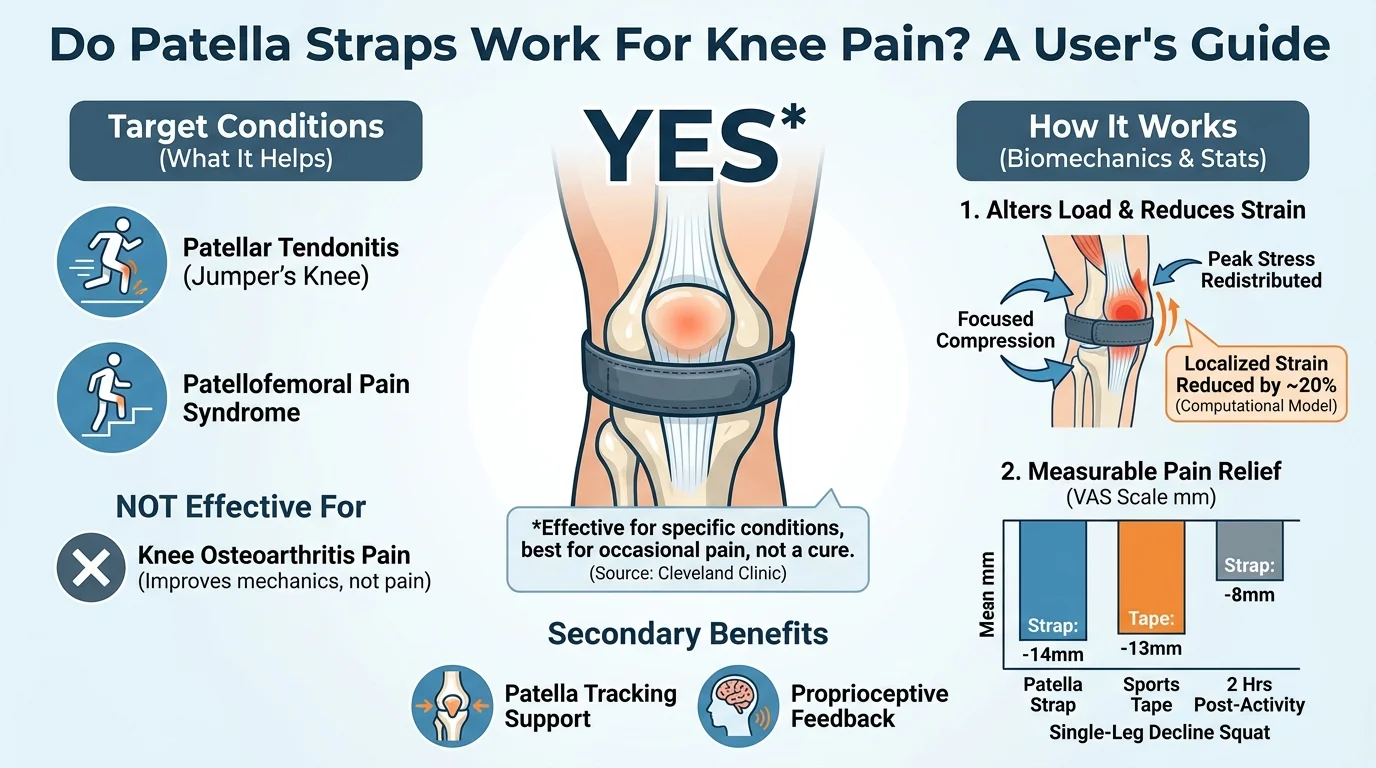
Patella Straps Work for Knee Pain, but with an Asterisk
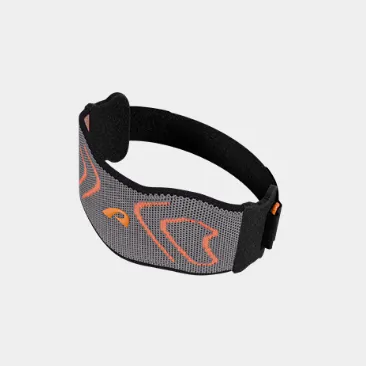
Patella straps work best for patellar tendonitis (jumper’s knee), not knee pain in general.
Cleveland Clinic backs this up, noting the strap reduces strain on the tendon and helps with patellofemoral pain syndrome. But the clinic calls it useful for “occasional pain,” not a cure.
One clinical study found a patella strap dropped pain by 14mm on a VAS scale during single-leg decline squats. Sports tape was similar at 13mm. Two hours post-activity, strap users saw an 8mm pain reduction.
For knee osteoarthritis, though, straps improved movement mechanics without meaningfully reducing pain. So if your pain isn’t tendon-based, don’t expect miracles.
How Patella Straps Work: The Mechanism Behind Pain Relief
A patella strap sits directly below your kneecap, right over your patellar tendon. That placement is the whole point.
The patella strap applies focused compression to one spot, changing how load travels through your patellar tendon. Researchers call this altering the patella–patellar tendon angle (PPTA), sometimes alongside shifts in patellar tendon length (PTL). Together, these changes nudge peak stress away from the exact spot where your tendon is already irritated or damaged.
The numbers back this up. One computational model found localized strain dropped by nearly 20% in overuse-affected regions when a strap was worn. Strain reduction tracks with pain reduction in clinical observations: less mechanical stress, less pain. So compression alters the load angle, reduces peak strain, and relieves pain.
This effect shows up most during high-load movements like running, jumping, squatting, and stairs. Anything that spikes tension through your patellar tendon.
Two Supporting Mechanisms
Patella straps offer two secondary benefits beyond tendon unloading.
One is patella tracking support. By limiting excessive kneecap movement, straps improve the mechanical environment for patella tracking issues, though this is a supporting effect.
The other is proprioceptive feedback. Constant skin contact from the strap feeds sensory input to your nervous system, potentially sharpening knee proprioception and triggering better stabilizing muscle response.
Proper placement matters. Position it about one strap-width below your kneecap, directly over the tendon. Tightness should feel like firm pressure, not numbness. Put it on before activity, especially before running, jumping, or heavy training sessions.
When Patella Straps Actually Help?

Not every knee ache qualifies. A patella strap earns its keep in one specific scenario—pain sitting directly below your kneecap, right at the patellar tendon.
The pattern looks like this:
– Pain sits under the kneecap
– It flares with jumping, landing, running, stairs, and squats—repeated loading
– It gets worse during activity and better with rest
That’s classic patellar tendonitis territory. Jumper’s knee, essentially. Some cases of patellofemoral pain syndrome fit too, especially when front-knee pain kicks in during movement.
Where Patella Straps Work Best:
Jumping and landing sports like basketball and volleyball see reduced tendon strain on impact.
Running is the obvious one. If your knee pain when running centers on the tendon, not the joint itself, this is exactly the use case patella straps were designed for.
Squats and gym work show measurable improvement too. One study found better weight-bearing symmetry between legs during 30° and 60° squat tests in knee osteoarthritis patients (p = 0.006 and p = 0.011). Not dramatic, but real.
Stairs and long walks count as well, especially for activity-related front-knee pain.
Quick self-screen. Answer yes to all three, and a patella strap’s worth trying:
1. Pain sits just below the kneecap
2. It worsens with jumping, running, stairs, or squats
3. It improves when you rest or reduce load
When Patella Straps Are Not Enough?
If your pain comes from a torn ligament, a ruptured meniscus, a fracture, or progressive arthritis, a compression strap for knee support won’t touch the root cause. It’s fabric and Velcro, not a substitute for a medical evaluation.
The Cochrane review found weak-to-absent evidence for knee orthoses in patellofemoral pain syndrome specifically. If you’re dealing with arthritis or degenerative joint pain, treat the strap as a symptom tool, not a treatment.
Straps also can’t do the heavy lifting recovery actually requires. They don’t rebuild weak quads. They don’t reverse cartilage wear. They don’t correct faulty movement patterns. Load management, targeted strengthening, and time do that work. A strap just quiets the noise while you do it.
Misuse Is Common, and It’s Not Harmless
All-day wear sounds responsible. It’s actually counterproductive. Continuous use, especially while sitting, resting, or sleeping, can lead to muscle dependence, reduced quad activation, restricted circulation, and skin irritation. Cap wear at 2-3 hours per session, only during pain-triggering activity. Never sleep in it.
Placement errors hurt effectiveness too. Too high, and it compresses the kneecap instead of the tendon. Too low, and it sits on your shinbone doing nothing useful.
Overtightening causes numbness or tingling. That’s a signal to loosen, not proof it’s working harder.
If pain hits during every activity, worsens with walking, or comes with swelling, instability, or trauma history, skip the patella strap. See a professional first.
How To Wear A Patella Strap?
Getting the mechanics right matters more than the strap itself. Wear it wrong, and you’re just wearing an expensive rubber band.
Where Should a Patella Strap Sit?
Slip the strap over your foot and pull it up to knee level. Center the padded section directly over your patellar tendon—about one finger-width below the kneecap. Fasten with even tension so pressure lands on the tendon, not the kneecap.
How Tight Should a Patella Strap Be?
Snug is the goal. Not crushing.
You want firm pressure, not numbness, tingling, or that circulation-cutting tourniquet feeling. If you can’t bend your knee, walk, or drop into a shallow squat comfortably, it’s too tight.
Walk a few steps, then squat. The strap should stay put—no rotating, bunching, or sliding toward your kneecap. That slippage is exactly the knee strap placement mistake that tanks effectiveness.
When and How Long to Wear It?
Tighten it before pain-provoking activity—running, stairs, squats, sport testing. Loosen it once you’re done. Continuous wear isn’t the goal; targeted support during load is.
One symptomatic knee needs one strap.
How To Choose The Best Patella Strap For Your Needs?
Match structure to your problem first:
-
Patellar tendonitis or jumper’s knee: go with a true infrapatellar strap—narrow, focused pressure right on the tendon.
-
Patella tracking issues or that wobbly, unstable feeling: a wider stabilizing knee support beats a thin strap here.
-
Patellofemoral pain or softening cartilage: look for an open-patella (horseshoe) design that avoids direct kneecap pressure.
Strap Size and Adjustability
Measure your leg circumference about 2-3 cm below the kneecap, then check it against the brand’s size chart. Circumference-to-chart matching prevents the two most common complaints: too loose (no support) or too tight (numbness, slipping).
Material, Breathability and Comfort
-
Breathability (mesh or perforated lining for running or basketball)
-
Elastic recoil (enough stretch to move, not so much it loses compression)
-
Skin contact (soft edges, low-friction stitching to prevent chafing)
Adjustability matters more than people think. Velcro or dual-strap closures let you dial pressure up for game day, down for recovery. Fixed-tension straps tend to either dig in or go slack mid-session.
Fit for Different Activities
-
Basketball: non-slip, quick on/off, stays put during cuts
-
Running: light, thin, breathable
-
Squats/lifting: durable compression that doesn’t restrict bending
Before buying, confirm: a real size chart, a stated use case (running, court, gym, daily wear), adjustable pressure, and a return policy in case the fit’s off.
Red flags after purchase: numbness or tingling within 15 minutes, constant re-adjusting mid-activity, or pain shifting from your tendon to the front of your kneecap. Any of those mean the strap or the fit isn’t right for your specific issue.
For buyers evaluating patella strap suppliers, material consistency, sizing options, customization, packaging, and quality control can also affect product selection.
Conclusion
Patella straps won’t cure patellar tendonitis overnight, and they’re not a substitute for strengthening exercises or proper rehab. What they do offer is real, immediate relief—redistributing load away from your irritated tendon so you can keep moving, keep training, keep living without wincing at every step.
The best results come from using the strap consistently during the activities that trigger your pain: running, squatting, or climbing stairs.
If your knees have been talking to you, don’t wait for the conversation to get louder. A quality patella strap, worn correctly, might be the small adjustment that makes a big difference. Explore AOFIT‘s patella straps and take the next step toward pain-free movement.