
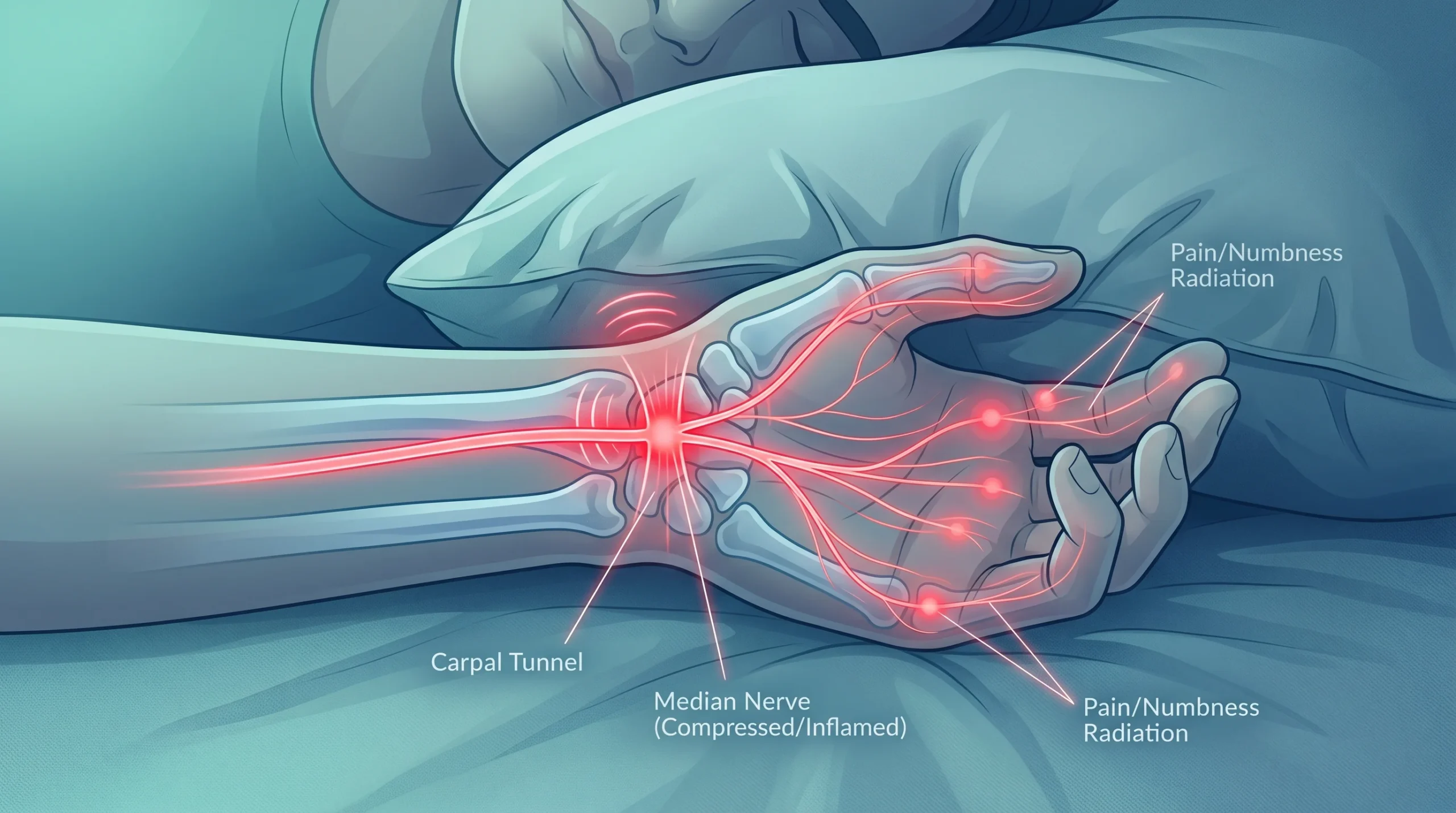
Wrist pain at night is a common complaint that disrupts sleep and diminishes quality of life. For many sufferers, the simplest and most accessible intervention is sleeping with a wrist brace. But does this passive support truly relieve nocturnal symptoms, or does it risk causing new problems like stiffness or nerve compression? This brief article examines the rationale for night‑time bracing, reviews current evidence on its effectiveness, and outlines practical considerations for those considering sleeping with a wrist brace as a nightly routine.
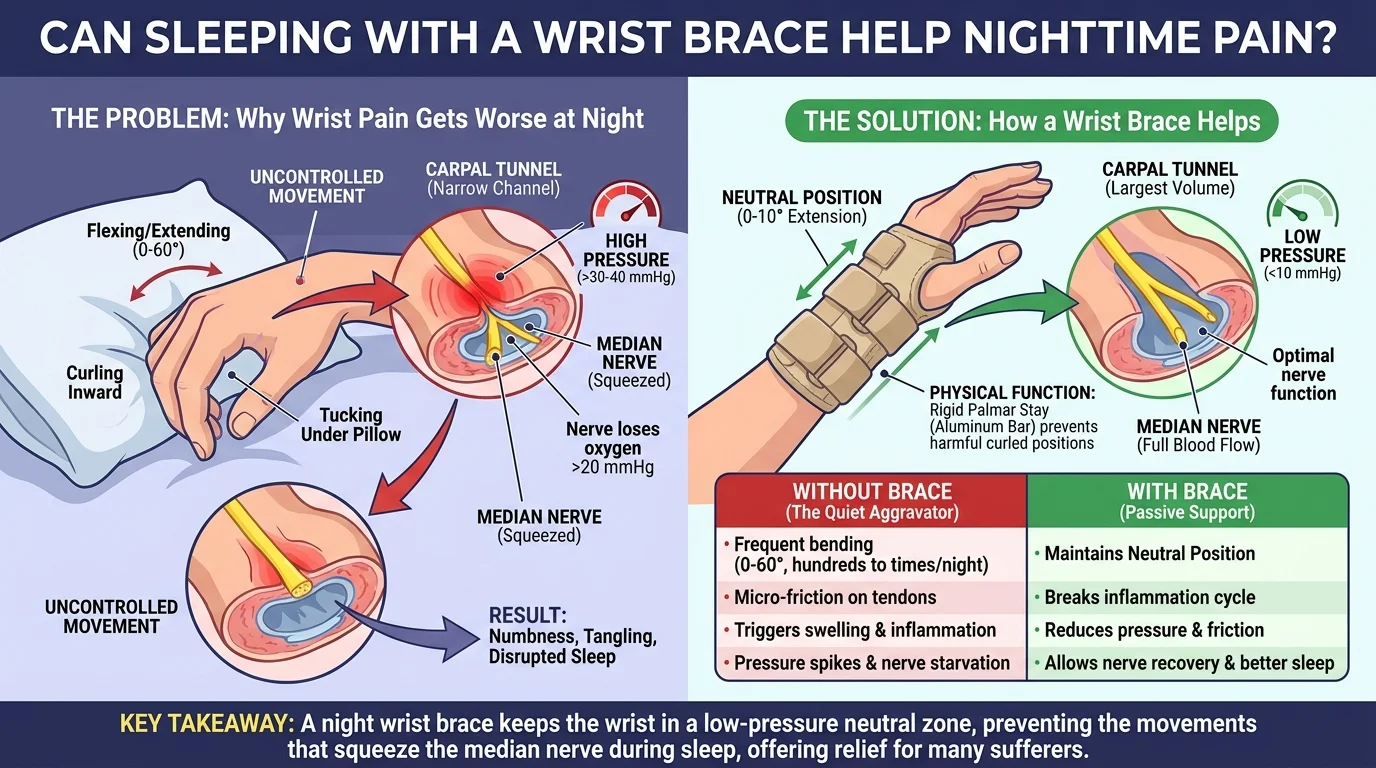
Why Does Your Wrist Pain Get Worse at Night?
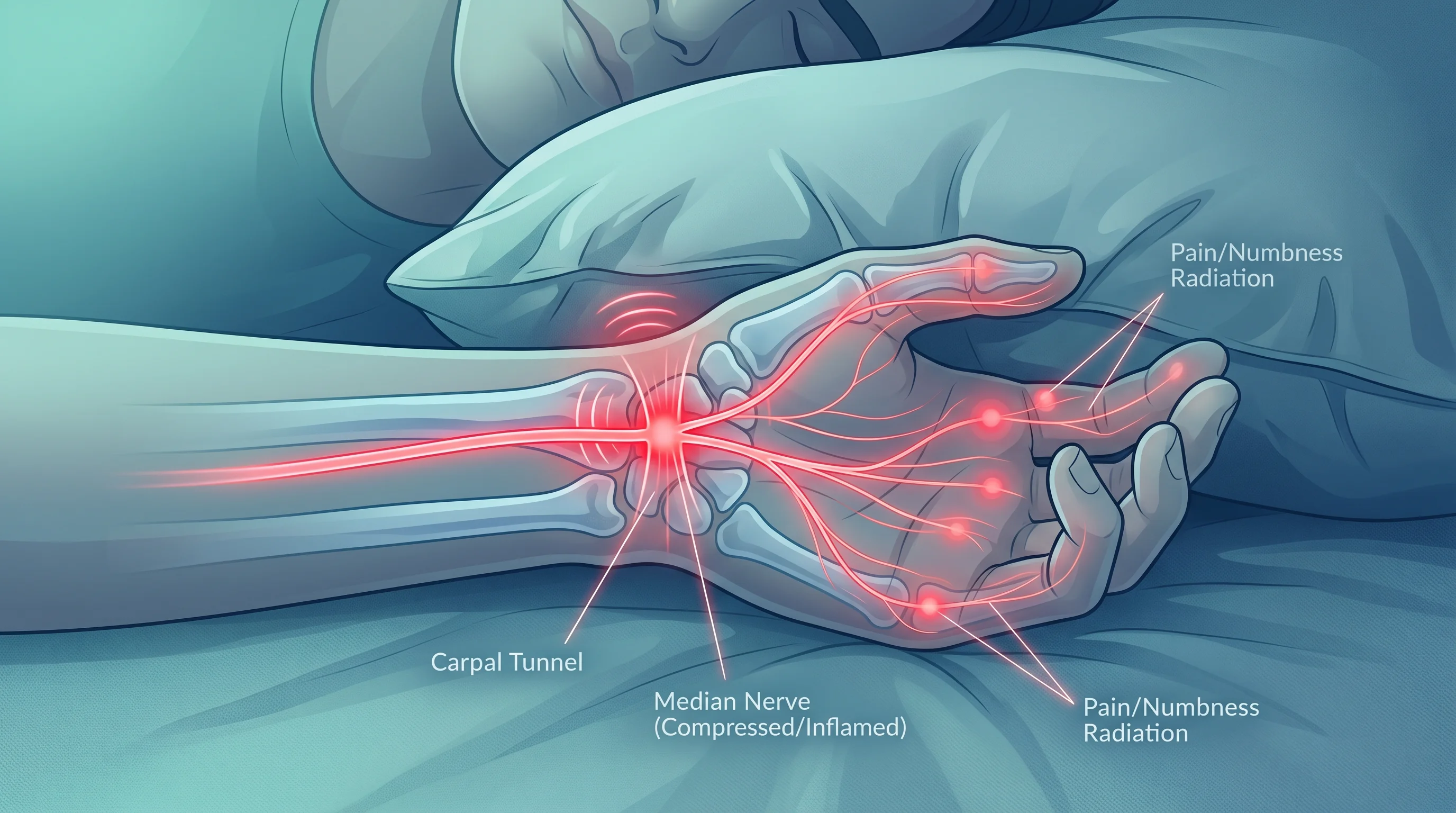
For many people dealing with carpal tunnel syndrome, wrist tendonitis, or post-injury pain, the hours between midnight and dawn are when the body does its worst damage.
The cause comes down to basic anatomy. There’s a narrow channel on the palm side of your wrist called the carpal tunnel. The median nerve runs straight through it. That nerve controls sensation in your thumb, index finger, and middle finger. Pressure builds inside that tunnel, the nerve gets squeezed, and the tingling starts.
Sleep Doesn’t Equal Recovery
Lying still doesn’t bring that pressure down. During sleep, most people flex or extend their wrists without realizing it — curling them inward, tucking hands under pillows, or resting them beneath their body weight. Those positions squeeze the already-tight carpal tunnel even further. The median nerve ends up in an even smaller space.
Static, uncontrolled wrist positioning during sleep is the quiet aggravator — and it’s something you can fix.
How a Wrist Brace Helps While You Sleep?
Your wrist has what’s called a neutral position, between 0° and 10° of gentle extension. At this angle, your forearm and the back of your hand form close to one straight line. The carpal tunnel reaches its largest internal volume here. Pressure inside that narrow channel drops below 10 mmHg. The median nerve gets full blood flow. Everything works as it should.
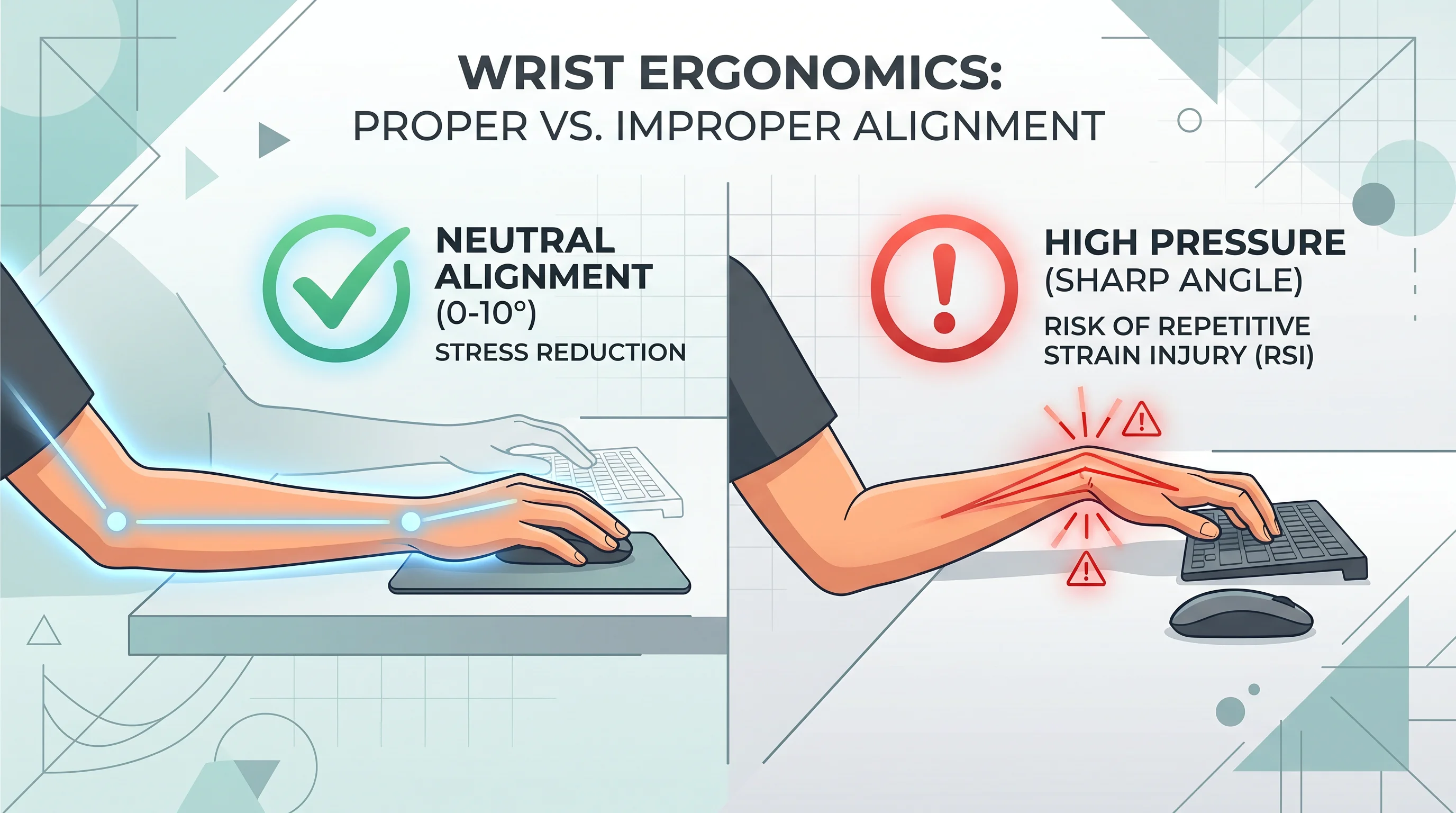
Now curl your wrist to 45–60°. That’s the kind of bend that happens without thinking when you tuck your hand under a pillow. Internal pressure spikes above 30–40 mmHg. Past 20 mmHg, the nerve starts losing oxygen. This slow oxygen shortage is the direct reason you wake up with numb, unresponsive fingers.
Here’s the part that surprises most people. Without a brace, your wrist moves through a 0–60° flexion range hundreds of times per night. You don’t feel it happening. But your tissue does. Each small bend creates micro-friction against already-inflamed tendon sheaths and ligaments. That friction triggers more swelling, more pressure, more inflammation.
What the Wrist Brace Does, Physically
A night wrist splint breaks that cycle through simple engineering. The palmar metal stay is an aluminum bar — 1.5–3 mm thick, running 10–12 cm from your palm base to your lower forearm. It’s stiff enough that bending past 0–5° means bending the bar itself. That resistance holds your wrist inside a 0–10° extension window all night.
Here’s what that does:
- Micro-movement drops by more than 50%
- Shear stress on the tendon sheaths falls
- Inflammatory signals slow down
- Carpal tunnel pressure stabilizes back toward the normal sub-15 mmHg range and holds there for a full 6–8 hours
Who Should and Shouldn’t Sleep With a Wrist Brace?
People Who Benefit From Sleeping With a Wrist Brace
Carpal tunnel syndrome (mild to moderate)
The NIH recognizes nighttime splinting as a first-line conservative treatment for mild-to-moderate CTS. You’re waking with numbness, tingling, or burning in your thumb, index, or middle fingers. Symptoms ease after shaking your hand. A night brace is a backed, proven first step. Some people notice real improvement within one to two weeks.
Desk workers and heavy keyboard users
Repetitive wrist use throughout the day leaves tendons and nerves irritated by evening. Nighttime aching, occasional numbness, or that vague deep soreness after long hours at a screen, these are warning signs worth paying attention to. Wearing wrist support to bed helps. So does adjusting your workstation setup. Together, they can stop things from progressing to full CTS or tendonitis.
Pregnant women with wrist swelling
Pregnancy-related fluid retention narrows the carpal tunnel. Nighttime numbness and reduced grip strength are common complaints, especially in the third trimester. A neutral-position wrist splint at night is one of the safest options available. No medication. No risk to the baby. Just real pressure relief.
Mild sprains and tendonitis recovery
Non-fracture wrist sprains and conditions like De Quervain’s tenosynovitis are common, especially in new parents from repeated lifting. A night brace reduces passive movement during sleep. It limits further irritation and supports the tissue as it heals. It’s not a replacement for proper treatment. But it makes the recovery process much smoother and less disruptive.
Wrist arthritis
Degenerative or rheumatoid arthritis flares after a full day of hand use. Sleeping without support lets the joint move freely all night, which makes morning stiffness worse. A wrist brace keeps the joint in a comfortable, stable position. You often wake up with less stiffness and less pain.
When a Wrist Brace Isn’t the Right Answer
Open wounds or unhealed surgical sites
A wrist brace over broken skin creates a warm, compressed environment. That’s the type of condition that slows healing and raises infection risk. Wait until the wound is closed before putting on any support.
Suspected fractures
A standard wrist brace does not provide the level of immobilization a fracture needs. It can hide serious symptoms. Worn in the wrong position, it can also cause further displacement. Sharp localized pain, visible deformity, or inability to bear weight — get imaging done within 24 to 48 hours. A wrist brace is fine for one night of temporary stabilization before your appointment.
Circulation issues or skin conditions
Your fingers turn pale, cold, or more numb after putting the brace on. Take it off right away. People with peripheral vascular disease, diabetes-related circulation problems, or active skin conditions like eczema or fungal infections on the wrist need medical guidance first. Do not use any overnight support without that input.
Children and adolescents
Growing joints and soft tissue react to prolonged immobilization in ways that differ from adults. A pediatric or orthopedic assessment is essential before a child wears a wrist splint at night.
Night Wrist Splint vs. Soft Compression Sleeve: Which One Works for Sleep?
The Core Distinction: Immobilization vs. Comfort
A night wrist splint with a rigid palmar stay scores 8–10 out of 10 for neutral-position control during sleep. That aluminum bar stops your wrist from curling past 0–5°. It holds. All night.
A soft compression sleeve scores 1–3 out of 10 for the same task. It warms. It compresses with light pressure. It feels reassuring. But it won’t stop your wrist from bending into the exact positions that compress the median nerve.
Match Your Symptom to the Right Wrist Support
| Your main complaint | What to reach for |
|---|---|
| Numbness/tingling that wakes you up | Rigid night splint |
| Need to shake hands to feel relief | Rigid night splint |
| Dull, achy soreness without nerve symptoms | Soft compression sleeve |
| Post-sprain, motion aggravates pain | Rigid night splint |
How to Wear a Wrist Brace at Night?
Find Neutral First
Get your wrist into the right position before fastening anything. Lay your forearm flat, palm down. Your wrist should form one straight line with your forearm. That’s neutral. The aluminum stay runs along your palm side, from just below the base of your palm up to the mid-forearm (about 8–10 cm past your wrist crease). Make sure its curve follows your palm.
The Step-by-Step Process
- Check the wrist brace and your skin. Confirm the metal stay is intact and the velcro grips well. Wash and dry your wrist.
- Slide your hand in, thumb first. Thread your thumb through the thumb opening. The stay should sit centered on your palm side.
- Confirm neutral position. Do this before you touch the straps.
- Fasten from the wrist outward. Start with the strap closest to your wrist crease. Work toward your palm, then your forearm. Each strap should feel snug but not restrictive — one finger should slip underneath without force.
- Run a quick circulation check. Press a fingertip and release. Color should return within two seconds. Fingertips should feel warm.
The Right Tightness and When to Loosen
Too tight: Numbness, tingling, or skin turning pale or bluish within 5–10 minutes. Loosen it right away.
Too loose: The brace shifts more than 1–2 cm as you roll over. The stay drifts off-center. Your wrist can still bend past 30°.
Put the brace on 10–15 minutes before you fall asleep, while lying still. Small adjustments now stop 3 a.m. problems later.
Building Up Wear Time
New to night splints? Don’t force a full eight hours straight off:
- Nights 1–3: 2–4 hours
- Nights 4–7: 4–6 hours
- After one week: Most people reach a full 6–8 hours with no trouble
During the day, take the brace off and move your wrist — 10–15 slow flexion and extension movements every couple of hours. Overnight support works best paired with careful daytime movement. Extended stillness around the clock is not the goal.
Stop and Remove the Brace If You Notice These Signs
- Pain gets noticeably worse compared to before putting it on
- Fingers stay numb or tingly for more than 30 minutes after removal
- Skin becomes blistered, broken, or shows signs of infection
- One hand feels much colder than the other
Real Results: What to Expect in the First Week of Sleeping With a Wrist Brace
Most people with mild-to-moderate carpal tunnel or wrist pain notice something shifting within 3–7 nights. The tingling softens a bit. You wake up less in the middle of the night. Morning stiffness starts to feel like something you push through.
Here’s a realistic picture of how that first week tends to unfold:
Nights 1–3: Your wrist is holding a position it isn’t used to. The wrist brace will feel strange, a mild pressure, a slight bulk under the sheets, a moment of awareness every time you shift. That’s normal. Many people also notice the nighttime tingling and numbness ease in these first few nights. The reason is simple: the wrist is no longer curling into nerve-compressing angles. A 20–30% drop in symptom intensity is a fair benchmark at this stage.
Nights 4–7: The adjustment settles. Most people stop noticing the wrist brace. They start noticing the results instead: fewer wake-ups, shorter morning stiffness, fingers that respond faster after getting up. A fair target by the end of the week: 30–50% fewer nighttime awakenings, and morning symptoms that clear in about half the time they used to.
How to Know It’s Working
Track three things each morning:
- Pain or numbness score (0–10). A drop of 2 or more points across 3–7 consecutive mornings is a clear positive signal.
- Number of nighttime wake-ups. Even one fewer per night shows the wrist brace is reducing compression.
- Time until symptoms ease after waking. That time window shrinks; your nerve is getting better recovery overnight.
Conclusion
A wrist brace for sleeping can break the cycle of compression, inflammation, and disrupted sleep—but only if it fits your wrist correctly. Off‑the‑shelf splints offer a good starting point, yet they rarely match the unique contours of your palm, forearm, and neutral angle. That’s why a custom‑fitted brace makes the difference: precise support where you need it, without unnecessary pressure elsewhere. If you’re ready to move beyond trial‑and‑error and get a brace built for your hand, explore the custom wrist brace to find your perfect fit and start waking up pain‑free.