
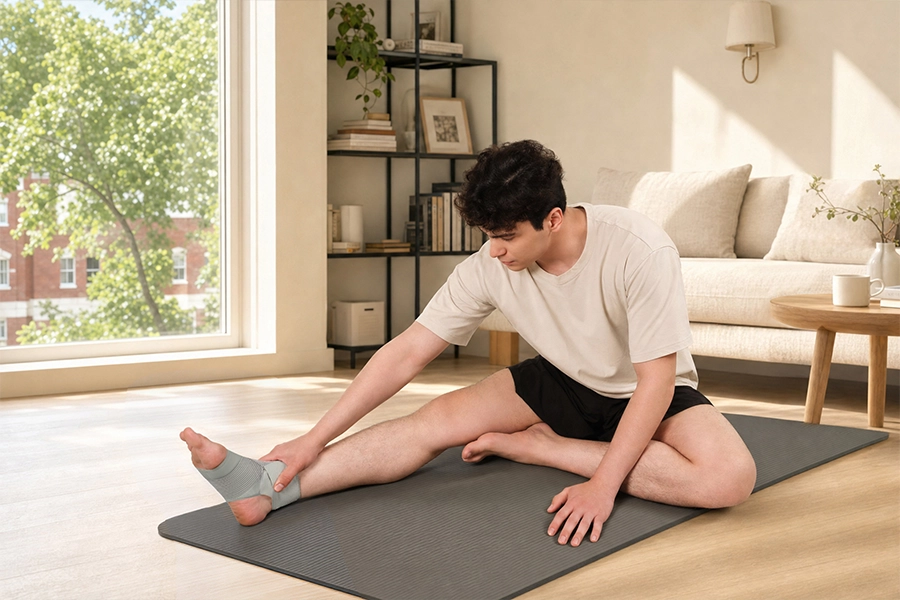
Living with ongoing ankle pain? You already know that getting through the day takes real strategy.
The good news: an ankle compression sleeve is one of the simplest, smartest tools out there. And most people aren’t using it right.
Managing plantar fasciitis? Recovering from a sprain that never healed right? Dealing with stubborn swelling that just keeps coming back? This guide covers all of it. You’ll see how compression therapy works, which conditions respond best to it, and how to pick and wear one for real, lasting ankle pain relief.
What Is an Ankle Compression Sleeve And Why Is It Different From a Brace?
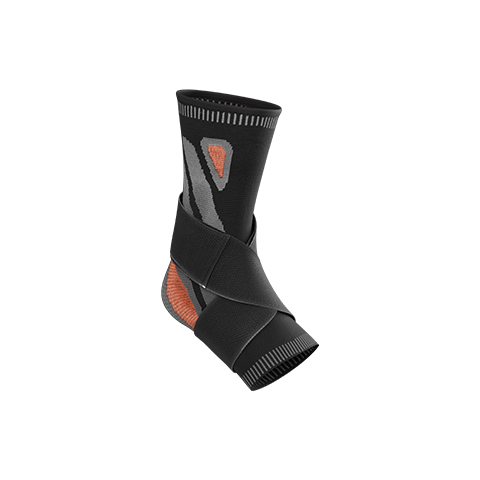
Slip a compression sleeve on, and you’ll notice right away: it feels like a sock, not a medical device. That’s on purpose, and it’s what sets it apart from a brace.
Here’s the clearest way to see the difference:
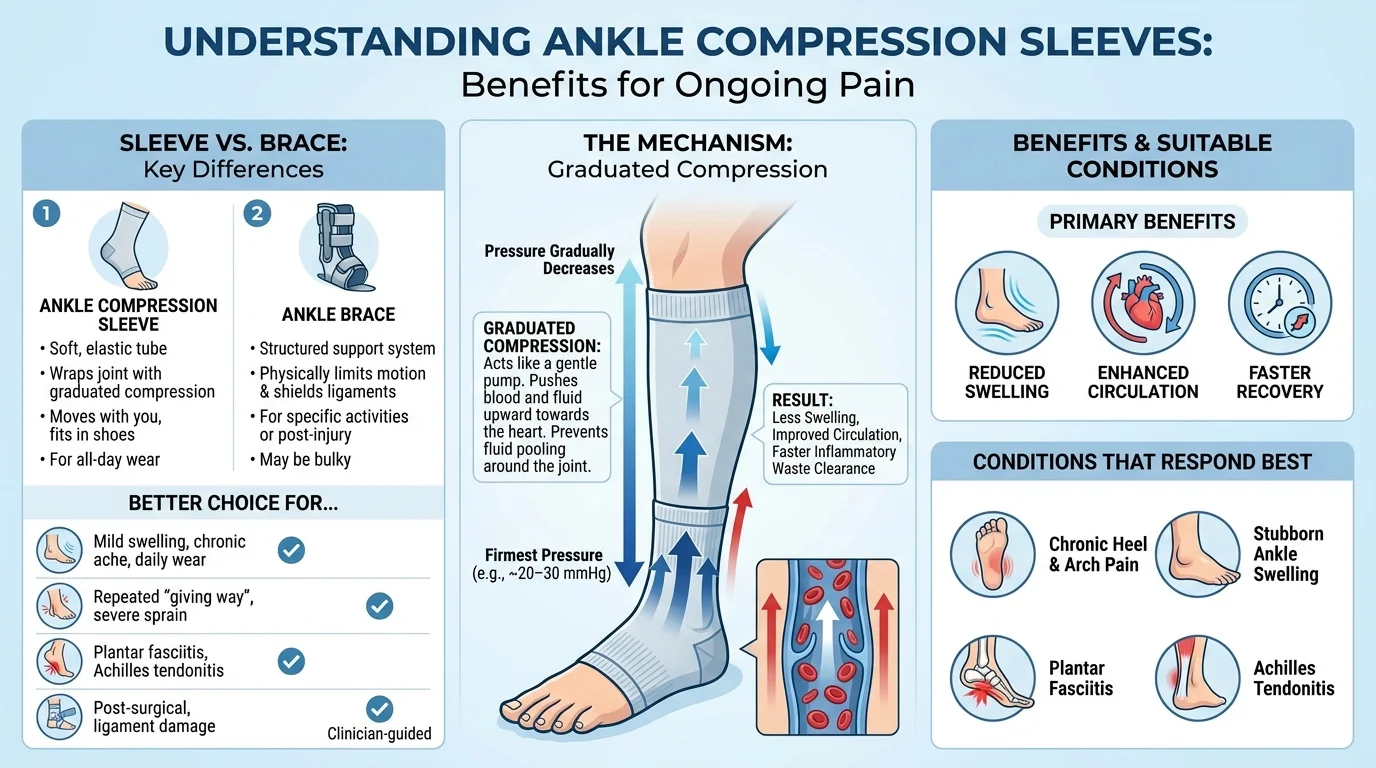
Ankle compression sleeve = a soft, elastic tube made from nylon and spandex. It wraps your joint in graduated compression. It moves with you, fits inside your shoes, and holds up for all-day wear.
Ankle brace = a structured support system with straps, stays, and sometimes semi-rigid panels. It’s built to physically limit motion and shield your ligaments from harmful movement.
The Graduated Compression Difference
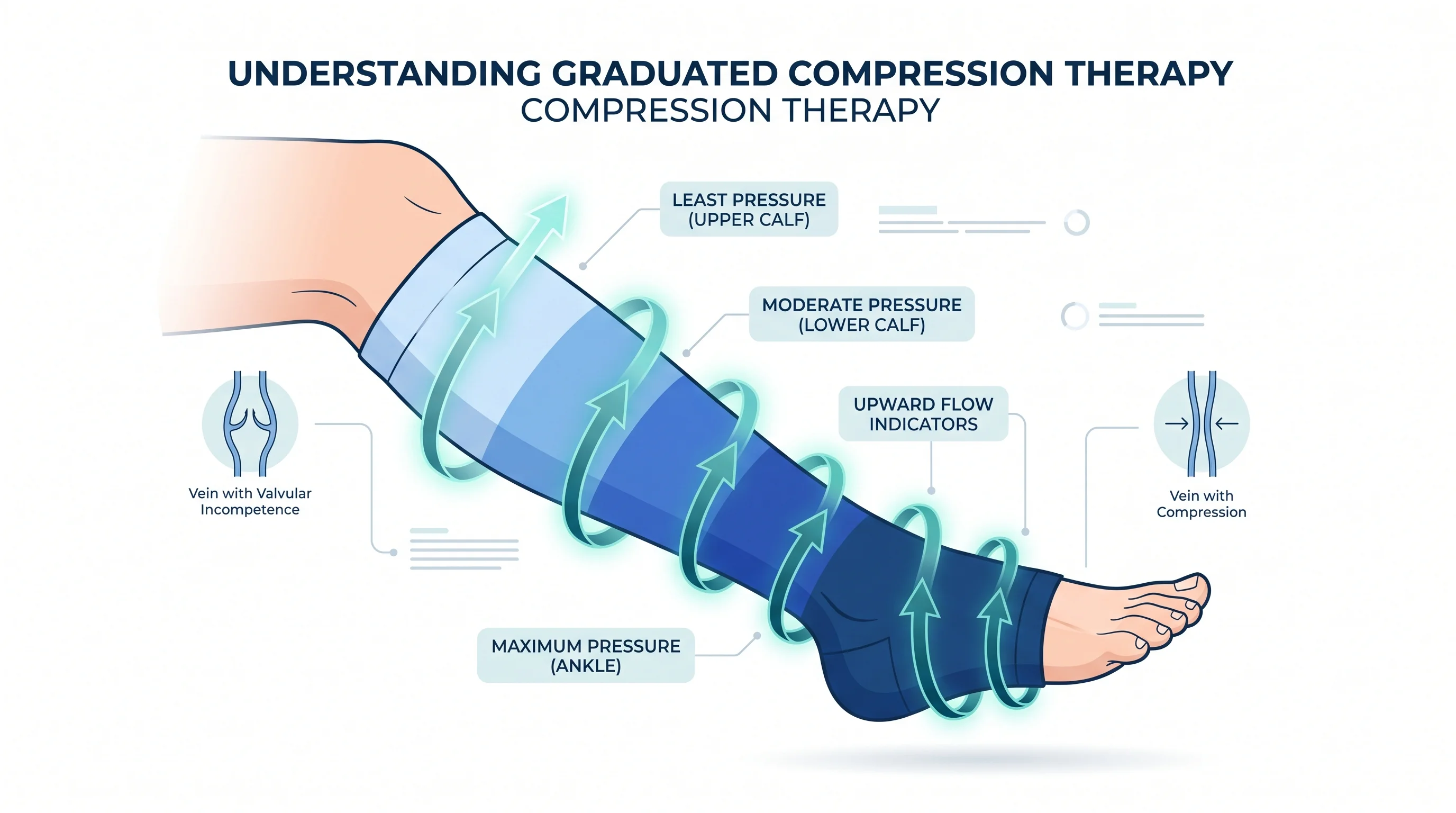
That word “graduated” matters more than most people expect. A quality ankle compression sleeve puts its firmest pressure at the ankle (~20–30 mmHg). Then it gradually eases off as it moves up the calf. This pressure gradient acts like a gentle pump. It pushes blood and fluid upward, back toward the heart. So fluid doesn’t pool around your ankle joint.
The result? Less swelling. Better circulation. Your body clears out inflammatory waste faster after activity.
A brace can’t do that. It holds your ankle in place, but it does nothing for blood flow.
Which One Do You Need?
|
Situation |
Better Choice |
|---|---|
|
Mild swelling, chronic ache, daily wear |
Ankle Compression sleeve |
|
Repeated “giving way,” severe sprain |
Ankle Structured brace |
|
Plantar fasciitis, Achilles tendonitis |
Ankle Compression sleeve |
|
Post-surgical rehab or ligament damage |
Ankle Brace (clinician-guided) |
Picking the wrong option creates real problems. A sleeve on a serious sprain leaves your ligaments without enough support. A brace worn for everyday swelling feels bulky, hot, and uncomfortable to keep on all day.
How an Ankle Compression Sleeve Relieves Ongoing Pain?
Compression therapy works through three distinct mechanisms.
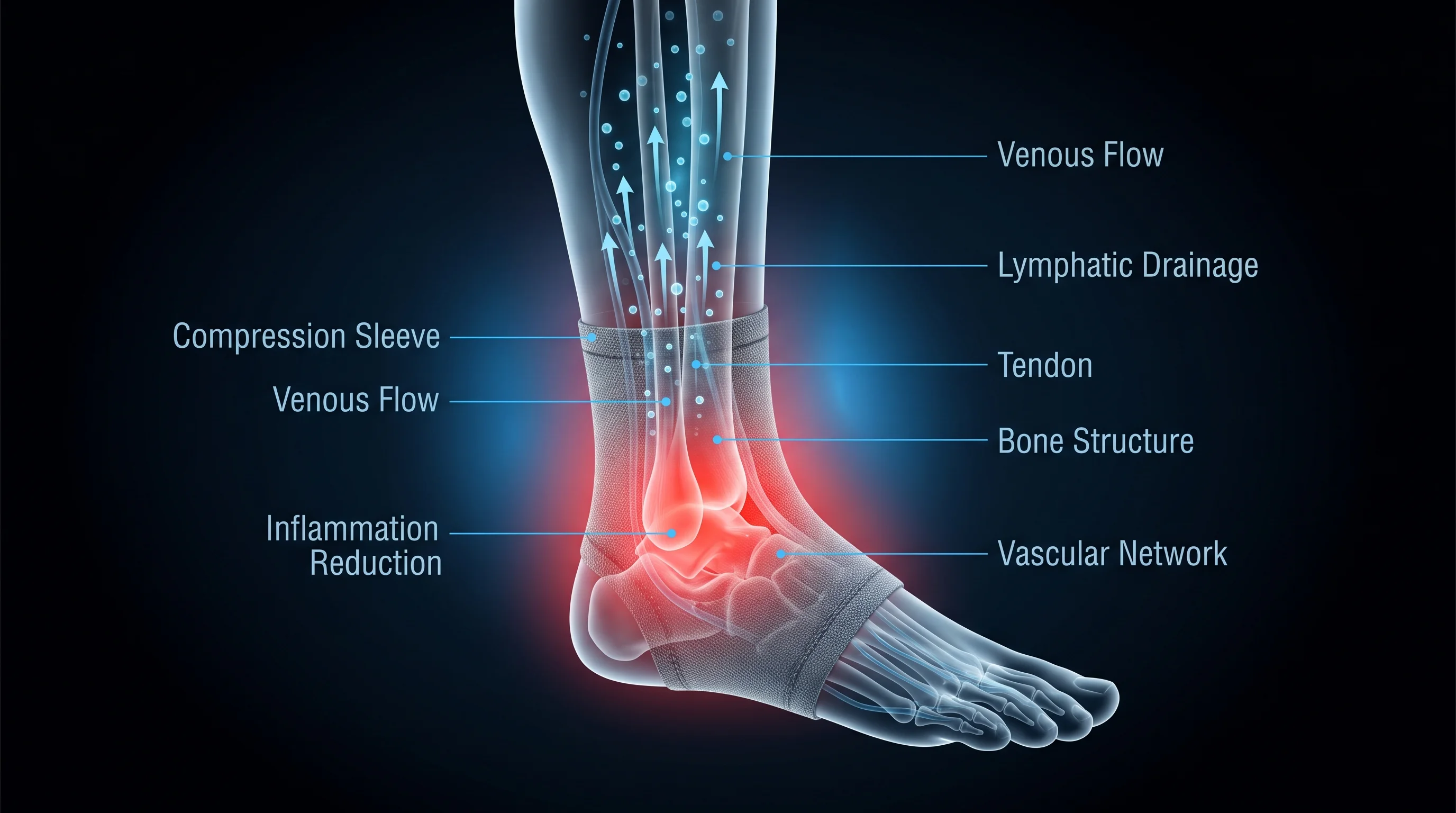
Mechanism 1: Pushing Fluid Out Before It Can Settle
Swelling isn’t just uncomfortable. It’s chemically active. Fluid pooling around your ankle joint concentrates inflammatory compounds — prostaglandins, bradykinin, cytokines — that irritate your nerve endings and keep the pain cycle running.
A graduated compression ankle sleeve breaks that cycle. It applies its firmest pressure at the foot and ankle (~15–20 mmHg), then releases pressure higher up. That pressure gradient pushes fluid upward through your venous and lymphatic systems. Less pooling means lower concentrations of those irritating compounds. Lower concentrations mean less chronic, achy pain.
The practical sweet spot: 8–12 hours of wear per day during upright, weight-bearing activity. Add elevation during rest (ankle above heart level), and you’re working the de-swelling process from both directions.
One timing note: dealing with a recent flare or sprain? Wait 48–72 hours for acute swelling to stabilize before putting your sleeve on.
Mechanism 2: Warmth That Loosens Everything Up
Here’s something most people never connect: that snug elastic fabric isn’t just compressing; it’s insulating. The sleeve traps a thin layer of warm air against your skin. This keeps superficial tendons and muscles warmer during movement.
Higher tissue temperature cuts passive stiffness in your muscle-tendon units and improves joint movement. The result: less morning stiffness, smoother movement, lower dull aching pain during activity.
For chronic ankle pain, this warming effect becomes part of your daily routine. Wear the sleeve during low-to-moderate activity to hold in warmth. On tougher days, apply 15–20 minutes of direct heat before putting the sleeve on. Then let the sleeve lock in that warmth through your session.
Mechanism 3: Smarter Signals, Steadier Movement
Ongoing ankle pain often has a hidden accomplice: micro-instability. These are tiny, hard-to-notice moments where your ankle gives way. Each one triggers compensatory tension throughout your foot, knee, and hip. Over time, that compensation pattern becomes its own source of pain.
A compression therapy ankle sleeve tackles this by boosting mechanoreceptor input — the sensory signals that tell your brain where your joint is in space. Better proprioception means:
Faster reflex responses in your peroneal muscles before a roll happens
Cleaner gait mechanics with less guarding and over-compensation
Reduced muscle fatigue during repetitive loading
To retrain this system while wearing your sleeve, start with 20–30 second single-leg balance holds (1–2 sets). Pair those with 10–15 reps of gentle plantarflexion and dorsiflexion drills. The sleeve’s constant light pressure makes every rep more effective for your nervous system.
Your progress benchmark: after 7–14 days of consistent use, look for clear signs — reduced end-of-day swelling, 2–3 points lower pain scores during activity, and longer walking tolerance before discomfort sets in. Not seeing those shifts? It’s worth checking whether proprioceptive training needs more focus, or whether a deeper injury needs professional review.
Reduces Swelling and Inflammation for Long-Term Comfort
For most people with chronic ankle pain, it’s a quiet build-up — that slow, heavy puffiness that grows through the day until your shoe feels two sizes too small by evening.
Here’s what matters: acute swelling and chronic edema are two different problems. Your ankle compression sleeve handles both — just through different methods.
Acute swelling moves fast. Higher capillary permeability floods surrounding tissue with fluid within hours. Apply a compression sleeve right away, and it works by blocking that fluid leak at the source. Research on acute inflammation shows that light compression (~10 mmHg) combined with cooling cuts swelling within just 15 minutes, with effects holding until the edema clears.
Chronic edema is a slower problem. Poor venous return, sluggish lymphatic flow, or just standing on your feet all day — fluid pools because your body can’t clear it fast enough. Graduated compression at ~20 mmHg boosts venous blood flow velocity and stops the leg swelling that builds up during long periods of sitting or standing.
The Timing Strategy That Works
During activity: Wear your sleeve to cut real-time venous pooling throughout your shift or workout
Right after: Keep it on for at least 40–60 minutes post-exercise — that’s the key window for controlling inflammatory swelling peaks
Daily baseline: For ongoing swelling patterns, consistent wear of 6–8 hours daily matches the clinical standard used for venous insufficiency and lymphedema management
The long-term payoff? Less day-to-night ankle swelling, less of that deep aching heaviness, and a joint that feels like yours again.
Supports Ankle Stability Without Limiting Your Movement
Research confirms that CAI patients show higher postural sway during single-leg balance tests compared to healthy controls. These are tiny, constant micro-movements. They add up to real dysfunction, real fatigue, and real lost confidence.
An ankle stabilizer sleeve addresses the problem.
Stabilize the Joint. Keep the Freedom.
A quality compression therapy ankle sleeve reduces inversion and plantarflexion angles at the moment of ground contact. Those are the exact angles that tip your ankle toward a roll. Studies on functional ankle instability confirm this shift is significant — even with elastic support.
What doesn’t change? Your full range of normal movement. Walking, climbing stairs, pivoting mid-shift — none of that gets locked out.
That’s the difference between a sleeve and a rigid brace. A brace immobilizes. A sleeve limits the dangerous extremes while keeping the functional range wide open.
It Works in Different Ways Depending on Your Day
For athletes and active movers: The sleeve’s proprioceptive input sharpens peroneal muscle response time. That’s your ankle’s first line of defense before a roll becomes a sprain. This faster reflex matters most during direction changes, landings, and late-stage fatigue loading. Pair it with a gradual training load increase — no more than ~10% per week. You’re protecting the joint from two directions at once.
For people who stand all day: Nurses, warehouse workers, retail staff — this group needs support that holds up across an entire shift. No sweaty, restrictive nuisance. A flexible ankle compression sleeve worn throughout the day delivers steady, low-level stabilization. It keeps micro-motion in check. It reduces end-of-day soreness. Plus, it doesn’t interfere with the constant turning, bending, and stair-climbing the job demands.
Conditions That Benefit Most From Ankle Compression Sleeve Support
Five conditions respond well to consistent sleeve support:
Ankle sprain recovery is where most people first reach for a sleeve. In the early acute phase, hold off. Let the first 48–72 hours pass and let that initial swelling settle. Then transition to graduated compression around 15–20 mmHg. That pressure range delivers real support without cutting off blood flow during healing.
Achilles tendonitis is a strong match for sleeve support. The pattern looks like this: pain and tightness build through a long shift, then stay with you after. Compression takes some load off the soft tissue and keeps post-activity swelling around the tendon in check. It won’t replace targeted rehab — but it makes the day more manageable while you put in the work.
Plantar fasciitis has a specific detail worth knowing. A standard ankle sleeve alone won’t address it on its own. The most effective setup is an ankle brace for plantar fasciitis plus arch support — one stabilizes the joint, the other takes direct pressure off the plantar fascia. Pain at that first morning step, or pain that builds after long periods of standing? Look for a sleeve that combines both.
Mild arthritis responds well to the sleeve’s warmth and light mechanical support.
Chronic ankle instability benefits from the steady sensory feedback a sleeve provides. It won’t replace structural support for serious ligament damage. But for day-to-day management and cutting down fatigue during repetitive movement, it’s a solid, reliable tool.
An Ankle Compression Sleeve Isn’t Always Enough
Compression sleeves work best for mild-to-moderate problems. Dealing with a severe sprain, a suspected ligament tear, major instability that stops you from bearing weight, or a serious circulatory condition? A sleeve is not your primary solution. These situations call for structured bracing, professional evaluation, or both. Using a sleeve as a stand-in delays the real care your ankle needs.
The straightforward framework: mild issues, sleeve first. Structural damage, step up your care.
Speeds Up Recovery and Improves Daily Quality of Life
Recovery isn’t passive. Your body is doing serious work — rebuilding tissue, clearing waste, restoring function. An ankle compression sleeve gives that process a real push forward.
Here’s how it works: graduated compression keeps blood moving through damaged tissue without stopping. More oxygen gets in. More nutrients reach the area. Waste products clear out faster. That’s the same reason doctors now encourage movement right after surgery. Studies show that restoring circulation sooner leads to faster recovery, less pain, and shorter downtime.
From “Getting Through the Day” to Living It
Chronic ankle pain shrinks your world in small ways. You stop taking the stairs without thinking. You hesitate on uneven ground. You cut the grocery trip short because you’re not sure how long your ankle will hold up.
Wearing the sleeve for 6–8 hours a day during weight-bearing activity starts to reverse that pattern. Less swelling at the end of the day means less stiffness the next morning. Less stiffness leads to more confident movement. More confident movement means you stop second-guessing every step you take.
A Non-Invasive Option With Long-Term Payoff
Reaching for pain medication every day has a cost. NSAIDs carry GI and kidney risks with long-term use. Opioids carry dependency risk. Neither one fixes anything at the source.
A compression sleeve, paired with 15–20 minutes of gentle movement each day, does something medication can’t. It supports your body’s own repair process from the outside in. No side effects. No escalating doses. No dependency.
How to Choose the Best Ankle Compression Sleeve for Ongoing Pain?
Compression level (mmHg) is your starting point. Most people managing daily ankle pain deal with recurring sprains, post-activity swelling, or mild inflammation. For them, 15–20 mmHg is the sweet spot. You get real circulatory and support benefits without the suffocating feeling. Pain is mild, and you’re sensitive to tightness? Start at 8–15 mmHg and adjust from there. Medical-grade 20–30 mmHg? Leave that for a clinician to recommend.
Material decides whether you’ll wear it long-term. Look for a nylon + spandex + microfiber blend with moisture-wicking properties. Breathable mesh zones matter too — over the foot arch and ankle folds. For 8–12 hours of daily wear, comfort is required.
Sizing is non-negotiable. Measure your ankle circumference at the narrowest point just above the ankle bone. Do it standing up with a soft tape measure. Use the brand’s circumference chart. Between sizes and have circulation concerns? Go one size up.
Targeted support matters for specific conditions. Got plantar fasciitis or Achilles pain? Look for sleeves with an arch support band or reinforced back panel. Standard ankle-ring compression alone won’t reach those areas.
Graduated vs. uniform compression comes down to your main symptom.
Swelling-dominant pain responds better to graduated compression — higher pressure at the ankle, easing upward.
Joint instability or localized tendon pain responds better to uniform compression with targeted reinforcement zones.
How to Wear and Use Your Ankle Compression Sleeve?
Put it on before the swelling starts. First thing in the morning — before you stand up and load your joint — is the best time. Skin should be dry and lotion-free. Oils break down the elastic fibers faster than anything.
The Right Way to Pull It On
Reach inside the sleeve, grab the heel pocket, and flip the sleeve inside-out to that point. Slide your toes in first. Then press your heel into the heel pocket until it sits firm. Use your palm to smooth the fabric upward. Work your way up in small strokes.
Three things that will wreck your results:
– Rolled-down edges — this creates a tourniquet effect at the fold
– Folded-over top cuffs — this doubles the pressure right there
– Bunching or twisting — this creates pressure points, not compression
The “Snug, Not Numb” Test
At 5 to 10 minutes after putting it on, do a quick check. The pressure should feel even all around. Your toes should move with no restriction. No sharp feeling. No pins and needles. Light sock-line marks that fade within 20 minutes? That’s normal. Redness that stays, cold toes, or numbness? Take it off. You need a larger size or a lower mmHg level.
Build wear time in steps. Start at 1–2 hours on your first day. Then work up to 6–8 hours over time. Wear it during the day and take it off before bed unless a clinician tells you otherwise.
Conclusion
An ankle compression sleeve delivers the one thing your joint craves most: steady support, less swelling, and better blood flow to keep inflammation at bay. Whether you’re managing plantar fasciitis, nursing a sprain, or simply standing hour after hour, the right sleeve works with your body, not against it.
Here’s the secret: small, daily support compounds into real, lasting relief. No surgery. No downtime. Just the right tool, worn consistently.
Don’t wait for another flare‑up. Explore the ankle compression sleeves from Leading China Ankle Brace Manufacturer — designed for real people who refuse to let pain win.
Your better‑moving future is just one sleeve away. Take that step today.