
That rolled ankle from a pickup game is now a throbbing reminder that recovery isn’t optional. Maybe your doctor mentioned bracing but left you to figure out the rest; you’re wondering why prices swing from $15 to $150 for what looks like the same neoprene sleeve. Not all are built for the same job. We tested and researched eight standout picks, breaking down support levels, materials, and real-world fit so you can match the right orthopedic ankle brace to your specific injury and recovery stage. Whether you need serious medical-grade ankle support or something breathable enough for daily wear, the answer is below.
Best Overall Orthopedic Ankle Brace: Bauerfeind MalleoTrain Ankle Brace
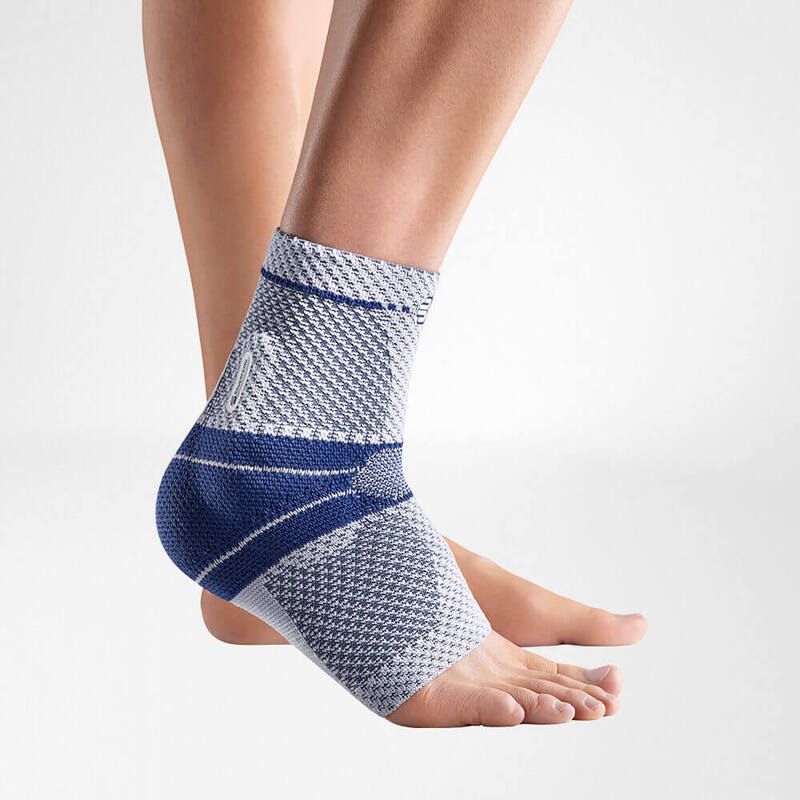
A randomized controlled trial tracking 220 acute ankle-injury patients over 14 days found the MalleoTrain group (118 patients) reported significantly lower pain scores than the 102-person control group. They also hit the 10%-symptom-reduction mark faster, used fewer painkillers, and scored better on overall clinical assessments. That’s the kind of evidence you want behind a compression ankle sleeve, and it’s why this brace tops our list for ankle sprain recovery.
What makes it work:
Two contoured pads target swelling and pain at the pressure points that matter most. The knitted, low-profile build replaces bulky neoprene, so it fits under socks and shoes for all-day wear. And the lightweight construction leaves natural movement alone during activity.
Who it’s built for
MalleoTrain is a strong fit for mild-to-moderate ankle sprain recovery, chronic ligament weakness, or lingering swelling from osteoarthritis. Office workers who need discreet adjustable ankle support through an 8-hour shift and recreational athletes easing back into running or team sports after a Grade I–II sprain get the most out of it.
Patient feedback backs this up: in follow-up surveys, 112 of 116 respondents rated it positively, and only one person stopped wearing it. That acceptance rate matters when compliance directly affects healing time.
Pricing sits in the mid-to-premium range compared to generic sleeves, reflecting the medical-grade knit and clinical backing. Not the pick for severe instability or post-op immobilization. But for everyday support and evidence-backed relief, it’s hard to beat.
Best Budget Pick of Orthopedic Ankle Brace: ASO Ankle Stabilizer
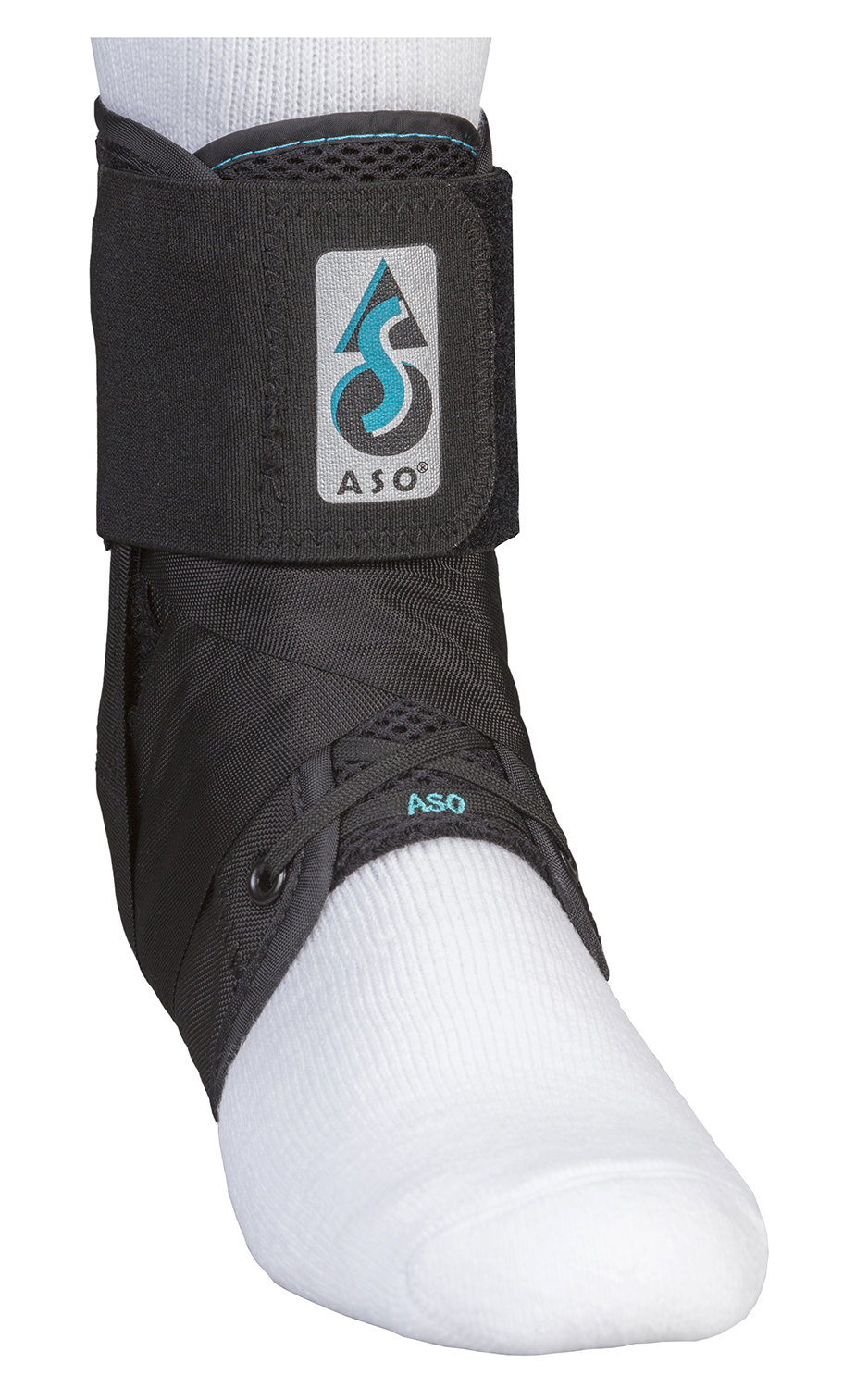
Athletic trainers have relied on figure‑8 taping for decades to lock down unstable ankles. The ASO Ankle Stabilizer bottles that technique into a lace‑up ankle brace you can put on in seconds instead of wrapping tape for ten minutes before every practice.
How the stabilization works
The ballistic nylon boot uses angled straps that wrap in a complete figure‑eight pattern around the subtalar and talocrural joints. That’s the same mechanical logic behind athletic taping, just reusable. An elastic cuff closure cinches everything down so the brace doesn’t slide or loosen mid‑workout, and the anatomical contouring routes straps above the malleoli to avoid pressure points.
Classic vs. EVO: know what you’re paying for
The ASO Classic costs AU$79.95 and offers low‑profile, straightforward figure‑8 support. The ASO EVO costs AU$109.99 and adds a dynamic cuff and inner stirrup strap for stronger heel capture and high‑ankle sprain protection.
The stabilization concept is the same; the roughly $30 buys you better high‑ankle coverage. North American retail typically runs US$30–100 across the lineup, with Classic sitting near the floor.
Who should buy Classic?
If you’re managing mild‑to‑moderate instability or preventing re‑injury during basketball, volleyball, or running drills, Classic covers it. The low‑profile build fits inside most athletic shoes without crowding your foot, one reason it’s stayed a go‑to budget pick for years. Only step up to EVO if you’re specifically worried about high‑ankle sprains.
Best Maximum Support of Orthopedic Ankle Brace: DonJoy Velocity ES

Football players don’t sprain ankles gently. When the injury is severe, or you’re heading back into contact sports, you need a rigid ankle brace built for that kind of stress. The DonJoy Velocity ES is engineered exactly for this scenario. ES stands for “Extra Support,” and it’s the most rigid configuration in DonJoy’s Velocity lineup, sitting above the MS (Moderate Support) and LS (Light Support) versions.
The engineering behind the stability
Three systems work together here. R3 (Rapid-Rigid-Ratcheted) Technology delivers circumferential compression around the tibia and fibula. Think of it as a structural cinch that keeps the lower leg locked in place. Rigid uprights on either side resist side-to-side collapse during impact. Bilateral hinges then allow normal forward-and-back ankle motion while blocking the inversion and eversion movements that cause sprains in the first place.
The SpeedWrap™ wrap system adds another layer of joint compression. That matters for acute ankle injuries and for controlling swelling right after a sprain. And the semi-rigid shell includes a heat-moldable foot plate. You can custom-contour it to your foot or existing orthotics, which tightens the fit and reduces internal slippage.
Who this orthopedic brace for ankle is for
This is your pick if you’re managing a Grade II or III sprain, returning to football, rugby, or soccer, or recovering from ankle surgery where your footwear can accommodate a bulkier profile. It’s not the most minimal-bulk option in the lineup. That’s the tradeoff for maximum rigidity. But it still fits inside most athletic shoes without sizing up.
ES vs. Aircast-style braces
Aircast-type maximum-support braces typically rely on aircell compression and figure-8 stabilization. The Velocity ES takes a different engineering path: ratcheted circumferential compression plus rigid structural uprights, rather than air-cushioned support. If your injury calls for hard structural control over cushioned compression, ES is the more direct answer.
Best for Acute Sprain of Orthopedic Ankle Brace: Aircast Air-Stirrup
Since 1978, orthopedic surgeons have relied on the Aircast Air-Stirrup for the first two weeks after an ankle injury. It’s referenced in more than 100 medical journal articles. It remains a go-to ankle stabilizer for injury management precisely because it handles the acute phase differþently than a compression sleeve or lace-up.
How it handles the first 14 days
The semi-rigid stirrup shell locks down inversion and eversion, the exact motion that causes most ankle sprains. But it doesn’t restrict plantar or dorsiflexion, so you can still walk with a near-normal gait. That balance is the whole point.
The Duplex™ aircell system adds graduated compression that pulses with each step, pushing fluid out and reducing swelling as you move rather than while you sit still.
Fit and sizing details
Aircast offers four adult sizes plus a pediatric option for ages 2–6. Retail runs around $79.06, positioning it as a mid-range medical-grade ankle support rather than a budget sleeve or premium rigid brace.
When to move on
If you can’t bear weight after four days, or swelling keeps climbing, stop relying on the same brace. That’s a signal for medical reevaluation, not more Air-Stirrup time.
Best Lace-Up Brace of Orthopedic Ankle Brace: AOFIT Lace-up Ankle Brace
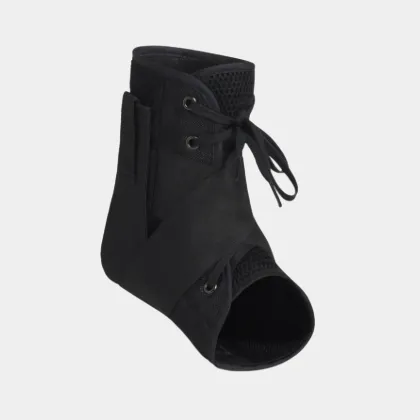
Sport-specific data tells you a lot about who a lace-up design actually serves. In one athlete survey covering soccer, volleyball, and running, volleyball players rated lace-up braces higher for comfort and stability, while soccer players and runners leaned toward compression sleeves. That split matters. If your recovery involves cutting, jumping, or pivoting, the AOFIT Lace-up Ankle Brace is built for exactly that load pattern, not steady-state running.
Rigid materials, figure-8 strapping
AOFIT uses rigid construction paired with bilateral figure-8 strapping, the same mechanical idea behind athletic taping minus the ten-minute wrap job. That combo gives you extra inversion and eversion control as an ankle stabilizer for injury recovery, without sacrificing comfort during wear.
Fit is diagonal, not straight-around
Lace-up and stirrup braces measure differently than sleeve-style compression ankle sleeve products. Measure diagonally, heel to ankle, with your foot at 90°, then re-check standing. Wear a thin sock. One fingertip of space between brace and skin is correct; two means it’s too loose.
Certified, replaceable, built to last
AOFIT’s lace-up brace carries ISO 13485, CE MDR, and FDA 510(k) coverage. For daily wear, plan on replacing it every 3–6 months; occasional use can stretch to a year.
Best for Recurrence Prevention: Med Spec ASO
Zero percent. That’s the recurrence rate researchers recorded for braced athletes in a prospective study tracking female soccer players with a history of ankle sprains. Compare that to 25% for taping alone, 25% for taping-plus-brace combos, and 35% for players who wore nothing at all. The study logged 1,717 practice exposures and 650 competitive game exposures, so this isn’t a small sample fluke. It’s real sports-use data, and the Med Spec ASO was the orthopedic ankle support brace behind those numbers.
Why recurrence prevention matters here
Once you’ve had one ankle sprain, your odds of a second one climb fast. The ASO earns its reputation as a sports medicine professional’s go-to ankle stabilizer for injury history and recurrence prevention. A 2018 systematic review in Sports Medicine backs the broader concept that bracing works for both primary and secondary prevention in athletes. A 2016 study adds that taping and bracing barely dent performance while cutting sprain risk.
Who should reach for this one
If you’ve got a prior sprain and you’re heading back onto a court or field, this lace-up ankle brace is built for exactly that risk window. Wear it during practices, games, and other high-load activity, not necessarily around the clock. A related version with plastic stays adds extra rigidity if your ligament tear history calls for firmer adjustable ankle support.
Best Semi-Rigid Support of Orthopedic Ankle Brace: Aircast A60
That “60” in the name isn’t a support rating. It’s the molding angle on the side stabilizers, and that distinction matters when you’re comparing specs across braces. The Aircast A60 skips inflatable air cells entirely. Instead, it uses two rigid side stabilizers and a single strap to control inversion and eversion while letting your ankle move naturally through normal walking and running gait.
Built for shoes, not immobilization
This is a low-profile rigid ankle brace that disappears inside athletic footwear. Breath-O-Prene fabric keeps heat and sweat down. The design is left/right-specific for anatomical fit, and it’s latex-free and hand-washable for repeat use.
Sizing runs by shoe size:
Small: Men’s up to 7 / Women’s 5–8.5
Medium: Men’s 7.5–11.5 / Women’s 9–13
Large: Men’s 12+ / Women’s 13.5+
Where it fits in recovery
Compared to the Air-Stirrup or Airsport, the A60 trades air-cell compression for a slimmer frame. That makes it the better call for later-stage rehab, recurring instability, or sprain prevention during sport—not fresh swelling management. Users consistently say it’s comfortable enough to forget you’re wearing it, though anyone needing serious swelling control should look toward the more compression-heavy models in the lineup.
Best Unisex Premium Support of Orthopedic Ankle Brace: BioSkin TriLok
Three layers, one brace, zero compromise on range of motion. The BioSkin TriLok stacks a compression sleeve, a FootLok strap, and a stirrup strap into a single system, and the order you put them on matters. Sleeve first, to manage swelling and give the straps something to grip. FootLok strap next. Stirrup strap last, for the final layer of joint control.
What the FootLok strap does
One reseller calls it a “suspension bridge” for weak tendons. Worn laterally, it works like an external ligament, blocking the exact motions that cause ankle sprains. Worn medially, it shifts to support posterior tibial tendon dysfunction and arch weakness instead.
Configure it for your specific problem
Lateral setup: outer ankle instability, inversion sprains, peroneal tendon issues
Medial setup: PTTD, arch collapse, inner-ankle pain
That’s the versatility. This isn’t a one-injury medical-grade ankle support.
Sizing and fit
TriLok starts at a women’s size 4, so it fits a wide range of adult feet. It’s built to work inside most shoes or barefoot, which is why you’ll see it on daily-wear recommendations, not just clinical rehab lists.
Price and where it sits
UK retail is around £69.99 with free delivery — premium territory. Kohl’s lists it as a bestseller. The pitch is straightforward: three straps, real ligament and tendon support, and your normal walking gait stays intact.
How to Choose the Right Orthopedic Ankle Brace by Injury Grade?
Doctors grade ankle sprains I through III, and that grade drives your medical-grade ankle support choice more than brand loyalty or price tag ever will.
Grade I (mild): Ligament stretch, minor microtears, joint still stable. A compression ankle sleeve handles swelling here, or reach for a lace-up ankle brace if you’re back on uneven ground or in sport. Clinician guidance caps use at 2–4 weeks during activity—stop once you can hold a 30-second single-leg balance on an unstable surface three times without pain or giving way.
Grade II (moderate): Partial tear, some looseness, more swelling. You want a lace-up or semi-rigid stirrup brace here; add a hinged design if instability feels pronounced. One common progression is semi-rigid for 1–2 weeks, then lace-up for sport. Other guidance stretches total bracing to 4–6 weeks, followed by sport-only wear for 2–3 months.
Grade III (severe): Complete tear, real instability. Start with a rigid ankle brace or walking boot. Timelines run 6–8 weeks rigid, with sport-level support continuing up to 6 months or until surgery is decided.
Sizing and Special Cases
Measure ankle circumference about 1 inch above the ankle bone. Between sizes? Go smaller for sleeves, larger for rigid shells to dodge pressure points. Test with the sock you’ll actually wear. Wide feet need low-profile lace-up designs so shoes still fit. For an ankle brace for plantar fasciitis, skip rigid immobilization—light or semi-rigid support usually does the job unless a separate sprain is involved.
Comparison Table: Support Level, Price & Best Use Case
|
Brace |
Support Level |
Typical Price |
Best Use Case |
Build |
|---|---|---|---|---|
|
Bauerfeind MalleoTrain |
Medium |
Mid-to-premium |
Mild-moderate sprain, daily wear |
Knit |
|
ASO Classic |
Medium |
AU$79.95 |
Instability prevention, sport |
Nylon/strap |
|
DonJoy Velocity ES |
High |
Premium |
Grade II–III, contact sports |
Rigid |
|
Aircast Air-Stirrup |
Medium-High |
$79.06 |
Acute sprain, first 14 days |
Semi-rigid/aircell |
|
AOFIT Lace-up |
High |
Mid-range |
Cutting, jumping, pivoting |
Rigid/strap |
|
Med Spec ASO |
Medium |
Mid-range |
Recurrence prevention |
Lace-up/strap |
|
Aircast A60 |
Medium |
Mid-range |
Later-stage rehab, sport |
Semi-rigid |
|
BioSkin TriLok |
High |
£69.99 |
Versatile, lateral or medial |
3-layer/strap |
Conclusion
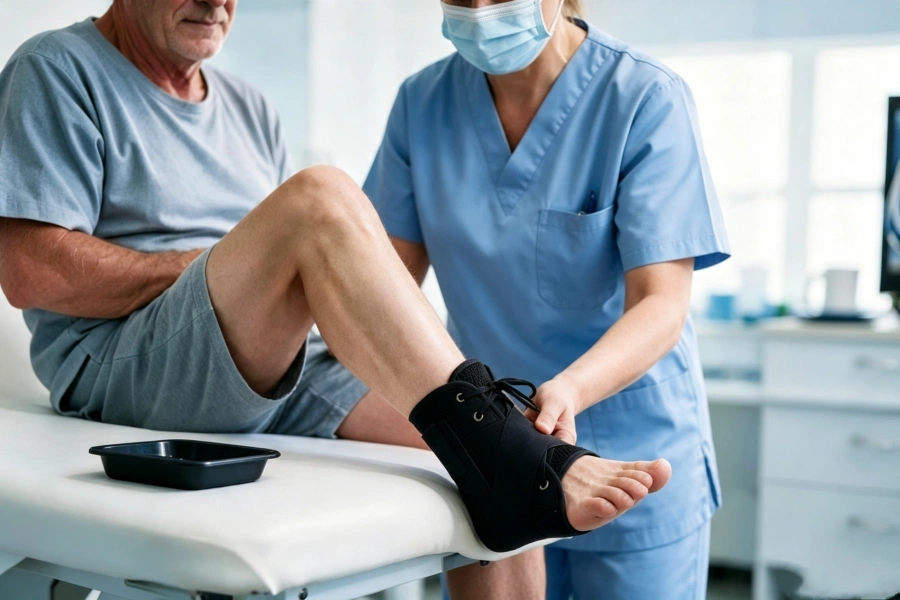
The best orthopedic ankle brace for you is the one matched to your injury grade, recovery stage, and daily activity level. A Grade 1 sprain needs a compression ankle sleeve for mobility and swelling control, while ligament tears or post-surgery recovery demand a rigid ankle brace with real structural lockdown. For training, hiking, or court sports, a lace-up ankle brace like the AOFIT gives you adjustable support without sacrificing range of motion.
Pull up the comparison table, check your injury against the grading guide, and cross-reference with your doctor or PT before you buy. The right ankle stabilizer speeds healing and prevents the re-injury that turns a six-week setback into a six-month one.