
That crick in your neck that won’t quit, the dull ache after a fender-bender, or the doctor’s orders following spine surgery—whatever brought you here, you’re probably tired of guessing which medical neck brace will actually help. Not all neck braces are created equal. The difference between a soft foam collar and an adjustable cervical neck brace can mean the difference between real relief and wasted money. We tested and researched six standout medical neck braces, from budget-friendly picks to models designed specifically for herniated discs and whiplash recovery, breaking down what each one does best and who it’s actually right for. By the end, you’ll know exactly which type matches your symptoms, how to wear it correctly, and how long you should expect to need it, no more scrolling through conflicting reviews at 2 am.
AOFIT Adjustable Cervical Neck Brace: Adjustable Neck Support
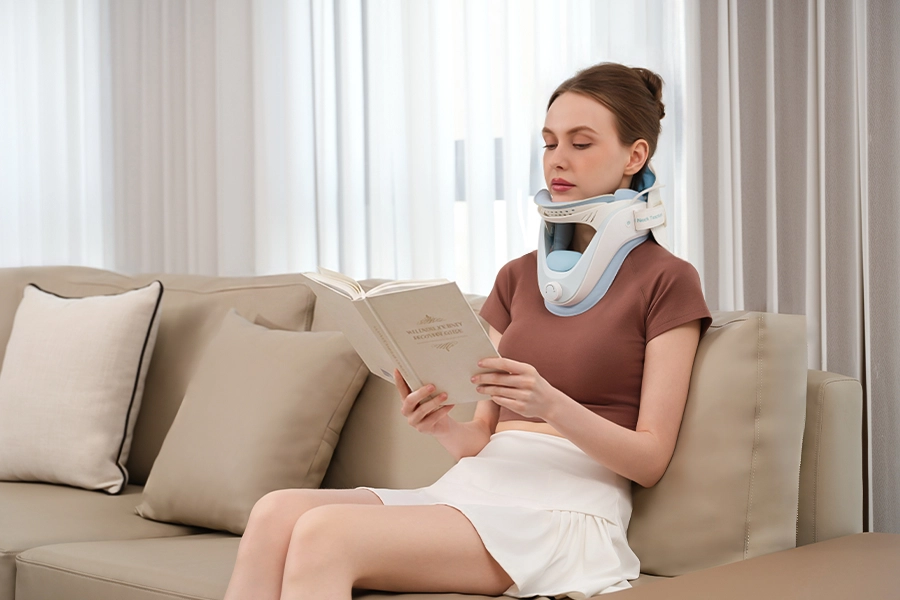
Three hours into a restless night with a stiff neck, you don’t care about engineering specs. You just want to stop waking up in pain. That’s the problem AOFIT‘s adjustable neck brace solves, and it’s why we chose it as the best overall pick for sleepers on this list.
Inside the brace
The medical neck brace build is smarter than most foam neck collars you’ll find at a drugstore:
Outer layer: ice silk fabric that wicks moisture and keeps heat from building up. Cheaper collars turn unbearable by 3 a.m. because they lack this.
Core support: a PP board insert sandwiched inside high-resilient sponge. This gives real rigidity without the sponge collapsing under your head’s weight.
Chin design: a V-shape contour that cradles your jaw and limits forward neck bending.
Closure: non-stick Velcro that you can loosen or tighten mid-sleep without removing the brace.
Who it’s for
This brace is for chronic neck pain, tech-neck posture correction, and anyone who needs a neck brace for sleeping that survives a full 6–8 hour cycle without shifting or overheating. Research on rigid collar-plus-chin-support designs shows this structural approach reduces forward head flexion compared to soft alternatives. AOFIT’s V-shape and PP board are engineered to do exactly that.
AOFIT Soft Foam Cervical Collar: Classic Medical Soft Collar
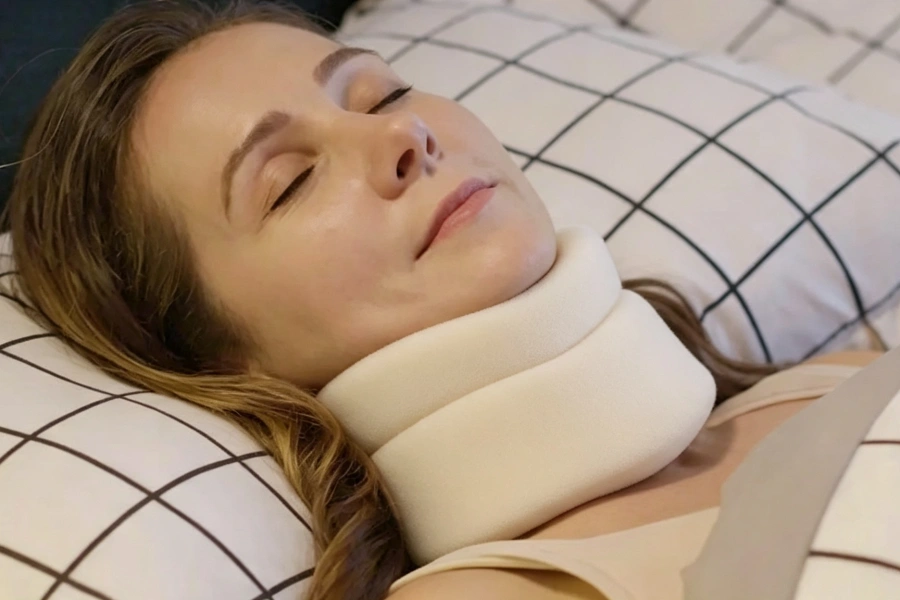
What you’re getting
This is a classic foam neck collar: soft foam core wrapped in fabric, built for short-term relief rather than rigid immobilization. The standout feature is its V-shaped jaw support. Instead of a flat pad pushing straight up, the V-contour redirects some of your head’s weight onto your jaw and collarbone. That shift reduces load on the cervical spine and cuts neck flexion by roughly 20–30%—enough to calm down irritated joints and pinched nerves without locking your neck in place.
How long to wear it
This isn’t a 24/7 solution. Wear it 1–2 hours at a stretch, 3–6 hours daily during the first 3–7 days of a flare-up, then taper off over the following week. Research on whiplash patients found no real difference between 2-day and 10-day continuous use—so more hours doesn’t mean faster healing. Stop entirely past the 10-day mark to avoid muscle deconditioning.
Wonder Care Soft Cervical Collar: Budget‑Friendly Neck Brace
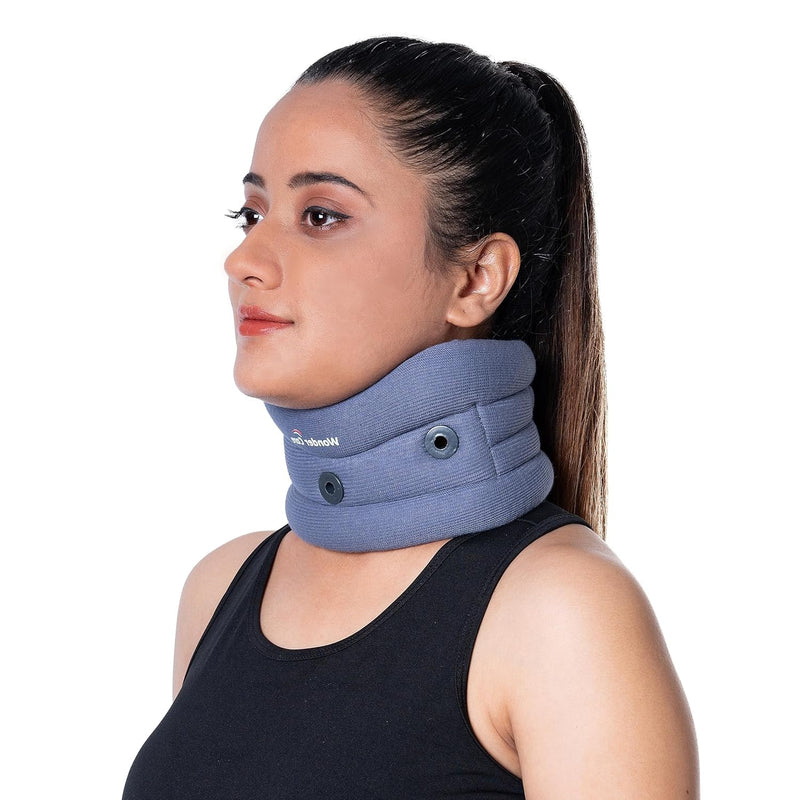
Twenty dollars gets you Wonder Care’s soft cervical collar. It earns its spot on this list by solving the sensitive skin problem most budget neck braces ignore.
Built for skin that reacts to everything
This cervical neck collar swaps synthetic blends for a cotton outer layer wrapped around a foam core. That matters if you’ve ever pulled off a neck brace to find red, irritated skin underneath. Cotton lowers the risk of contact dermatitis compared to polyester blends, which is why Wonder Care markets itself specifically for “budget and sensitive skin” users.
But don’t expect miracles. Soft collars can still cause decubitus ulcers (pressure sores) during extended wear—cotton reduces irritation, it doesn’t eliminate it. Wipe down the interior every 1–2 days to cut down on sweat buildup.
Breathing holes do real work
The breathing holes built into the foam aren’t cosmetic. Soft collars only reduce neck movement by about 17.4% (compared to 62.9% for rigid designs), meaning your muscles stay more active—and generate more heat. Ventilation holes help that heat escape instead of turning your collar into a sauna by hour three.
GIONAR Cervicorrect Neck Brace: Posture Correction & Cervical Curve Restoration

Four weeks. That’s the timeframe GIONAR builds its whole pitch around—consistent use for a month, and you should see a measurable 30–40° restoration in your cervical lordosis, the natural forward curve your neck is supposed to have. If you’ve spent years hunched over a phone, that curve has probably flattened out. This is the neck brace built specifically to bring it back.
The 3-zone memory foam breakdown
Most foam collars are a single piece. GIONAR splits its support into three functional zones.
Zone 1 (front/chin) cradles your jaw and tucks your chin, cutting down on the forward-flexion habit that defines “text neck.”
Zone 2 (sides) wraps medium-firm foam around the lateral neck, limiting side-bending and rotation—similar to how soft collars manage short-term pain, but with more even pressure.
Zone 3 (back) is the workhorse. Thicker, more resilient foam here keeps your neck in a slight backward curve whether you’re sitting upright or lying down. Similar traction-based cervical collars have shown NDI scores drop from 22.05 to 9.60 and VAS pain scores fall from 6.10 to 2.45 over four weeks, roughly a 56–60% improvement. GIONAR’s structure is built to chase those same numbers.
Who benefits most
Side sleepers get a specific advantage. Keeping your ear and shoulder aligned while sleeping on your side is tough without support—your head sinks into the pillow, and your neck bends sideways. The reinforced back zone prevents that collapse, which is why users with forward-head posture and mild cervical pain report the most consistent improvement with nightly use.
MAXRANK Ice Silk Neck Brace: Comfortable Cooling Neck Support
Sweat pools under a foam collar faster than most people expect, especially past midnight when bedroom temps sit at 28–35°C. MAXRANK built its entire pitch around solving exactly that problem, and it’s why hot sleepers keep this cervical neck collar on their radar.
The cooling mechanism, explained
The outer layer is a polyester microfiber blend—ice silk—with a smooth, low-friction surface that conducts heat away from skin. Within the first 10–15 minutes of wear, surface temperature drops by roughly 2–4°C. A 2°C shift is generally the threshold where humans actually notice a difference. In a room hovering at 28–30°C, where neck skin temp typically runs 32–34°C, that drop brings the contact surface down to something closer to 28–32°C—cool enough to feel it.
Don’t expect hours of deep chill. This is a fast, short-term cooling effect. It works as a quick relief valve. For multi-hour cooling, you’d need a PCM-based ice ring.
Built light on purpose
At 80–150 grams, this foam neck collar weighs a fraction of rigid protective models (some run 386g). Since your head already weighs about 10% of your body weight, adding under 150g barely registers—roughly 3% of head load. That’s the difference between a collar you forget you’re wearing and one you’re constantly adjusting at 2 a.m.
Who benefits most
Sensitive-skin users get a real advantage here. Ice silk dries 40–60% faster than cotton and stays breathable even at 85–95% humidity, cutting down the sweat-soaked friction that triggers rashes. Support tops out at a modest 1.5–3.5 lbs—fine for posture upkeep and mild strain.
Price range
$28–65 depending on configuration. The lower end gets you a universal-fit basic version; the upper tier adds ergonomic jaw contouring and higher-density foam for daytime wear.
OTC Cervical Collar: Clinical Applications of Common Soft Collars
Most people grab a soft foam neck collar because something hurts and they need relief now. That instinct lines up with how these OTC medical neck braces are designed to work.
Where soft medical neck braces help:
Doctors and physical therapists recommend soft cervical collars for a narrow set of situations:
Mild muscle strain, minor whiplash, or general neck tension
Post-treatment “reminder” support, a nudge to avoid sudden, jerky movements
Nighttime use, when involuntary muscle tension during sleep needs a gentle check
Mild cervical osteoarthritis or early-stage degenerative neck pain
Older adults managing chronic, low-grade neck discomfort
The OTC 2394 Foam Cervical Collar fits this use: it’s listed for muscle tension, minor injury, whiplash, and movement reminders.
Do you need a prescription?
Not usually. Retail soft collars are sold over-the-counter without a script. If you’re recovering from surgery, trauma, or dealing with ongoing pain, get a doctor or physical therapist involved before self-treating with a neck brace for herniated disc symptoms or worse.
How long to wear one
Clinical guidance is consistent: 10 days max, short daily sessions, not all-day wear. Beyond that window, there’s no added benefit, only risk of muscle deconditioning.
When soft isn’t enough
Soft collars aren’t built for real instability. If you’re dealing with a confirmed fracture, spinal instability, nerve compression with numbness or weakness, or early post-fusion recovery, you need a semi-rigid or rigid orthopedic neck brace instead. A foam neck collar doesn’t provide the structural limitation those cases require.
Medical Neck Brace Selection Guide: How to Match the Right Type to Your Symptoms?
Soft foam collars limit neck motion by roughly 20%: flexion drops from about 107° to 85°. That’s a reminder for posture rather than true immobilization. They work for mild strain, a flattened cervical curve, or desk-job neck fatigue. Wear one 1–2 hours at a time, capped at 4 hours daily, for no more than 2–3 weeks. Skip them if you’re dealing with a fracture, dislocation, or fresh post-surgical instability.
Semi-rigid adjustable neck braces step things up. Flexion range drops to about 39.1° compared to 48.1° for soft collars, while staying far more comfortable than fully rigid designs. This is the go-to orthopedic neck brace for post-surgical transition periods, moderate instability, or disc herniation that doesn’t require complete rigidity. Post-op patients often wear them full-time at first, then taper down per doctor’s orders.
Posture-correcting braces, sometimes extending into head-neck-chest support, address multi-plane movement for severe degeneration, post-fusion recovery, or conditions like ankylosing spondylitis. Fit matters more here than anywhere else, so measure head, neck, and chest circumference precisely to avoid compressing your airway or blood vessels.
Cooling and traction devices serve a narrower purpose. Cold therapy sessions run 20 minutes, once or twice daily, easing acute inflammation. Neck traction devices follow the same 20-minute rule for nerve root compression—longer sessions risk triggering muscle spasm.
Matching by condition:
Herniated disc, mild-moderate: soft or semi-rigid, 1–2 hour sessions, under 4 hours/day, roughly 2 weeks
Whiplash: soft collar short-term, capped at 10–14 days to avoid muscle deconditioning
Chronic degenerative pain: soft collar plus posture-correcting support for long-term habit correction
Fracture or severe instability: rigid collar or halo brace only, under direct medical supervision
The right neck traction device or collar matches the structural limitation your specific injury needs.
Conclusion
Whether you’re recovering from whiplash, managing a herniated disc, or just tired of “text neck” creeping up on you, the right medical neck brace makes the difference between sluggish healing and real progress. Soft foam collars work best for everyday support and sleep, adjustable models give you customizable compression as you heal, and posture-correcting options like the GIONAR are worth it if screen time’s your main culprit.
Match the medical neck brace to your specific symptom, follow the wear-time guidelines we covered, and pair it with any physical therapy your doctor recommends. Pick the option that fits your situation today.