
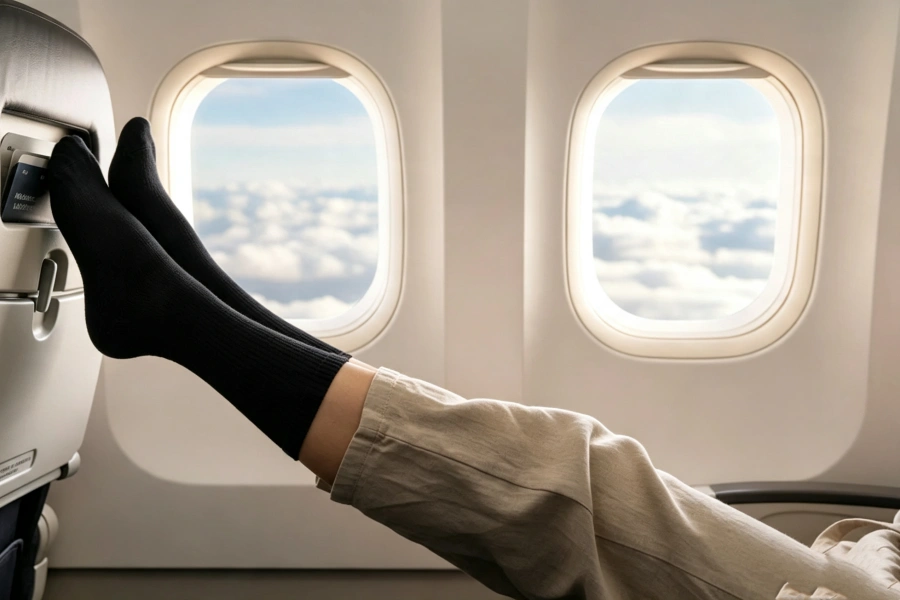
Every long-haul flight presents a silent challenge to your legs—prolonged immobility, reduced cabin pressure, and low humidity combine to slow venous return, increasing the risk of swelling, fatigue, and even deep vein thrombosis. This is where compression socks in flight become not just a comfort accessory but an evidence‑based health intervention. In this guide, we unpack the science, the proven benefits, and the practical selection criteria for the best compression socks for air travel, helping you make informed decisions for health, comfort, and productivity at 30,000 feet.
Why Your Legs Are at Risk During Long Flights?
The physiological challenge of air travel
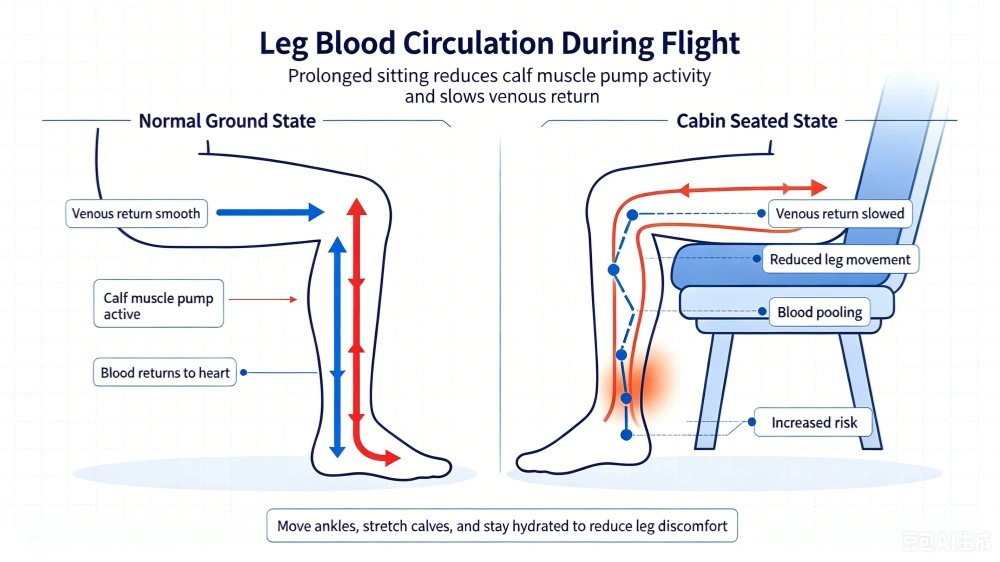
When you board a commercial aircraft, your legs face a perfect storm of circulatory challenges. The cabin is pressurized to an altitude equivalent of 6,000–8,000 feet. This reduced pressure, combined with low cabin humidity, causes blood vessels to dilate and blood to become more concentrated. Meanwhile, prolonged immobility in a cramped seat means your calf muscles are largely inactive.
The result? Blood pools in the lower extremities. Venous return slows. And the risk of deep vein thrombosis (DVT), a potentially dangerous blood clot that forms in the deep veins of the leg, rises significantly.
When should you be concerned?
- Short flights (under 4 hours): For healthy individuals with no additional risk factors, the absolute risk is very low.
- Long-haul flights (over 4 hours): Risk increases significantly. The American Society of Hematology recommends compression socks primarily for flights of four hours or longer.
- Ultra-long-haul (over 10 hours): Risk is substantially elevated, particularly for those with pre-existing conditions.
The Science Behind Compression Socks: How Graduated Pressure Works
The principle of graduated compression
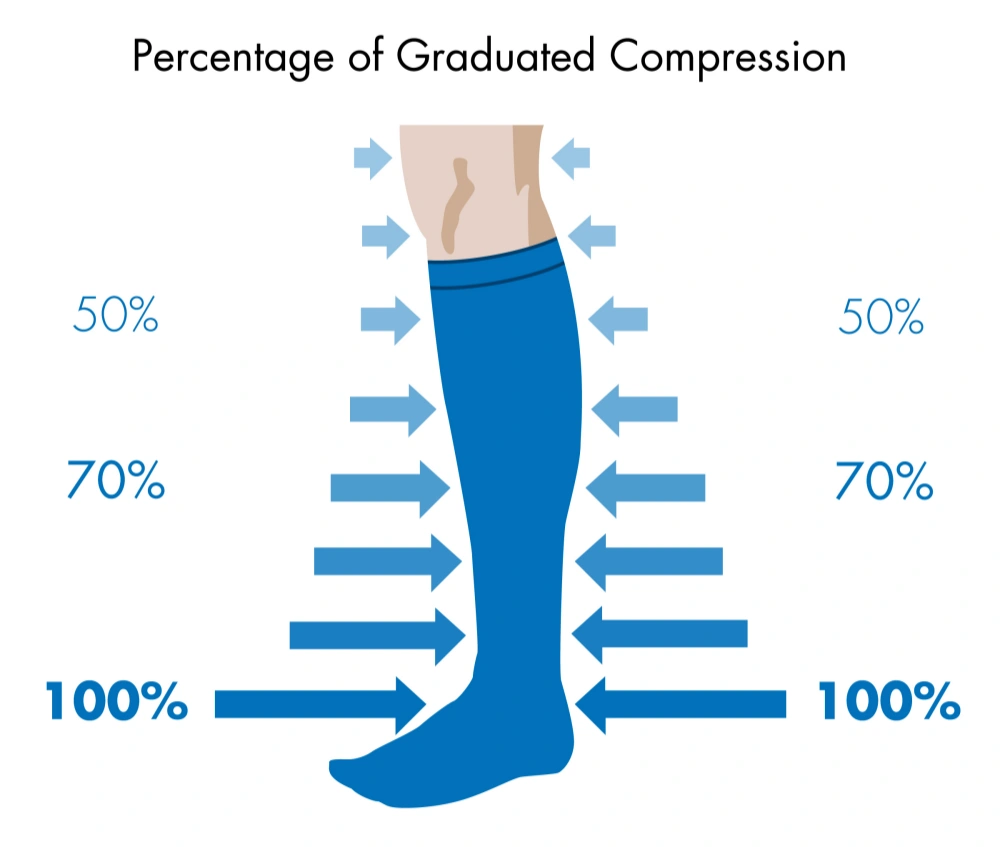
Compression socks are precision-engineered medical devices that apply graduated pressure, meaning the compression is highest at the ankle and progressively decreases as the sock moves up the leg.
How it promotes venous return?
- Squeezing superficial veins, forcing blood into the deeper venous system where calf muscles can pump it more effectively toward the heart
- Reducing the diameter of veins, which increases blood flow velocity
- Supporting vein walls, preventing over-expansion that can occur in the low-pressure cabin environment
- Acting as an external muscle layer, assisting the natural calf muscle pump that propels blood upward
The Cochrane evidence: what the data says
The Cochrane systematic review included nine randomized controlled trials with 2,637 participants and found high-certainty evidence that compression stockings reduce asymptomatic DVT in airline passengers.
Key findings from the review:
| Outcome | Without Stockings | With Stockings |
| Asymptomatic DVT | ~39 per 1,000 people | ~4 per 1,000 people |
| Leg edema (swelling) | Significant | Reduced by ~4.7 points on a 10-point scale |
The review concluded that wearing compression stockings results in a very large reduction in symptomless DVT.
5 Proven Benefits of Wearing Compression Socks In Flight
1. Reduced Risk of Deep Vein Thrombosis (DVT)
This is the most significant medical benefit. High-certainty Cochrane evidence shows that wearing compression stockings on flights over four hours reduces asymptomatic DVT from approximately 39 per 1,000 people to just 4 per 1,000. For high-risk individuals on flights exceeding 10 hours, where DVT incidence can reach 4–6%, the protective effect is even more clinically meaningful.
2. Reduced Ankle and Foot Swelling (Edema)
More than 90% of air passengers experience some degree of flight-induced ankle edema. Prolonged sitting causes fluid to pool in the lower legs and feet due to gravity. Compression socks prevent this fluid accumulation by maintaining venous return and reducing capillary filtration.
3. Relief from Leg Heaviness and Fatigue
That heavy, aching sensation in your legs after a long flight isn’t just in your head, it’s the result of blood pooling and fluid accumulation. Compression socks help fight this feeling of fatigue by supporting circulation and reducing the burden on your veins. Many travelers report significantly less leg fatigue and discomfort when wearing properly fitted compression socks.
4. Accelerated Post-Flight Leg Recovery
The benefits of compression socks extend beyond the flight itself. Wearing them during and immediately after travel helps your legs recover faster. Better circulation means reduced fluid retention and faster clearance of metabolic waste products from muscle tissue. Many experts recommend keeping compression socks on for a few hours after landing to allow the circulatory system to re-equilibrate gradually.
5. Improved Symptoms of Venous Insufficiency
For individuals with pre-existing venous conditions, the protective effects of compression socks during flight are particularly valuable. These conditions make the veins less efficient at returning blood to the heart, and the added challenge of flight conditions can exacerbate symptoms. Compression socks provide the external support these weakened veins need.
Who Should Wear Compression Socks in Flight ?
Strongly recommended groups:
| Group | Rationale |
| Previous DVT or pulmonary embolism | Personal history is the strongest predictor of recurrence |
| Varicose veins or chronic venous insufficiency | Already compromised venous return |
| Pregnancy | Hormonal changes and increased blood volume make veins more vulnerable |
| Recent surgery (within 3 months) | Postoperative state increases clotting risk |
| Cancer patients | Certain cancers and treatments increase blood “stickiness” |
| Obesity (BMI over 30) | Extra pressure on the venous return system |
| Long-haul passengers (>4 hours) | Even without other risk factors, risk increases with duration |
| Frequent business travelers | Cumulative risk across multiple flights |
Who should be cautious or consult a doctor
- Peripheral arterial disease (PAD): Compression could potentially restrict flow in already damaged blood vessels
- Severe heart failure: May affect the body’s ability to handle increased venous return
- Diabetes with peripheral neuropathy: Reduced sensation means you may not feel if the sock is too tight or causing damage
- Skin infections or fragile skin: Compression can aggravate existing conditions or cause injury
Choosing the Right Compression Level: 15–20 vs 20–30 mmHg for Flying
Understanding compression measurements
Compression levels are measured in millimeters of mercury (mmHg). The number indicates the amount of pressure the sock applies at the ankle, where compression is highest.
15–20 mmHg: The travel-friendly choice
This is the most commonly recommended range for general travel. It provides sufficient pressure to reduce swelling and improve comfort without being overly tight. For healthy individuals on flights up to 8–10 hours, 15–20 mmHg offers an excellent balance of efficacy and comfort.
When to choose 15–20 mmHg:
- You are a healthy traveler with no significant risk factors
- You are flying 4–10 hours
- You want to prevent swelling and reduce leg fatigue
- You are pregnant or have mild varicose veins
20–30 mmHg: Medical-grade compression
This level provides firmer, more therapeutic compression and is typically recommended for individuals with medical indications. In the LONFLIT studies, stockings with ankle pressure between 20–30 mmHg were effective in controlling edema and reducing DVT incidence in both low-medium-risk subjects and patients with microangiopathy on 7–11 hour flights.
When to choose 20–30 mmHg:
- You have a history of DVT or pulmonary embolism
- You have diagnosed venous insufficiency or varicose veins
- You are post-surgical (with doctor approval)
- You are flying ultra-long-haul (>10 hours) with multiple risk factors
- Your doctor has specifically recommended this level
AOFIT product recommendation:
- For healthy travelers and those with mild risk factors on long-haul flights, AOFIT graduated compression knee-high socks offer the ideal balance of comfort and protection. Crafted from breathable, moisture-wicking materials with graduated pressure technology, they provide the scientifically validated benefits.
- For high-risk individuals or those with diagnosed venous conditions, AOFIT medical-grade compression socks deliver the firmer support needed for therapeutic protection. Always consult with a healthcare provider to determine which level is appropriate for your specific health profile.
How to Wear Compression Socks on a Plane?
Best timing: put them on before swelling begins
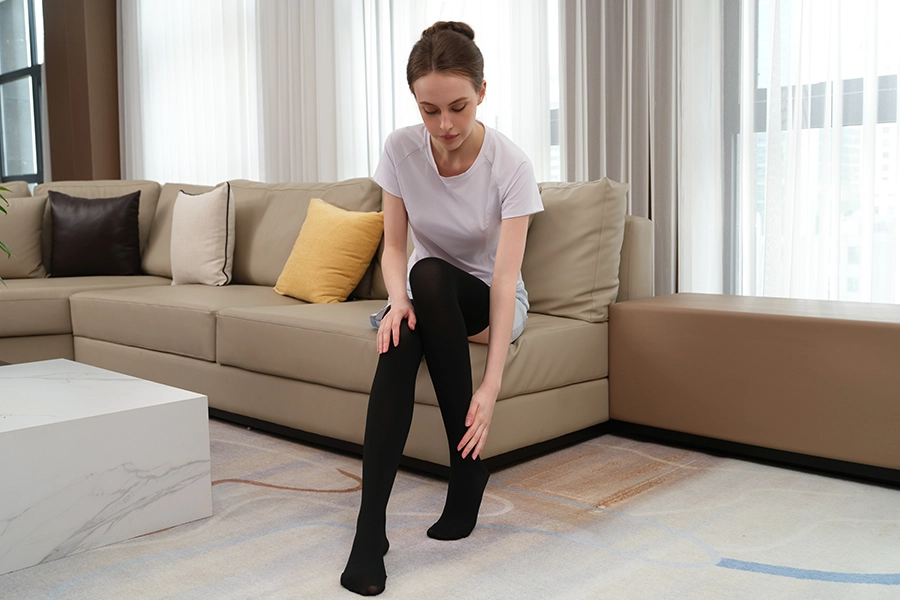
The ideal time to put on compression socks is in the morning—when your legs are at their least swollen point. If you have an afternoon or evening flight, you can wear them throughout the day under your clothes. The key is to apply them before your legs begin to swell from sitting, as trying to put them on swollen legs is more difficult and less effective.
Wear them:
- Throughout the entire flight (including taxi, takeoff, and landing)
- During layovers and connections
- For a few hours after landing to allow your circulatory system to re-equilibrate
Proper donning technique
- Turn the sock inside out down to the heel
- Place your foot into the foot pocket, ensuring the heel is properly positioned
- Gradually roll the sock up your leg, smoothing out any wrinkles
- Ensure the top band sits 1–2 inches below the knee (for knee-high styles)
Complementary measures: a complete in-flight leg health plan
Compression socks are most effective when combined with other preventive measures:
- Ankle pumps: While seated, repeatedly point and flex your feet. This activates the calf muscle pump and promotes venous return, even without standing.
- Regular walking: Get up and walk the aisle every 1–2 hours when the seatbelt sign is off.
- Stay hydrated: Drink plenty of water. Avoid alcohol, tea, and coffee, which can contribute to dehydration.
- Avoid crossing legs: Sitting cross-legged or in positions that bend hips and knees for prolonged periods impairs circulation.
How to Choose the Best Compression Socks for Air Travel: Sizing & Material Guide
Five core selection dimensions
When selecting compression socks for air travel, consider these five factors:
1. Compression level
- 15–20 mmHg: Healthy travelers, mild symptoms, flights up to 10 hours
- 20–30 mmHg: High-risk individuals, diagnosed conditions, ultra-long-haul flights
2. Length
- Knee-high is the evidence-based choice for air travel
- Avoid ankle-length or thigh-length for flying unless specifically recommended
3. Material
- Moisture-wicking fabrics (nylon, merino wool blends) to keep feet dry
- Breathable construction to prevent overheating
- Four-way stretch for comfort and ease of donning
- Antistatic properties for comfort
4. Seam construction
- Flat seams or seamless designs reduce friction and prevent skin irritation during long wear
- Reinforced heel and toe for durability
5. Top band design
- A soft, smooth cuff border prevents the tourniquet effect and reduces discomfort
- The band should be wide enough to distribute pressure evenly without digging in
Sizing: Measure
The single most common mistake in compression sock selection is choosing by shoe size. Proper fit requires precise measurements:
Step 1: Measure ankle circumference (the narrowest part of your ankle) just above the ankle bone
Step 2: Measure calf circumference (the widest part of your calf)
Step 3: Measure leg length (from the floor (heel) to the back of your knee)
Step 4: Consult the brand’s size chart
A properly fitted compression sock should feel snug but not painful. You should be able to wiggle your toes freely. If the top band leaves deep indentations or causes discomfort, the size or compression level may be incorrect.
AOFIT Product Features
AOFIT compression socks for air travel are designed with the traveler in mind:
| Feature | Benefit |
| Graduated compression (15–20 mmHg / 20–30 mmHg) | Evidence-based protection for all risk levels |
| Knee-high length | Optimal coverage for calf muscle pump support |
| Breathable, moisture-wicking fabric | Keeps feet dry and comfortable throughout long flights |
| Flat-seam construction | Minimizes friction and skin irritation |
| Soft top band | Prevents tourniquet effect, ensures all-day comfort |
| Precision sizing | Available in multiple sizes based on ankle and calf measurements |
Frequently Asked Questions About Flight Compression Socks
Can I wear compression socks in economy class?
Absolutely. While the term “Economy Class Syndrome” might suggest otherwise, DVT and venous issues can occur in any class of travel. The Cochrane trials on compression stockings for air travel were conducted with passengers in economy class seats. Compression socks are equally effective regardless of cabin class and arguably more important in economy, where legroom and movement are more restricted.
Do compression socks prevent varicose veins?
They manage symptoms but do not cure varicose veins. Compression socks can reduce the discomfort, swelling, and aching associated with varicose veins by providing external support to weakened vein walls. However, they do not eliminate existing varicose veins that requires medical treatment. For travelers with varicose veins, compression socks are an essential tool for preventing symptom exacerbation during flights.
Are compression socks safe for everyone?
Not everyone. Individuals with peripheral arterial disease (PAD), severe heart failure, or diabetic peripheral neuropathy should consult a doctor before using compression socks. Compression can restrict blood flow in already compromised arteries or cause injury in areas with reduced sensation. For everyone else, compression socks are generally safe when properly fitted.
Can I sleep in compression socks on a long flight?
Yes, you can. Compression socks are designed to be worn for extended periods. If you are on an overnight flight and plan to sleep, keeping them on throughout is recommended and actually preferable to removing them mid-flight. Just ensure they are properly fitted and comfortable before you settle in for rest.