
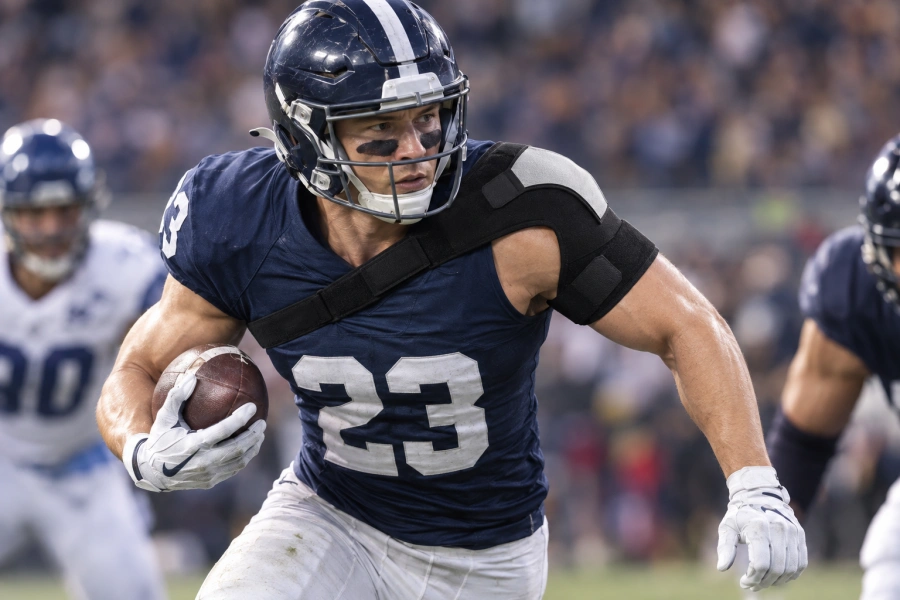
A bad overhead press, a hard landing, or a missed catch can sideline your shoulder for weeks. The right sports shoulder support brace lets you train with confidence, while the wrong shoulder brace for athletes slips mid-set, feels bulky, or offers far less stability than you need. With options ranging from light compression sleeves to rigid stabilizers, choosing the right shoulder brace for athletes gets confusing fast.
This guide cuts through that. You’ll see how we evaluated each sports shoulder support brace, get a quick comparison table, and learn the strengths and trade-offs of every sports shoulder support brace. Then we match braces to your sport and condition, whether you have an AC joint sprain, a rotator cuff strain, or general instability.

Quick Comparison Table: 8 Best Sports Shoulder Support Braces for Athletes at a Glance
|
Product |
Best For |
Brace Type |
Support Level |
Adjustability |
Price |
|---|---|---|---|---|---|
|
AOFIT Copper Shoulder Compression Sleeve |
General training, gym workouts, and athletes seeking lightweight compression |
Copper-infused compression shoulder sleeve |
Light |
Elastic fit; size-dependent compression |
OEM/ODM bulk pricing |
|
Breg Shoulder Stabilizer |
Weightlifting and sports requiring additional shoulder stability |
Shoulder stabilization brace |
Moderate–High |
Adjustable straps and stabilization settings |
Quote-based |
|
Shock Doctor 842 Shoulder Support |
Wrestling, contact sports, and mild AC joint support needs |
Adjustable shoulder support with compression |
Moderate |
Adjustable chest and arm straps |
Approx. $35–60 |
|
DonJoy Sully Shoulder Brace |
Return to sport following shoulder instability or sprain |
Neoprene shoulder stabilization brace |
High |
Multiple adjustable straps for directional support |
Approx. $150–250 |
|
EVS Sports SB03 Pro |
Motocross, off-road riding, and impact sports |
Reinforced shoulder support brace |
Moderate–High |
Adjustable arm and chest straps |
Approx. $50–90 |
|
Mueller Shoulder Support |
General training, mild shoulder discomfort, and everyday support |
Adjustable shoulder compression wrap |
Light–Moderate |
Adjustable compression straps |
Approx. $20–40 |
|
FIGHTECH Shoulder Brace |
Rotator cuff discomfort and cold/heat therapy |
Adjustable shoulder wrap with therapy-pack compatibility |
Light–Moderate |
Adjustable compression and fastening straps |
Approx. $20–40 |
|
Sparthos Shoulder Brace |
Budget-conscious users seeking mild compression support |
Neoprene shoulder compression brace |
Light–Moderate |
Adjustable straps and compression fit |
Approx. $20–35 |
Below are detailed descriptions of the eight sports shoulder support braces.
1. AOFIT Copper Shoulder Compression Sleeve: Lightweight Sports Shoulder Support Brace for High-Impact Training and Competition

AOFIT produces close-fitting copper shoulder compression sleeves without rigid stays, buckles, or restrictive hardware, supplying both retail and private-label buyers. Unlike braces that lock the joint in place, this sleeve preserves normal movement for reaching, lifting, and overhead work, giving athletes light-to-moderate compression and joint awareness.
What You Get
AOFIT blends copper-infused yarn into polyester, nylon, spandex, or other breathable textiles, with fabric treated for antimicrobial performance. Available constructions include seamless, circular, flat-knit, and multi-panel builds in compact to full-coverage lengths.
Related AOFIT compression lines list ratings of 15–20, 20–30, or 30–40 mmHg, fabric weights between 260–420 GSM, and at least 95% elastic recovery after 50 washes. AOFIT also reports roughly 30% more airflow than standard neoprene for its spandex-nylon blend. Keep in mind that this figure varies across specific copper weaves, and neoprene alternatives will retain more heat.
Customization and Pricing
Buyers can adjust colors, logo placement, fabric weight, compression strength, sleeve length, and size grading. AOFIT also handles sample runs and custom branding through its custom shoulder braces service.
Single-unit listings run about $19.99–$35.99, where order quantity and fabric selection dictate the unit price.
Why We Recommend It
Why it made the list: It is the only fully customizable, hardware-free sleeve here with published compression tiers and documented fabric specs.
What it can do: Fits training demands for gym sessions, volleyball, tennis, baseball, swimming, and wrestling, as well as return-to-play routines after a mild strain.
Best for: Private-label brands, teams, and distributors needing lightweight compression. Pass on this if you require rigid stabilization for joint instability or acute injuries.
Confirm before contacting: MOQ, sample terms, and wash-cycle test data for your specific material configuration.
2. Shock Doctor 842 Shoulder Support: Best for Wrestling, Contact Sports and AC Joint Sprains

The Shock Doctor 842 Shoulder Support provides Level 3 stabilization for moderate-to-major ligament sprains, muscle strains, loose joints, and AC joint support. It fits either the left or right shoulder, with U.S. retail pricing around $64.99–$66.99.
Its core feature is the multi-position X-Fit® strap system. Adjustable straps across the chest and upper arm hold the shoulder aligned under load, while a strap-retention stabilizer keeps the wrap from shifting out of place. You can also connect the arm strap directly to the chest straps to limit painful movement after an AC sprain. The main body uses N-Tex™ vented neoprene (65% SBR) lined with soft Lycra/spandex mesh.
Where It Works
Wrestling: A strong option for practice and competition, provided match rules permit soft braces.
Football: It adds stability under a jersey, though the neoprene and strap hardware can pinch beneath shoulder pad harnesses.
Rugby: Useful under a jersey to manage recurring instability.
Why We Recommend It
Why it made the list: Level 3 support, a bilateral fit, and an adjustable X-Fit strap system for roughly $65 at retail.
What it can do: It stabilizes AC joint sprains, muscle strains, and joint instability during wrestling, rugby, and football sessions.
Best for: Contact-sport athletes who need more control than a compression sleeve gives. It will disappoint anyone looking for a low-profile silhouette or blunt impact protection.
Confirm before contacting: Production location, bulk pricing, and sample policies.
3. DonJoy Sully Shoulder Brace: Best for Returning to Sport After Instability or Sprain

The DonJoy Sully Shoulder Brace is a functional shoulder stabilizer built for athletes returning to controlled, sport-specific drills. It braces against shoulder instability and dislocation during movement.
An elastic strapping system provides support. You can adjust the straps to stabilize the joint, assist movement, or restrict a specific range of motion. The design is reversible, fitting either shoulder. As your strength and control improve, you can loosen the straps in stages. This maintains useful motion, compression, and joint-position awareness without locking your arm.
It works best for instability that surfaces during dynamic movements like reaching, throwing, contact, and overhead work. It is not meant for the acute phase right after an injury. DonJoy specifically lists it for football, baseball/softball, and motocross.
The DonJoy Store lists it at $162.89 on sale, down from $180.99. That is roughly 10% off, putting it well above the price of a basic sleeve.
DonJoy notes that post-surgical use should follow physician guidance. Stop wearing it and get evaluated if you experience recurrent subluxation, sharp pain, numbness, or growing weakness.
Why We Recommend It
Why it made the list: It is the only entry built for the middle phase of recovery, offering adjustable stabilization rather than locking the joint completely.
What it can do: It supports a steady progression from noncontact drills to overhead work and controlled contact.
Best for: Athletes with documented instability or a sprain who have regained basic motion and strength. It is a poor match for anyone needing a sling or returning too early.
Confirm before contacting: Whether team or bulk pricing exists.
4. EVS Sports SB03 Pro: High-Support Shoulder Brace for Motocross and Impact Sports

EVS Sports makes protective gear for motocross, mountain biking, and skiing. The EVS Sports SB03 Pro is its low-profile shoulder instability brace for riders who expect to take spills. It skips the molded shell entirely. Instead, the RHEON™ X-Strap System uses reactive strands that reinforce the major shoulder muscles and adjust tension as you move, giving you dynamic shoulder compression support.
The brace pairs breathable Air Mesh™ with moisture-wicking airprene®. It features adjustable chest straps on both the front and back, an adjustable upper-arm closure, and a universal cut that fits either shoulder without snagging. It slips under jerseys, roost guards, and jackets with far less bulk than a rigid orthosis.
Why We Recommend It
Why it made the list: It is the only low-bulk brace here built around falls and impact.
What it can do: It supports motocross, mountain biking, downhill skiing, and contact sports.
Best for: Riders who want joint stabilization without a rigid shell. Pass on this model if you need armor against direct blows.
Confirm before contacting: Production base, MOQ, and sampling terms are not published. Also confirm the certification markings on the exact unit.
5. Breg Shoulder Stabilizer: Best Shoulder Stabilizer Brace for Weightlifting and Instability
Breg makes the Shoulder Stabilizer (part no. 1074X), a reusable, medical-grade brace. It restricts abduction and external rotation, the two movements most tied to anterior translation. Standard sleeves only provide surface compression, but this brace targets specific directional movement.
The lightweight, ventilated neoprene harness features an adjustable arm band and hook-and-loop closures. Breg lists it for shoulder dislocation, subluxation, and global or multidirectional instability. It stops your arm at vulnerable end-range angles without pinning it to your torso, limiting motion “without sacrificing function.” The universal build fits either shoulder, so you do not need to order a dedicated left or right version.
How It Performs for Lifters
Bench press: Useful for lifters with physician-diagnosed instability, particularly when elbows flare out. It cuts down time spent in that high-abduction, externally rotated bottom position.
CrossFit: Well-suited to controlled pressing, rowing, and machine work. Kipping pull-ups, muscle-ups, snatches, and jerks can still push past its mechanical control range.
Trade-off: The harness can get in the way during wide-grip benching, deep dips, overhead lockouts, and Olympic catch positions.
You still need structured rehab and sensible load management alongside any support gear. Strap the harness and arm band tight enough to stay anchored without causing numbness, and test your setup with an empty barbell first.
Why We Recommend It
Why it made the list: It is the only brace here engineered to restrict specific instability angles instead of providing general compression.
What it can do: It handles controlled pressing and gym work for recurrent subluxation, a history of dislocations, or multidirectional instability.
Best for: Lifters with diagnosed instability who need more structural support than a sleeve gives. It is a poor fit for Olympic lifters, undiagnosed pain, or post-op immobilization.
Confirm before contacting: Retail pricing varies, running from about $214.95 on medical-supply sites to roughly $369–$404 through other outlets. Breg does not publish MOQ, sampling, or bulk purchasing terms.
6. Mueller Shoulder Support: Best General-Purpose Shoulder Support for Training and Mild Instability
Mueller’s 69530 series is a bilateral, adjustable neoprene shoulder support brace built for compression, alignment, and moderate stability. It provides flexible joint support. Mueller lists it for muscle strains, ligament sprains, rotator-cuff injuries, impingement, bursitis, and arthritis.
The multi-strap Velcro setup lets you tweak compression levels and reposition the straps for a secure fit that preserves full range of motion. That works well for mild instability and recurring soreness.
The fabric blend is 50% neoprene, 35% nylon, 10% spandex, and 5% polyester, finished with an antimicrobial treatment and a breathable mesh panel. Neoprene traps body heat.
Where It Fits
Basketball and volleyball: Noncontact drills, shooting, serving, and setting.
Baseball: Throwing practice, batting, and mild post-strain support. Get a medical assessment if you deal with recurrent pain or past dislocations.
Gym work: Cable, machine, and moderate pressing or pulling. Never use it to mask sharp pain.
Mueller’s official store lists the brace at $62.50–$124.99. Medco offers it for $55.87 on sale ($91.98 regular), and CVS carries a hot/cold model at $42.99. The added strap adjustability accounts for the higher price over a standard sleeve.
Why We Recommend It
Why it made the list: It is the only multi-strap, mesh-paneled brace in this lineup that fits either shoulder across a 26–52 in chest range.
What it can do: It supports controlled training, rotator-cuff soreness, and mild instability without locking up movement.
Best for: Recreational and competitive athletes who need moderate joint stability. It is the wrong choice for acute dislocations or post-surgical protection.
Confirm before contacting: Bulk pricing, sampling, and customization options, since Mueller does not publish these details.
7. FIGHTECH Shoulder Brace: Best for Rotator Cuff Support with Cold/Heat Therapy
The FIGHTECH Rotator Cuff Shoulder Brace is a neoprene compression wrap built with an adjustable arm sling. It focuses strictly on rest and recovery rather than athletic performance, which sets it apart from the other entries here.
Hook-and-loop straps let you fine-tune compression across the shoulder and upper arm. The universal design fits either side and comes in four sizes. The listing targets rotator cuff symptoms, tendonitis, bursitis, frozen shoulder, labrum injuries, dislocations, separated shoulders, and post-operative support.
Its standout feature is an internal pocket that holds a hot or cold gel pack against the joint once you tighten the straps. The listing notes that the gel pack is sold separately. FIGHTECH lists no customization, MOQ, or sampling terms, making this a straight retail buy.
Price
It costs about $27.99, compared to roughly $34.99 on Amazon marketplace listings. The brace holds an average rating of 4.0/5 from approximately 16,235 reviews. Buyers praise the pain relief, joint stability, and the dedicated ice-pack strap.
Where It Fits
Use it for short-term rest during acute rotator cuff flare-ups or light daily routines. Skip it during throwing, lifting, swimming, or racquet sports; immobilizing the arm during dynamic movement compromises mechanics and delays functional mobility. Wearing any sling setup too long also increases the risk of joint stiffness and adhesive capsulitis.
Why We Recommend It
Why it made the list: It combines compression, sling support, and a hot/cold pocket for about $28, backed by a large review base.
What it can do: It supports short-term rotator cuff rest, bursitis or tendonitis flare-ups, and clinician-directed recovery.
Best for: Athletes managing a painful shoulder between sessions instead of during active training or competition.
Confirm before contacting: Which of the four sizes matches your measurements; the gel pack is sold separately.
8. Sparthos Shoulder Brace: Best Budget Shoulder Compression Sleeve for Mild Pain
Sparthos designed this neoprene shoulder compression brace for everyday aches. With adjustable chest and arm straps, hook-and-loop closures, and a fit that works on either shoulder, it offers more adjustability than a standard sleeve. It provides mild-to-moderate stabilization for general strain, rotator-cuff discomfort, and AC-joint soreness without locking down the joint.
In practice, it functions as a comfort and awareness sleeve. It supplies gentle warmth, compression, and a physical cue to keep you from twisting into painful positions. The cut works well for work, sleep, walking, and light exercise, and an integrated pocket lets you slide in an ice pack for post-workout cold therapy.
Price
The manufacturer lists the brace at $26.97, while the brand homepage shows options starting at $23.97, putting typical costs between $23.97 and $26.97.
Why We Recommend It
Why it made the list: It pairs adjustable stabilization with an ice-pack pocket at a budget price point, backed by nearly 20,000 reviews.
What it can do: It supports mild strain, tendinitis, and low-intensity daily movement. It will not replace a clinical immobilizer after surgery, a fracture, or a major dislocation, and it provides minimal protection against falls or recurrent joint subluxation.
Best for: Budget-conscious users managing mild shoulder pain while staying active. Skip this brace for contact sports, overhead athletic competition, or injuries requiring rigid immobilization.
Confirm before contacting: Sparthos publishes no MOQ, sampling, or customization terms. Check your chest and bicep measurements closely before ordering, since the two-size system leaves borderline users between fits.
Best Sports Shoulder Support Brace by Sport: Weightlifting, Basketball, Volleyball, Baseball, Swimming and Football
Choosing the right sports shoulder support brace comes down to how much movement your sport demands. More support cuts down unwanted motion, but it also limits flexibility. Flexible supports aim to stabilize the joint while leaving essential range of motion intact.
|
Sport |
Main shoulder demand |
Best shoulder brace type |
Recommended support |
|---|---|---|---|
|
Weightlifting |
Heavy pressing, bench press, snatch, clean-and-jerk; high load with overhead elevation |
Adjustable neoprene shoulder support with compression and a stabilizing strap |
Medium–high for pressing and instability; medium for routine training |
|
Basketball |
Repeated overhead reach, shooting, rebounding, falls, and contact |
Low-profile compression brace that stabilizes without immobilizing the arm |
Low–medium; prioritize range of motion |
|
Volleyball |
High-volume overhead hitting, serving, and blocking |
Lightweight compression sleeve or adjustable support with controlled shoulder positioning |
Low–medium during play; higher only for instability or rehab |
|
Baseball |
High-velocity throwing, external rotation and deceleration |
Thin compression support or movement-friendly rotator cuff brace |
Low for pitchers; medium for fielding or post-injury training |
|
Swimming |
Repetitive overhead stroke cycles (freestyle, butterfly, backstroke) |
Flexible compression sleeve with minimal bulk |
Low; enough compression for comfort and proprioception |
|
Football |
Tackles, collisions, falls, and forced shoulder motion |
Structured shoulder stabilizer with cross-body or figure-eight straps; optional padding |
Medium–high for contact; lower-profile compression for non-contact drills |
AOFIT targets weightlifting, CrossFit, basketball, and overhead training with its sports shoulder support brace line. Their focus is stabilization that preserves natural movement, which is the right balance for most athletes.
Sport-Specific Rules That Save You Money
Baseball pitchers: Heavy stability restricts external rotation and alters throwing mechanics. Wear the lightest brace that checks painful translation or offers proprioceptive feedback. Save firmer stabilization for warm-ups, rehab, and non-pitching sessions.
Volleyball players: A rigid brace slows arm speed and cuts hitting range. In competition, stick with compression or a flexible adjustable strap. Step up to firmer support only if you deal with instability or recurrent subluxation.
Swimmers: Small limits on elevation, rotation, or scapular glide shorten stroke length and ruin catch position. Pick a seamless, low-profile sleeve, and skip bulky straps under a swimsuit.
Matching AOFIT Products to Your Sport
AOFIT organizes its site by product category. Search directly for these terms: “adjustable shoulder brace,” “rotator cuff shoulder support,” “shoulder stabilizer,” and “compression shoulder sleeve.”
Football and heavy lifting: Look for shoulder stabilizers equipped with adjustable straps.
Baseball and swimming: Look for flexible compression sleeves or lightweight supports rather than rigid stabilizers.
Whichever you choose, check whether the sports shoulder support brace is side-specific or reversible. Rely on the sizing chart on the specific product page for final chest and bicep dimensions.
Conclusion
The best sports shoulder support brace fits your sport and your shoulder, regardless of strap count or price.
Three factors matter most:
Match the brace to the problem. A shoulder stabilizer brace like the Breg or DonJoy suits instability. The Shock Doctor 842 suits AC joint sprains. FIGHTECH is the pick for rotator cuff support.
Match it to your sport. Weightlifting, basketball, baseball, and motocross all place different demands on your shoulder.
Match it to your budget. Lightweight compression sleeves from AOFIT or Sparthos handle mild pain without adding bulk.
Use the comparison table to find your sports shoulder support brace, which suits your sport and condition.
Browse the AOFIT shoulder compression support range, pick your size, and get back to training with a shoulder you can trust.