
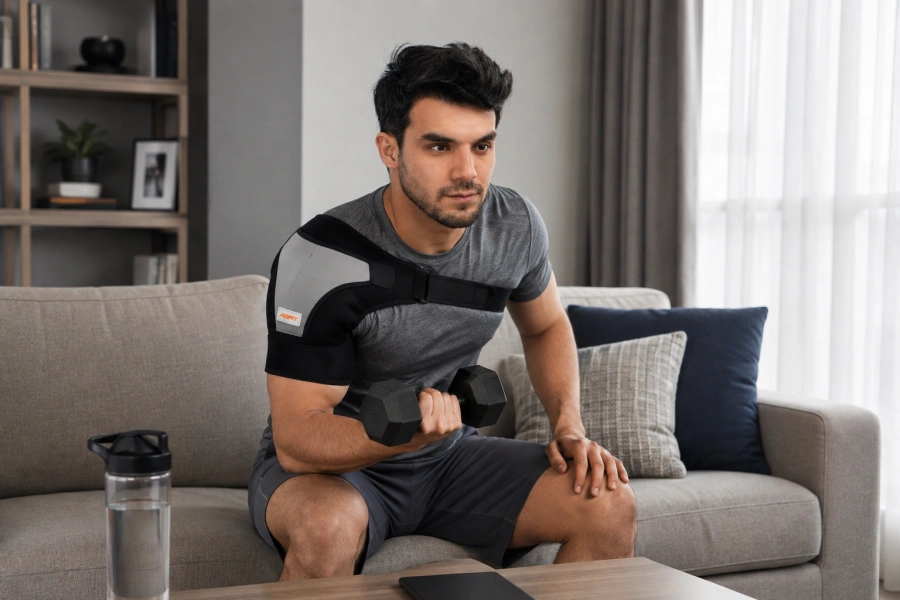
That first week after shoulder surgery can feel overwhelming, especially when every small movement sends a jolt of worry through you. If you’ve just come out of a rotator cuff repair, a dislocation correction, or any procedure that leaves your shoulder feeling fragile, you’re probably wondering how you’re supposed to protect it while it heals. A well-fitted shoulder stabilizer limits motion so your tissues can repair without added strain.
Here is the approach: We’ll walk through how this kind of shoulder surgery recovery support works, how long you’ll likely need it, and how to choose between the different styles available, so you feel confident and supported through every stage of your healing journey.
How a Shoulder Stabilizer Supports Recovery?
A shoulder stabilizer locks your joint into a safer position so nothing gets pulled, twisted, or overstretched while it heals. That sounds basic, but the mechanics behind it are clever.
The Core Mechanism
Every time you reach, twist, or lift your arm, you’re putting tension on fragile tissues. A shoulder stabilizer limits abduction, external rotation, and sudden movements—the exact motions most likely to strain healing structures. This reduces shear and tensile forces on your rotator cuff, labrum, joint capsule, and ligaments during the window when they’re most vulnerable.
Different Injuries, Different Approaches
Rotator cuff repair brace: Uses an abduction pillow or brace that holds your arm at roughly 15° away from your body, easing tension on the repaired area and lowering re-tear risk.
Labral repair or shoulder instability: Limits abduction and external rotation, since those movements push the joint back into a risky position.
Shoulder dislocation brace: Keeps the joint immobilized to prevent re-dislocation. Wearing one for 2–3 weeks post-injury can lower recurrence risk by about 25%.
Arthroscopic procedures: Simple cleanups need just a light sling, while repairs require stricter immobilization.
Supporting Your Arm’s Weight
Your sling or arm sling for shoulder surgery doesn’t just restrict movement—it transfers the weight of your arm onto your shoulder strap and torso instead of your joint. That eases the constant downward pull you feel while walking, sitting, or turning.
Most patients regain about 70% of their range of motion by weeks six to eight, though heavy lifting capacity may stay down by roughly 40% during this period. A good reminder to keep things gentle.
The Three-Stage Recovery Process: From Immobilization to Mobility
Healing doesn’t happen in one straight line—it moves through distinct phases, each with its own rules. Knowing where you are in this timeline makes the whole shoulder rehab process feel a lot less mysterious.
Stage One: Strict Immobilization (Weeks 0–2, sometimes extending to 4)
This is the “don’t even think about it” phase. Your shoulder brace stays on 24 hours a day, including while you sleep. Active shoulder movement is off the table—only your wrist, hand, and elbow get to move. A biceps tenodesis protocol, for example, calls for a full 4 weeks in a sling, day and night, with removal only for washing, dressing, or approved home exercises.
Stage Two: Controlled Movement (Weeks 2–6)
Around week 2–3, protected passive range of motion (PROM) typically begins. By weeks 3–4, gentle active-assisted movement (AAROM) joins in. Posterior stabilization protocols often start PROM within limited angles—think 90° flexion, 45° internal rotation, 90° abduction—and gradually build toward more freedom.
Stage Three: Weaning Off Your Support (Weeks 3–6 and Beyond)
There’s no fixed calendar date here. Progress depends on pain control, healing stability, and your provider’s green light. Many patients start reducing daytime wear between weeks 3–6, with full independence from the shoulder support around week 6. From there, active range of motion and light strengthening take over. Fuller strength training often starts closer to week 12 for rotator cuff repairs.
How Long to Wear a Shoulder Stabilizer After Different Surgeries?
No two shoulders heal on the same clock. The surgery you had, how much tissue needed repair, and your surgeon’s personal protocol all shape how long you’ll need to wear the shoulder stabilizer.
Typical Timelines by Procedure
Bankart repair (labral/instability fix). Most protocols run 4–6 weeks. A common pattern: full-time wear for the first 4 weeks, then daytime freedom while nighttime wear continues through weeks 5–6.
Latarjet procedure. This one tends to sit on the longer end, often 6 weeks continuous, including overnight. Some surgeons allow daytime weaning starting week 4, but the more conservative 6-week window is still standard.
Rotator cuff repair brace protocols. Usually 6 weeks total, with full-time wear for weeks 1–5 and comfort-only use in week 6. Large or massive tears frequently push this to 6–8 weeks.
Shoulder arthroplasty (replacement). The widest range—anywhere from 1 to 6 weeks. Many centers use a simple sling for about 4 weeks, but if soft tissue repair or bone grafting was involved, expect closer to 6.
The Rule That Matters
Your surgery type sets the baseline weeks. Tear size and joint stability decide if you need extra time. And your surgeon’s specific orders always override any general timeline. If you’re feeling instability, worsening pain, or your doctor restricts external rotation, lean toward the more conservative end of your range.
Proper Fitting and Wearing Techniques
Fit makes or breaks the whole recovery process — even the best orthopedic shoulder support won’t do its job if it’s sitting in the wrong spot or cinched too tight.
The Two-Finger Rule
Once your shoulder brace is secured, you should be able to slide one to two fingers underneath the strap without a struggle. If you can’t fit even one finger in, it’s too tight. If it’s sliding around loosely, it’s too loose.
Checking Circulation and Skin
After removing the shoulder brace, skin color should return to normal almost immediately. Watch for purple, white, or cold-feeling skin, numbness, or tingling. These are red flags for excessive pressure. A brief indentation from the strap is fine; a deep, lingering mark, redness, or chafing is not.
Functional Testing
Try light movements like wrist rotation, gentle elbow bending, or a short walk to confirm nothing shifts. You shouldn’t feel restricted breathing, sharp pinching, or sudden pain.
Getting the Size Right
Measure bare skin, not over clothing, following your product’s guidance for arm or shoulder circumference. If you’re between two sizes, choose the snugger one for stability during activity, or the slightly larger one for extended daily wear. The shoulder brace should feel secure but never numbing.
Quick Fitting Checklist
Measure bare skin twice for consistency
Align the brace with your shoulder joint center
Tighten until snug, leaving one-finger clearance
Test with light movement
Recheck skin color and sensation, and readjust immediately if anything feels off
Choosing the Right Type: Immobilizer vs. Shoulder Stabilizing Brace vs. Abduction Sling
Not every shoulder needs the same kind of support, and picking the wrong one can slow you down more than it helps. Here is what each option actually does.
Shoulder Immobilizer: For Total Rest
This is your go-to for the earliest, strictest phase — think fresh fractures, acute soft-tissue damage, or the first days after surgery. It locks your elbow close to your body, providing full immobilization. If your surgeon’s orders sound like “don’t move it at all,” this is what they mean.
Stabilizing Shoulder Brace: For Controlled Function
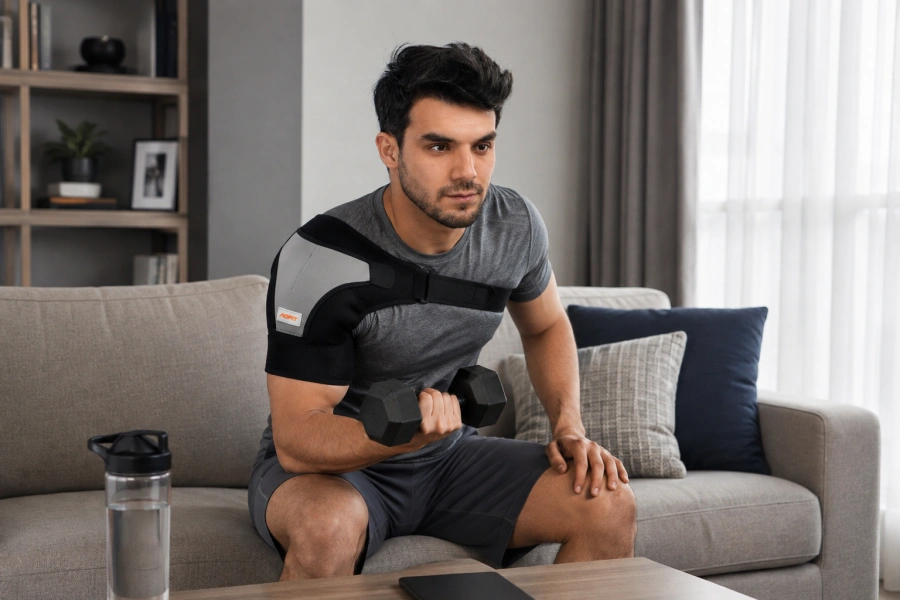
Once you are cleared for some movement, a shoulder stabilizer brace takes over. It does not demand total stillness — it limits risky motions while letting you function. This works for AC joint sprains, clavicle fractures, or ongoing instability. Most use a figure-eight or chest harness design to control motion during daily tasks.
Abduction Sling: For Positioned Healing
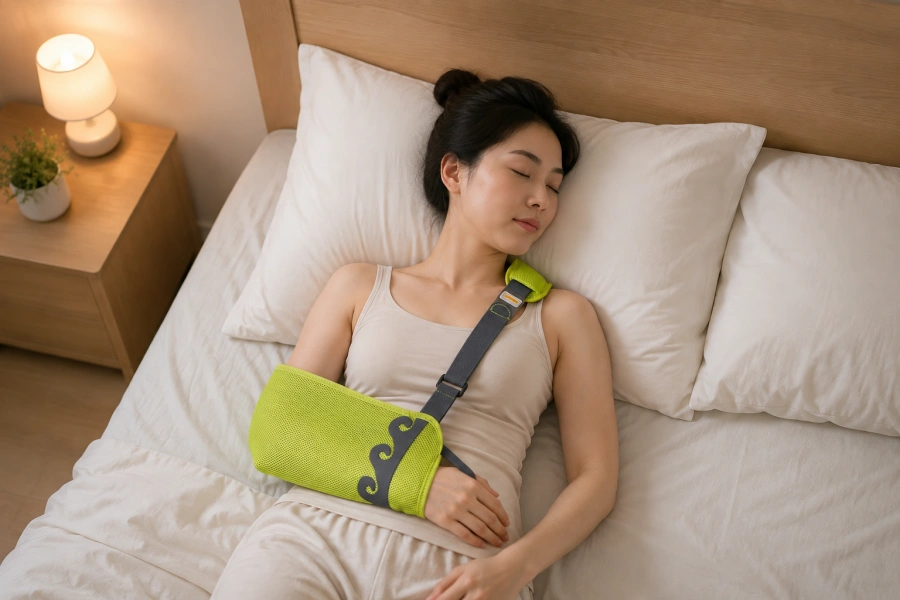
If your repair needs your arm held away from your body, an abduction sling or pillow is the right call. AOFIT’s version sets a 15°–30° abduction angle, common for rotator cuff repair and brachial plexus injuries. It reduces tension on repaired tissue better than a standard sling holding your arm flat against your torso.
Key Precautions and Warning Signs During Post-Op Support
Healing well requires wearing your brace correctly and knowing what your body is telling you underneath it.
Everyday Limits Worth Respecting
– Skip driving for at least 24 hours after anesthesia, and longer if you’re still on narcotic pain medicine.
– Avoid lifting anything heavier than 10–15 pounds for 4–6 weeks, or until your surgeon clears you.
– Shower after 36–48 hours once outer dressings are removed. Skip baths or pools — soaking isn’t allowed yet.
– Sleep with pillows supporting your arm, avoiding pressure on the surgical side.
– Choose loose, front‑opening clothing to prevent unnecessary shoulder strain.
Red Flags That Need Immediate Attention
Contact your provider right away if you notice:
– Numbness or tingling that’s worsening or spreading
– Sudden or one‑sided swelling
– Skin turning pale, blue, purple, or unusually cold
– Increasing redness, warmth, drainage, or a foul smell from the incision
– Fever above 38°C (100.4°F)
– Chest pain, shortness of breath, coughing blood, or fainting
Act quickly if you see these signs. Your shoulder rehabilitation device protects you, but your awareness keeps recovery on track.
Questions About Shoulder Stabilizer
Does a shoulder stabilizer heal the tear, or just protect it?
Just protection. The brace limits how far your arm can move and nudges your shoulder back to neutral when you drift. Neither one repairs tissue — that’s your body’s job. The brace lowers the odds of a setback.
Does a shoulder stabilizer heal the frozen shoulder?
Not quite. Frozen shoulder needs light compression and adjustable support, not rigid immobilization. Going too still for too long — past 2–3 weeks without movement — actually raises your frozen shoulder risk.
I’m an athlete. Will a brace slow my comeback?
Look for adjustable-angle, strap-based designs. They protect you between sessions while still allowing your prescribed rehab movements.
I’m caring for an elderly parent post-surgery. What matters most?
Prioritize an easy on-off design and gentle padding. Nighttime wear needs extra circulation checks.
Had a previous dislocation, do I need something different?
Yes. Choose a shoulder stabilizer that restricts external rotation and abduction to guard against repeat instability.
Conclusion
Healing from shoulder surgery means giving your body exactly what it needs, exactly when it needs it. Your shoulder stabilizer works hardest in the early weeks by protecting delicate tissue. The right fit and wear schedule make the difference between smooth progress and setbacks. And listening to your body is as important as following your surgeon’s timeline. A shoulder stabilizer from AOFIT becomes a quiet, steady companion through recovery. If you’re going through this right now, check in with your care team about which support style fits your specific procedure, then choose a shoulder brace that feels reassuring.