
You’ve found a supplier willing to put your logo on a brace, and you’re ready to sign. Before you do, make sure you know whether you’re getting a private label arrangement or a white label product with your name on it. That distinction affects your minimum order quantities, profit margins, and whether you’ll own a real brand three years from now.
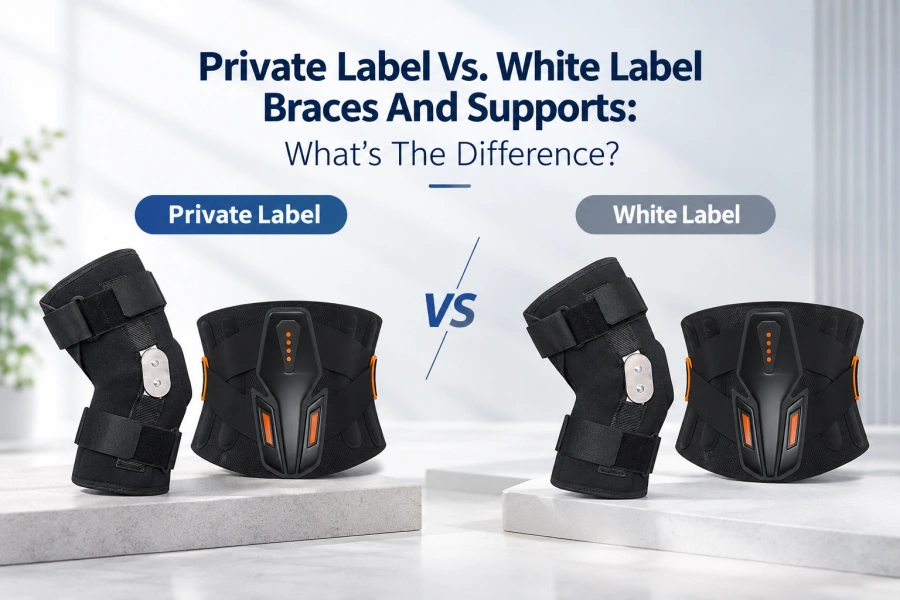
Confusing private label vs white label braces and supports is one of the costliest mistakes a distributor, retailer, or emerging sports brand can make when sourcing braces and supports. This guide explains how private label and white label manufacturing differ, what each path means for your budget and timeline, and how to choose the right fit for your business, whether you want to test a market or build something of your own.
What Is Private Label Braces and Supports?
Private label means the factory builds the product and you brand it. A third-party manufacturer produces the knee brace, ankle support, or back brace, and you put your trademark on it before it reaches customers. In industry terms, the buyer controls the brand and owns the custom specifications.
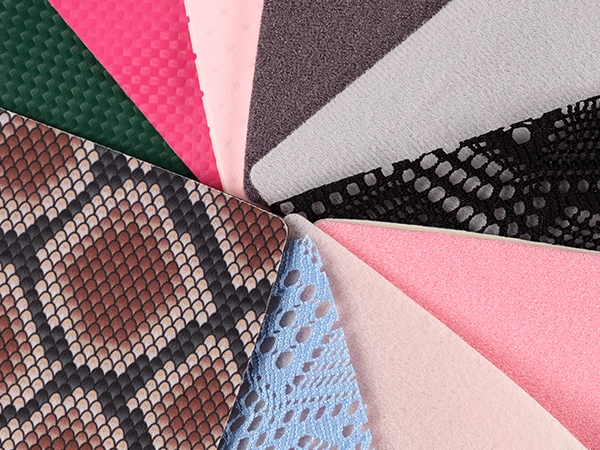
There are two routes here, and the difference matters for your budget.
OEM gives you complete control. You provide technical drawings, choose the materials, set compression zones, and determine size tolerances, which also means you take full responsibility for the build.
ODM is faster and costs less. You start with the manufacturer’s existing design, then add your logo, colors, and minor trim adjustments.
What you can customize:
– Logo application: embroidered, heat-transfer, screen-printed, woven, or rubber-stitched
– Packaging: retail boxes, polybags, hang tags, barcode labels, and Amazon FBA-ready packaging
– Product specs: compression levels, closure systems, reinforcement, and fit tolerances
AOFIT‘s private-label catalog covers knee braces and sleeves, ankle supports, wrist braces, elbow and shoulder supports, plus lumbar and posture products—the standard lineup for building a sports-brace brand from scratch.
What Is White Label Braces and Supports?
White label lets you skip custom development. You pick a brace already running on the factory floor, add your branding, and sell it under your own name. You bypass tooling molds, engineering sign-offs, and months spent dialing in compression zones. The physical brace—whether a knee sleeve, ankle support, or lumbar belt—stays built to the manufacturer’s original specification. Only the packaging and branding change.

What gets customized:
– Brand name and logo placement
– Hangtags, barcodes, and retail labels
– Box, polybag, or carton artwork
– Instruction leaflets and insert copy
– Selected color options or size labels
The same factory-standard brace might sit on five competitors’ shelves under five different labels. That is the trade-off: you gain speed and low upfront risk, but you give up product exclusivity.
Typical categories available white label:
Knee sleeves and hinged braces, wrist and thumb supports, ankle compression sleeves, elbow straps, lumbar belts, shoulder immobilizers, cervical collars, and basic walking boots.
For distributors testing market demand or e-commerce sellers needing barcode-ready inventory fast, this is a practical entry point into sports medical sourcing before committing to custom manufacturing.
Private Label Vs. White Label Braces and Supports: A Comparison Across 7 Key Dimensions
|
Dimension |
Private Label |
White Label |
Decision Point |
|---|---|---|---|
|
Customization |
Full control over structure, compression level, support stays, fabric, color, sizing, and packaging. AOFIT supports sizing, material, stiffness, strap, and packaging customization. |
Logo and packaging swap only, with products pulled straight from an existing catalog. |
Choose private label for medical-grade differentiation; choose white label to test market demand. |
|
Brand Ownership |
You control the branding and product specs to build a proprietary line. |
The brand name is yours, but suppliers often sell the underlying design to other buyers. |
Private label builds equity; white label launches faster without creating a defensible moat. |
|
MOQ |
Standard customization starts around 500 units; new patterns or materials can push minimums to 1,000–3,000+. |
Catalog items run 100–500 units per SKU. |
Confirm whether the MOQ applies per order, SKU, size, or color. |
|
Cost Structure |
Covers sampling, tooling, material development, certification, and custom packaging. Upfront costs are higher, but they amortize at scale. |
Covers unit price, logo printing, and packaging, with minimal development fees. |
Private label suits predictable volume; white label fits small-batch validation. |
|
Lead Time |
Bulk production takes 30–40 days. Samples take 1–2 weeks standard, or 3–6 weeks for new materials. |
Catalog orders ship in 15–30 days, though custom branding adds time. |
White label favors seasonal or promotional runs that demand speed. |
|
Exclusivity |
Negotiable by region, channel, or structure, provided contracts define scope, term, minimum volumes, and penalties. |
None. The same mold ships to multiple sellers. |
Exclusivity protects your position, but suppliers expect annual purchase commitments. |
|
Risk Profile |
Higher inventory and forecasting exposure; misjudging compression or sizing creates dead stock. |
Commoditization risk; expect price wars and duplicate product photos across competitors. |
Many brands test with white label, then upgrade proven sellers to private label. |
Case in point: knee sleeves. White label gives you a knit sleeve with fixed compression and a standard colorway. Private label lets you dial in copper-fiber content, knit tension, and pressure distribution by size. AOFIT’s copper knee sleeve program customizes the knit technology, fiber blend ratio, function, and packaging.
Case in point: wrist braces. White label locks you into standard aluminum or plastic stays. Private label gives you options for removable stays, breathable fabric blends, and dedicated left- or right-hand builds, which are critical if you sell into rehab channels where fit tolerance matters.
Case in point: lumbar support. A standard neoprene belt runs roughly $3.89–$6.69 per unit at 500 MOQ. Private label lets you redesign panel count, waist sizing, and breathable zones. Expanding size coverage adds SKUs, which increases minimum order quantities and ties up capital in inventory.
How to Choose: Private Label Vs. White Label Braces and Supports
|
Factor |
Lean White Label |
Lean Private Label |
|---|---|---|
|
Brand Stage |
New brand, first time testing the brace category, unproven demand |
Established brand with repeat buyers and clear positioning |
|
Budget |
Low-to-mid; spend goes toward inventory, packaging, marketing |
Enough capital for sampling, structural changes, testing, tooling |
|
MOQ Tolerance |
Need small test runs; some suppliers offer 50-unit MOQs, standard branded SKUs run ~200 units/style/size |
Can absorb ~500 units/style/color/size; complex molded parts often require 500–1,000 units |
|
Speed to Market |
Top priority; existing models ship fast |
Accept longer timelines; custom ankle brace samples take 5–7 days, bulk production 15–25 days, first order ~3–4 weeks |
|
Differentiation |
Logo, color, packaging, and content carry the brand |
Need proprietary structure, support level, materials, closures |
|
Risk Appetite |
Verify materials and test reports, but accept faster validation |
Own design liability, performance testing, labeling, compliance |
Quick gut check for White Label: Can you launch in 4–8 weeks? Is demand still unproven? Do you lack an R&D or tooling budget? Are you fine with competitors selling similar-looking braces?
Quick gut check for Private Label: Do you already have specs or a reference sample? Does existing catalog stock fail your compression, breathability, or sizing requirements? Can you commit to 500+ units upfront?
A Three-Phase Approach for Distributors and New Entrants
Validate demand with White Label ankle supports. Launch lace-up, compression-sleeve, and semi-rigid models at ~200 units each (or 30–50 for pure channel tests). Customize only the logo, hangtags, and retail boxes. Track 30-day sales, conversion rate, return rate, and repeat purchases.
Optimize selectively. Once a style clears your sales threshold, modify the 1–2 features driving conversion (such as wider straps, better airflow, or adjusted compression) before scaling past 500 units.
Build core SKUs with full Private Label. Lock in exclusive structure, color, and size matrix once demand is proven, with 7–12 day prototyping and 30–40 day production cycles.
The Practical Path from White Label Braces and Supports to Private Label Braces and Supports
Six numbers tell you when to stop reselling and start building. If you hit three or more, staying white label is costing you margin.
The upgrade signals:
Volume clears the threshold. Custom brace MOQs run 300–1,000 units per design, while deeper private label partnerships take 2,000–5,000+ units per SKU annually. Moving that volume in white label means you are paying off someone else’s factory instead of building your own brand equity.
Sales stabilize instead of spiking. When you have three to six straight months of steady sales, low returns, and demand visible 6–12 months out, you are ready to invest in custom materials, colors, packaging, and size runs.
Feedback clusters around fixable flaws. Group your complaints, returns, and low reviews by cause. When 10–15% or more mention slipping, pinching, heat buildup, poor sizing, or clumsy application, you have your redesign brief.
Competitors blur together. When identical sports braces crowd the same marketplace listings, ad costs rise, and margins shrink, adding distinct hinges, compression bands, breathable panels, or non-slip silicone protects your margin
Brand equity is forming. Repeat buyers, direct search traffic, dealer inquiries, and clinician referrals show that customers already treat you as an actual brand rather than a generic reseller.
Return data points to specs. Break returns down by size, left versus right side, body area, and use case. If most returns stem from fit, update your size chart and measurement guide before you spend money on tooling.
The nine-step build-out:
Pick one entry SKU with steady demand and minimal tooling needs, such as an adjustable wrist support, knee brace, or ankle sleeve.
Order real samples from 2–3 white label suppliers to test support, breathability, slippage, stitching, and size accuracy side by side.
Turn common buyer complaints into factory specs: “won’t slip during exercise,” “breathable overnight wear,” “fits narrow calves,” or “one-hand application.”
Build the complete private label package: logo, die-cut packaging, colorways, user manual, warning labels, barcodes, spec sheet, size chart, and bill of materials (BOM). Swapping a logo is not enough; change at least one detail in the structure, fabric, or fit.
Audit 3–5 OEM/ODM factories on ISO 13485 certification, FDA and CE registration status, lab test reports, material traceability, MOQs, production lead times, and defect records.
Run 2–3 sampling rounds to check fit, support pressure, range of motion, slippage, skin irritation, and wash wear. Mechanical braces need repeated flex and strap-pull testing; one knee brace project required testing to 15,000 flex cycles daily for over a year.
Confirm local compliance rules and packaging copy for each target market, covering medical classification, warning statements, and required lab tests. Drop any unsupported claims about “treating,” “correcting,” or “preventing” injuries.
Start lean with one SKU, core sizes, and limited colors. Keep your first purchase order within standard MOQs of 300–1,000 units, and retain backup samples for quality control checks.
Track real metrics before expanding. Let conversion rates, size-specific return rates, defect counts, repeat orders, and customer acquisition costs decide when to fund the next SKU.
AOFIT uses this process to help distributors step away from stock items through sample validation, spec sheets, factory audits, and staged rollouts, avoiding the dead inventory that trips up most new brands.
Supplier Due Diligence Checklist (Private Label & White Label)
Before wiring a deposit to any contract manufacturing braces partner, run this checklist regardless of which model you choose.
Verify the supplier’s legal standing. Check their business license, actual factory address, years in operation, and whether production, packaging, and QC stay in-house or get subcontracted. Ask for 2+ reference clients in your category with verifiable contacts.
Lock down technical documents. Collect spec sheets, size charts, material tolerances, test reports with the lab name and batch number, and relevant certifications (ISO 13485, CE, FDA).
Confirm golden-sample sign-off before bulk production begins. Require written approval for any material, process, or packaging substitutions.
Nail down MOQ, pricing, and lead time per SKU, color, and size, with Incoterms and payment milestones in writing.
Protect IP and exclusivity with NDAs that cover subcontractors and affiliated factories.
Clarify regulatory liability. Who registers as the manufacturer, relabeler, or repackager determines who owns labeling, traceability, and recall obligations under FDA rules.
What Does AOFIT Offer?
AOFIT’s published services go well beyond standard logo placement. Their scope includes adjustments to sizing, left or right orientation, base materials, support stiffness, strap density, foam thickness, padding, hinges, and fabric. For branding, they offer 3D rubber badges, woven labels, embossing, heat transfers, and TPU badges, along with Pantone-matched fabrics, straps, and hook-and-loop fasteners.
|
AOFIT Offering |
Procurement Meaning |
Term |
|---|---|---|
|
Add logo, color, packaging to an existing product |
Branding a standard-catalog item |
Private Label |
|
Custom size, orientation, material, stiffness, strap/fill density |
Parameter-level product adjustment |
ODM or OEM |
|
Modified hinge structure, ROM range, foam thickness, fabric, strap position |
Functional/structural redesign |
ODM |
|
3D rubber badge, woven label, embossing, heat-transfer, TPU badge |
Brand identification |
Private Label |
|
Pantone-matched fabric, straps, hook-and-loop, logo colors |
Appearance/brand color customization |
Private Label (or ODM if product color changes) |
|
OPP/PVC bags, zip pouches, color boxes, hangtags, manuals, barcodes, carton marks |
Packaging and retail presentation |
Private Label |
|
Sample development from buyer concept through mass production |
Supplier-led design development |
ODM |
|
Manufacture to buyer spec, deliver under specified brand |
Build-to-order |
OEM |
AOFIT can start with an existing design, add branding and packaging, and alter physical straps and padding on request. In practice, their private label projects frequently involve physical modifications. Always confirm the exact project scope with the factory before signing off, rather than assuming what the term covers.
Write Your RFQ in These Terms
Give suppliers specific project criteria instead:
Product body: Note whether you want a standard catalog build or precise changes to materials, dimensions, colors, and functions.
Brand content: Define logo placement, application technique, colors, dimensions, and accepted file formats.
Packaging: Specify packaging materials, box dimensions, barcodes, user manual languages, and outer carton markings.
Development milestones: Set sign-off dates for design approval, prototypes, golden samples, mass production runs, and pre-shipment inspections.
IP ownership: Clarify whether the design remains standard supplier property or becomes an exclusive buyer modification.
MOQ and cost: Request itemized pricing for the base build, logo application, custom colors, packaging runs, and any structural tooling.
AOFIT accommodates modifications across sizing, materials, colors, structural elements, labels, manuals, barcodes, and packaging. Because minimum order quantities scale with technical complexity, require your supplier to quote branding and product development as separate line items rather than a single bundled fee.
Conclusion
Choosing between private label and white label braces and supports comes down to how much control you need over your brand. White label gets you to market quickly with minimal upfront investment, which works well for testing demand or plugging catalog gaps. Private label builds defensible margins, customer loyalty, and equity you can sell down the road. Neither option is inherently better. They serve different stages of growth, and experienced sourcing managers frequently run both across their product lines.
Match your sourcing model to your actual runway. If you are weighing MOQs, budget, and timeline, talk to a manufacturer with direct experience on both sides of production. Reach out to our team at aofitbrace.com for a straight answer on what works for your business.